The complexity of modern warfare makes it difficult to identify who qualifies as a party to conflict. But the need for clarity has never been greater.
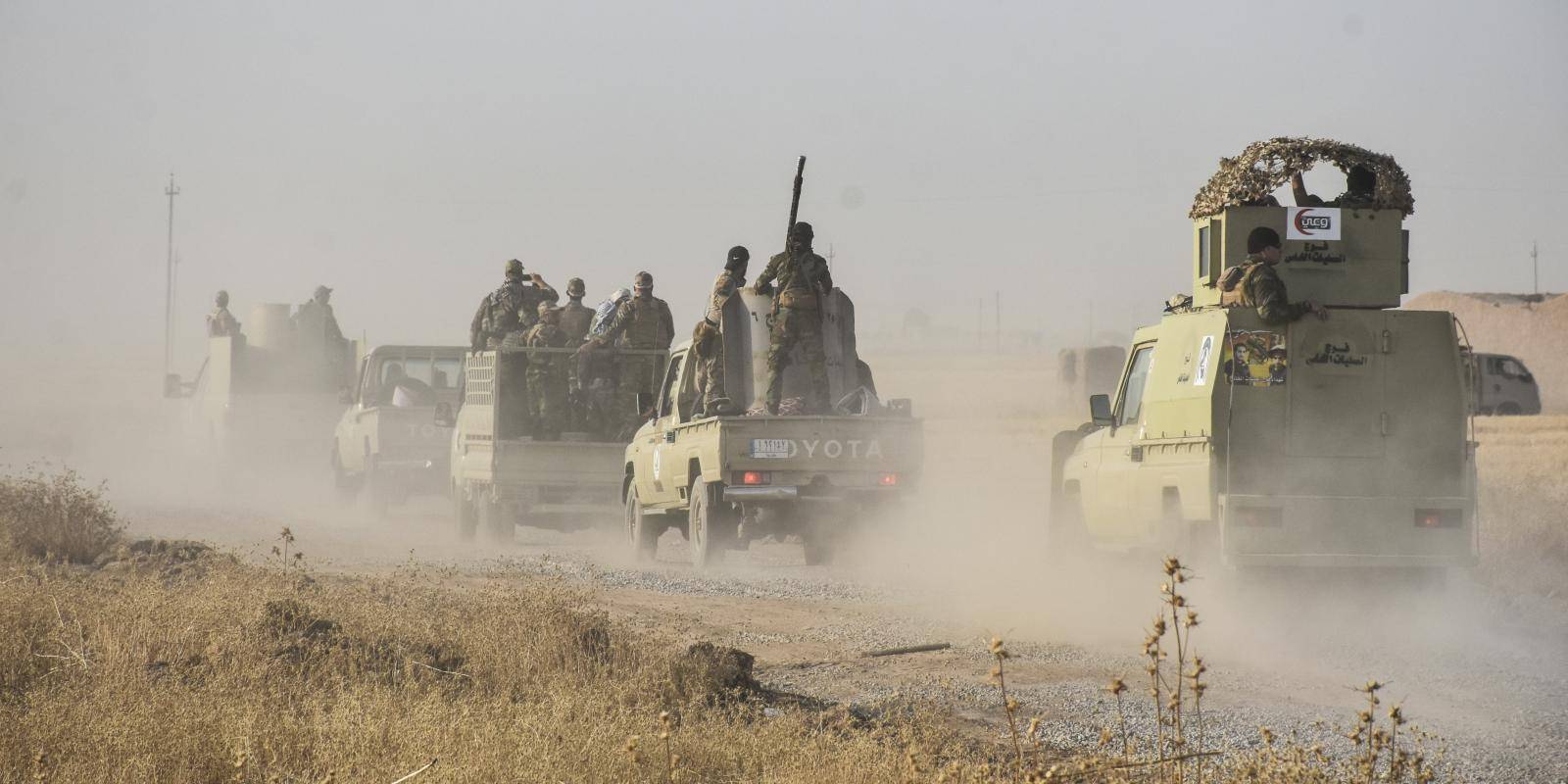
The war in Ukraine has generated awareness and interest in questions of party status both among the public and in political spheres. Many states have been providing military assistance to Ukraine. This assistance includes the supply of a wide range of weapons, training of Ukrainian troops, the provision of targeting intelligence and support through cyber operations. On the other side of the conflict, Russia, too, has received external support. Belarus has allowed its territory to be used as a launchpad for Russia’s invasion and has delivered tanks to Russia, while Iran has supplied drones and trained the Russian military in their use. Military support to both countries has raised questions and concerns as to when supporting states might themselves become parties to the international armed conflict alongside either Ukraine or Russia.
Yet, the same underlying issues have arisen in many, if not all, major armed conflicts from the 20th century onwards – even if those issues may have been less present in the wider public consciousness. The different forms of military support in the war in Ukraine have been recurring features in armed conflicts around the world. For example, prior to Germany’s declaration of war on the US in the Second World War, the US’s political objective regarding military assistance to the Allies was – much like today, with reference to Ukraine – to provide as much support as legally possible without becoming a co-belligerent. In the Iran–Iraq war, Kuwait faced allegations from Iran that its support for Saddam Hussein made it a party to the war alongside Iraq. Such concerns were also prompted when Germany provided logistical and intelligence support to the multinational anti-Islamic State coalition in Syria and northern Iraq, and in the US over similar military assistance to the Saudi-led coalition against the Houthi rebels in Yemen. Regarding the Somalia-based Islamist militia group Al-Shabaab, its alleged support of Al-Qaeda raised questions in the US as to whether Al-Shabaab had become a party to the armed conflict between Al-Qaeda and the US. And the International Criminal Court (ICC) considered that military support between the Central African Republic (CAR) and a Democratic Republic of the Congo-based armed group led by Jean-Pierre Bemba made both parties to the armed conflict with other groups in the CAR.
As military technology advances, contemporary armed conflicts are characterized by increasingly complex patterns of cooperation involving states, international organizations and non-state armed groups.
States have often relied on each other’s support to wage wars. But, as military technology advances, contemporary armed conflicts are characterized by increasingly complex patterns of cooperation involving states, international organizations and non-state armed groups. These patterns make it difficult to identify who among the cooperating partners qualifies as a party to conflict. Such issues are likely to become even more pressing in future wars.
Determining whether a state, an armed group or an international organization is a party to an armed conflict is not merely a theoretical exercise. Party status has significant legal consequences in the regulation of armed conflict. Public discourse on party status – for example, in the case of states that provide military support to Ukraine in Russia’s war of aggression – has to an extent been confused on what it would mean, in legal terms, to be a party.
Armed conflict is today regulated not by a single body of international law, but by different regimes – including, most fundamentally, the ius ad bellum, the ius in bello (otherwise referred to as international humanitarian law – IHL – or the law of armed conflict), international criminal law, international human rights law (IHRL) and the law of neutrality. The implications of party status cannot be understood without considering how these different bodies of law interact.
1.1 Purpose and structure of the paper
Despite the ubiquity of cooperation in armed conflicts, debates on party status have been marked by uncertainty regarding the criteria in international law for identifying parties and confusion as to the legal implications. Yet, states, international institutions, courts and humanitarian organizations, as well as non-state armed groups, need to have a clear sense of how to address these questions.
The purpose of this research paper is, therefore, to provide a roadmap to establish who is party to an armed conflict and the legal implications of that finding. The paper analyses what party status means and how parties to armed conflicts are identified as a matter of international law. In doing so, it draws on illustrative examples from state practice in recent and current conflicts.
The paper does not aim to identify a specific state or other entity as a party to any of the conflicts mentioned. Instead, it seeks to provide the tools for any such analysis in the form of a general framework of legal criteria for establishing when a state, international organization or non-state armed group becomes a party to an armed conflict. As diverse forms of cooperation increasingly shape armed conflicts, the paper focuses on identifying parties in situations where there are multiple parties on the same side of conflict – referred to as ‘co-parties’.
This paper is structured as follows. Chapter 2 outlines the legal framework for identifying co-parties to an armed conflict. Chapter 3 discusses how and why party status is legally relevant and clarifies what turns on identifying parties to armed conflict. Chapter 4 draws out some specific legal implications of becoming a co-party. Finally, Chapter 5 concludes with practical recommendations for those facing the challenges of identifying (co-)parties to armed conflicts.
1.2 Scope of the paper
This paper addresses issues of party status in international armed conflicts (IACs) and non-international armed conflicts (NIACs). IACs are defined as ‘a resort to armed force between States’. Accordingly, in principle, only states can be parties to IACs. While statehood under general international law remains the basic defining characteristic of parties to an IAC, there are two exceptions regarding collective entities other than states. First, international organizations can be parties to IACs, under customary international law. Second, national liberation movements involved in self-determination conflicts may be considered as parties to an IAC, despite not (yet) fulfilling the criteria of statehood, in that the provisions of Additional Protocol 1 may be made applicable to them (Articles 1(4) and 96(3) of the Protocol).
A NIAC is defined as ‘protracted armed violence between governmental authorities and organized armed groups or between such groups within a State’. The baseline requirement for a collective entity to qualify as a party to a NIAC is thus one of sufficient organization. This does not presuppose state-like organizational structures. Rather, the criterion is a functional one. Sufficient organization requires being able: (i) to conduct intensive collective violence; and (ii) to implement at least the basic rules of IHL. International criminal jurisprudence has developed non-exhaustive indicators to assess the organization requirement. Unlike in IACs, there is no formal limitation of the types of collective entities that can be parties to NIACs. Any entities that meet the organization requirement can be parties. This includes states, international organizations and armed groups, as well as potentially certain corporations.
The findings of this paper apply to all collective entities that can be parties to either IACs or NIACs. However, the paper focuses on states as parties to IACs and on states and armed groups as parties to NIACs. For reasons of space, issues of the law of occupation are outside of the paper’s scope.