International and Iraqi government strategies to resolve the instability in Sinjar, including building border fortifications and the Sinjar Agreement, have ignored the transnational nature of the conflict and risk exacerbating regional instability.
The transformation of Iraq’s Sinjar district into a transnational conflict hub has significant implications for regional stability. At the local level, hundreds of thousands of residents are still unable to return home, years after their areas of Sinjar were liberated from ISIS. These IDPs continue to live in dire conditions in camps in the neighbouring KRG Duhok governorate. This reality continues to create tension between the IDPs and the KRG authorities. The longer the IDP crisis continues, the greater the suffering of thousands of Sinjari citizens, and in turn the greater the chances of multiple armed groups becoming further entrenched in the district. The residents who have returned to Sinjar have had to make compromises with the transnational armed groups that now control the area. The securitization of borders and a lack of accountability threaten the everyday lives of returnees in terms of armed conflict, the inability to make ends meet and the lack of access to essential goods.
At the national level, the continuation of the status quo may also further destabilize the already fragile relationship between the KRG and the central government. KRG leaders consistently express frustration with the Iraqi government’s inability to implement the various provisions of the Sinjar Agreement.
Critically, as this paper has discussed, Sinjar has also become a key hub that connects several regional conflicts. The flare-up of the Israel–Palestine conflict has spread beyond the borders of those territories to areas including Sinjar, which remains a key hub for the PMF, as well as Iran and its allies, to maintain authority across Iraq and the Levant. PMF groups claim that the mountains of Sinjar are a strategic military position from which their forces could strike Israel. The location also connects the PMF to allies in the ‘axis of resistance’ to Israel.
Meanwhile, the PKK rely on Sinjar to fight in Syria and in Türkiye. The PKK’s presence and activities in Sinjar (building tunnels, moving weapons and fighters across the border between Syria and Iraq, and using the Sinjar mountains as a sanctuary) have already provoked Turkish airstrikes that heightened fears among the residents of the district and prevented IDPs from returning.
In recognition of the crisis in Sinjar, the Iraqi government and its international supporters have devoted significant attention and funds to manage the conflict. However, the existing responses have approached Sinjar as a disputed territory between local and national parties and ignored the post-2014 transnational dimension. This chapter analyses current policy responses and concludes with specific proposals for complementing the Sinjar Agreement with a much-needed transnational element.
The perils of a securitized approach
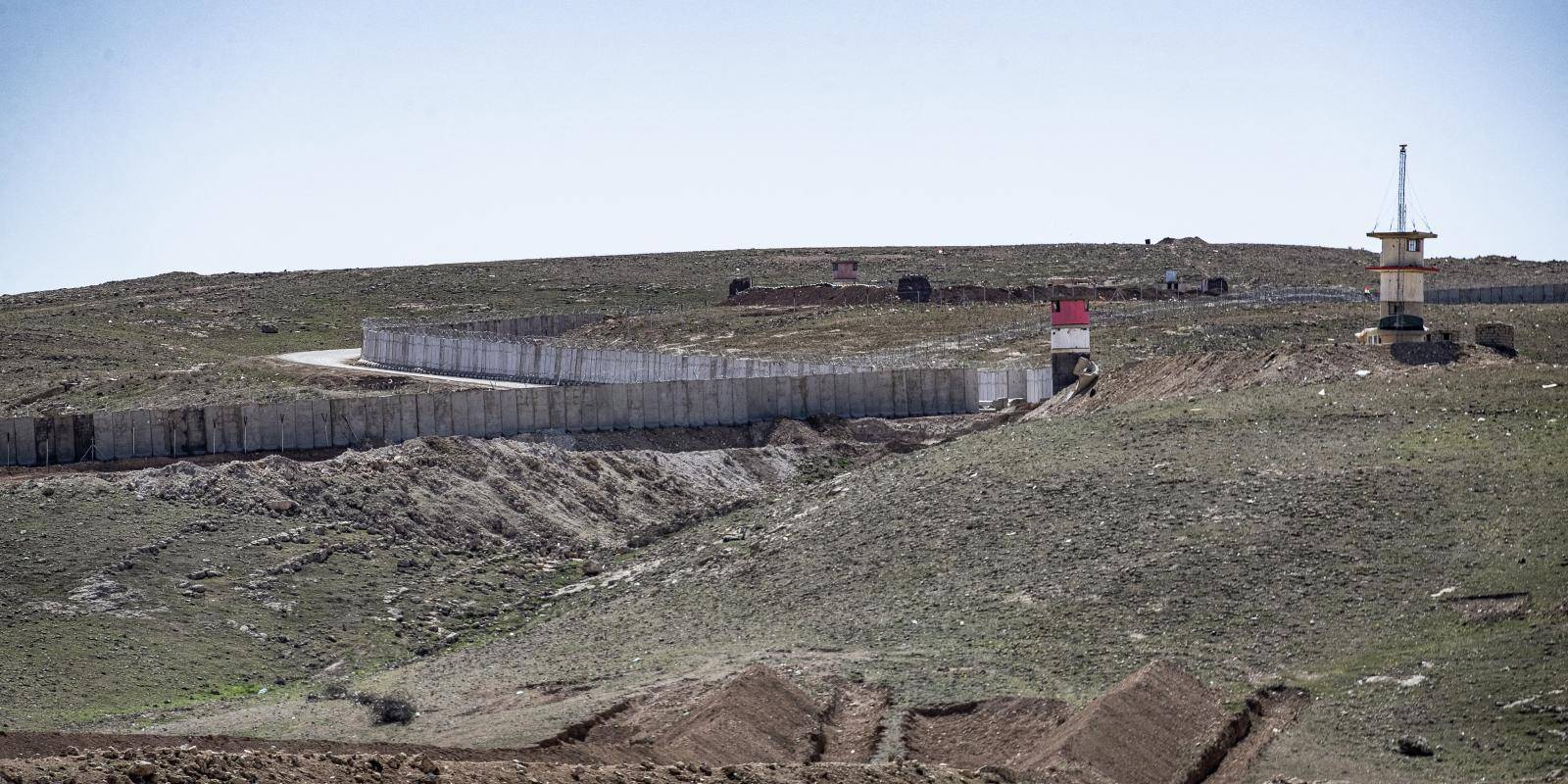
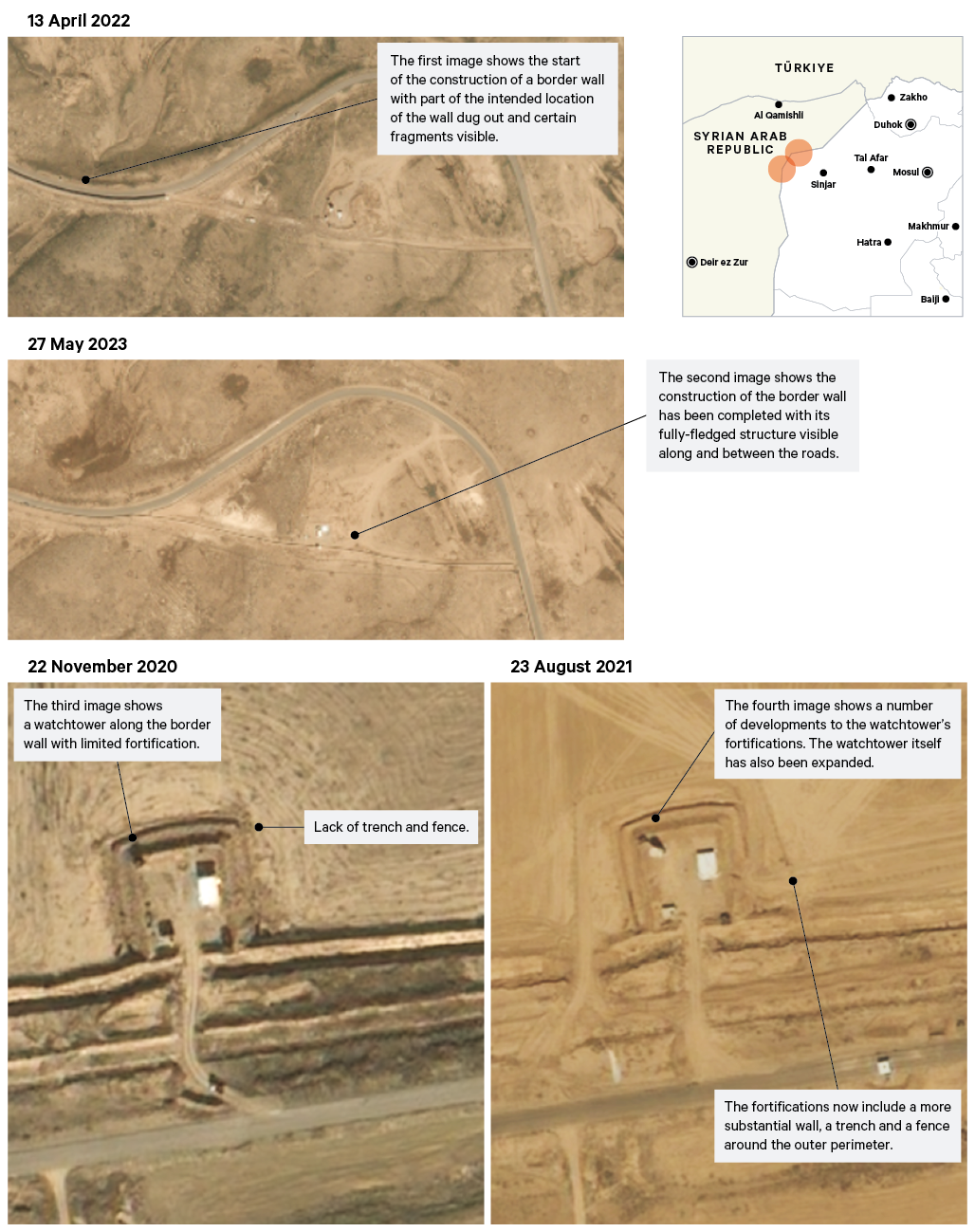
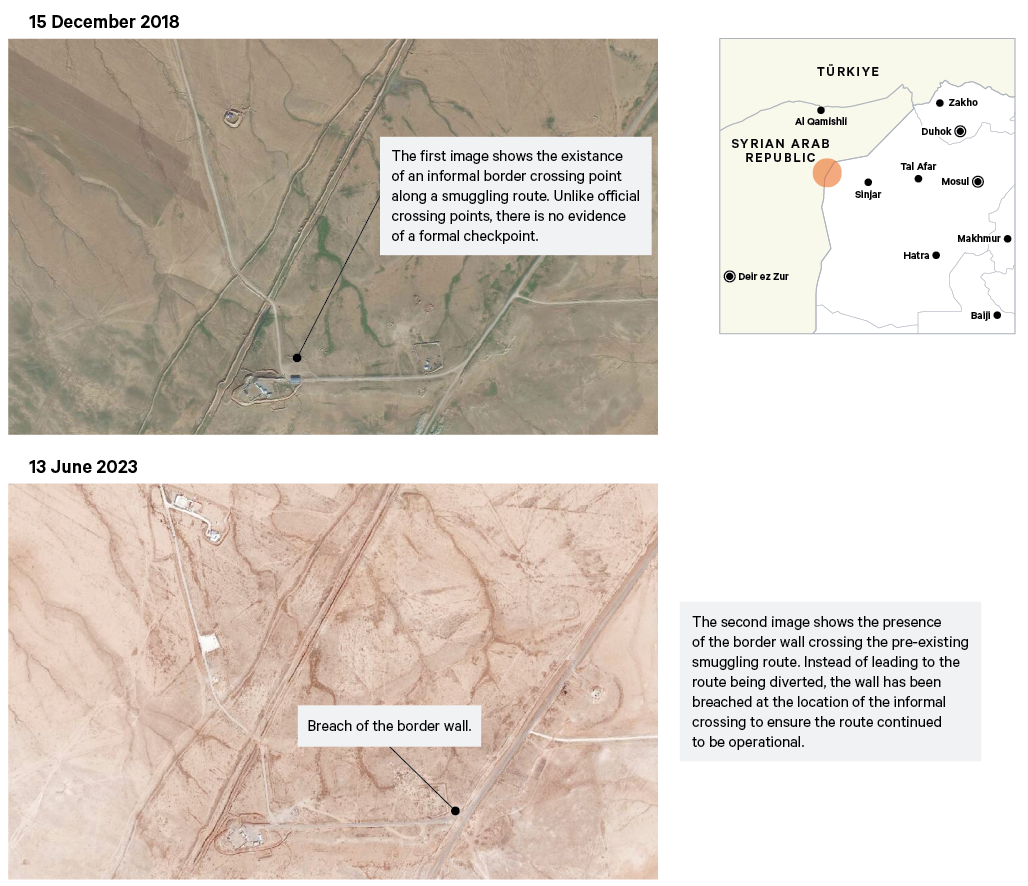
The Iraqi government has taken a securitized approach to tackle the Sinjar problem, with the aim of ultimately removing the PKK’s influence from the district. The central government sees the presence of the PKK in Sinjar and the group’s cross-border activities as threats to Iraq’s national security. According to an official at Iraq’s National Security Agency, ‘The PKK rules Sinjar and is entrenched in the district’s security and local economy. We see the PKK as a national security threat. The group’s presence in Sinjar is unacceptable to us.’ To end the PKK’s presence in Sinjar and cut ties between the group’s allies on both sides of the border, the government has positioned greater numbers of Iraqi security forces near the district (see Figure 4) and embarked on building fortifications (including a wall) at sections of the border between Sinjar and Syria (see Figure 5). The wall extends from northwest of Nineveh near the Al-Rabia crossing with Syria to the southwest of Nineveh near the governorate’s Al-Ba’aj sub-district – located north of Iraq’s Anbar governorate. The wall is 160 kilometre long (the whole Iraq–Syria border is 650 kilometre long) and is part of a system of fortifications that includes a fence and a 3-metre-deep military trench.
But instead of containing the PKK and ending its transnational operations, Baghdad’s militarization and securitization of the area have only resulted in greater violence in Sinjar. After construction of the wall at sections of the Iraq–Syria border near Sinjar, clashes erupted in April 2022 between the Iraqi government forces and the PKK-aligned armed groups in Sinjar. Additionally, pro-PKK groups in Sinjar and across the border in Syria organized popular demonstrations against the wall and the Sinjar Agreement more generally. The wall has thus only served to exacerbate tensions and violence across localities.