Intensity of water use
The volumes of water used in producing and supplying food, and the sustainability impacts of these uses, vary enormously by agricultural commodity and geography of production. While green water access is an important determinant of effective water availability and needs to be accounted for in analysis of virtual water use, much of the global product-level data on water use covers blue water only. Moreover, there are wide variations in the volumes (let alone sustainability) of blue water use associated with production of different food goods, or with production
of similar goods in different places.
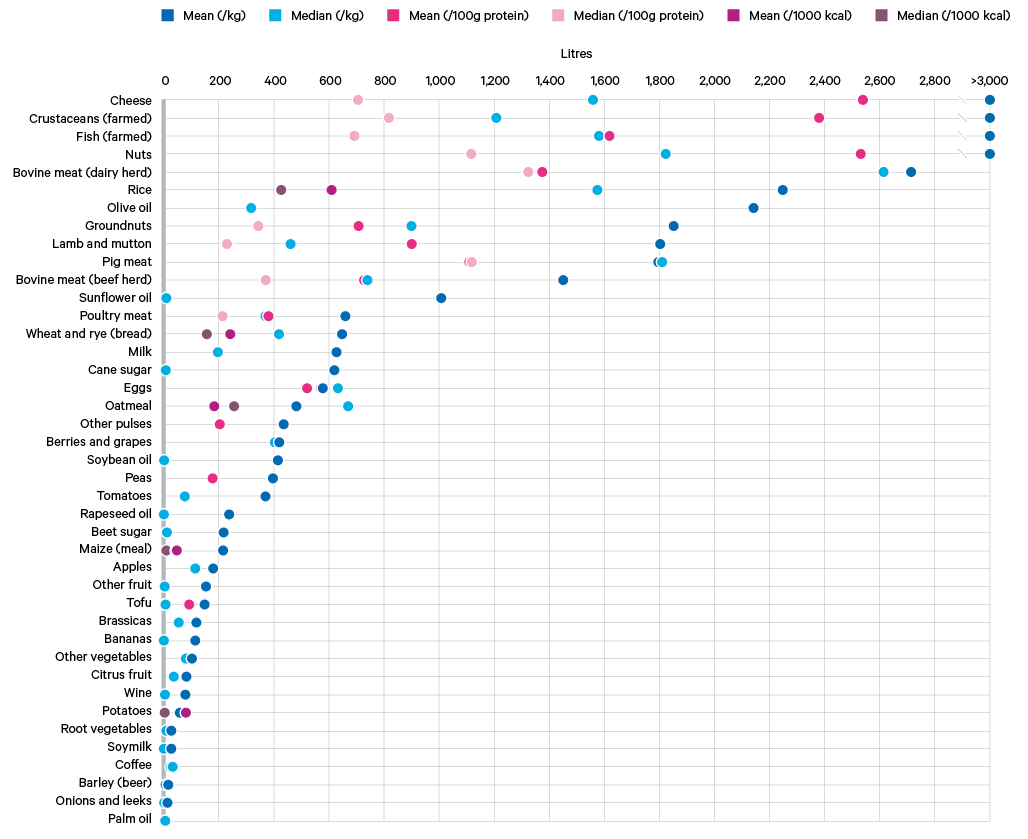
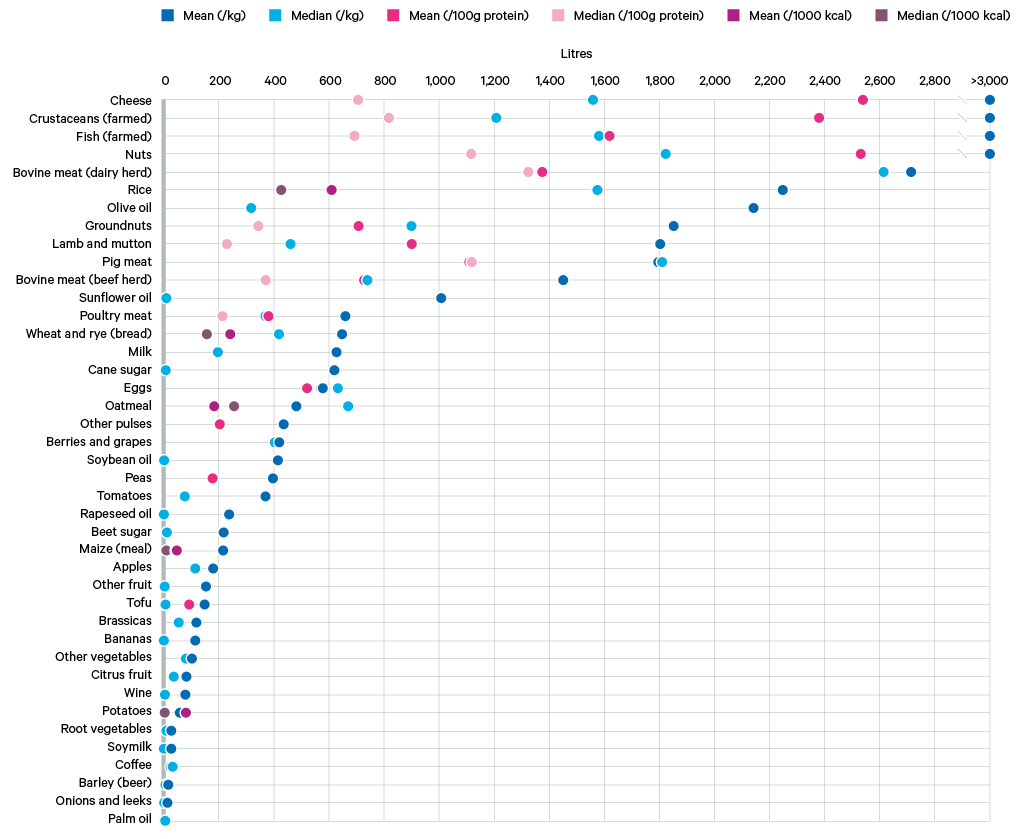
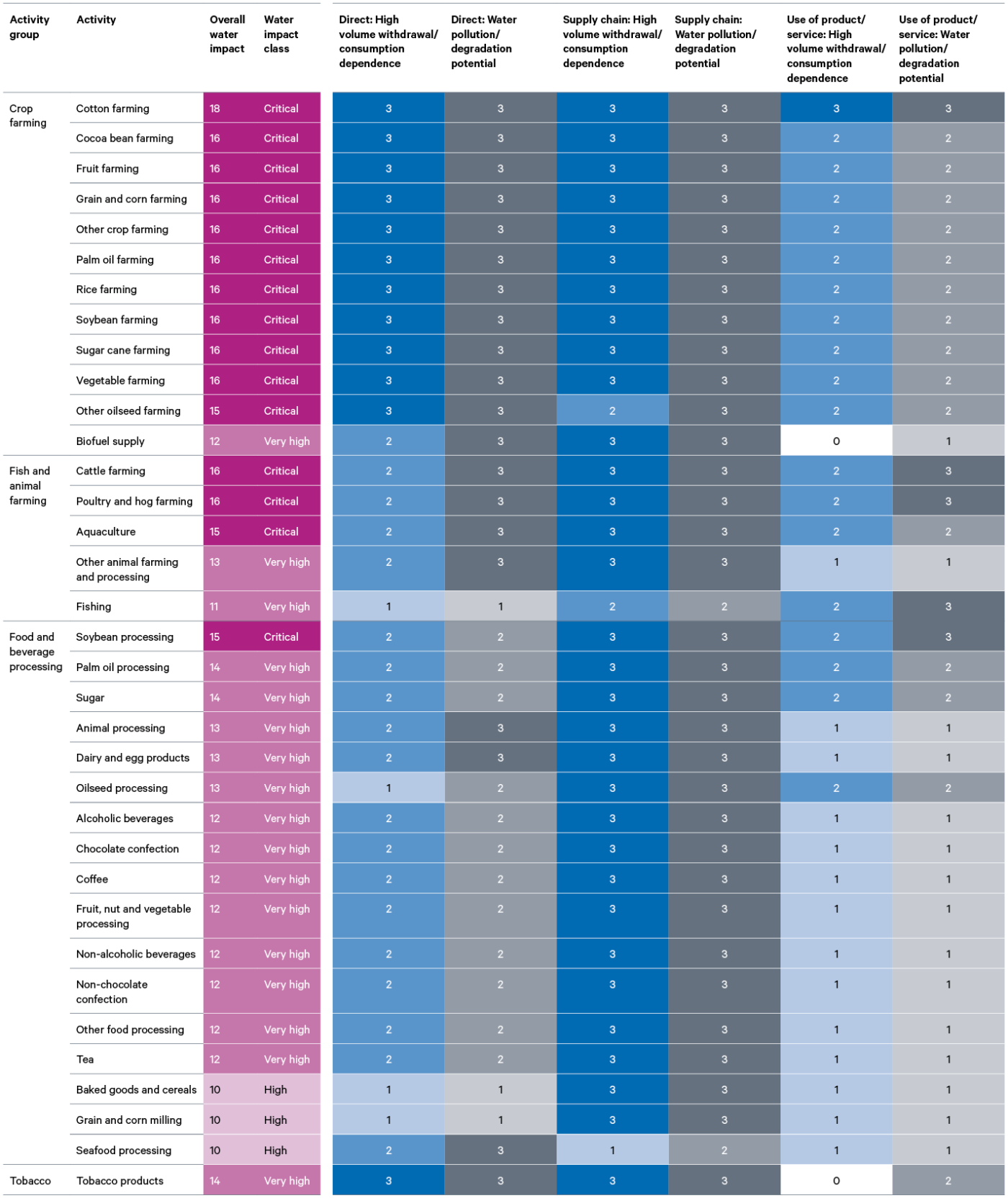
A meta-analysis of studies of global food production systems found that the mean volume of water used in the food supply chain (whether considering the mass, energy or protein content of the food) often differed significantly from the median volume of water used for any given product; the meta-analysis also found frequent substantial differences in the volumes of water used between one product and another. For example, over 5,500 litres of water are used to produce a kilogramme of cheese on a mean average basis, but the median volume required is far lower: a little over 1,500 litres. This suggests the data are significantly skewed by the inclusion of water-intensive supply chains (with the effects mostly due to water-intensive agricultural production). It also suggests that considerable efficiencies can be gained by concentrating food production in places where producers use less water, or by switching to more water-efficient production methods. Globally, on both a mean and median basis, the most water-intensive foods are meats (especially beef, pork and lamb), farmed fish and crustaceans, nuts, rice and cheese; cultivation of many fruits and vegetables requires significantly smaller volumes of water (see Figure 3).
In principle, this means significant water savings are potentially achievable both through supply-side measures (such as changing production practices and locations) and demand-side reforms (such as dietary change). However, volumetric comparisons of water use do not tell the whole story. They are insufficient, on their own, to determine the likely impacts of food and agricultural production on a given country or region’s water security. Assessments also need to factor in the relative abundance or scarcity of water in different locations: using a greater volume of water from a water-abundant region may cause less water stress than using a smaller volume from a more water-stressed area. Robust water governance that accounts for the drivers of demand pressures is therefore necessary if supply-side investments or technologies are to be effective in increasing the sustainability of water use.
The argument for a holistic approach – combining supply- and demand-side measures – to transforming food systems underpins the first of five ‘missions’ articulated by the Global Commission on the Economics of Water in a report published in 2024. The commission – an independent body established in 2022 with a two-year mandate, convened and facilitated by the government of the Netherlands and the OECD respectively – calls for humanity to reduce its collective dependence on water-intensive foods. The commission emphasizes the need for increased water productivity in farming, and for widespread adoption of regenerative agricultural systems to preserve soil health. The commission’s report also champions dietary change, calling for the share of plant-based foods in people’s protein consumption to rise to 30 per cent by 2050.