Conference

Competition policy conference 2026

As economic security, industrial strategy and geopolitical rivalry reshape merger control and market regulation, the competition policy conference brings together regulators, business leaders and academic experts to examine where competition law is heading next.

Event date and time: 17 November 2026 — 10:00 TO 18:00 GMT

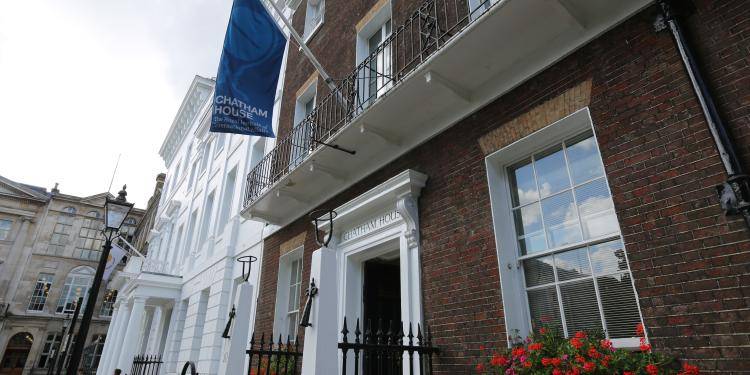
Event location: In person — Chatham House

Image — Image — Looking directly up at the skyline of the financial district in central London.

Competition policy london skyline


Competition policy is evolving rapidly in 2026

Geopolitical rivalry, economic nationalism and strategic competition are reshaping the regulatory landscape, with national security, economic resilience, industrial strategy and technological sovereignty playing an increasingly important role. 

Across the UK, EU and US, regulators are responding in different ways, raising important questions about the coherence, predictability and future direction of the international competition order. These tensions are particularly visible in: 

  • FDI screening and merger control, where alliance politics and security considerations are increasingly influencing decisions.
  • Consumer protection and AI, as regulators develop new approaches to AI-enabled anti-competitive practices and enforcement.
  • Defence, where expanding national security exemptions raise questions about the balance between security interests and fair competition.
  • Digital markets, as the EU reviews the Digital Markets Act and the CMA continues to develop its approach to regulating the largest technology companies. 

Hosted in person at Chatham House and held under the Chatham House Rule, this year’s conference brings together regulators, policymakers, business leaders and legal practitioners to explore how competition policy is adapting to a world where market governance, industrial strategy and geopolitics are increasingly intertwined.

Register today

Agenda

Tuesday 17 November

Keynote address | Competition and Markets Authority

Speakers
Sarah Cardell, CEO, Competition and Markets Authority

1000–1030

Merger controls in an era of strategic competition

  • How can authorities calibrate merger control thresholds and remedies to remain pro-competitive without becoming a vehicle for protectionist industrial policies?
  • As the stakeholders recalibrate their approach to merger review under strategic and national interest pressures, can the current US framework be understood as ‘America First Antitrust’ and how durable are these shifts likely to be across future administrations?
  • At a European level, how successful will the revised Merger Guidelines be in creating a new, legally and economically sound approach with an evidence-based analytical framework for mergers across sectors?
  • What does the UK-EU reset mean for merger control alignment - a natural convergence on procedural cooperation or a lasting point of divergence that will be maintained for political convenience?
  • In a landscape of geostrategic competition, will merger controls end up becoming a tool that generates national champions or can they generate genuine efficiencies still?
1030–1130

Networking break

1130–1200

Economic security and competition policy: Uneasy alliance or fundamental conflict?

  • As economic security displaces market efficiency as a core pillar of regulatory policy, should competition authorities redefine their mandate or resist the drift and defend the primacy of consumer welfare?
  • When FDI screening operates as an instrument of alliance management rather than neutral risk assessment, how far does this erode the non-discrimination and equal treatment norms on which competition enforcement depends?
  • Does sector-specific industrial policy, whether through the Foreign Subsidies Regulation, the Industrial Accelerator Act or equivalent frameworks, represent a proportionate response to genuine security concerns, or is it protectionism in disguise?
  • How should competition authorities respond when dominant market positions are reinforced through state-backed trade arrangements or preferential supply chain access, rather than conduct that traditional enforcement tools were designed to address?
  • For businesses already operating globally, how should they navigate a compliance environment in which trade remedy instruments, FDI rules and competition enforcement increasingly target the same conduct with potentially conflicting outcomes?
  • Are jurisdictions like the UK, Japan and India being forced to choose sides and what does that mean for the coherence of a rules-based international competition order?
1200–1300

Networking lunch

1300–1400

Keynote address

1400–1430

Dominance redefined: Article 102 and anti-trust

  • Where should stakeholders focus efforts to provide operational value on anti-trust regulations and how could updated guidelines ensure legal certainty for firms, authorities and judges alike?
  • Do the revised Article 102 TFEU guidelines enhance legal certainty for firms and national competition authorities alike in Europe and if not, what areas should be focused on to improve these efforts in this specific context?
  • To what extent do algorithmic preferencing and recommendation systems constitute a form of digital nudging under Article 102, and does current guidance give enforcers sufficient tools to act without clearer evidence of market foreclosure?
  • Does current legislation adequately distinguish between or address distribution and functionality self-preferencing by gatekeepers?
  • How will these guidelines play into widening geopolitical divide between Europe and the US?
1430–1530

Networking break

1530–1600

The digital rule makers: Convergence, conflict and the future regulation of tech

  • How has prolonged exposure to each other changed the relationship between technology stakeholders and digital market regulators over recent years?
  • Is the flexible and faster approach of the DMCCA, a post-Brexit success story and what lessons should be learned from the European Commission’s review into the effectiveness of the DMA. How might these two stories tell the tale of the potential UK-EU rest?
  • Where does this leave businesses in the technology space, particularly those operating in the rapidly developing world of AI?
  • Does an ex-ante approach to AI regulation provide a proactive risk mitigation strategy or will the speed of AI’s rapid advancement and the complexity of algorithms make effective enforcement too challenging?
  • How do stakeholders tackle divergence between US and European approaches and do current geopolitical trends risk turning regulating into politicised decision making? 
1600–1700

Networking reception

1700–1800

End of conference

1800

Who attends