Much of the growth in agricultural supply and demand, and therefore in the associated water footprints, between now and the middle of this century is expected to occur in the Global South. On the demand side, the OECD and Food and Agriculture Organization of the UN (FAO) jointly project that global consumption of agricultural and fisheries products will grow by 13 per cent (at constant prices) by 2034, with this additional demand occurring predominantly in low- and middle-income countries.
The relative importance of China in driving global consumption of food and agricultural products is declining, while growing urban populations and rising affluence are expected to increase India and Southeast Asia’s combined share of additional global demand to 31 per cent by 2033. China will still be responsible for 11 per cent of additional demand over the next 10 years, but this compares with a 28 per cent share of global demand growth in the previous decade. Rising affluence and dietary shifts are expected to result in demand for feed crops for livestock growing more rapidly than direct food use in most regions of the world.
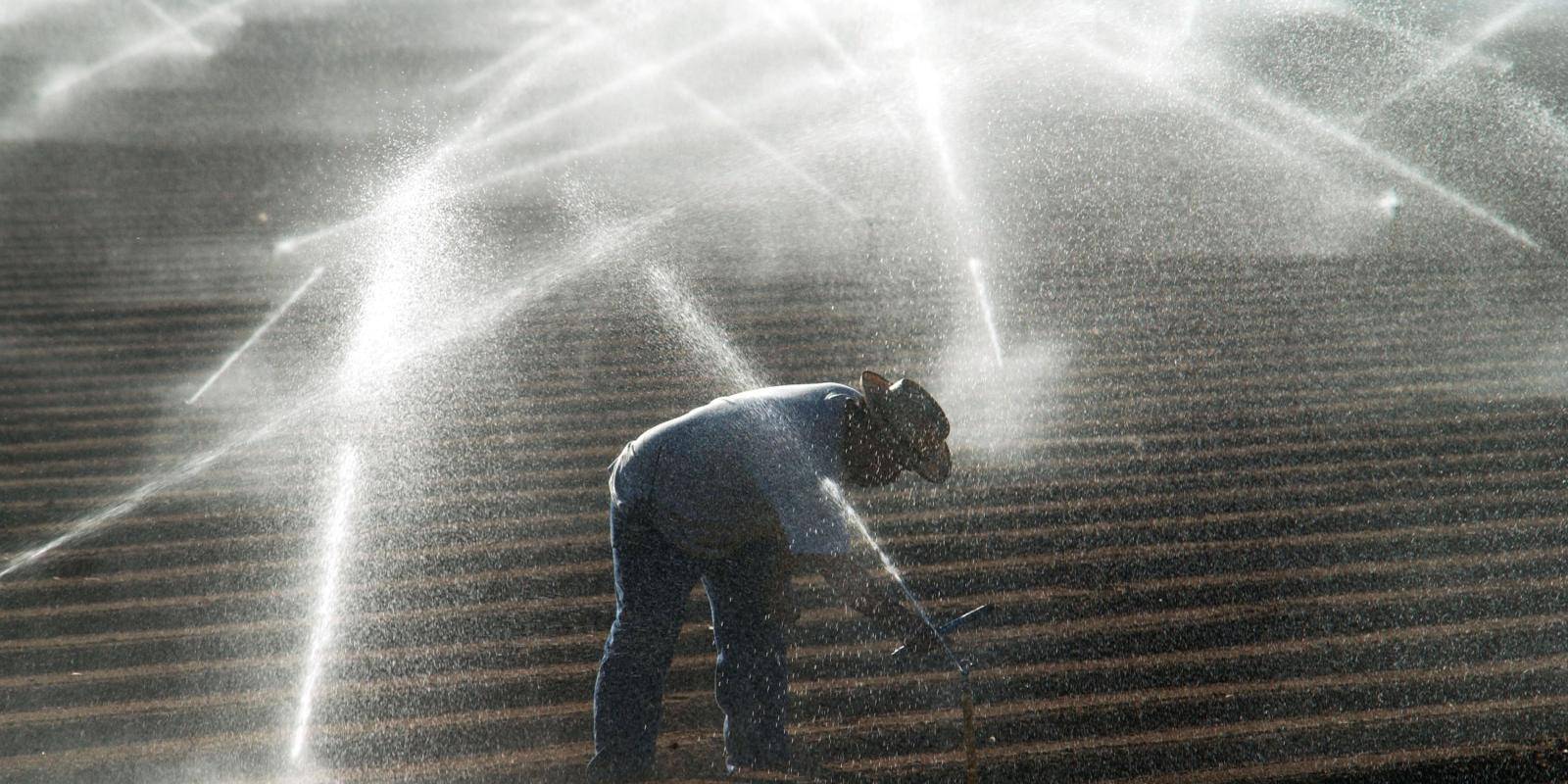
On the supply side, significant expansions in irrigated areas are expected. Relative to 2010, the harvested irrigated area in 2050 is projected to increase by 12 per cent in Eastern Asia and the Pacific, 22 per cent in the Near East and North Africa, 30 per cent in Southern Asia, 35 per cent in Latin America and the Caribbean, and more than 100 per cent in sub-Saharan Africa (FAO geographical definitions). Alongside improved water management in existing irrigated and rainfed areas, this has the potential to provide substantial productivity, livelihood and poverty alleviation benefits to millions of small-scale farmers. However, it must be part of a fully integrated water management strategy and a holistic biological-geographical-hydrophysical approach that ensures, as a starting point, that all hydrological and ecosystem needs for water quality and quantity are met throughout the year.
Integrated approaches and policies in agricultural water resource management must, equally, be designed and implemented in inclusive ways that are responsive to gender and other social inequalities and that promote social inclusion, ensuring the benefits are accessible to everyone. If marginalized groups are excluded from conversations about design and implementation, then approaches to agricultural water resource management are more likely to fail to meet those groups’ needs; poorly designed approaches could also exacerbate social and systemic inequalities, with far-reaching implications for health, resilience, prosperity, and social and political stability. For example, without sufficient safeguards, the practice of night irrigation can pose safety threats to vulnerable groups required to be out in the fields during darkness; if these risks are not addressed, this can limit participation and ultimately lower productivity.
Better water management can improve the sustainability of water use in the food and agriculture sector, even if supply-side practices alone are unlikely to be sufficient to achieve sustainability. One study suggests that improved water management and sustainably expanded irrigation could increase global caloric output by over 40 per cent without significant detrimental impacts on ecosystems and other economic sectors. Another suggests that expanding irrigation on up to a quarter of global croplands – where institutional and economic capacity rather than hydrology is limiting expansion – could feed an additional 840 million people without additional aggravation of blue water scarcity. These areas are mainly located in sub-Saharan Africa, Eastern Europe and Central Asia.
Yet given that the limits of sustainable irrigation potential will remain a fundamental constraint on global agricultural productivity improvements, security of food supply will remain a serious concern. A study by Beltran-Peña et al. (2020) indicates that there will only be sufficient food production capacity to feed the global population by 2100 under the most sustainable of development scenarios examined by the authors. Under the business-as-usual and middle-of-the-road-scenarios modelled in the study, global demand for food and agricultural goods will outpace water-constrained production potential. Under all three of these scenarios, most countries in Africa and the Middle East will continue to rely heavily on imports of food, and therefore virtual water, throughout the remainder of the century due to their domestic water constraints.