Donald Trump’s poll numbers suggest his popularity is waning

As the Trump administration enters its crucial second year, polls indicate that much of the American public disapproves of the president and his flagship policies, although views are split along partisan lines.

Expert comment

Published 5 January 2026 — 6 minute READ

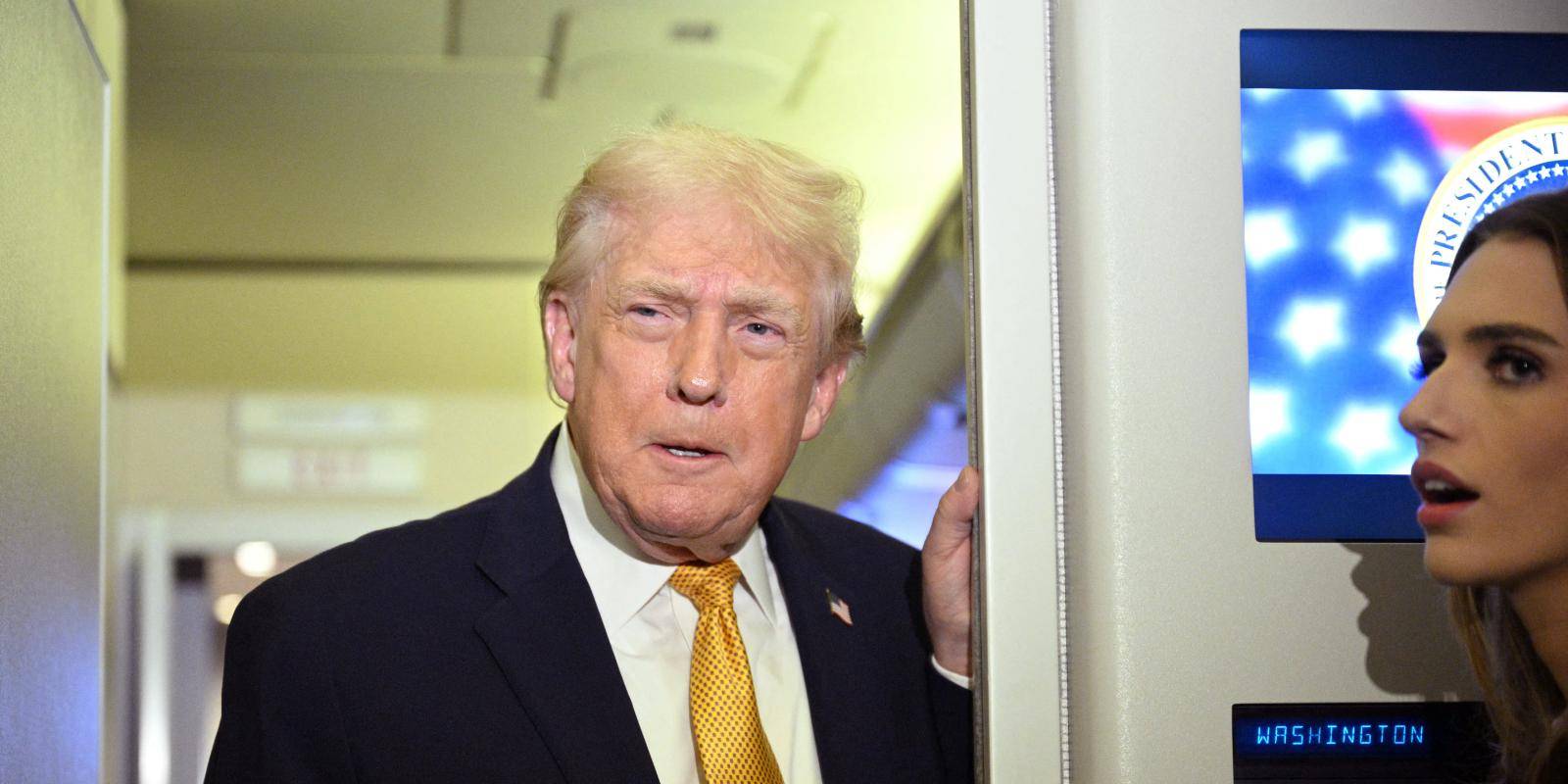
Image — US President Donald Trump speaks with reporters aboard Air Force One on his way back to Washington, DC, on 4 January 2026. Photo by Jim WATSON / AFP via Getty Images.

As US President Donald Trump enters the second year of his second term, polls suggest his domestic popularity is in decline. Various surveys of US public opinion have found that the public disapproves of his handling of key domestic challenges and some of his flagship policies lack support.  

The extraordinary operation to seize Venezuelan President Nicolas Maduro and his wife on 3 January is likely to dominate short-term reactions to Trump’s presidency at the beginning of the new year. But it is too early to say how it will affect his popularity in the long run. 

Trump had positioned himself as an anti-war ‘president of peace’, and December polling before the operation indicated most Americans opposed US military action in Venezuela. However, some previous US presidents, such as George W Bush, enjoyed significant short-term boosts from foreign military interventions. 

The long-term impact may depend on how things play out in Venezuela. Initial signs are that the Venezuela operation is unlikely to undo the firm partisan split in how Trump’s presidency is received. It is also unlikely to affect a fundamental decline in support among independent voters, whose main concern remains the US economy.

Declining popularity

Since convincingly winning the 2024 presidential election with 49.8 per cent of the popular vote and a majority of the Electoral College, Trump’s popularity has steadily declined. By Inauguration Day on 20 January 2025, his approval had slipped to 47 per cent. By the most recent Gallup poll in December, it stood at 36 per cent.  

Trump had a similar approval rating (37 per cent) almost a year into his first term, which was the lowest of any post-war president at that point. Among the presidents to serve two terms since World War II, only Richard Nixon had a lower approval (29 per cent) at the end of his fifth year in office. Trump claimed in a Truth Social post on 31 December that the polls are ‘rigged’ and his ‘real’ approval rating is 64 per cent, without providing any evidence.

Approval ratings give a rough measure of a president’s popularity that can be driven by many disparate judgements. 

For many people, the numbers reflect the deeply partisan nature of American politics today. In January, 91 per cent of Republicans approved of the way Trump was handling his job as president, but only 6 per cent of Democrats agreed – an 85-percentage point partisan divide. By the end of the year, that split stood at 86 points. But, significantly for Trump’s overall approval, his backing by self-identified independents (more than a third of the electorate) fell 21 percentage points over the course of the year.

Economy, trade, immigration

Alongside the decline in general approval ratings, polls about individual policies suggest the public is increasingly critical of Trump’s handling of both their priorities and his signature initiatives. 

The economy is consistently the highest priority for a majority of Americans. In an end-of-year address, Trump sought to blame his predecessor, President Joe Biden, for high inflation and low wages. He said that ‘inflation has stopped, wages are up, prices are down’ and argued that the US is now ‘poised for an economic boom the likes of which the world has never seen.’ 

But in December 2025, NPR polling found that about half the American public thought the US was in a recession (in fact, the US economy grew by 4.3 per cent in Q3). A similar share of those surveyed by YouGov in the same month thought that the economy was getting worse. A Harris poll conducted for the Guardian found that 45 per cent of Americans said their financial security was getting worse.

Another December poll found that just 31 per cent approved of Trump’s handling of the economy – his second term low – with prices being the public’s top economic concern. And a Fox News survey in November found that about twice as many voters said Trump, rather than Biden, was more responsible for the current economic conditions. 
Flourish chart

Article second half

Trump’s economic vision has rested in part on his tariff policy, which has been seen to alienate trading partners, unsettle markets and drive up prices at home. Most American citizens do not cite tariffs specifically as a high priority concern. But six-in-ten respondents surveyed by Fox News disapproved of the president’s imposition of tariffs, with other polls showing that most Americans think tariffs hurt the individual, their family and the country. 

On immigration, a signature Trump issue since his first election campaign in 2016, six-in-ten adults surveyed now disapprove of his approach, which has led to mass roundups and deportations of allegedly undocumented immigrants. 

Foreign policy

Foreign policy issues have rarely been a high priority concern for most Americans. But when asked, roughly six-in-ten adults disapprove of Trump’s handling of relations with other countries. And they are evenly divided on whether they think Trump is keeping his ‘America First’ foreign policy campaign promise: Republicans overwhelmingly say yes, Democrats largely disagree. 

US policy in Latin America is currently in the spotlight, following the 3 January military operation in Venezuela and the renewed focus on the western hemisphere in the recent national security strategy. How Americans will respond to the Trump administration’s action in Venezuela may depend on how things play out over time. 

An initial YouGov survey immediately after the raid found Americans deeply divided, with 36 per cent supportive of the US using military force to overthrow Maduro and bring him to trial, while 39 per cent were opposed. Sentiment was highly partisan and will likely remain so: 66 per cent of Republicans supported the action, compared to 14 per cent of Democrats. 

Before the operation, a December Reuters/Ipsos poll found that about half opposed the deadly US strikes on boats suspected of carrying illegal drugs in the waters off Venezuela if they lacked court approval. However, yet again, such sentiment divided along party lines: 67 per cent of Republicans approved of the boat strikes, compared with only 9 per cent of Democrats. 

Elsewhere, a recent Quinnipiac University Poll found that a majority of registered voters disapprove of the President’s handling of the Russia-Ukraine war. Again, this judgement is deeply partisan; 74 per cent of Republicans approve of Trump’s approach while 92 per cent of Democrats disapprove. Notably, roughly half of the voters surveyed believe Trump has favored Russia too much; only 3 per cent say he has been too supportive of Ukraine. 

Such findings come at a time when a majority of Americans want to maintain or increase US military aid to Ukraine despite Trump ‘pausing and reviewing’ this financial assistance in March.

Regarding the Middle East, almost half the respondents surveyed by Ipsos in October said they did not approve of Trump’s handling of ‘the situation with Israel and Gaza.’ However, 46 per cent said they approved, which is the president’s highest rating on a foreign policy issue. 

Polls have notably limited their questions about China to Trump’s handling of economic relations. In the summer of 2025, only roughly four-in-ten Americans supported increasing tariffs on imports from China, a Trump initiative. But two-thirds backed his effort to prohibit US companies from selling high-tech products to China. The president has subsequently partially moved away from both of these signature policies – announcing a trade deal with China and allowing the export of some advanced chips – while building relations with Chinese President Xi Jinping. 

Waning support

Public opinion is a fickle instrument with which to gauge both politics and policy. At best it is a snapshot that can change overnight. It measures emotion. Members of the public may not know the exact inflation rate or be able to find Ukraine on a map. But they have feelings about prices when they go to the grocery store or whether they want the US to be involved in yet another war. And they largely vote based on those emotions.

For now, all signs are that President Trump’s support is waning. 

Donald Trump still has three years left as president. But his Democratic party rivals and his fellow Republican politicians, especially those facing voters in the mid-term elections in November 2026, are closely watching the president’s standing with the American public. 

His future ability to effectively govern, including the pursuit of his foreign policy, will in part depend on his standing with the American public. The president says the economy will improve in 2026. If it does, public satisfaction with his stewardship of the country is likely to improve. 

Other issues could also help improve his public standing – for example, Trump could portray a ceasefire in Ukraine as him ending another war. But they could also complicate it: if the situation in Venezuela escalates or the US takes further military action, it could prove divisive at home. 

For now, all signs are that President Trump’s support is waning. Time will tell if that remains the case.