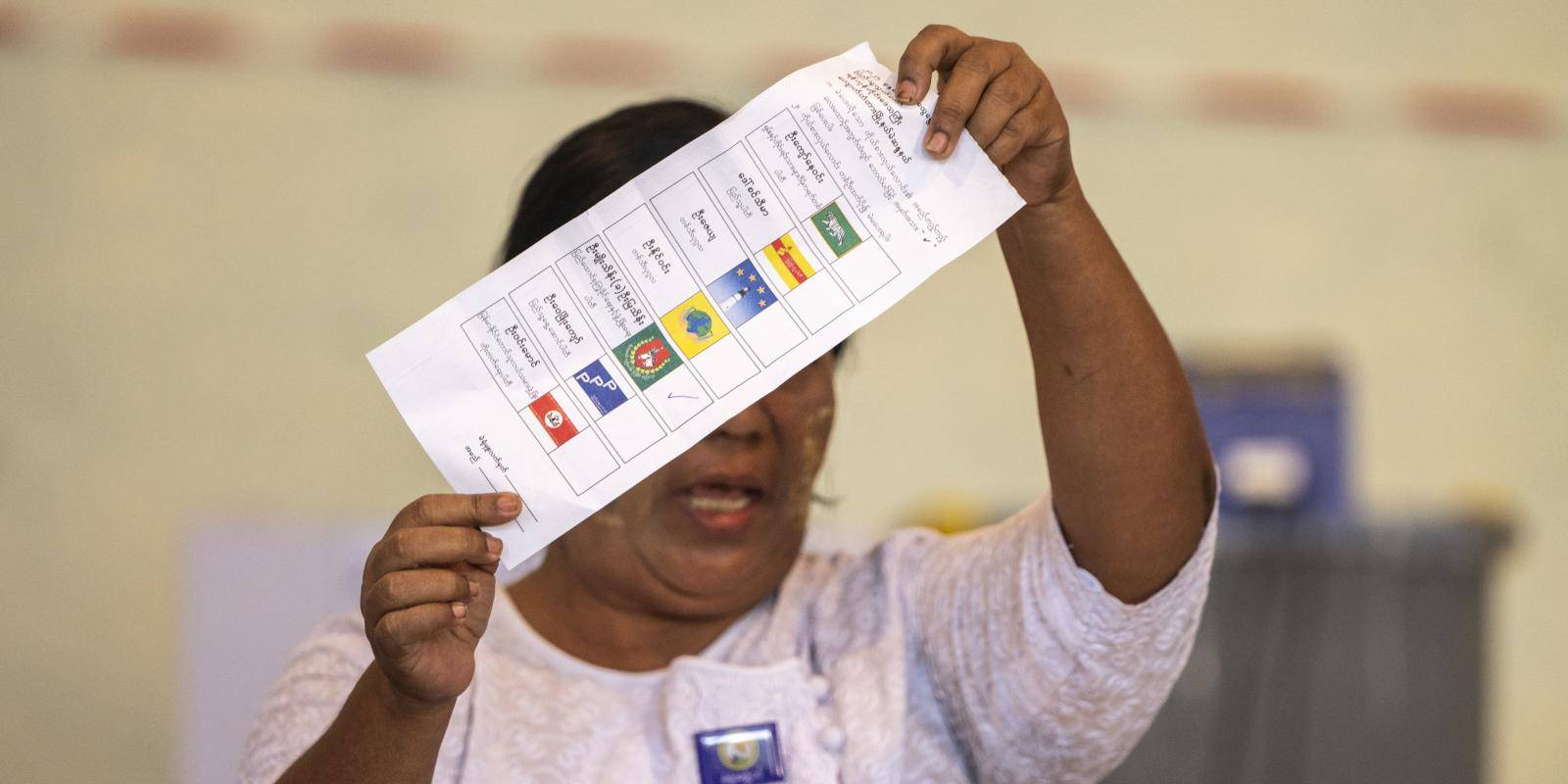

Five years after its military coup, Myanmar has a nominally civilian government. But the outcome of the general elections held on 25 January was never in doubt. Opposition parties were banned, voting did not take place in areas of the country affected by the ongoing civil war and there were widespread reports of coerced voting. As a result, we can be sure the military’s chosen front organization, the Union Solidarity and Development Party, won a landslide victory.
The UN Special Rapporteur on human rights in Myanmar, Tom Andrews, has called on the international community to ’unequivocally reject’ the outcome. But is that the best way forward? Or is now the time to reassess relations with the military (‘Tatmadaw’ in Burmese)?
The situation in Myanmar is dire. The civil war that erupted after the February 2021 military coup is in a stalemate. Ethnic armed organizations and anti-regime militias control around 38 per cent of the country but are unable to capture the lowlands, the heartland of the military. The Tatmadaw, backed by Russian advisers, continues to launch deadly strikes into areas it does not control. Evidence indicates that the anti-regime forces are in retreat. In 2025, the Tatmadaw retook 26 of the bases and camps it had previously lost to the rebels and the number of armed clashes has fallen since its mid-2023 peak.
As a result of the conflict, Myanmar’s economy has collapsed, state control is disintegrating, and organized crime groups are exploiting the chaos. But despite the situation on the ground, there is little to no external pressure to end the conflict. None of Myanmar’s neighbours – China, India, Bangladesh, Laos or Thailand – want to see the military overthrown. All seem sanguine about the dangers emanating from the conflict, including irregular migration, illegal drug production, border insecurity and economic stagnation.
In October 2023, China supported a temporary alliance of ethnic organizations to destroy some Myanmar-based scam centres that had defrauded huge numbers of Chinese citizens. Once the operation was complete, however, it returned to favouring the status quo. And while the Association of Southeast Asian Nations (ASEAN) agreed a ‘five-point consensus’ on the crisis in 2021, this has not prevented some of its 11 member states from operating rival policies towards Myanmar.
Although many countries outside the region have condemned the coup, the Tatmadaw’s violence and the fraudulent elections, there is no sign of any of them taking serious action to improve the situation. The immediate question facing the wider world is how to respond to the results of an election that was clearly neither free nor fair. Virtue signalling displeasure is easy – but it is not going to improve lives. Given that the Tatmadaw-backed government enjoys the tacit support of its neighbours and continues to receive military backing from Russia, we can be reasonably confident that it is not about to collapse. The question is whether or not to engage it.
We have been here before. This moment in Myanmar has parallels with the situation in 2008. The military leadership is seeking a fresh start and looking for international acceptance. Back then, the Tatmadaw introduced a new constitution, a major step in the process of undoing the previous military coup, in 1962. This constitution remains in force but is deeply flawed: it reserves a quarter of the seats in parliament for the military, for example. However, it does offer a roadmap towards peace, stability and even something approaching democracy.
In 2026, outside powers have three options. One: they can tolerate the status quo with all its spiralling problems. Two: they can intervene to try to overthrow the military regime. Three: they can deal with the military regime in the hope of improving the situation for the people of Myanmar.
There is little likelihood of regional support for option two, which leaves a choice between tolerating the status quo and engagement.
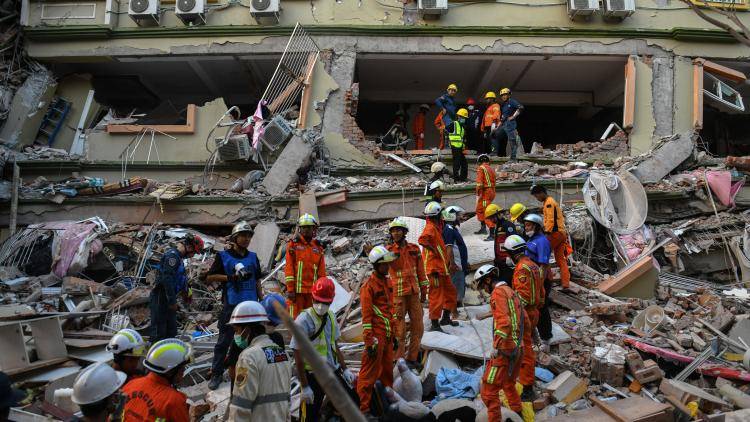
The worst outcome would be a form of engagement that delivered international acceptance of continuing violence. Engagement must come with principles. Here, the ASEAN five-point consensus could be an important lever. It calls for an immediate cessation of violence; constructive dialogue among all parties concerned; an ASEAN special envoy to facilitate mediation of the dialogue; humanitarian assistance; and for the special envoy to visit Myanmar to meet all parties concerned.
It is hard to exaggerate the nationalist mindset of the Tatmadaw, characterized by paranoid fear of outside powers and ethnic separatism. The military would most probably use any ceasefire period to rebuild its forces with the ambition of eventually capturing areas currently controlled by ethnic armed groups and rebel militias. How can such an agenda be constrained?
The military wrote its long-term objectives into Article 6 of the 2008 constitution. They include ‘non-disintegration of the union’ – a nationalist demand to preserve the borders of the country – but also the ‘flourishing of a genuine, disciplined multi-party democratic system’ and ‘enhancing the eternal principles of justice, liberty and equality in the union’.