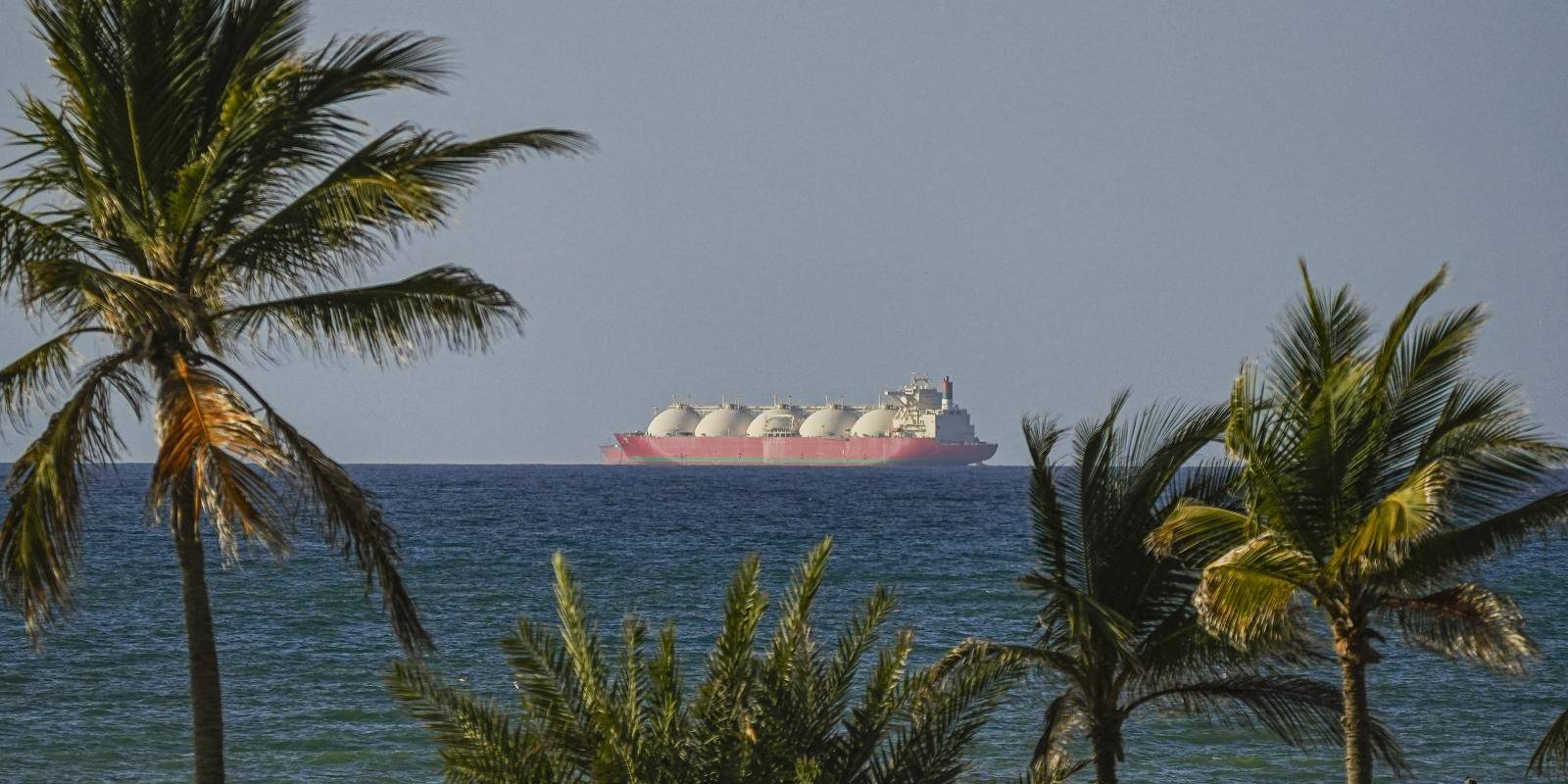

On Sunday, President Donald Trump announced a blockade against shipping ‘trying to enter, or leave, the Strait of Hormuz.’
This move seems to aim at punishing Iran for having failed to agree to what Vice President JD Vance termed the ‘final and best offer’ for a peace settlement that he put forward during talks in Islamabad.
The temporary ceasefire proposed by Pakistan had provided for the lifting of Iranian restrictions on maritime movements through the Strait ‘as a goodwill gesture’.
This has not occurred, amid dispute about the application of the cease fire to Israel and its war in Lebanon.
Act of war
A blockade is an act of war. Its imposition compounds the fact that the US and Israel have launched an unlawful war against Iran. It also threatens the already fragile truce.
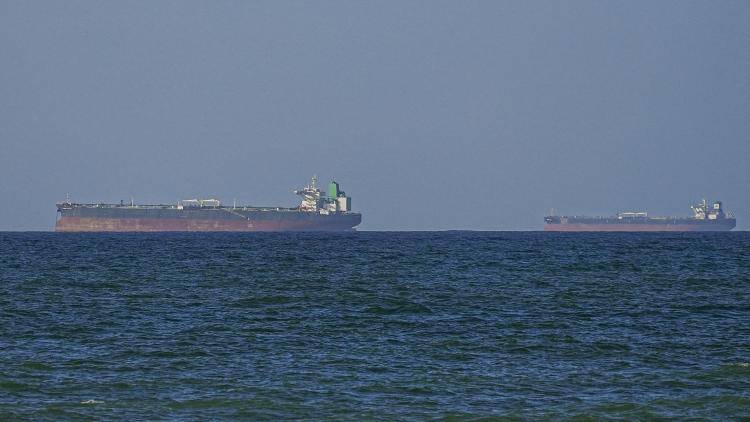
Moreover, President Trump’s initial announcement seemed to suggest that it would cover all shipping through the Strait.
This would have made the Gulf states, and those depending on their oil and gas, its principal victims, rather than Iran.
US Central Command has now clarified that it will ‘not impede freedom of navigation of vessels transiting the Strait of Hormuz to and from non-Iranian ports.’
This clarifies that a traditional blockade is intended, trying to strangulate only the economy of the opponent and forcing a surrender, rather than stopping all traffic through the Strait altogether, which would clearly be unlawful.
President Trump’s initial announcement was also directed against the new Iranian practice to sell passage through the strait for a fee of up to $2 million. ‘No one who pays an illegal toll will have safe passage on the high seas,’ he added.
This would expose third-party tankers to arrest and seizure by US forces beyond the Strait.
But would the US really capture an Indian or Chinese super-tanker if they had paid the Iranian toll, or entered its ports or coastal areas? This would be a very significant escalation of the conflict, and Washington may well hesitate in making good its threat.
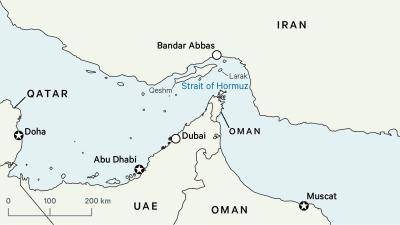
Made with Natural Earth data.
The right of passage through the Strait
Freedom of passage through the Strait of Hormuz is a key issue for all maritime nations. The Strait controls shipping in the order of around 100-140 major vessels passing before the war per day.
When the 1982 United Nations Convention on the Law of the Sea (UNCLOS) was negotiated, a critical deal was struck reflecting this fact.
The convention accepted that coastal states can lawfully extend their territorial sea from the previously accepted limit of three nautical miles (nm) to 12 nm. This placed some 138 additional straits that are less than 24 nm wide under the jurisdiction of one or more coastal states.
The Strait of Hormuz, with a width of 21 nm at its narrowest point, is covered by the territorial seas of Iran and Oman respectively.
In exchange, the coastal states had to accept that a special legal regime would apply to straits used for international navigation. While the coastal states enjoy sovereignty over their territorial seas in most aspects, an original limitation to that sovereignty applies – they must accept an enhanced right of ‘transit passage’ for shipping of all nations.
This right goes further than the traditional right of ‘innocent passage’ granted to shipping through the territorial sea of any state. Innocent passage allows for some interference with passing shipping in accordance with local law, for instance for the protection of the marine environment or regulation of fisheries.
Crucially, the coastal state may suspend the right of passage if it judges that demands of its national security so require.
In contrast, given the lack of other viable routes, transit passage guarantees un-suspendable passage to all ships that may not be ‘impeded’ in any way by the coastal state. That right applies in peace and war, although with some necessary qualifications where the direct participants in an armed conflict are concerned.
The positions of the parties
Neither the US nor Iran is a party to UNCLOS. The US correctly argues that transit passage has become accepted as a firm right of all states in international custom, also binding on non-parties. Iran asserts that it need only grant the more limited, traditional, right of innocent passage, which can be suspended. It also claims that foreign warships must coordinate access with its authorities.
Oman has ratified UNCLOS, but has added statements affirming its ‘full sovereignty over its territorial sea’, and seeks to reserve its right to require prior permission for passage of warships.
However, UNCLOS rules out reservations of this kind. The US Navy has conducted a ‘freedom of navigation programme’ since 1979, enforcing the right of unimpeded passage.
This has regularly included unannounced passage of warships through the Strait of Hormuz.
During the present truce Washington claims to have sent two guided missile destroyers through the Strait, to emphasize this point and to prepare for an operation to clear the strait of mines.
Overall, the bargain of allowing all coastal states to extend their territorial seas was conditioned on universal acceptance of the regime of transit passage. Moreover, even if there could be doubt in relation to the passage of warships, which is not really the case, this would not affect the traffic of oil and gas tankers at issue in this instance.
Impact of the armed conflict
Kazem Gharibabadi, the Iranian Deputy Foreign Minister for Legal and International Affairs, claimed earlier in the conflict that ‘we are now in a state of war, and wartime conditions cannot be governed by peacetime rules.’
The US-Israeli attack on Iran clearly brought an international armed conflict into being. This turns the Strait of Hormuz into a ‘belligerent strait.’
While the conflict lasts, Iran would be entitled to attack US or Israeli warships under the law of maritime warfare. This might include convoys of merchant ships conducted by US warships.
Direct attacks on merchant vessels of the two belligerents and on neutrals are, however, prohibited. US and Israeli-flag merchant vessels cannot simply be sunk, although Iran could seize them, along with neutral shipping carrying contraband.
Iran initially effectively blocked passage through the Strait for all maritime commerce altogether. However, this action was clearly and unambiguously rejected by the UN Security Council (UNSC) as a ‘serious threat to international peace and security.’
At a meeting of the Council of the International Maritime Organization (IMO) in London, Iran later claimed to have adopted only ‘necessary and proportionate measures to prevent aggressors and their supporters from exploiting the Strait of Hormuz to advance hostile operations against Iran.’