

The fragile ceasefire between Iran and the United States, in place for two months, has been punctuated by several episodes of violence. That includes the latest exchange of strikes following the shooting down of a US helicopter, and President Donald Trump’s threats on 11 June to seize Iran’s Kharg Island. However, both Washington and Tehran have generally expressed a reluctance to return to open warfare. And according to media reports the US has signaled to Iran, through Qatar, that recent attacks were not meant as a resumption of all-out war.
At the same time, negotiations to prolong the ceasefire and reopen the Strait of Hormuz have failed to make progress. A deal on the Strait will eventually emerge, but whatever the details, dynamics in the Persian Gulf have changed – and will not return to the pre-28 February 2026 status quo.
A new deterrence strategy
Since the ceasefire in early April, Iran and the US have floated in a volatile state of no war and no peace. The two sides are far from reaching an agreement that would set bilateral relations on a more stable and predictable footing, let alone resolve the deep divergences that have divided them for 47 years. Each perceives that it has the upper hand, and expects the other to make compromises. In this fragile context, limited escalations are virtually guaranteed to happen again. But the events of early June reinforce the view that Iran and the US will continue to try to avoid uncontrolled escalation.
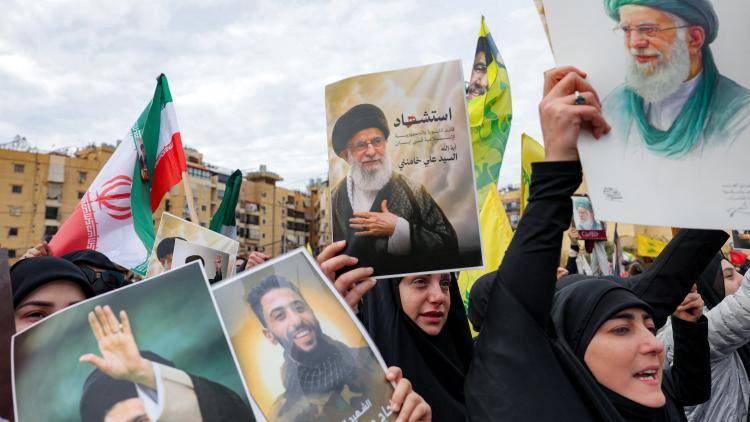
However the war ends, a new equilibrium is steadily emerging in the Persian Gulf based on an equation that features both new and pre-existing but modified variables.
First, the Axis of Resistance – the network of non-state armed groups supported by Iran – has failed. Israel has not been able, as much as it has tried since October 2023, to decisively defeat Hamas and Hezbollah. But the two Iran-backed groups have undoubtedly been weakened. More importantly, they could not deliver what was one of the original rationales behind Iran’s support for the Axis: deterrence.
When Tehran developed its forward defence strategy, one of its goals was to signal to the US and Israel that an attack on Iran would be met with a costly retaliation from Axis members. In this sense, the Axis did not fulfil its mandate: the threat of reprisals failed to deter multiple American and Israeli attacks on the Iranian homeland.
As a result, Iran’s focus is shifting to the Gulf. Analysts, in and out of government, have long known that in the event of a war that threatened its survival, the Islamic Republic would likely try to close the Strait of Hormuz. Countless wargames and simulations demonstrated exactly that. What was known in theory has now been demonstrated in practice, and there will be no turning back.
This profoundly and sustainably transforms the geopolitics of the Gulf region. There is little doubt that the Strait of Hormuz will eventually re-open to maritime traffic. It will probably not be a sudden re-opening. Instead, it will be gradual, for both security reasons and because it will take time for supply chains to re-organize themselves.
But the Islamic Republic will not forget the tremendous leverage it gained by closing it. Neither will it agree to permanently forego the option of resorting to this tactic again. Rather, it will integrate it into its strategy. And it will not hesitate to consider closing the Strait again if it perceives it to be necessary. The war, in other words, has broken a psychological barrier that will not be rebuilt.
Iran will, as such, restock and reconstitute its damaged military infrastructure with Hormuz in mind. Rebuilding its missile and drone production facilities, heavily damaged by American and Israeli strikes, will be its top priority, as will be the consolidation and diversification of its global supply networks.
This will take precedence, for example, over rebuilding its shattered nuclear infrastructure and conventional navy. This will ensure that the threat of the closure of the Strait remains a black cloud permanently hanging over maritime shipping in the Gulf and, therefore, the global economy.
The Houthis
The fear of that scenario will be compounded by the possibility that the Houthis, the group that controls the northwestern quadrant of Yemen, could join the fray and close the Bab al-Mandab at the southern tip of the Red Sea – another crucial maritime chokepoint. This week, the Houthis explicitly threatened to close the route to Israeli shipping.
The Houthis are not Iranian puppets and do not merely execute orders from Tehran. That said, they caused severe disruption to Red Sea shipping throughout 2023-25, motivated, they said, by solidarity with Palestinians. In a hypothetical future conflict in which the Islamic Republic is seriously threatened, it is conceivable that they would renew their attacks. In combination with the closure of the Strait of Hormuz, the impact on the global economy would be significant.
The other feature of the new equilibrium is the threat of Iranian attacks on the Gulf Arab states. As with Hormuz, analysts have long understood that if pushed into a corner, the Islamic Republic would likely target the six petro-monarchies that form the Gulf Cooperation Council (GCC): Bahrain, Kuwait, Oman, Qatar, Saudi Arabia, and the United Arab Emirates.
And, as in the case of Hormuz, the war has created a precedent that provides Iran with important leverage moving forward. For GCC states, whose brand is partly premised on their reputation as havens of stability, this is another permanent threat that will further damage their security and prosperity.