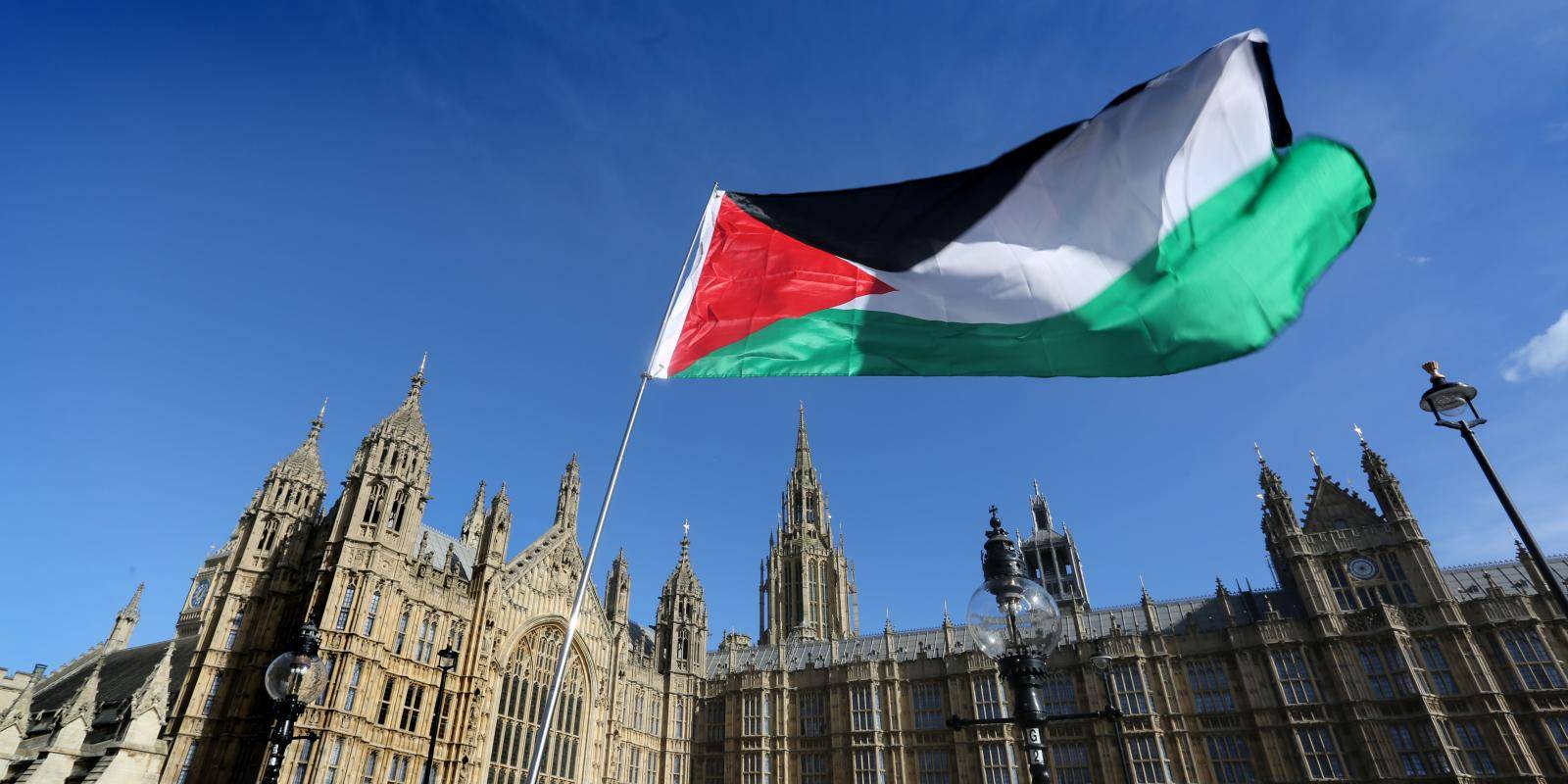
More than a year after the UK formally recognized Palestinian statehood, realizing a viable and sovereign Palestinian state on the ground has never seemed further off, with rapid Israeli settlement expansion in the West Bank – illegal under international law; a stalled ceasefire and Israeli military entrenchment in Gaza; and little appetite for a two-state solution across the political spectrum in Israel.
The UK respects and upholds the principle that every country has the right to defend itself, as emphasized after the horrific Hamas attacks on Israel of 7 October 2023. But Israel’s devastating retaliatory war on Gaza has far exceeded the justification of self-defence. Moreover, Israeli takeover of Palestinian land is undermining the possibility – and the goal of decades of international effort – of a sovereign state for Palestinians.
In the West Bank, Israeli confiscation of Palestinian land has accelerated, with over 100 new settlements approved by the current Israeli government over the past four years – including 34 in 2026 alone. This includes advancing plans for the highly controversial E1 settlement in a geographically strategic corridor between East Jerusalem, Ramallah and Bethlehem. The development of E1 would create a swathe of Israeli control eastwards from Jerusalem to the existing settlement of Ma’ale Adumim, effectively dividing the West Bank in two.
At the same time, more than 250 additional Israeli outposts have been established in the past three years throughout the West Bank, including in Areas A and B – i.e. areas of the West Bank under full or partial control of the Palestinian Authority (PA), including the main Palestinian population centres. Most such outposts, while not initially authorized by the Israeli government, are allowed to remain – often with the direct support of the latter. The proliferation of outposts has contributed to a sharp rise in settler attacks on Palestinians. Over 1,600 incidents have been recorded so far in 2026, resulting in casualties or damage in 275 communities and pushing Palestinians into increasingly isolated enclaves.
In Gaza, Israel maintains full control of over 60 per cent of the territory, and US president Donald Trump’s 20-point peace plan, endorsed by UN Security Council Resolution 2803, has been stalled for months. At least 1,300 Gazans have been killed by Israeli military action since the ceasefire entered effect in October 2025, and over 90 per cent of the population remains displaced in dire conditions. While humanitarian aid into Gaza has increased in the past year, the inflow remains below the levels needed to meet basic needs: over 1.4 million people lack reliable access to sufficient safe and nutritious food; access to clean water is limited; and health services remain severely strained by a shortage of fuel, oil, generators and medical supplies.
Hamas, meanwhile, remains the de facto authority in the parts of Gaza beyond the ‘Yellow Line’ of Israel’s control. The transitional National Committee for the Administration of Gaza (NCAG) – the Palestinian technocratic committee established by Trump’s Board of Peace – has yet to enter the territory, instead operating from Cairo, and Israeli prime minister Benjamin Netanyahu has rejected any meaningful involvement of the PA in Gaza.
Most crucially, Israel has indicated no plan to withdraw from Gaza. In August 2026, Hamas agreed to a 15-point plan, drafted by the Board of Peace, whereby it would decommission arms in sequence with a phased Israeli withdrawal. There were ambiguities in the plan, including whether it included all weapons or just heavy arms, and there was deep scepticism in Israel – and in some neighbouring countries – as to Hamas’s real commitment to this undertaking. Netanyahu rejected the plan outright, stating that withdrawal would only happen after Hamas’s complete disarmament – a process that could take years. Israel’s scepticism regarding Hamas’s intention to disarm is warranted, and Netanyahu’s rejection of any reciprocal process could be viewed as a stalling tactic until after the Knesset elections due on 27 October. But ongoing Israeli fortification of the Yellow Line, including the construction of more than a dozen military outposts, suggests that any timeline for withdrawal may be postponed indefinitely.
While the situations in the West Bank and Gaza differ greatly, Israeli policy in both territories is undermining the fundamental basis of a viable Palestinian state – and the outcome of Israel’s upcoming elections is unlikely to change that. A change of leadership could bring some essential policy shifts, such as more active steps to rein in settler violence. But most parties will continue to support the broader settlement project in the West Bank, and a new governing coalition would be hard pressed to make any major concessions in Gaza.
Netanyahu’s chief rival, the Yashar party’s Gadi Eisenkot, has rejected any discussion of Palestinian statehood. Of the other opposition leaders, only The Democrats’ Yair Golan has voiced support for a future two-state solution in his campaign. The reluctance of most parties to consider the option reflects declining support for a two-state model among the Israeli public since 7 October 2023, with recent polling showing that only 16 per cent of Jewish Israelis believe coexistence with a Palestinian state is possible. Such strength of opinion suggests that elections alone will not change Israeli policy regarding Palestinian statehood. External incentives and pressure will be needed, no matter who leads the next government.