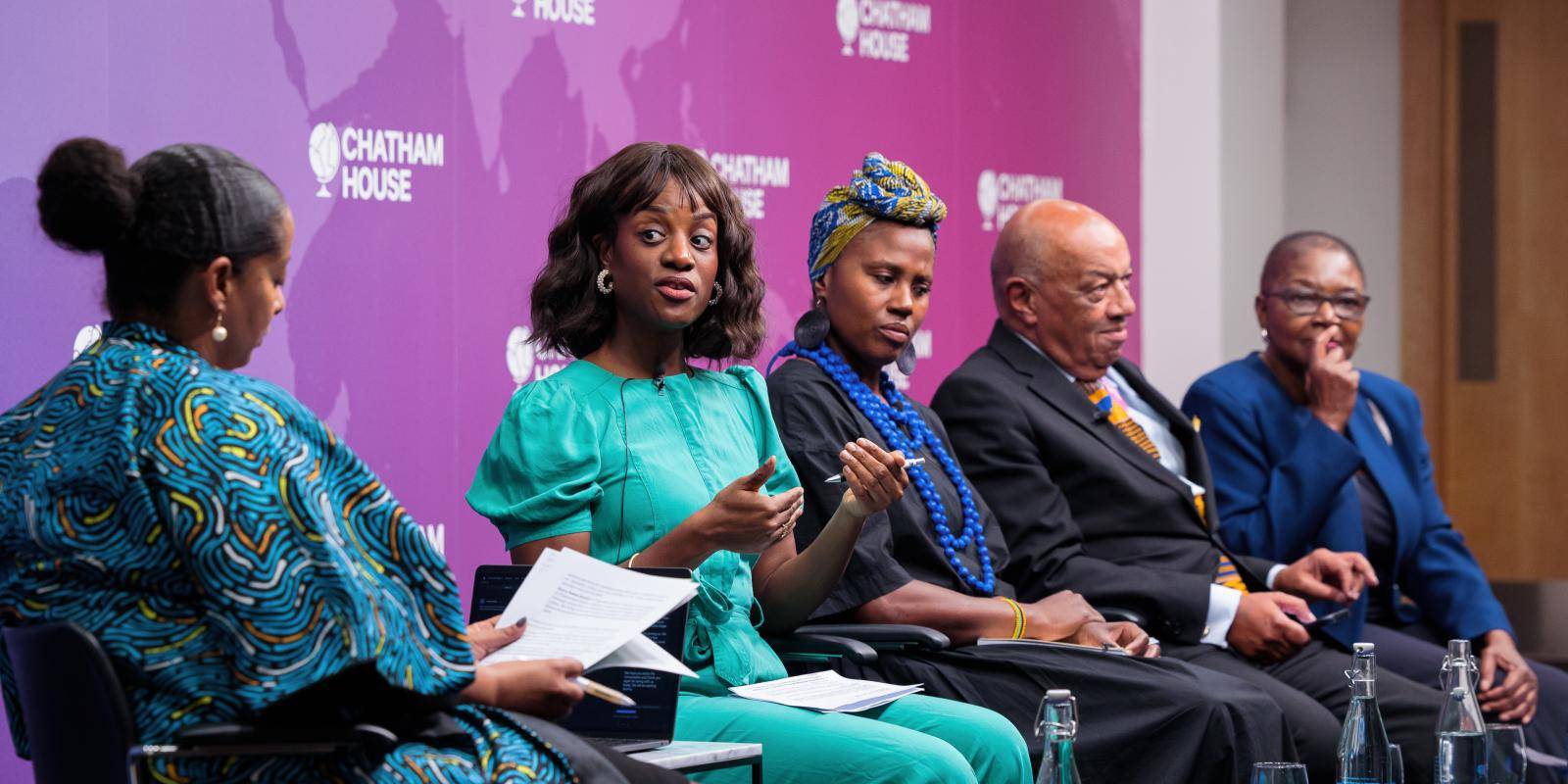

On 15 October 2026, a panel discussion spotlighted a landmark UN resolution recognizing the transatlantic slave trade as the ‘gravest crime against humanity’ and how this has reset the terms of the global reparations debate.
Chaired by Tighisti Amare (Director, Africa Programme), the panel brought together The Rt Hon. Baroness Valerie Amos, Ebony Riddell Bamber, The Rt Hon. Lord Paul Boateng and Shodona Kettle. They examined where reparatory justice frameworks can move from acknowledgement to policy, and where the limits of political will and international consensus lie.
The panel was followed by a drinks reception to launch ‘Everyday Legacies’, a special Black History Month exhibition at Chatham House. The exhibition was curated by Joseph Osayande and Lisa Musumba, representing Chatham House’s EDI Working Group, and the Royal College of Art Association of Black Students, Alumni & Friends (RCA BLK).
The exhibition explored the creativity, influence and collective strength of Black British and Afro-diasporic communities that have shaped Britain’s social, cultural and political fabric, while recognizing their continuing role in shaping its future. Expressed through a wide range of mediums, the pieces worked in conversation with each other, reflecting the use of Black bodies and minds as sources and tools for expression, conflict and pride.
Artists exhibited included Crystal Acqua, Raneece Buddan, Daniela Commey, Michael Dairo, Natasha Fontenelle, Melanie Issaka, Sechele Mtitimila, Natasha Muluswela, Puretee Philip, Sani Sani and Sabina Silver.
Emily Moore, Co-founder and Chair of RCA BLK, said:
‘Partnering with Chatham House for Black History Month provides a vital platform to celebrate the rich, multifaceted creativity of practitioners within the RCA BLK community. Creative practice is a powerful catalyst for storytelling and reflection, and this milestone exhibition highlights how our students and alumni bridge deep cultural heritage with ground-breaking innovation. By showcasing these nuanced narratives and visionary perspectives, we celebrate not only our shared histories and vibrant expressions, but the extraordinary artistic talent shaping contemporary culture today.’
Joseph Osayande, Deputy Head of Individual Membership at Chatham House and Chair of the EDI Working Group, said:
‘It was a pleasure to create this exhibition alongside RCA BLK. The exhibition spoke to the powerful and nuanced experienced of the Afro-Caribbean community in Britain, and translated through art. It marks the sixth exhibition we have done at Chatham House for Black History Month – an important milestone.’
Lisa Musumba, Outreach and Communications Officer of the Chatham House Africa Programme and Race and Ethnicity Co-Chair of the EDI Working Group, said:
‘This Black History Month at Chatham House has been one to remember. It has been wonderful to see such diverse audiences engage with our panel discussion, art exhibition and Independent Thinking podcast episode – each of which has deepened our celebration of the power and influence of global Black communities.’
Chatham House’s Equality, Diversity and Inclusion (EDI) Working Group coordinates, consults on and supports the delivery of EDI-related events and activities across the institute. If you are interested in getting involved, please contact us.