|
|
|
|
|---|
|
Denmark
|
1.6 GW
|
Operational
|
|
Finland
|
100 MW
|
Operational
|
|
Netherlands – NorNed
|
700 MW 450 kv HVDC
|
Operational
|
|
Russia
|
100 MW
|
Operational
|
|
Sweden
|
0.6 GW
|
Operational
|
|
Sweden
|
0.7 GW
|
Operational
|
|
Sweden
|
0.25 GW
|
Operational
|
|
Sweden
|
2.15 GW
|
Operational
|
|
Germany – Nordlink
|
1.4 GW 500 kv HVDC
|
Under construction (2020)
|
|
UK – NSN
|
1.4 GW 515 kv HVDC
|
Under construction (2021)
|
|
UK – NorthConnect
|
1.4 GW 500 kv
|
Pending licence
|
Source: Global Transmission Report (2019), ‘Data & Statistics’, https://www.globaltransmission.info/archive.php?id=1424 (accessed 30 Mar. 2020).
Note: HVDC = high voltage direct current.
Interconnection is just one mechanism for achieving grid flexibility. Other means are flexible demand, greater supply flexibility from conventional generators, and static and mobile storage (in EVs). Currently, grids are generally the most economic instrument to balance supply and demand, but significant changes are taking place with all of these new technologies and operational and control equipment. The relative economics of each will change over time. Most notable has been the fall in battery costs, both for mobile and stationary storage. BNEF have tracked the cost of lithium-ion battery packs and note that the costs have fallen from $1,160/kWh in 2010 to $373/kWh in 2015 and then to $176/kWh in 2018. The uncertainty over technology costs and potentially political and policy uncertainties, such as Brexit, may delay the deployment of large infrastructure projects, such as the construction of interconnectors.
There is an increasing reliance on and an anticipated role for smaller and decentralized energy sources, particularly solar PV. These trends may appear contradictory. While there is likely to be a rise in prosumers (consumers who generate their own electricity and exchange it on the grid), many urban areas will be unsuitable for sufficiently large-scale generation and so heavy industry in these regions will require significant high-voltage transmission systems. Large-scale, particularly offshore, renewables that are capitalizing on falling technology costs will also rely on long-distance and high-voltage transmission grids. It is likely that the renewable-dominated power sector will be both decentralized and well-interconnected and therefore investment in the distribution system is as important as investment in the transmission system – if not more so.
Increasing power demand
While the EU and Norway have targets for improving energy efficiency, the decarbonization of the energy sector is likely to lead to the gradual electrification of transport and, more slowly, of heat and/or the increased use of hydrogen. This will have multiple impacts on the existing power sector, including changing demand, consumption patterns and centres of demand.
Electricity accounts for 19 per cent of total final energy consumption globally, while in the OECD and Europe, it is slightly higher at 21.4 per cent. However, meeting carbon reduction targets will lead to significant increases in electricity generation as well as an increased share of total energy consumption. According to the IEA, global consumption could rise from 23,000 TWh to between 34,000 TWh and 37,000 TWh, depending on the extent of energy efficiency, by 2040.
Global EV electricity demand could rise 200-fold by 2040, to more than 1,400 TWh. In the EU, under some scenarios cited in analysis funded by the European Commission, the number of EVs could rise from less than 1 million in 2018 to 35 million in 2030 and 190 million by 2050. This could lead to an additional power demand of 356 TWh – 34 per cent of final energy demand in passenger vehicles – and 10 per cent of total power demand by 2050. Norway has been at the forefront of EV deployment globally, with a share of 47 per cent of worldwide light vehicle sales in the first quarter of 2019, up 10 percentage points from 2018 – although for the first time, Germany has overtaken Norway in absolute sales numbers. Norway’s experience in encouraging sales of EVs and their grid integration, especially in areas of high deployment, offers important policy and regulatory experience for the EU and beyond.
The buildings sector accounts for around 32 per cent of global final energy consumption, using the equivalent of more than 35,000 TWh of electricity per annum. In Europe, 71 per cent of all energy is used for space heating of residential building stock alone. The decarbonization of the heating sector is likely to be driven by broad efficiency and supply options, some of which will be electrified, such as heat pumps. Other options are likely to see the greater use of renewable energy, including solar and biomass. Analysis for the European Commission suggests that electrical space heating in the residential sector could grow from around 5 per cent in 2015 to between 22 per cent and 44 per cent in 2050, depending on the deployment of different technologies.
Norway’s heavy industry in an energy transition
CCS and the prospects for fossil fuels in industry
Scenarios based on current policies tend to anticipate some demand growth for gas to 2030 followed by a slight decline to around today’s level by 2050. By contrast, 2°C pathways tend to show little demand growth to 2030 and a sharper reduction of around one-third of demand by 2050. The pathway taken will depend on how fast and how orderly the energy transition is, and the role of CCS and negative emissions technologies (NETs). CCS and NETs play a critical role in energy scenarios, often increasing the ‘available’ carbon budget by 50 per cent or more.
In a net-zero world, all gas supply would have to be decarbonized (by CCS) and/or replaced with biogas or green or blue hydrogen. The failure of CCS to materialize at the speed or scale anticipated would have severe implications for future gas demand, yet this risk is not typically made clear to decision-makers in government or business.
Despite considerable political support for CCS, the global roll-out has not occurred. In 2008, the G8 announced strong support for the launch of ‘20 large-scale CCS demonstration projects globally by 2010’ with the aim of beginning broad deployment of CCS by 2020. The EU in 2007 committed to having 12 ‘demonstration plants of sustainable fossil fuel technologies in commercial power generation’ operating by 2015, as part of plans to use CCS with new fossil-fuel power plants by 2020. To date, however, none of these plans have come to fruition.
Although further, and in some cases more ambitious, targets to reduce emissions have been introduced over the past decade, CCS is not widely seen as a viable solution. This is in part due to a lack of progress and the clear failure to meet agreed objectives, but also – at least in the electricity sector – because the economics of CCS become less attractive as the costs of alternatives fall.
The prospects for CCS appear to hinge, at least in the short term, upon industry rather than the power sector, and there is a view that it will be essential in hard-to-abate industrial sectors. CCS could have a role in those industrial processes that emit CO2 that are not related to energy use, such as in the production of clinker during cement fabrication. Norcem Brevik cement plant and Fortum waste management facility in Oslo are linked to the Northern Lights transport and storage-project, led by Equinor with key partners Shell, and Total; the national parliament is expected to make a decision on investment in CCS at Norcem, Fortum and Northern Lights in 2020/21. Its sponsors describe it as the world’s first full-scale cross-border CO2 storage project, using gases from industry and the subsequent ship transportation and sub-seabed storage. In 2020, the state-owned enterprise Gassnova, which manages a CCS project in Norway, will review progress made in the Northern Lights project and make its recommendations to the government, allowing for investment decisions by private partners and approval by the parliament. If approved, construction is scheduled to take three years, becoming operational in 2023/24.
Heavy industry, with its high energy costs, is susceptible to international competition on energy and carbon prices. As a result, there is an argument that unilateral action on heavy industry will only result in the offshoring of production, rather than a change in global production. To create a level playing field between producers on energy and carbon emissions, global production standards must be introduced and enforced, along with border carbon tax adjustments for the importation of products, or pricing carbon on a global basis. The European Green Deal communication states that the Commission will propose a ‘carbon border adjustment mechanism, for selected sectors, to reduce the risk of carbon leakage’.
However, even if CCS is developed at scale and the economics improve, unless carbon is adequately priced, CCS will always be more expensive than not capturing the carbon. Therefore, there is a growing realization that creating a use for the CO2 will significantly improve the economics of CCS. The trend now is therefore towards carbon capture, use and storage (CCUS). An increasing number of governments and industries are researching and developing CCUS programmes, which include using CO2 to create synthetic fuels; using micro-organisms, similarly to photosynthesis, to create ethanol; or incorporating the gas into concrete. Understanding the energy required, the economics and the environmental implications of these processes is often still in its infancy, and therefore extensive research and piloting will be required.
Given the market opportunities of CCS and CCUS, globally many countries and companies are engaging in their development, for example, such as the US and China. Public subsidies for industrial CCS are likely in the EU, with a focus on support for transporting carbon to enable industry clusters and entire carbon storage and use value-chains. In this context Norway is seen as potentially globally important, given its experiences in marine environments and piping as well as with heavy industry. Norway also has depleted offshore oilfields suitable for sequester. It has also put in place a relatively large industrial CCS project that captures carbon from the Oslo waste incinerator and a cement plant, then transports the CO2 and stores it deep under the Norwegian North Sea.
Evolving business models in heavy industry
Heavy industry has sought to be energy efficient, in order to be economically competitive. The threat of higher energy prices and the introduction of, or rise in, carbon prices have also accelerated action. However, the prospects of a net-zero economy will require more transformative action from industry and for changes in the way, and the extent to which, products are used. These changes include:
Energy production and consumption: Some heavy industries are seeking to ensure that the energy they use is renewable by becoming prosumers (producing and consuming their own power). Others are seeking to become more flexible in their operations in order to help maintain the supply-and-demand balance.
Shift to a circular economy: Many sectors are now looking to develop a more circular approach, whereby they consider not only the recycling and reuse of their products but their processes of production and service provision.
- The aluminium sector, which is extremely energy intensive, is continually developing new methods to improve efficiency of production while seeking to decrease the percentage of post-consumer waste. However, there are moves to create fully ‘closed-loop’ cycles. Similar considerations are also under way for the steel and plastics sectors, which will require clearer manufacturing and recycling standards.
- There are opportunities to apply circular solutions for various by-products of refinery processes, which are not being burned for energy generation. These solutions, for example, include lubricants, the use of improved bitumen for road construction, and recyclable packaging. Long-term solutions will need to be found to use oil as a resource without burning it and releasing CO2. The circular economy concept might be a useful approach to unlock material innovation. Other areas of interest include bio-derived chemicals and fuels, for example the recovery of used cooking oil to convert to aviation fuel.
Evolving geographical competition for heavy industry
As the price of renewable energy continues to fall, companies in heavy industry may look to shift their production base, which has traditionally been located near low-cost energy sources. Flexible production methods and the variability of solar and wind will become less significant as cheap capital, greater automation and variable power prices may lead to production being located where the power supply is cheapest. Alternatively, short-term storage costs may continue to fall or the cost of long-distance transmission decrease. Any of these scenarios casts doubt over the continued competitiveness of heavy industry and their power sources in northern Europe.
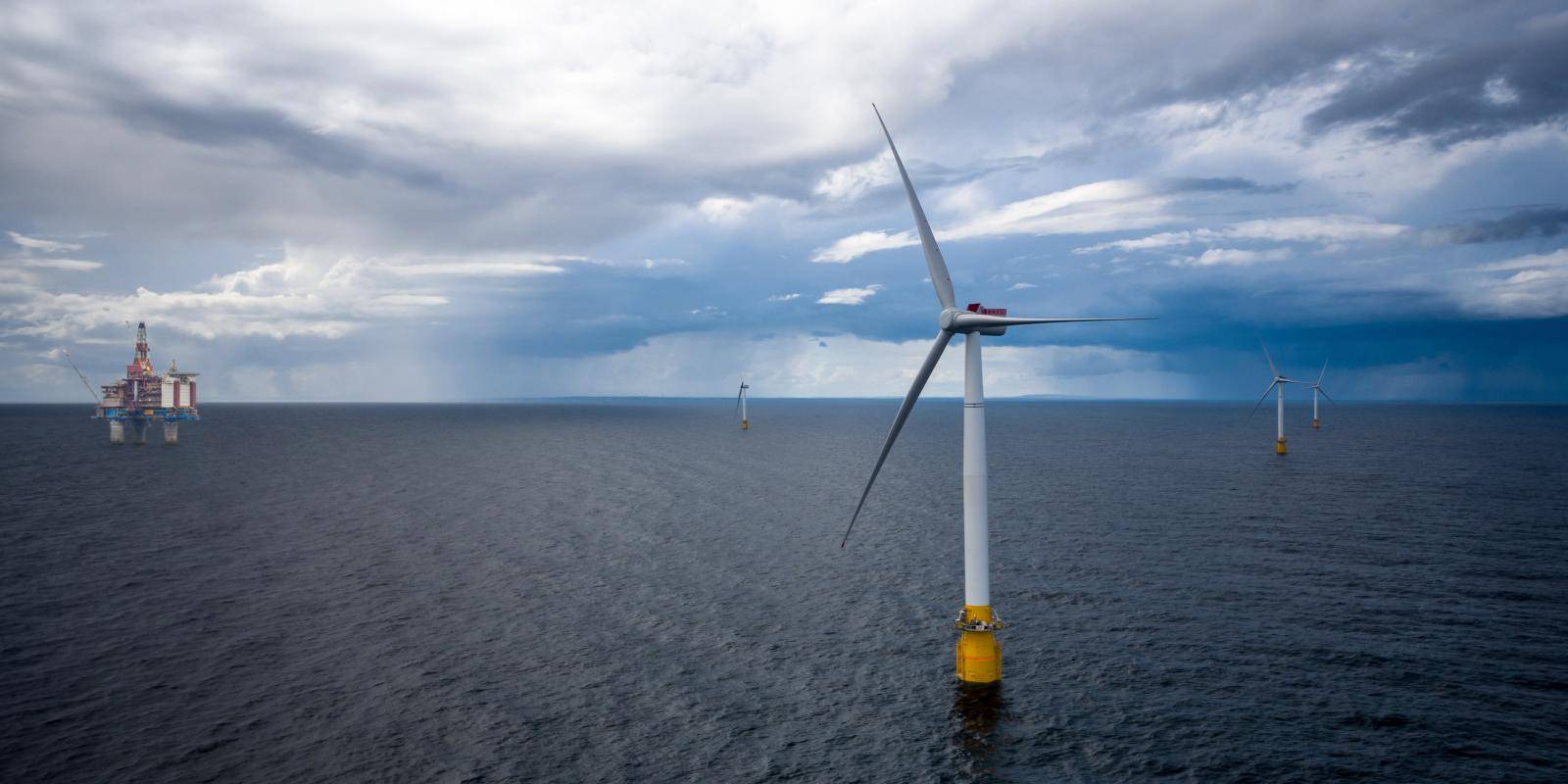
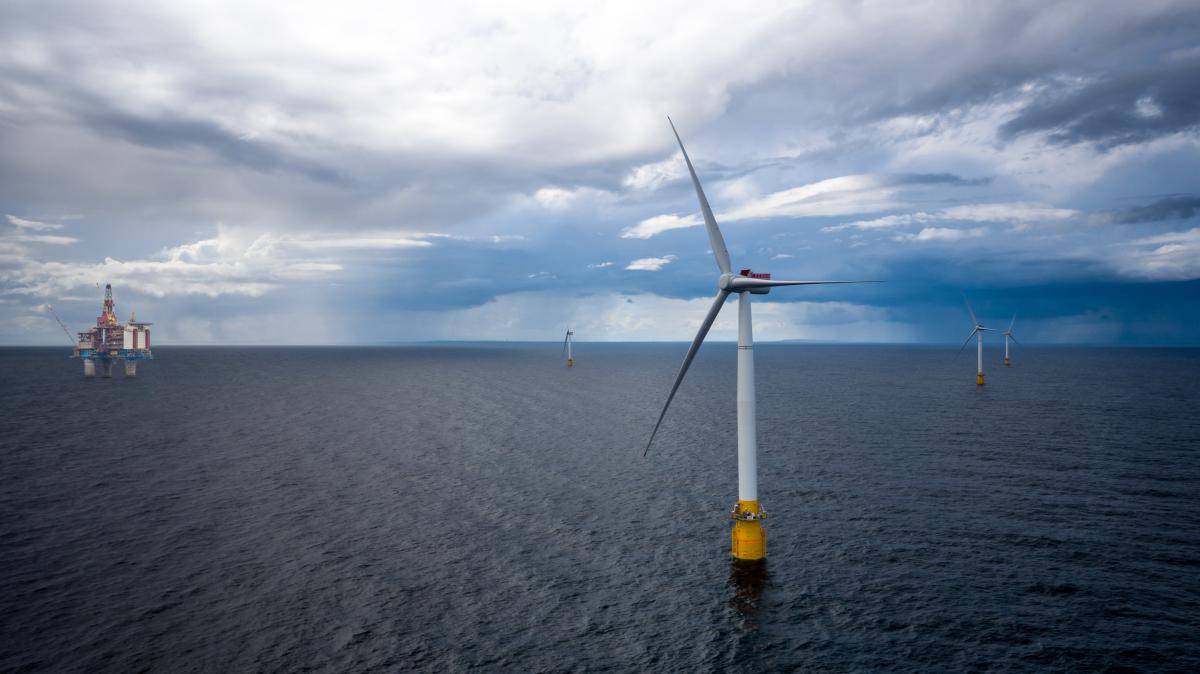
The marine environment will become increasingly important for renewable energy. Existing technologies, such as seabed-mounted wind, are seeing dramatic falls in costs. In recent contracts, prices in the UK were settled at £39.65/MWh (€44.43/MWh) – below the current market price of electricity – down from £120/MWh (€134/MWh) in 2015. New technologies, such as floating wind farms, are opening in deeper water with the advantages of higher wind speeds and being further from populations. If floating wind farms follow the trend of both onshore and other offshore wind, then wider experience and economies of scale will rapidly lead to falling costs and greater competitiveness, enabling deployment at significant levels. The European Commission has stated that between 230 GW and 450 GW of offshore wind will be necessary for the EU to meet its 2050 net-zero carbon targets, while capital expenditure on offshore wind including grids will need to rise from around €6 billion a year in 2020 to €23 billion by 2030, and thereafter up to €45 billion.
Marine developments also play an important role in the economic development of coastal communities, which have also been left behind as traditional industries, primarily fishing, have diminished.