



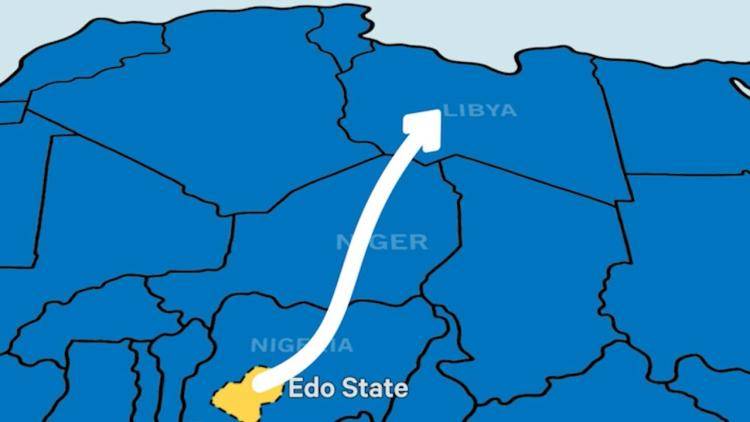
Leah de Haan details the transnational movement of people from Edo State in Nigeria to Libya.
Despite being thousands of miles apart, Libya and Edo State in southern Nigeria are connected by a centuries-old route for trade and the movement of people. Since the outbreak of conflict in Libya in 2011, it has become a major route for human-smuggling and -trafficking.
This research paper traces the movement of people along that route and reveals a transnational ‘continuum of violence’, connecting structural violence in Edo State to direct violence against Nigerians and other people moving in Libya’s conflict economy. By identifying causal loops and feedback mechanisms at work, the paper shows how the levels of violence escalate along the route and lead to people becoming part of an ‘abuse-for-profit’ system in Libya.
The paper contends that by adopting a broader ‘conflict and violence’ approach in place of a narrower one focused on border and migration management, policymakers can disrupt the continuum and reduce the violence and social pressures that fuel it.
DOI: 10.55317/9781784136109