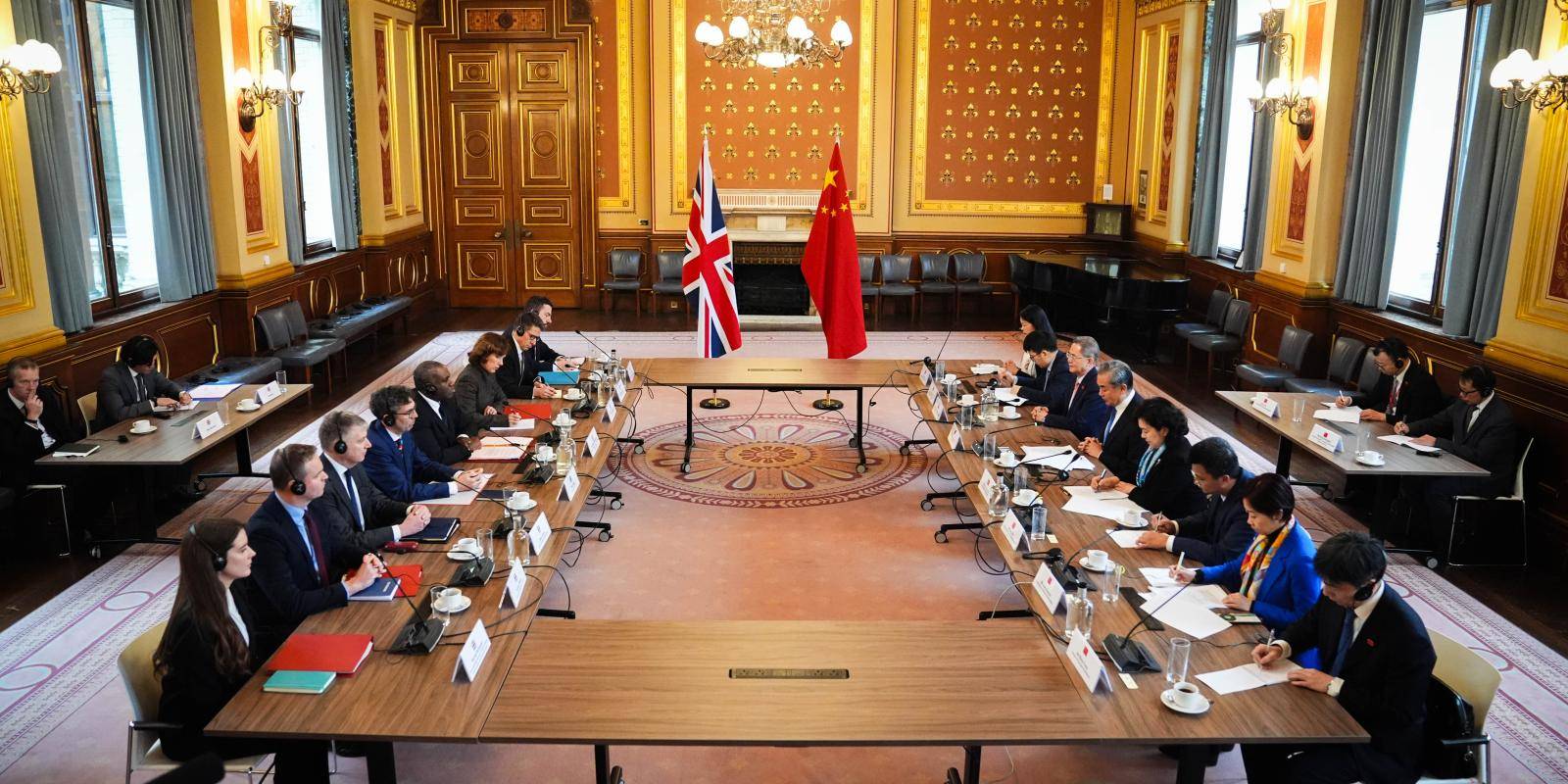
The UK should take a zero-tolerance approach to Chinese transnational repression and malign influence operations. Beijing’s vigorous defence of what it sees as ‘core interests’ often directly conflicts with the UK’s democratic values. The UK should reframe the debate around the need for reciprocal respect for the UK’s own sovereignty and distinct political culture.
The UK and China have all but irreconcilable disagreements on fundamental values, including human rights and the separation of government-linked political goals from academia, business and civil society. The UK faces two distinct but related domestic challenges from China in this area, alongside the diplomatic impacts of bilateral disagreement on human rights. The first is that China pursues the transnational repression of individuals it perceives as acting against its ‘core interests’ – this repression extends to targets in the UK, such as dissidents and activists. The second is that China conducts extensive influence operations designed to gain political or economic leverage and access to information – such operations may threaten the UK’s national security, conflict with the UK’s democratic culture or violate UK laws.
Beijing is likely to persist in these practices for as long as the Communist Party of China (CPC) remains in power. Transnational repression, malign influence operations and opposition to the universality of human rights are baked into China’s governance model. As the UK has no practical influence over that model, the UK government’s priority should be sustainable mitigation and deterrence – particularly because China’s willingness and capability to pursue its interests extraterritorially are likely to increase along with its power and the extent of its economic and security interests abroad.
China’s pursuit of transnational repression
Beijing has a very low tolerance for any actions it sees as disruptive, directly or indirectly, to China’s territorial and political integrity. The political leadership actively seeks to counter these actions extraterritorially. In practice, this leads to Beijing targeting dissidents and activists abroad, especially those from Hong Kong, Taiwan, Tibet and Xinjiang.
In recent years Beijing has engaged in numerous attempts to enforce its interests by violating UK civil liberties. These efforts have ranged from the intimidation and harassment of Hong Kong British Nationals Overseas (BNOs) and Hong Kong, Uyghur and other activists in the UK to the surveillance and censorship of Chinese students in the UK. In a notable 2022 case, such intimidation involved the apparent manhandling of a Hong Kong pro-democracy protester by the staff of the Chinese consulate in Manchester.
The principal trade-off for the UK in dealing with Chinese transnational repression is between, on the one hand, maintaining the integrity of the UK’s system of civil liberties and protecting the rights of UK inhabitants and, on the other, reducing the risk of retaliation from the Chinese government. Beijing would ultimately like other countries to cooperate with it in resolving what it sees as matters of internal politics – for example, through the return of dissidents, activists and refugees to China for punishment, as in cases of forced repatriation of Uyghurs from Thailand. Complying with China on such matters would compromise both the human rights of the individuals concerned and the integrity of the UK’s social contract. The UK must continue to make clear that such compliance is not an option.
China’s influence operations
China’s political system presents a unique challenge for UK policymakers due to the pervasive presence of the CPC in Chinese businesses, universities and other organizations. This presents significant risks to the UK’s interests – risks that include intellectual property theft, the use of primary research in science and technology to boost China’s military and surveillance capabilities, and the leveraging of relationships in pursuit of political and economic influence.
China’s political system presents a unique challenge for UK policymakers due to the pervasive presence of the CPC in Chinese businesses, universities and other organizations.
This entrenchment of the CPC in Chinese public life, and the consequent blurring of distinctions between the political and public spheres, makes it very difficult for policymakers in other countries to separate malign influence operations from legitimate activity. This is especially the case in a democracy such as the UK, which values freedom of association. A recent string of alleged Chinese ‘spy’ cases illustrated the nature and extent of this problem – including the often limited awareness of the nature of CPC influence activities among targets in academia and business. Increasing such awareness should be a priority for the UK government; this is one area where a country-agnostic approach will not work, due to the uniqueness of China’s political system.
Mitigating the risks of Chinese political interference in the UK requires an informed and nuanced approach. Banning collaboration with PRC-connected entities based on the involvement of the CPC, for instance, is a recipe for no collaboration with China at all, including in areas where the UK could benefit. Moreover, any response motivated solely by traditional national security considerations could present an inherent risk to vital UK liberties such as freedom of association, freedom of assembly and freedom of speech. This includes the risk of conflating the activity of the CPC with the behaviour of Chinese nationals or people of Chinese ethnicity, as appears to have occurred in the US through the now-abandoned ‘China Initiative’ designed to counter economic espionage.
The issue is particularly salient in the case of PRC students in the UK. Surveillance of Chinese students is reportedly ubiquitous on UK campuses. According to research and anecdotal evidence from students and academics, such activities are often allegedly conducted by other students and have sometimes been linked to organizations such as the Chinese Students and Scholars Association (CSSA), China’s official body for PRC students overseas. Typically, each CSSA branch – also commonly referred to as a CSSA – will be attached to a university or college. The situation is complicated by the fact that these CSSAs often provide vital social and support networks for PRC students in the UK even while facilitating surveillance and censorship. Influence and censorship operations conducted via students pose risks to academic freedom and free expression, and can also give risk to conflicts between PRC students and their counterparts from Taiwan, Hong Kong and elsewhere. On such issues, the UK government should work closely with universities to improve understanding of the nature of the challenge. The government should develop tailored measures for countering censorship and surveillance, and for preserving academic freedom while maintaining support for students from the PRC.
An approach to human rights focused on what the UK can influence
Disagreement over China’s human rights record is a consistent point of tension in the bilateral diplomatic relationship. Changing Beijing’s basic position on human rights is fundamentally unrealistic. Instead, the UK government should recognize that securing the UK’s interests on these issues is best done pragmatically rather than via appeals to universal principles, which Beijing rejects out of hand and sees as an obstacle to cooperation.
The trade-off is between upholding a point of principle on the one hand and securing pragmatic gains on human rights as part of a wider diplomatic and economic relationship on the other. In a geopolitically uncertain world in which China continues to increase its global influence, a realistic approach must be favoured.
Therefore, the UK should prioritize questions of values over which it can have practical influence and which directly concern the integrity of the UK’s political system and civil liberties. Such issues could usefully be framed in terms of the UK’s own sovereign national interest and cultural distinctiveness, and with reference to the values of the UN Charter, values which China claims to uphold and will have difficulty countering rhetorically. This logic extends to issues such as Uyghur and other minority forced labour occurring within China – rather than framing this in terms of the applicability of universal human rights to China, the case should be made that any involvement of forced labour in UK supply chains would be antithetical to the UK’s own distinct values and political system.
The idea here is that if China is serious about its claims to respect the diversity of different countries’ civilizational perspectives, then it should be willing to accommodate the values of the UK in bilateral relations; it should likewise be willing to adopt a more reciprocal attitude to its long-standing policy of championing non-interference in other countries’ internal affairs. Framing the issue in this way is also critical to presenting UK sovereign interests as a red line in the bilateral relationship. Ultimately the UK should make clear its terms of engagement, and what it will and will not tolerate as a baseline for cooperation in other areas.
Recommendations
In light of the above challenges and dynamics, this paper recommends that the UK government take the following steps to tackle PRC transnational repression and political interference in the UK:
- Formally make permission for CPC-linked entities to operate in the UK conditional on their adherence to the UK’s democratic norms and system of civil liberties, taking a zero-tolerance approach; any CPC-linked entity found in violation should be forced to cease operation in the UK.
- Improve UK government understanding of the nature and extent of Chinese transnational repression in the UK, building on the 2025 inquiry by the UK parliament’s Joint Committee on Human Rights.
- Ensure that China is included on the enhanced tier of the Foreign Influence Registration Scheme (FIRS), which would allow the UK home secretary to label China as a specific actor and legally require the registration of all activities conducted by Chinese state-linked entities. This should be done as part of a wider move to build UK resilience against great power influence, and should also include the addition of the US to the enhanced tier of FIRS.
- As a progression from FIRS, begin mapping the presence and activities of Chinese state-linked entities operating in the UK, and consider developing a public register of such entities.
- Develop government-certified training modules for use across central and local government, academia, business and civil society to develop baseline knowledge of China’s political system, strategic goals and influence operations, as mentioned above.
- Introduce legislation prohibiting the flow into the UK of goods produced via forced labour, regardless of origin.
- Establish a ‘dialogue on sovereign interests’ with China for addressing core issues of sovereignty, including human rights issues affecting the UK. Ensure that all known incidents of Chinese transnational repression in the UK are logged and raised with Beijing as a matter of the UK’s sovereign interests.