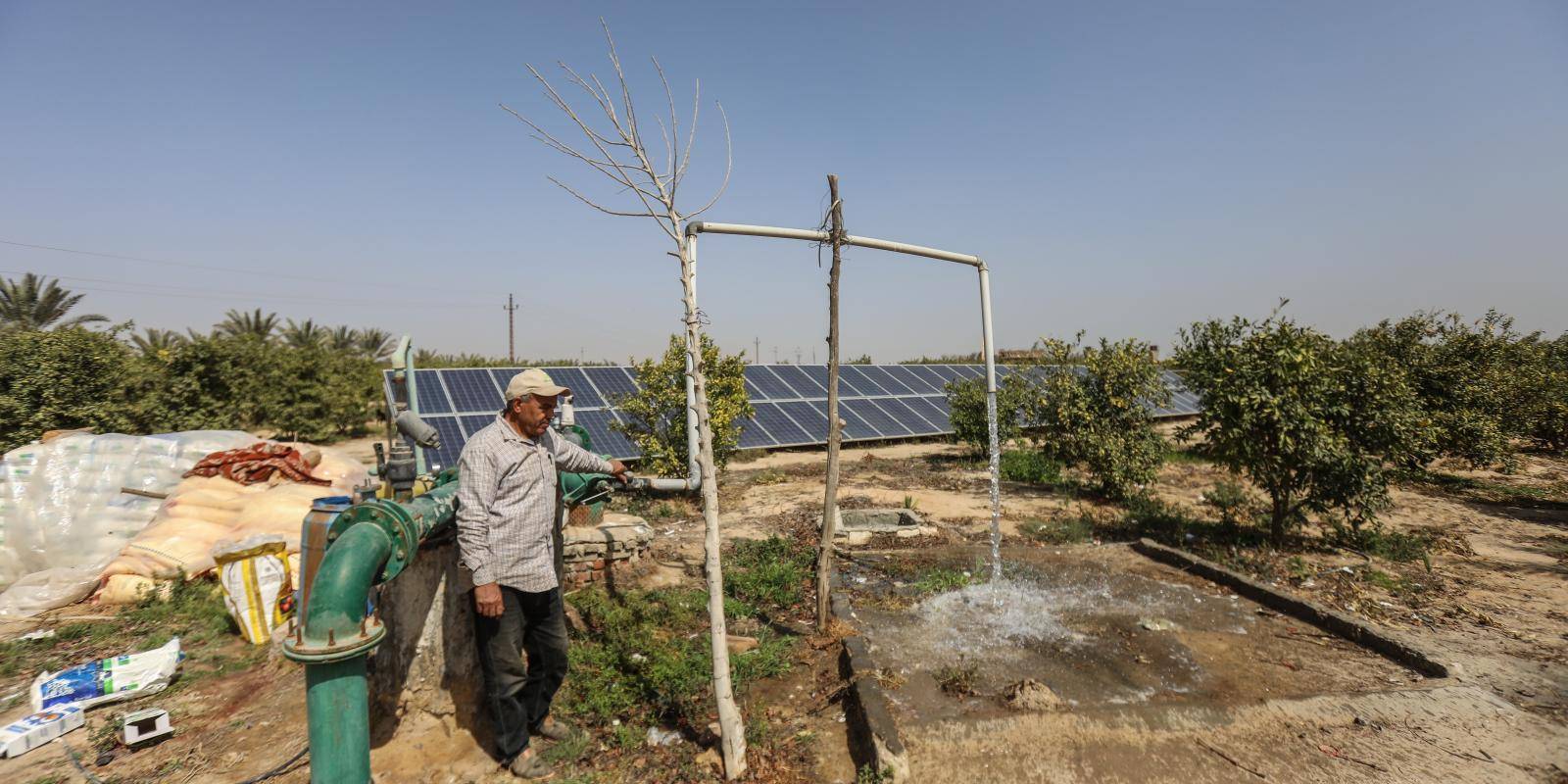
Climate change is reshaping state–society relations across the MENA region. Growing climate risks and green-economy opportunities are pushing governments to act, making climate governance a critical vehicle for legitimacy, participation and long-term sustainability.
Why climate governance and social contracts matter in the MENA region
The Middle East and North Africa (MENA) region is acutely vulnerable to the cascading impacts of climate change, but it is well placed to develop both green technology and related economic opportunities. Intensifying heatwaves, water scarcity and extreme weather in the region are pressuring governments to act with urgency. At the same time, the global shift towards renewable energy presents a chance for MENA countries to diversify their economies, particularly away from fossil fuel exports, and create jobs. How governments respond to climate change – not only through policies and projects, but through the way they engage their citizens – is becoming a defining feature of state–society relations. In other words, climate action is now a core element of the region’s evolving social contracts.
This paper uses the lens of the green economy to assess the effectiveness and best practice of different MENA climate governance models. Here the term ‘green economy’ refers to economic strategies and policies that support low-carbon resource-efficient growth – initiatives that advance climate mitigation while sustaining development objectives. The term ‘climate governance’, on the other hand refers to the processes, institutions and relationships through which public and private actors design, implement and coordinate climate-related policies. It includes decision-making authority, accountability mechanisms and the degree of participation across levels of government and society.
The shift to renewables and sustainability is dependent on the integrity of social contracts: the implicit or explicit agreements that define state responsibilities and citizen expectations. Climate change is effectively stress-testing these agreements. Citizens across the MENA region are increasingly aware of and affected by environmental issues. A 2023 survey found three-quarters of young people in North Africa and the Gulf countries feel that climate change impacts their daily lives. The response of states, whether by engaging or bypassing communities, and government delivery of climate action are reshaping trust in public institutions. This draws on the long-standing notion of social contracts in political-economy research and recent arguments that environmental stress can reconfigure these implicit state–society bargains.
The shift to renewables and sustainability is dependent on the integrity of social contracts: the implicit or explicit agreements that define state responsibilities and citizen expectations.
The remainder of the paper is structured as follows. First, it outlines the theoretical framework distinguishing a ‘constitutional-participatory’ governance model (an approach that embeds environmental rights in law and involves citizens and local authorities in shaping climate decisions) versus a ‘techno-investment’ one (a centralized, top-down approach that drives climate action through large-scale technology projects and state-led investment with limited public participation). The paper goes on to define the core characteristics of the models and explain what is meant by adaptive climate governance, a method that takes elements from both approaches in response to climate pressures.
Next, the paper presents a detailed comparative analysis of these models in practice, examining country case studies that represent different approaches to climate governance. Morocco and Tunisia are examples of constitutional-participatory frameworks, and the United Arab Emirates (UAE) and Saudi Arabia are illustrations of techno-investment models.
The paper then examines emerging adaptive approaches to climate governance in Egypt and Jordan, demonstrating how these countries are attempting to reconcile the legitimacy benefits of civic participation with the efficiency advantages of centralized delivery under fiscal and capacity constraints.
Finally, drawing on insights from all these case studies, the paper offers concrete, context-sensitive policy recommendations for governments, civil society organizations, international climate finance institutions and regional cooperation bodies to strengthen adaptive climate governance across the MENA region.