Strengthening climate governance in MENA requires tailored, context-sensitive policy measures that enhance participation, bolster institutional capacity and improve transparency.
Of the dominant approaches to climate action in the MENA region, an adaptive climate governance model has the potential to be most effective, particularly when considering the individual circumstances of each country. This approach balances the two imperatives highlighted throughout this paper: securing legitimacy through participation and ensuring the capacity to act effectively. The policy recommendations below focus on practical, near-term measures that can be integrated into existing institutions, aiming to improve implementation while strengthening public trust.
For MENA governments
These recommendations are designed to be adaptable to diverse governance contexts across the region. While participatory climate governance is a desirable goal due to its legitimacy benefits, its form and timing should reflect each country’s political system, level of decentralization and institutional capacity.
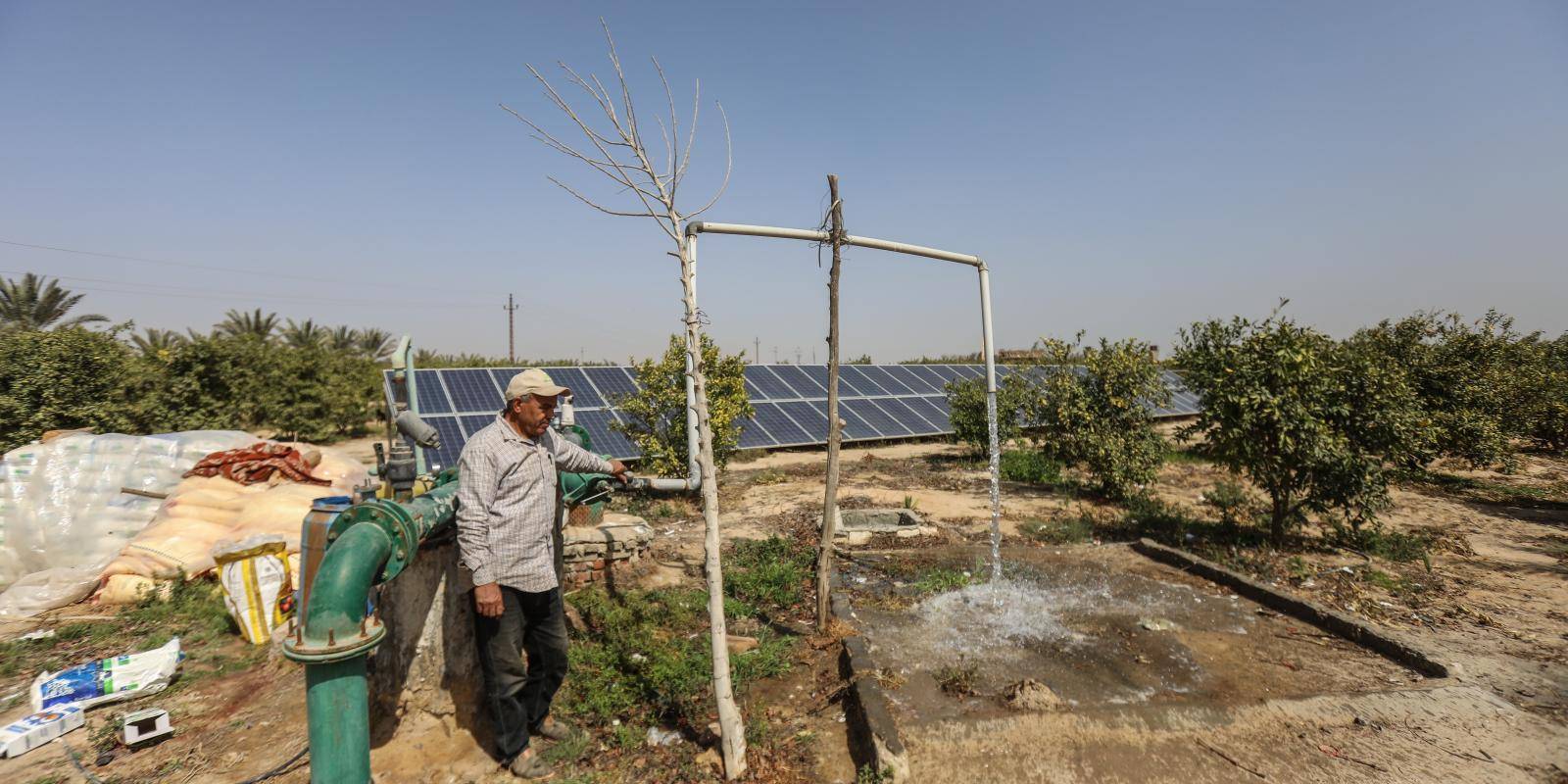
- Assess the political and institutional fit of participatory approaches. Participation is not a one-size-fits-all system. Governments should seek consultants to help identify where in the policy cycle engagement with stakeholders and the public is most beneficial. For example, in centralized systems, upstream consultation between policymakers and farmers on water plans can build legitimacy. This can include consultation on crop changes and irrigation methods to address increasing water scarcity and rising temperatures. In more decentralized systems, empowering municipal actors may be more effective.
- Structure participation to support implementation, not delay it. Governments should ensure that engagement is time-bound and focused to avoid policy paralysis. Once agreement on a particular project is reached, governments should streamline execution by empowering public delivery units, public–private partnerships or regional agencies through funding or terms of authority.
- Adapt transparency and communication strategies to the political context. Develop freedom of information regulations to allow access to climate-related performance metrics. Even in systems with limited civic space, governments can foster public understanding by explaining climate goals, trade-offs and implementation plans, regardless of whether public input is formally solicited. This can take the form of unidirectional communication plans to explain risks and drivers for policy action.
- Invest in capacity-building where decentralization is part of the strategy. In systems with local government mandates, central governments should train and resource local authorities to enable effective support for mitigation and adaptation plans.
- Institutionalize climate policy review mechanisms appropriate to governance capacity. Where feasible, establish annual or biennial reviews of climate implementation with participation from civil society, and independent technical experts. In more controlled environments, begin with technical monitoring and expand inclusion over time.
For CSOs and climate activists
In countries with participatory frameworks, CSOs already contribute to public outreach, policy monitoring and small-scale project implementation. The challenge in these contexts is often one of scale and sustainability, which requires political recognition and sustained domestic and international funding.
- Tailor strategies to the political context. In more participatory environments, CSOs should leverage legal pathways, use litigation and parliamentary lobbying to uphold environmental rights and influence legislation. Demonstrating constructive partnerships can also build trust with government. In more restrictive contexts, CSOs should focus on developing and utilizing their technical expertise, public education and on framing recommendations in alignment with national goals or development plans.
- Strengthen regional coordination. CSOs should participate in one of the two existing MENA-wide civil society climate networks (Climate Action Network Arab World and the Arab Network for Environment and Development – RAED) in order to share tactics, coordinate advocacy and amplify their collective voice.
- Engage public awareness through media and education. Raising citizen understanding of climate science and solutions can help sustain informed public pressure for action. Past efforts by CSOs in Lebanon, Morocco, Tunisia and Jordan should be expanded and amplified.
- Maintain informal channels with government. Building relationships with mid-level officials through semi-formal events and offering technical or implementation support can yield long-term influence, even in less participatory systems.
- Advocate for systemic support. CSOs with institutional access should collectively push for legal protections, formal inclusion in national planning cycles and reliable budget allocations. CSOs need to prioritize and lobby for reform of NGO laws, environmental litigation rights and CSO funding mechanisms that are not donor dependent.
For international climate finance institutions and donor agencies
Climate finance strategies should be adapted to the region’s diverse political and institutional contexts. Donors, mostly European institutions and foundations, should avoid one-size-fits-all conditionalities and instead use governance-sensitive incentives that promote delivery, transparency and inclusion.
- Use tailored funding criteria to encourage governance improvements. In participatory states, link funding to implementation milestones. In more technocratic contexts, prioritize transparency measures, fund projects with tangible public benefits and include components that engage local actors.
- Support institutional and civic capacity-building. Invest in programmes that enhance both state capacity and civic engagement, such as strengthening national climate coordination units (beyond existing programmes in Egypt, Jordan and Morocco), municipal training for climate planning, training on how to design climate projects to access climate finance (based on existing programmes by EBRD), building CSO technical capacity (along the lines of EU and UNDP programmes in Tunisia, Jordan and Egypt, or university-based climate research centres already strong in Saudi Arabia and the UAE).
- Fund and showcase participatory pilot projects. Use grants to support local demonstrations of participatory design and implementation. Highlighting successes can influence national agendas and inform other local authorities in other countries.
For regional cooperation bodies and initiatives
Regional forums have an important role in fostering inclusive climate action while accommodating different governance models. Flexibility, knowledge sharing and norm setting are key.
- Design collaborative platforms that bridge governance styles. The Arab League, Gulf Cooperation Council, and initiatives like the Middle East Green Initiative, the Regional Center for Renewable Energy and Energy Efficiency, and the Eastern Mediterranean and Middle East Climate Change Initiative (EMME-CCI) should create technical working groups on issues such as water, energy and agriculture. These groups should include government officials, technical experts and, where possible, civil society observers. They can jointly develop regional guidelines (e.g. on drought management) that states adapt locally via either participatory or technocratic means.
- Normalize inclusive governance practices. Regional initiatives should explicitly promote adaptive climate governance and encourage states to report not only on emissions or projects, but also on how they engage citizens and businesses. Norm-setting actions – such as requiring multi-stakeholder representation in national delegations to regional meetings – can gradually institutionalize inclusive practices.
Taken together, these actionable steps aim to fortify climate governance in MENA to deliver on the twin goals of green economy transition and social contract renewal. Empowered with this roadmap, MENA policymakers, civil society and international partners can move from understanding climate governance challenges to surmounting them.
In implementing these recommendations, it is important that each actor remains flexible and ready to adjust. Climate change itself is dynamic and as impacts worsen, even resistant governments may find they need more citizen cooperation. Conversely, some participatory systems may face stability tests that require efficient top-down action. All stakeholders should adopt a learning mindset, monitor what works in governance adaptations, and be prepared to change direction, replicate or scale up.
There is no single climate governance model that all countries can adopt to take successful climate action. The constitutional-participatory approach excels in building public trust and aligning climate action with societal needs, but it can falter if institutions lack capacity or if consensus-building stifles urgent action. The techno-investment approach can deliver rapid projects and mobilize vast resources, yet in some contexts it risks public pushback and policy reversal if citizens feel alienated. The paper argues, however, that an adaptive governance model, one that engages stakeholders enough to confer legitimacy yet empowers authorities to implement green policies decisively, has the highest chance of successful climate action. Countries that iteratively adjust policies based on feedback (from investors, local communities and experts) are more likely to secure sustained green investments, ensure projects’ long-term viability and maintain public support. In other words, the most ‘adaptive’ states are better able to navigate the inevitable trade-offs between speed and public buy-in. Despite this lack of a perfect formula, embracing adaptive climate governance offers a pragmatic path forward. It acknowledges the economic realities and urgency of climate action, while grounding policy in the consent and confidence of the public.