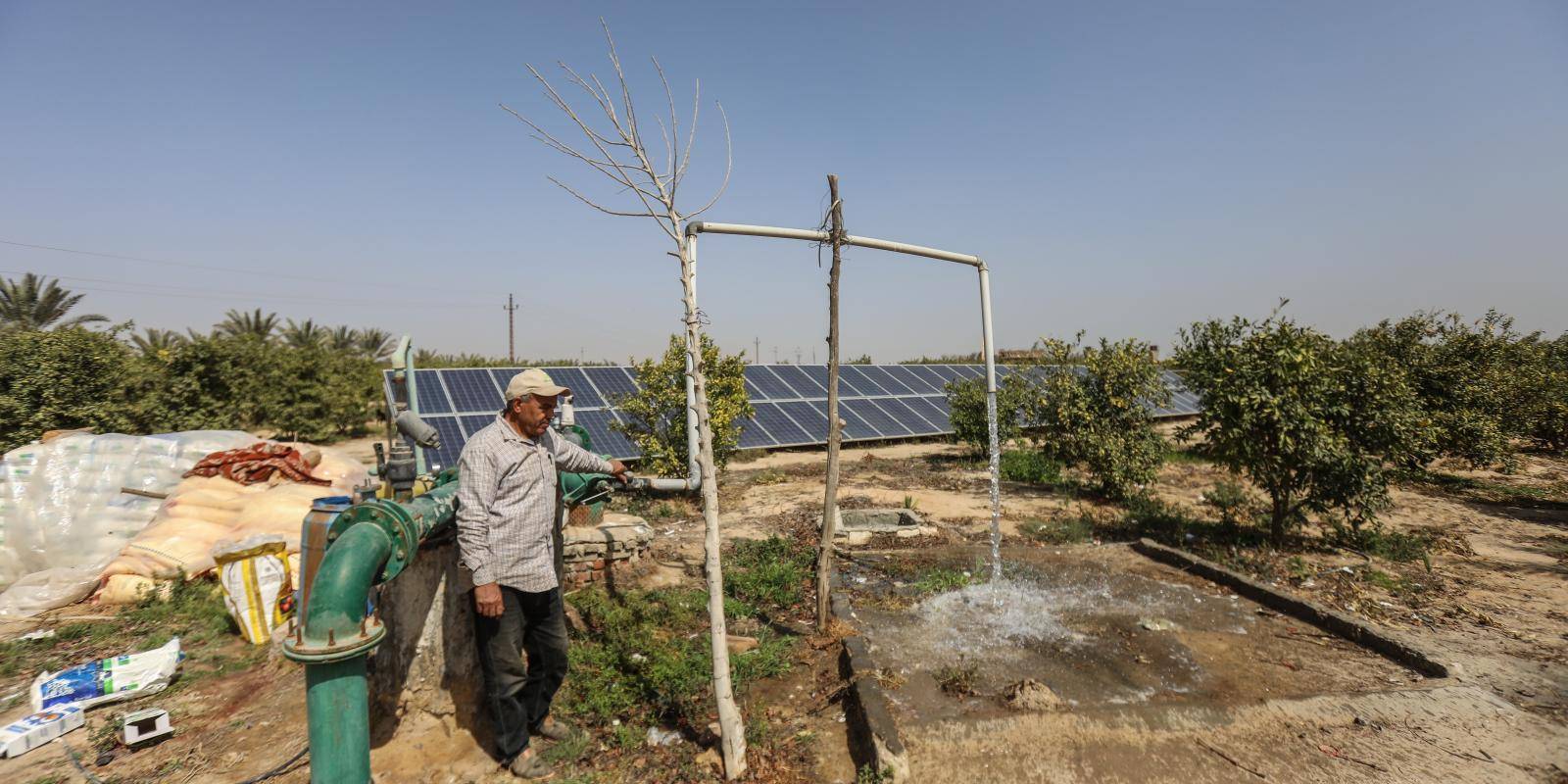
Hybrid climate governance is emerging across the region as MENA governments blend participation with technocratic delivery. These adaptive approaches seek to balance legitimacy and project implementation.
Hybrid models for legitimacy and capacity
Most MENA countries do not fit neatly into either a purely participatory or purely techno-investment climate governance model. Instead, many adopt evolving hybrid approaches to varying degrees of success. These adaptive climate governance models selectively blend elements of public participation with top-down, expert-driven decision-making. Leaders of these countries recognize that tackling climate change in the long term requires both public legitimacy and effective implementation capacity.
In this paper, adaptive climate governance success is defined as the ability of institutions to design flexible, inclusive and durable policies that secure long-term investment, accelerate the energy transition and maintain public trust.
This section examines two country cases, Egypt and Jordan, where such hybridization is evident. The official rhetoric of each country initially favoured public participation in climate action, but under pressure from economic constraints, both have since leaned on technocratic, investment-centric methods to get things done.
Egypt: From participatory overtures to techno-investment delivery
Egypt’s climate governance journey has mirrored its political transitions. After the 2011 revolution, there were hints of greater openness. Notably, Article 46 of the 2014 Egyptian Constitution enshrined environmental rights, acknowledging the rights of every individual to a ‘healthy, sound and balanced environment’. This created a legal basis for public expectations on climate and the environment. In practice, however, climate change remained a low priority in the country through the 2010s. That began to change in 2022 as Egypt was preparing to host the UN’s COP27 climate summit, when both international and domestic pressures forced the government to give climate issues a higher profile.
Inclusive rhetoric around COP27
In the lead-up to COP27, Egypt announced a broad national dialogue on climate change. By signalling an inclusive approach to climate policy, Cairo aimed to bolster its legitimacy at home and its image abroad. Indeed, around COP27 the government hosted youth groups, development NGOs, academics and private companies to discuss priorities like renewable energy and adaptation funding. Some civil society representatives were even included in Egypt’s official delegation to COP27, and the summit in Sharm el-Sheikh featured side events with Egyptian NGOs and youth groups. Egypt also introduced avenues for youth and academic engagement in climate discourse, and established a permanent ‘Youth Climate Change Committee’ with UN support.
Techno-investment reality of implementation
However, when it comes to implementing climate and clean energy projects at home, Egypt remains largely technocratic. The same government that invites NGOs to consultations will also clamp down on unsanctioned activism, as authorities arrested dozens of people for attempting climate-related demonstrations. In effect, the national dialogue and other participatory processes were carefully managed to avoid challenging the regime’s authority.
After the fanfare of COP27, Egypt moved to deliver concrete initiatives, most notably the Nexus of Water, Food and Energy (NWFE) programme, the country’s flagship package of projects to transition away from gas-fired power plants towards renewables, backed by Western donors. To execute NWFE, the government empowered a high-level taskforce spanning the Ministry of International Cooperation and the Ministry of Electricity, both of which worked directly with international partners and investors. The approach has been to agree deals with multilateral development banks and foreign governments to secure funding and technology, then push projects through via government agencies. Decisions on which solar farms or irrigation projects to prioritize are made by small inner-circle technocrats and external consultants, with local communities having a minimal role in the planning.
To its credit, this top-down strategy has had some successes. Within a year of COP27, Egypt locked in about $15 billion in financing agreements for its NWFE climate portfolio. Major renewable energy installations are underway as a result, including the Benban Solar Park in Aswan, one of the world’s largest solar complexes with 1.6 GW of generation capacity, developed by dozens of companies under
government coordination.
Participatory in narrative, selective in practice
The strategy has been less successful in relation to public participation. Though, Cairo does retain inclusive aspects in its approach when it bolsters outcomes. For example, the Egyptian government uses participation to build international trust and unlock donor funds that often require stakeholder input – in a manner that is not too dissimilar from other donor-dependent economies – or to improve technical design through the advice of external experts. Yet, the main aspect of the country’s climate action is a tight circle of government officials that makes decisions and implements projects.
The Egyptian government uses participation to build international trust and unlock donor funds that often require stakeholder input. Yet, the main aspect of the country’s climate action is a tight circle of government officials that makes decisions and implements projects.
The government believes that tangible results will legitimize its climate efforts in the long term more than broad-based deliberative processes would. Indeed, Egypt has been able to kick-start several major green projects post-COP27 and trumpets these as national achievements. The state tells people about projects once the decision has already been made, and, given Egypt’s current economic conditions, many Egyptians seem willing to accept this if it delivers more jobs, more reliable electricity and less pollution. The implicit bargain is that legitimacy from delivery is a suitable substitute for legitimacy from public participation, but it remains to be seen if this will work in the long term.
Jordan: Aspirational participation meets hard constraints
Unlike Egypt, Jordan has a reputation for relative openness and reformist rhetoric. Its form of governance is widely seen as participatory, with an elected parliament, active civil society and consultation mechanisms. In climate policy, Jordan has made efforts to involve a range of stakeholders. For example, the National Climate Change Policy of 2013 was formulated through a ‘transparent and participatory manner’, bringing together representatives from ministries, NGOs, academia and the private sector. On paper, Jordan demonstrates many of the key elements of participatory governance. The country has decentralized institutions, such as municipalities that could play roles in climate adaptation, it has developed green growth plans with input from development partners, and it encourages public–private partnerships in renewable energy and other sectors.
Progress and constraints
In the 2010s, these policies bore fruit in terms of infrastructure. Jordan had a renewable energy boom, and by 2022 renewable energy represented 23 per cent of its total power generation capacity, reducing Jordan’s fuel import dependence and the marginal cost of electricity generation. This was a remarkable achievement for a resource-poor country. Crucially, this expansion was driven by a strong top-down push as the energy ministry set ambitious targets, offered fixed tariffs to attract investors and streamlined approvals for projects. The process involved some stakeholder engagement with industry investors and international donors as a requirement to receive project financing, but the government’s main priority was to make progress in these projects.
Yet the very speed of this roll-out exposed capacity issues. The national grid struggled to handle the influx of intermittent renewable power, and the National Electric Power Company (the state-owned utility) fell into deeper financial strain, unable to integrate all the new energy supplies. By 2019, the government had to impose a freeze on further large renewable projects over 1 MW in capacity, halting new solar and wind tenders until grid upgrades and storage solutions could catch up. This moratorium, which lasted until 2022, underscored the fact that a technocratic, investment-driven approach can overshoot if not accompanied by adequate planning and consultation across sectors.
Jordan’s resource and fiscal constraints often force it into this kind of pragmatic centralization. The country is energy-poor, one of the most water-scarce in the world and fiscally burdened by debt and a large refugee population. Jordan’s updated emissions reduction target of 31 per cent by 2030, as part of its NDCs, is largely conditional on external support, including projects aligned with green growth national action plans and public–private partnerships embedded in the kingdom’s Economic Modernization Vision. When funding comes through from external donors or multilateral banks, Jordan feels pressure to deliver results to secure future support. This dynamic has at times driven more top-down implementation of projects, particularly those backed by concessional finance, and may reduce the scope for broader public consultation and local stakeholder input.
Donor-funded programmes such as the Water Sector Efficiency Project and the Red Sea–Dead Sea conveyance (before it was abolished) have relied on highly technocratic planning that largely excluded local communities and CSOs. This is especially significant because many local groups possess deep, location-based knowledge of the fragile Dead Sea and Red Sea ecosystems, including long-term observations about groundwater, biodiversity stressors, pollution sources, and the social-ecological dynamics affecting coastal and desert communities. By not drawing on this expertise, project design processes have often missed important environmental sensitivities or underestimated the ecological risks associated with proposed interventions. Similarly, concessional loans from the European Bank for Reconstruction and Development (EBRD) and the Green Climate Fund have played a central role in expanding Jordan’s renewable energy sector. Yet these initiatives have also tended to depend on a narrow network of national agencies and a small group of recurring consultants, rather than drawing on broader public engagement or diverse local expertise
Participation and pragmatism
Politically, Jordan’s monarchy and government remain keenly aware of maintaining public support, given the country’s economic hardships and its high unemployment levels. The leadership frequently uses participatory rhetoric to strengthen the social contract, promising to be responsive to citizens’ needs. A number of projects and policies (e.g. the Red Sea–Dead Sea Conveyance Project, net metering and renewable energy fee reforms) have been revised, delayed, scaled back, or halted as a result of a public backlash.
In climate policy, the participatory approach is reflected in frequent references to inclusion. Jordan’s climate change committees and policy taskforces typically include some NGO representatives and academics. Civil society groups in Jordan are regularly invited to participate in national climate consultations, including those tied to strategies like the National Climate Change Adaptation Plan. Yet, while their presence signals openness to dialogue, many advocates note that this involvement rarely shapes final decisions in a meaningful way, leaving a sense that while participation is encouraged, key choices are often already set.
Civil society groups in Jordan are regularly invited to participate in national climate consultations, yet, while their presence signals openness to dialogue, many advocates note that this involvement rarely shapes final decisions in a meaningful way.
Jordan tends to leverage its limited capacity by concentrating efforts on a few critical initiatives. Water policy is a prime example. Facing a severe water crisis exacerbated by droughts and population growth, Jordan has taken bold actions like instituting strict rationing, reducing water losses and pursuing a large desalination and conveyance project from the Red Sea. These are tough measures, but the public largely endures them because the alternative is existential scarcity. In emergencies, Jordanians have shown willingness to accept decisive top-down action as long as it is communicated as necessary and is implemented with some fairness.
This implies a kind of adaptive social contract where in normal times the government promises inclusion and dialogue, but in a crisis, it expects citizens to trust its technocratic decisions for the greater good even at the expense of long-term sustainability. So far, that trust has held in cases like water management, perhaps because the consequences of inaction are so evident to people. The Jordanian experience highlights a central lesson of adaptive climate governance, namely that inclusive policy development followed by firm, expert implementation can achieve a lot. However, due to its less obvious consequences, climate action is unlikely to have the same level of support as efforts to manage water resources, and thus the balance of the approach must be continually adjusted based on feedback.
How adaptive approaches reconcile legitimacy and capacity
The cases of Egypt and Jordan illustrate how MENA governments in different political and economic contexts are converging on adaptive models to address the twin challenges of legitimacy (public trust and buy-in) and capacity (effective delivery and problem-solving). By infusing participation – even if selectively – governments aim to gain legitimacy for climate actions. While the majority of the public is often most concerned with the impacts of policies on their livelihoods, many are more likely to accept policies, and even change their behaviour, if they feel a sense of involvement or at least see that their concerns are acknowledged. For instance, Egypt’s emphasis on a national dialogue and Jordan’s inclusion of NGOs in policy committees are attempts to shore up what political scientists call ‘input legitimacy’ (the legitimacy a policy gains from inclusive, transparent and participatory decision-making processes). These initiatives signal that the public’s voice matters, which can strengthen the social contract around climate action. Inclusivity also helps align policies with societal needs. Civil society can act as a bridge between the public and the state, holding governments accountable and ensuring policies reflect realities on the ground.
However, participatory climate governance is not a panacea and ‘output legitimacy’ (the legitimacy a policy gains from the quality of its results) is equally important. The effectiveness of climate governance depends on how institutions are organized and coordinated. For example, Algeria’s climate system is highly centralized under the Ministry of Environment but suffers from fragmented mandates and limited cross-ministerial planning. In contrast, Morocco’s inter-ministerial commission and subnational councils allow for horizontal and vertical alignment, enhancing both delivery and legitimacy.
What adaptive governance offers is not simply more participation, but enough inclusion to confer legitimacy and local ownership, without compromising delivery timelines or policy coherence. Consultation can build buy-in, but may slow decisions, whereas centralized projects can be delivered faster but risk public backlash or unforeseen problems. The optimal path lies somewhere in the middle, and this may vary between countries and their different contexts, combining the efficiency of decisive government action with the legitimacy of stakeholder engagement. In MENA, this balance is particularly important given the fragility of implicit social contracts and uneven institutional capabilities.
As a concept, adaptive governance assumes that states have the institutional capacity to adjust course when needed, an assumption that may not hold in fragile or under-resourced settings. The case studies reflect this complexity. Tunisia, for instance, has robust legal frameworks for participation, but weak institutions have limited their practical effect. In contrast, Saudi Arabia has made significant progress on renewable energy through top-down control, yet the civil society space remains limited.
In addition, many MENA region local governments lack the technical or financial capacity to manage climate responsibilities. In Algeria, for example, provincial-level authorities have unclear mandates and limited climate literacy, which impedes regional adaptation planning.
Furthermore, in fragile political contexts – such as Lebanon, Libya or post-revolution Tunisia – climate policy often takes a backseat to immediate fiscal and security concerns. This deprioritization weakens institutional memory and coordination, making it harder to sustain climate strategies over time. Adaptive governance in such settings requires integration into broader development or service delivery agendas to maintain salience.
In fragile political contexts – such as Lebanon, Libya or post-revolution Tunisia – climate policy often takes a backseat to immediate fiscal and security concerns.
By retaining technocratic control and focusing on performance, governments can address the capacity and efficiency problems that often plague fully participatory systems. Complex projects such as solar parks, water infrastructure, or climate finance deals require technical expertise and swift coordination, which top-down governance can provide. This delivers visible improvements that can, in turn, enhance results, or public trust in the government because it delivers tangible benefits.
Adaptive governance can also create a virtuous cycle with early stakeholder inclusion building support, which smooths implementation. Successful implementation then reinforces public confidence, making citizens more willing to engage constructively the next time they are consulted for a project.
Understandably, achieving this is far from easy. More often, trade-offs are made. Some degree of participation is sacrificed for efficiency, or some efficiency is slowed down to gather broader buy-in. The Egypt and Jordan examples show trade-offs in action. Egypt leans heavily towards efficiency and political control, completing projects but arguably missing deeper public endorsement. Jordan leans towards consultation in principle, but when urgent action is required, it centralizes decisions to get things done, risking disillusionment among those who feel their input is unimportant. Yet the very fact that both are striving for a mix indicates a recognition by some regional leaders that climate governance cannot be one-dimensional. Climate change poses a significant challenge that demands societal transformation, legitimacy, technical solutions and capacity.
The adaptive model is emerging by necessity rather than choice. MENA countries face urgent climate threats, but any action to tackle these issues that is perceived as illegitimate or unfair could trigger a social backlash – as was seen in Jordan in response to energy subsidy reforms, water tariff reforms and metering polices, the Red Sea–Dead Sea Conveyance Project, and Amman’s Bus Rapid Transit – while any action that is too timid or slow could be ineffective and a backwards step for development.
An adaptive approach is about guiding climate governance with pragmatism. The process aims to be inclusive enough to harness society’s support and knowledge, and executive enough to actually implement solutions at scale. This approach is already visible in Egypt and Jordan’s adaptations.
Ultimately, these adaptive approaches may also be setting the stage for long-term evolution in governance. Small experiments with participation could gradually expand the democratic space in some countries. Meanwhile, successful techno-investment climate initiatives could strengthen state institutions and public faith in expertise. In the best-case scenario, today’s adaptive models could guide MENA climate governance towards a future where states are both responsive and effective, a social contract that citizens believe in because they have both a voice and positive outcomes.
Adaptive governance is not presented as universally superior without acknowledging trade-offs. Instead, the case studies suggest that blending participatory and technocratic approaches can help capture the strengths of both. Jordan and Egypt, for example, opened dialogues to build public support while using specialized agencies to deliver priority projects. This hybrid model attempts to maintain rapid implementation where necessary while incrementally broadening inclusion to build legitimacy.