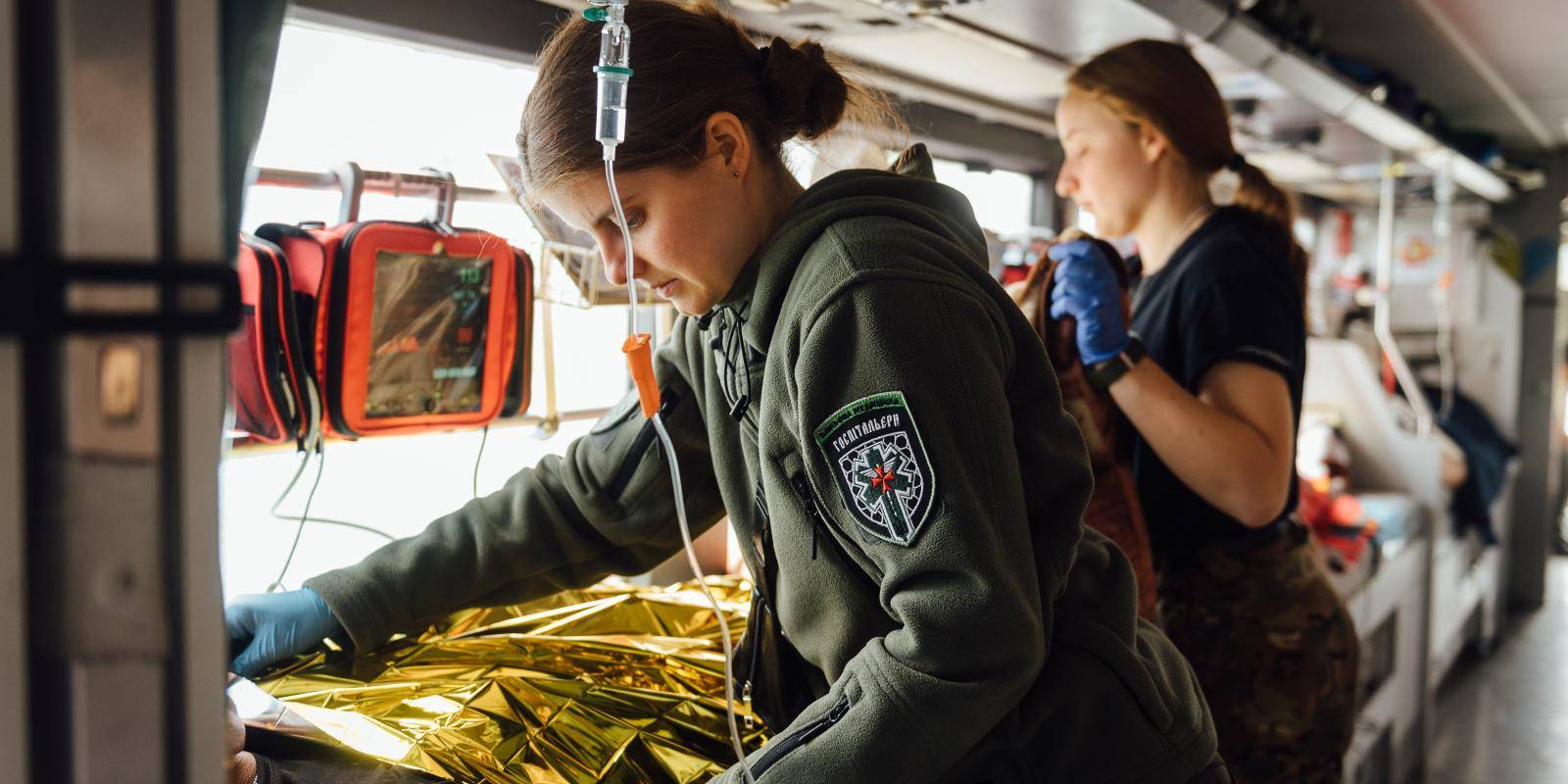
Following a series of attacks by the Taliban directed against medical vehicles and personnel, Danish ISAF forces in Afghanistan recommended that medical personnel should not display the distinctive emblem. In these extraordinary circumstances, it was considered that medical personnel and the wounded and sick were better protected by not displaying the distinctive emblem.
To give effect to the protections afforded to medical facilities, transports and personnel, it is important for them to be identifiable. The distinctive emblem – a red cross, red crescent or red crystal on a white ground – plays this role.
The emblem does not confer protection – that comes from IHL – but it assists belligerents to identify medical facilities, transports and personnel to facilitate compliance with their obligations towards them.
There is no obligation to use the emblem. People and objects are protected even if the emblem is not worn or displayed. At times, armed forces do not mark medical facilities, as this may disclose the position of camouflaged frontline units. More problematically, in certain recent conflicts armed forces and medical organizations have refrained from marking their facilities, vehicles and personnel as they feared that the emblem was attracting fire rather than discouraging it.
Traditionally the emblem is displayed by physical markings: armlets, flags and markings on the sides and roofs of medical facilities and transports. In 1996 Annex I to AP I was amended to include light, radio and electronic identification signals. More recently, the ICRC launched an initiative to consider the technical feasibility of a digital emblem, to mark the digital infrastructure of medical facilities.
5.1 Who/what is entitled to display the emblem?
Only the persons and objects entitled to specific protection under IHL are entitled to use the distinctive emblem: medical personnel, facilities and transports that meet the definitions in Additional Protocol I and that belong to or are recognized and authorized by a party to the conflict. In addition, these persons and objects must also be authorized to use the emblem. This is a related but separate step, but it can occur at the same time as recognition and assignment. The same criteria apply in non-international armed conflicts.
The emblem must be used under the control of a competent authority.
5.2 Who authorizes use of the emblem?
This issue is not specifically addressed in IHL treaties. The ICRC Study on the Use of the Emblems recommends that for military facilities and personnel, responsibility to authorize the use of the emblem should be entrusted to a state military authority; while for civilian facilities and personnel, the responsible authority may be military or civilian. Frequently these are, respectively, ministries of defence and of health.
In non-international armed conflicts, Article 12 AP II requires the distinctive emblem to be used ‘under the direction of the competent authority concerned’. It is generally agreed that these are the authorities of the organized armed groups, which must play a similar role to states in authorizing and supervising the use of the emblem.
There have been instances when medical facilities authorized by a state continued to use the emblem when organized armed groups gained control of the area where they were located, as when the Free Syrian Army held Aleppo in Syria. But for this paper it was not possible to find examples of medical facilities, transports or personnel belonging to organized armed groups displaying the emblem, or of civilian facilities and personnel being authorized to do so by the competent authorities of the organized armed groups.
5.3 Regulation and supervision of the use of the emblem
The use of the emblem must be regulated and supervised to avoid abuse. Abuse is understood as referring to improper use of the emblem, rather than unlawful conduct against facilities, objects and persons entitled to display the emblem.
States must adopt domestic measures to regulate the use of the emblem, including: defining which emblems are recognized and protected in that state; specifying the authorized users and uses; and identifying the national authorities entrusted with regulating and monitoring its use. Domestic measures must also be adopted for the prevention, suppression and punishment of misuse of the emblem, both in peacetime and during armed conflict.
Measures that criminalize misuse can have a deterrent effect, but such legal proceedings address past violations. IHL also requires the use of the emblem to be supervised, including to prevent or put an end to abuse in real time during armed conflicts.
Use by the medical services of the armed forces is under the direction of the competent military authority. Military authorities, and in practice the military commander, must exercise effective control to ensure the emblem is not used improperly. There have been instances when improper use has been sanctioned by the armed forces.
Supervision of use of the emblem by civilian medical facilities, transports and personnel is not expressly addressed in IHL treaties. Guidance documents on the use of the emblem tend to focus on legal measures to respond to misuse of the emblem, but do not address practical measures to respond to misuse in real time.
An expert consultation on the emblem convened by the International Red Cross and Red Crescent Movement in 2024 concluded that in most cases states have not identified with sufficient clarity which authority is responsible for authorizing use of the emblem and, equally importantly, for supervising its use in times of conflict.
Since authorities of organized armed groups are entitled to authorize the use of the emblem, they also have a corresponding obligation to supervise its use.
Many states have adopted extensive domestic measures regulating the use of the emblem, and have expended considerable efforts in preventing improper use by unauthorized persons, such as pharmacies or businesses. Notably, however, the same attention has not been devoted to measures to prevent misuse of the emblem during conflicts – a time when such misuse can put the facilities and the wounded and sick at risk. The consultations for the ICRC Study on the Emblem could not determine with clarity where responsibility for such supervision for civilian facilities lay, let alone find examples of the relevant government authorities actually intervening to end misuse.
As for other aspects of the rules of IHL protecting medical care, the rules on the emblem foresee a heightened protection, coupled with a responsibility to prevent and respond to misuse. Insufficient attention has been placed on this second aspect – even though improper use of the emblem undermines trust, genuine use and, ultimately, the protections afforded to the people and facilities that the emblem aims to protect.
5.4 Misuse of the emblem
Misuse of the distinctive emblem is prohibited. This prohibition covers improper use and perfidious use.
The distinctive emblem may only be displayed by those authorized to do so, and to mark objects and persons entitled to specific protection. Improper use occurs when the emblem is used by persons, facilities or transports not authorized to do so, such as pharmacies or any commercial user. It also occurs when persons, facilities or transports that are entitled to display the emblem act or are used in a manner that leads to loss of their specific protection – for example, when vehicles displaying the emblem transport weapons, ammunition or able-bodied combatants.
Entitlement to specific protection is a condition for authorization to display the emblem. As discussed, the precise arrangements for granting of such authorization can vary. There may be instances when they expressly indicate that loss of specific protection automatically ends or suspends the entitlement to display the emblem. More frequently this is likely to be an implicit condition.
Loss of specific protection is often disputed. While displaying the emblem in such disputed circumstances can contribute to giving effect to the protections afforded to the wounded and sick, the party displaying it should act in good faith and cease using it if they are no longer entitled to do so. Respect for the emblem is based on trust, meaning that if the emblem is displayed after specific protection is lost, its value is undermined in the specific instance and in future.
Perfidious use of the emblem is a grave breach of Additional Protocol I when it has the purpose of killing, injuring or capturing an adversary and causes death or serious injury. Use of facilities and objects displaying the emblem for ‘defensive’ purposes – such as hiding or moving weapons, military equipment or fighters – would not constitute perfidy.
Making improper use of ‘the distinctive emblems of the Geneva Conventions’ is a war crime in international armed conflicts under the Statute of the International Criminal Court (ICC), if that use results in death or serious personal injury. The corresponding Elements of Crime clarify that the use of the emblem must have been for ‘combatant purposes’, i.e. ‘purposes directly related to hostilities and not including medical, religious or similar activities’.
5.5 Good practice
- Domestic measures regulating the use of the emblem should clearly indicate who the competent authorities are for authorizing and supervising its use in armed conflict.
- Actors with a particular role as regards the emblem should elaborate guidance setting out specific measures to be taken to supervise its use – with the aim of preventing and responding to misuse. This work should expand existing guidance and focus on concrete operational measures for immediate (i.e. real-time) response to allegations of abuse.
- Armed forces should elaborate regulations and guidance to prevent abuse of the emblem when it is displayed on military medical facilities, transports and personnel, as well as to supervise its use.
- Organized armed groups should elaborate and implement similar measures to all those outlined above.
- Civilian providers authorized to display the emblem should adopt internal regulations to prevent abuse and to supervise its use.
- If belligerents in a particular conflict agree on the involvement of a neutral body to address allegations of misuse of specific protections, this body could also play a role in putting an end to misuse of the emblem.