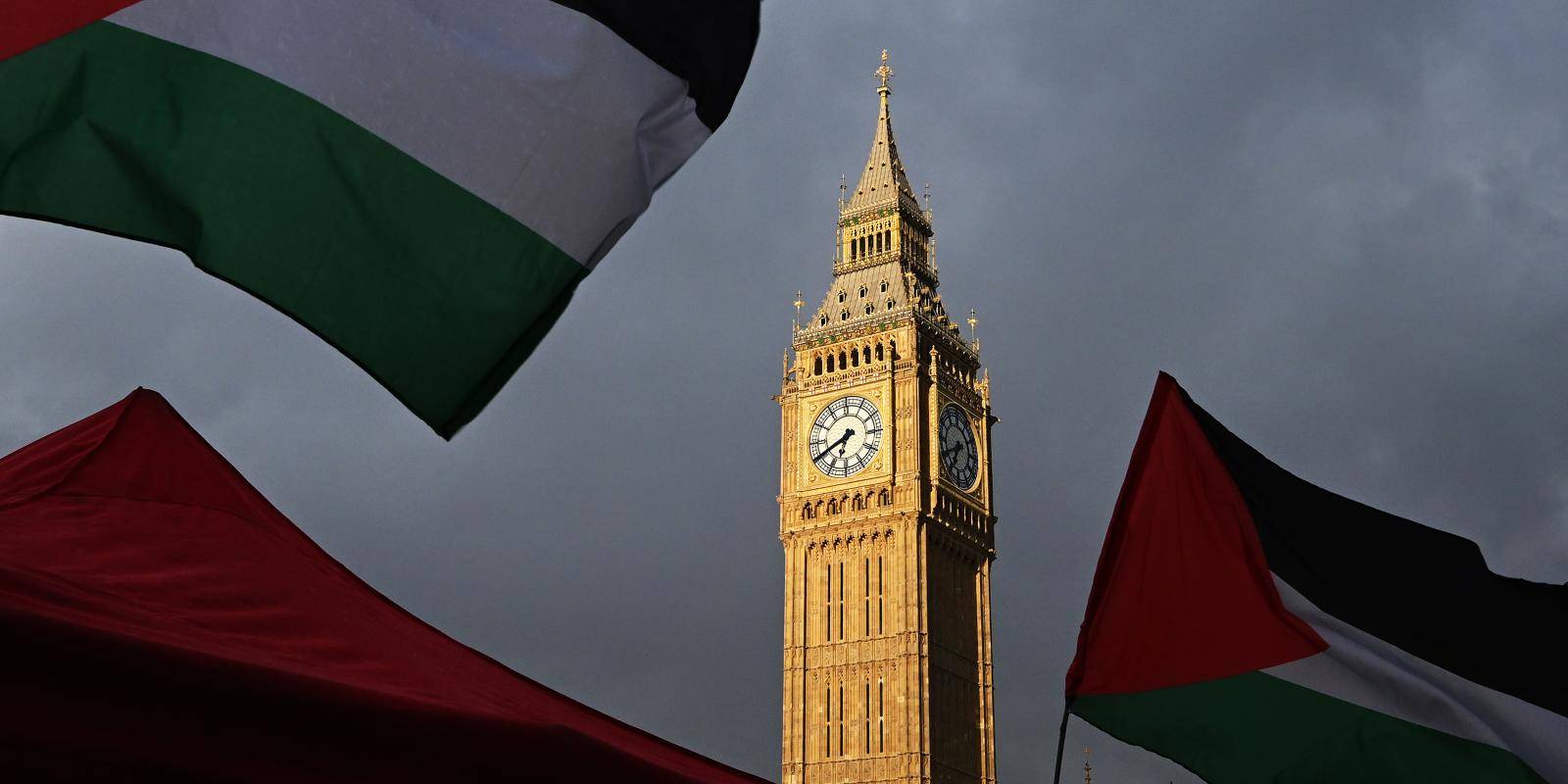

UK Prime Minister Keir Starmer will gather his cabinet this week to discuss whether the UK should recognize a Palestinian state. For all his caution, he should lead them to agreement on doing so. Recognition is a purely symbolic step, but the value of that symbol has risen. It is one of several measures the UK should take to help build international pressure on Israel to end the death, displacement and near-famine in Gaza.
The prime minister is right to observe the drawbacks of recognizing Palestine. For a start, recognition of a state can only be done once. More than 140 countries have already done so, and as critics of recognition point out, that has not brought a state into existence, although delegates are gathering at the United Nations in New York this week for a conference to discuss practical steps toward a two-state solution.
Recognition would infuriate Israel. Prime Minister Benjamin Netanyahu has already stated that ‘European countries will not influence us and they will not cause us to abandon our core objectives’. The step would also probably anger US President Donald Trump, now visiting the UK, imperilling a transatlantic trade deal that is important for UK growth.
Then there are the prime minister’s own political considerations at home. Starmer rightly made expunging anti-semitism a central part of his leadership of the Labour Party. But only a year into his premiership, his authority is already weakened. Recognition has higher stakes for him than for France’s President Emmanuel Macron – set to recognize Palestine in September – who will step down from power for good in May 2027.
Why recognize Palestine now?
All the same, it is the right time to take this step.
First, recognition is an unequivocal statement to Washington, Israelis, Palestinians and the Middle East that the UK views the creation of a Palestinian state alongside Israel as the only solution that will secure the future of both people.

That would not, as Israel claims, reward Hamas for its attacks of 7 October 2023 and its continued holding of hostages. A two-state solution is an undesirable outcome for Hamas, which has openly – and violently – opposed previous peace processes. It is weakened and the moderate camp strengthened if ordinary Palestinians can see a peaceful route leading to nationhood and self-determination. Nor would recognition deny that Israel has a need for security from those who want to kill its people.
But recognition would state what has long been the view of British governments: that the alternative to the creation of a Palestinian state is conflict without end, one that jeopardizes Israel’s security and international support as well as the region’s stability and future.
Second, recognition would strengthen the arguments of Saudi Arabia and other Arab nations in the Middle East that steps towards the creation of a Palestinian state are inseparable to peace efforts in Gaza.
Saudi Arabia matters. Besides the US and Israel, the Kingdom is perhaps the most important country in hopes of eventually securing peace. Its desire to play a role is an important new development after decades of failed efforts involving other regional powers. Riyadh’s good relations with the Trump administration make it well placed to address the most difficult questions such as putting forward a credible alternative to Hamas to lead a future Palestinian state.
The Saudis are not the only ones who could convene talks on a new Palestinian leadership. And Palestinians themselves must play a decisive role in shaping their future government or it will have no legitimacy on the ground.
But Riyadh could help broker talks with regional powers such as Jordan, Egypt, Qatar and the Emirates who have long had views and have been busy building contacts. It could also lead essential negotiations on how the region might contribute to the reconstruction of Gaza in the event of peace.
Normalized relations with Israel remain off the table while a ceasefire is still out of sight, but it remains a potentially transformative prize for Israel, offering a route to better relations not just within the region but with Muslim countries farther afield including Indonesia and Malaysia. UK recognition of Palestine could lend weight to Saudi arguments in their talks with Washington, if not with Israel itself.
