

Vietnam has become the third country (after the UK and China) to reach an agreement with President Donald Trump over the ‘reciprocal tariffs’ he announced on 2 April. Trump had originally imposed a 46 per cent tariff on Vietnamese exports to the US – the fifth highest figure announced on his ‘Liberation Day’. All those tariffs were suspended within hours but were due to be reimposed within 90 days (a deadline that has now been pushed to August 1).
Announcing the deal with Vietnam last week, Trump said that the US will instead impose a 20 per cent tariff on Vietnamese goods. A higher rate of 40 per cent will apply on any goods from Vietnam it considers to have been ‘trans-shipped’ – i.e. simply moved through Vietnam rather than being manufactured or assembled there. The Trump administration has previously accused Vietnam of trans-shipping Chinese goods into the US market, in effect concealing part of China’s trade surplus with the US.
The Vietnamese government has worked hard to reach an agreement with Washington. It has conducted well-publicized raids on sellers of counterfeit products to try to assuage Washington’s concerns over protecting intellectual property. Ministers have held multiple rounds of talks online, sent trade delegations to the US and pledged to buy billions of dollars’ worth of American products. Some reports even suggest Vietnam is considering buying American F-16 fighter jets, which would have been unthinkable even a few months ago in line with Hanoi’s long-held aversion to becoming dependent on Washington for strategic defence systems.
That said, all these purchases add up to a tiny fraction of Vietnam’s overall trade surplus with the US, perhaps $10 billion compared to a surplus in 2024 of $123 billion. According to President Trump, Vietnam has also pledged to cut all tariffs on imports from the US. This prompted him to declare that American-made SUVs ‘will be a wonderful addition to the various product lines within Vietnam’. While this seems optimistic given that many Vietnamese streets are too small for American cars, it is quite possible that Vietnamese government ministries might be told to ‘buy American’ for their next vehicle purchase to reduce the trade surplus a little more.
Vietnam’s economic incentives
Vietnam has moved so fast to reach an agreement with Washington primarily because its economy depends on exports to the American market, and the country’s leadership knows it will be judged on its economic performance. The Communist Party of Vietnam (CPV) will hold its five-yearly Congress within a few months and its General-Secretary, To Lam, wants to be selected for another term in office. Keeping the country’s exports flowing to the US is a big win for him and his recently unveiled development strategy, which is firmly aimed at increasing economic growth.
To Lam’s strategy involves the embrace of the private sector, which was endorsed by the new Politburo in May. He has also largely ended the anti-corruption campaign initiated by his hard-line predecessor, which had hobbled the economy. This approach is intended to help catapult Vietnam into the ranks of ‘high income countries’ by 2045, the centenary of the Vietnamese Declaration of Independence, and avoid falling into the ‘middle income trap’ like most of its Southeast Asian neighbours.
To achieve this ambitious goal, Vietnam needs to sustain annual economic growth of at least eight per cent for the next 20 years. This will depend on maintaining very high levels of exports, particularly to the US and Europe.
Between Chinese factories and Western markets
At the same time, Vietnam is becoming more connected to Chinese-controlled supply chains. Vietnam’s economic growth has been driven in part by foreign firms building factories in the country to assemble products using components made in China. Historically, these assembly lines were owned by Japanese, Korean or Taiwanese firms. Increasingly, however, Chinese-owned companies are also setting up production in Vietnam.
There are three reasons for this. Firstly, corporations are seeking to mitigate the risks of having all their production in one country; secondly, they need to reduce their exposure to US tariffs on China; and thirdly, because it is made possible by Vietnam and China both being part of the huge 15-country free trade area known as the Regional Comprehensive Economic Partnership (RCEP).
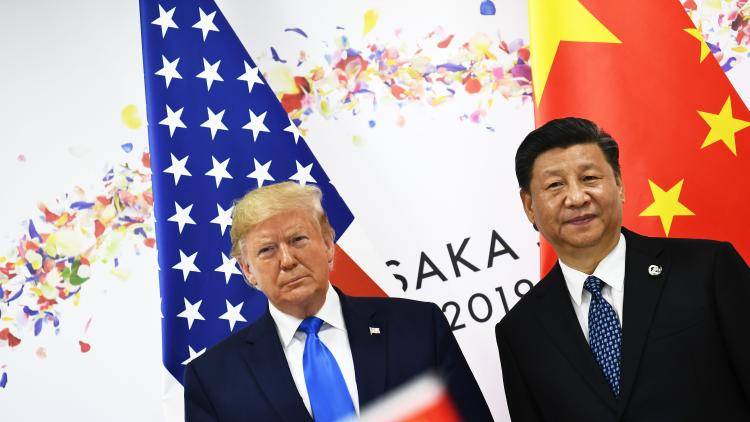
For now, Vietnam’s major economic role globally is as an assembly line between Chinese producers and Western markets. This has rankled the Trump administration, which says China has trans-shipped products via Vietnam to avoid US tariffs. The higher tariff rate on trans-shipped products in the deal announced by Trump is intended to counter this. But exactly where the boundary lies between Vietnamese goods and trans-shipped goods will occupy trade negotiators, diplomats and customs officials for many months to come.
Impact on Vietnam’s foreign relations
While the deal will certainly contribute to improved US–Vietnam relations it is unlikely to signal a major change in Vietnam’s foreign policy orientation. Hanoi cannot afford to antagonize either of its major partners. It needs the US as a market, but also relies on trade with, and political support from, China.