‘Sánchez clings on’ has become an evergreen headline for the English language press watching Spanish politics. Spain’s tall, photogenic and (a national first) English-speaking prime minister is a consummate survivor. His aptly titled memoir, Manual de resistencia (‘The Resistance Manual’), charts his bumpy ride from political outcast to head of Spain’s left-wing government.
He came to power in 2018 through an audacious no-confidence vote, toppling the scandal-ridden conservative premier, Mariano Rajoy. Since then, Sánchez’s seven years as prime minister have been another very bumpy ride. But at every crisis, he’s produced a trump card to keep himself in office.
In 2023, reeling from a drubbing in regional elections, he stunned Spain by calling a snap general election the very next day. Against the odds, he managed to hold onto power by the narrowest of margins.
Now the man who vowed to clean up corruption finds himself engulfed in it. His closest political ally, Santos Cerdán, and even his own wife and brother are accused of corrupt practices – all deny the allegations. Undaunted, Sánchez still insists that he will serve out his term, with elections not due until August 2027.
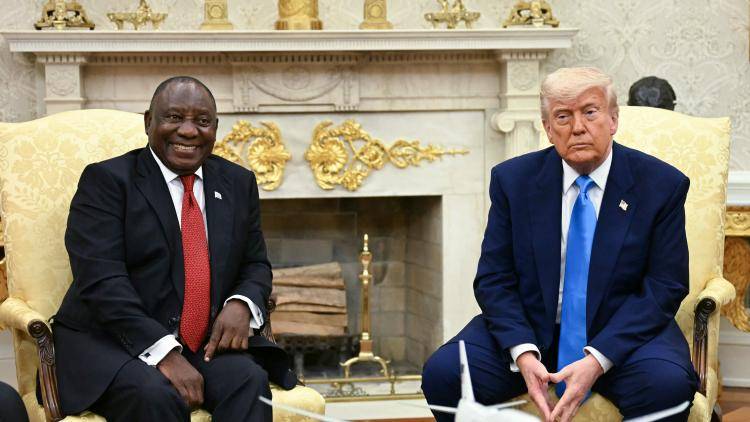
Strange as it sounds, it may be President Donald Trump who helps him to do just that.
What it takes to survive
At June’s NATO summit in The Hague, Sánchez infuriated President Trump by refusing to sign up to the new 5 per cent of GDP defence-spending target agreed by all the other NATO leaders. Instead, Sánchez announced that 2.1 per cent would be quite sufficient.
Trump promptly threatened punitive tariffs ‘to make [Spain] pay twice as much’ (though in fact nothing has yet happened). Other NATO leaders also expressed their irritation with Sánchez. Many quietly acknowledge that their own defence-spending pledges aren’t realistic, but feel that, instead of openly defying Trump, Sánchez should have toed the line and promised 5 per cent ‘mañana’.
Why did Sánchez choose to break ranks? Because at home he has no room for manoeuvre. Only two months earlier, even a 2 per cent defence spending plan was greeted with howls of protest from the numerous small far left and separatist parties on whose support his coalition government depends.
Requiring those parties, just two months later, to accept a leap to 5 per cent might well have toppled his government. Sánchez, once more, did what he had to do in order to survive.
But this approach may not only allow him to survive. He may actually thrive – for defying Trump plays well at home. According to a YouGov poll, President Trump is regarded unfavourably by a whopping 81 per cent of the Spanish population.
During the 2023 election campaign Sánchez characterized the contest as a choice between ‘Sanchismo’ (continuity) or far-right barbarism.
The tactic worked, playing on fears of a right-wing government that would almost certainly include the hard-right VOX party, which bristles with MAGA-style policies – even embracing the slogan ‘Make Spain Great Again’. Sánchez, it turned out, only needed to point to Mar-a-lago to bring out the vote in Malaga.
Sánchez will also have noted that standing up to Trump has worked well for two other social-democratic leaders, Canada’s Mark Carney and Australia’s Anthony Albonese.
Making a habit of provoking Trump
Since Trump was re-elected, Sánchez has doubled down, presenting himself as a bulwark against the surge in ‘global far-right extremism’. At times it seems as if he is openly taunting the US president, claiming for example that rather than ‘Drill, baby, drill’, it’s going to be ‘Green, baby, green’.