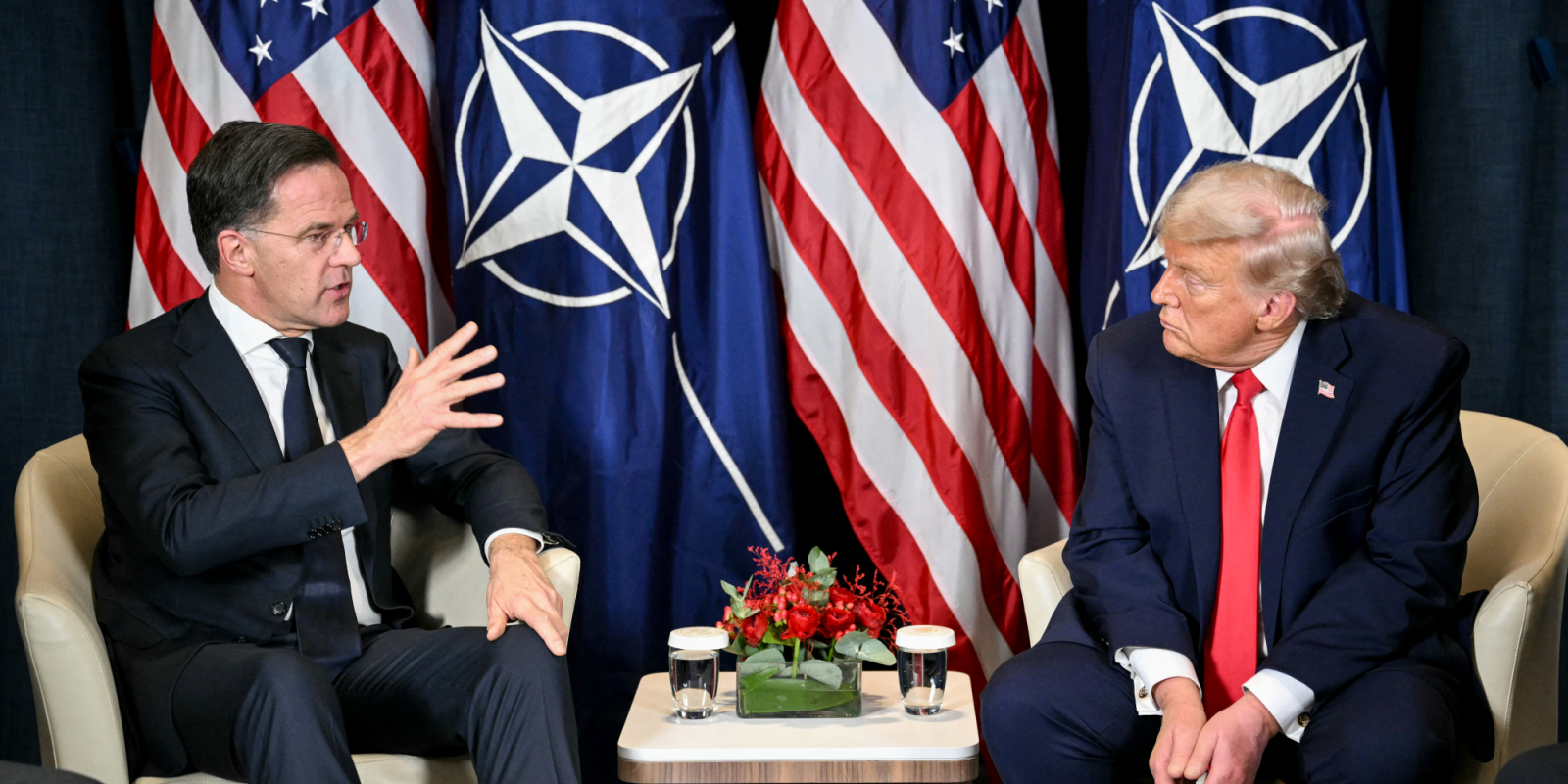

At Davos this week, President Donald Trump eased tensions over his desire to acquire Greenland for the United States. He withdrew threats of punitive sanctions against Denmark and other European countries who oppose his plans. And he ruled out the prospect of military action to acquire the territory. Instead, he announced that a ‘framework agreement’ has been reached that will accommodate US interests in the long term, or indeed forever.
The agreement may in fact just be an agreement to reach a framework agreement according to certain basic principles. It appears to have emerged from conversations with NATO Secretary-General Mark Rutte.
Greenland does not seem to have endorsed this approach fully. Denmark has stated again that it cannot negotiate on sovereignty. And opposition to any agreement may build.
The Cyprus precedent
Any sale of Greenland by Denmark to the US was simply not possible. In contrast to the practice of the 19th and early 20th century, no state can transfer significant lumps of territory to another sovereign state if the local population objects.
Moreover, Greenland has a constitutional status of a self-determination entity which, once granted, cannot be removed. That further entrenches the principle that it is for the people of Greenland alone to determine their future status.
It has been reported that the solution envisaged in the new framework agreement is to transfer only small parts of Greenland to the US, rather than the entire territory – an arrangement similar to the UK’s sovereign base territories in Cyprus.
In such an agreement the US would acquire sovereign title to its principal military base area in Greenland. This might be extended to more than one base, in accordance with the 1951 Defense of Greenland Agreement, as amended in 2004.
When Cyprus became independent in 1960, it was agreed that two significant areas (Akrotiri and Dhekelia), amounting to about 3 per cent of its territory, would remain under the sovereignty of the UK, which has maintained military bases there ever since.
Unlike other overseas territories, these two areas are administered under the authority of the UK Ministry of Defence and not its Foreign, Commonwealth and Development Office.
The UK claims full sovereign rights over the two areas. But Cyprus argues that according to a UK declaration, London’s authority is limited to exercising the military functions associated with the bases.
As the areas are large, they include significant numbers of civilians. The UK Commander cooperates with Cyprus officials in delivering civilian functions and services to them, and ensures that the law applicable to them in the base areas tracks Cypriot legal provision where possible. Such issues should be less relevant in the more sparsely populated Greenland, even if the base areas are extended.
However, unlike Cyprus, most other international basing agreements see the host country retain sovereignty over the territory on which a base is located, only agreeing not to exercise its own jurisdiction and instead allowing the foreign state to apply its own.
Therefore, if Trump does indeed demand actual sovereignty over US base areas in Greenland, he would be attempting to press Denmark into a rather unusual concession. Under the Danish constitution Denmark’s Parliament would have to approve a loss of territory, which may give rise to lively debate and opposition.
However, even were Denmark to agree to this option, serious legal issues may arise were a portion of Greenland to be transferred to the US before the people of the island have exercised their right to self-determination through a referendum on independence.
The Chagos precedent
In 1965 the UK removed the Chagos Islands from Mauritius before granting independence to Mauritius in 1968.
In an Advisory Opinion of 2019, the International Court of Justice (ICJ) ruled that this violated the right to self-determination of Mauritius.

It made this finding despite the fact that the UK had obtained agreement from a delegation from Mauritius before excising the islands. The Court found that the delegation was still under the influence of the UK government before independence and that Mauritius had therefore not validly consented.
The UK decided to follow the ICJ’s pronouncement, although it was not legally binding – an act that has recently been called ‘stupidity’ by the US president. The UK exchanged its claim to sovereignty over the Chagos Islands for a long-term lease, allowing the US, in turn, to retain its critical base on Diego Garcia for at least 99 years.
Should Greenland ever become independent, it might advance a similar argument: that it once was a colony of Denmark; That essentially it remained one at the point the transfer of territorial sovereignty to the US was made; And therefore that it had not validly consented. It could then ask to regain any territory granted to the US by Denmark before independence.
International vs Constitutional Law on Self-determination
Copenhagen and Washington might answer that Greenland already exercised its colonial right to self-determination when it integrated with Denmark in 1954. The UN General Assembly accepted in Resolution 849 (IX) that this had been the case. This would mean that the right to colonial self-determination, which can only be exercised once, has been exhausted.
The US and Copenhagen might also assert that the rights presently enjoyed by the people of Greenland are more limited than colonial self-determination. These rights are not based in an entitlement to de-colonization in international law, given that the colonial status ended in 1954.
Instead, rights are the result of a voluntary grant provided by Denmark in the Act on Greenland Self-Government. The Act provides for the possibility of independence should the people of Greenland opt for it, but it might not include the right to territorial unity and integrity that attaches to a colonial self-determination claim administered by the United Nations.