

The scramble to secure critical minerals has reignited a wave of resource nationalism, with states intervening in private entities across the mining sector.
This is part of a decisive shift, as market-oriented economies move from incentivizing private actors towards taking a direct financial stake in their operations – in order to influence supply.
The traditional drivers of state intervention have been to protect the mining industry, get projects off the ground, or expectations that governments can benefit economically from extraction.
New drivers of intervention are far more concerned with control over minerals flows – to address vulnerabilities caused by the dominance of China in supply chains and the volatility emanating from intervention from other players.
The US is acting with remarkable urgency to increase production and secure supply. That means that governments that do not have an equity stake in supply chains risk being left behind in the race for material security, placing their manufacturing jobs, many of which rely on supply of minerals, in jeopardy – consigning themselves to trajectories of deindustrialization.
Countries like the UK and blocs like the EU are following Washington’s example by accepting the need for relatively risky minerals investments. In doing do, they must be guided by a desire for control as much as – if not more than – a search for the best value, especially given current low prices.
Increasing volatility and political risk
The geopolitical vulnerability of minerals supply is clear. China is the world’s biggest miner and dominant processor of critical minerals. Beijing’s use of export controls, soft barriers to trade such as export licensing requirements, and trade dumping to reduce prices mean that consistent supply is no longer guaranteed.
US action to counter this dominance will mitigate their own supply risks, but at high cost. The US is leveraging several funding mechanisms, including $15 billion in letters of interest from its Export Import bank EXIM, and $7 billion in loans from the department of energy. The pentagon has also committed $2.8 billion in equity and debt to eight mining and refining projects.
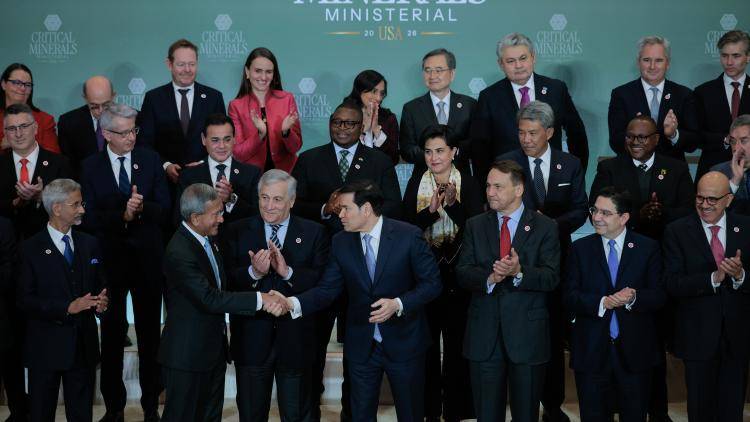
The US is distinct from other partners as they have a higher risk appetite, and they are strategically leveraging Gulf State sovereign funds. Their goal is control, via significant shareholding in mining concerns, seats on their boards, and through that the ability to control flows of critical minerals.
For example, the agreement for the US Development Finance Corporation (DFC) and UAE-backed Orion consortium’s 40 per cent share of Glencore’s copper operations in the Democratic Republic of Congo (DRC) was tied to them being able to choose the export destination for the copper.
Similarly, the US Department of War provided support measures lasting over a decade to MP Metals for Neodymium-Praseodymium oxide and manufactured magnates – while including an offtake agreement to ensure that it could have access to the finished product.
This US policy is a major political risk. Even if these efforts mitigate supply risks, they will still fall far short of overtaking China as a dominant producer of critical minerals.
Other countries, such as the UK, EU countries and others, cannot match the scale of what the US is attempting and have a difficult ask of their taxpayers; to pour money into an industry with low project success rates and high environmental costs.
But government investment is what is required to get mining projects off the ground and establish some measure of control over mineral supply flows. That in turn will ensure national access to industry-critical materials and protect jobs. But it will also likely cause further volatility, as states pressure companies to serve national needs in addition to market forces.
State involvement can influence companies’ decision making. In February 2026 French firm Imerys Lithium placed its project in Cornwall, UK, on care and maintenance due to financing constraints. At the same time, the Banque des Territoires, acting on behalf of the French government, acquired a minority stake in another Imerys Lithium project located in France. The French project with state support pulled through.
The UK’s National Wealth Fund has similarly put money into domestic critical minerals projects. That includes Cornish Lithium, a separate project close to the Imerys site.
However, to genuinely protect supply, the scale of financing must increase, and equity ownership strategies cannot only take place within national borders. Countries like the UK must mobilize politically guided capital instruments to gain direct influence in mining operations across the global supply chain.
Funds such as British International Investment should seriously consider taking investment positions overseas that complement other instruments such as UK Export Finance – so that the UK has a stake in – and access to – mineral production it cannot achieve domestically.
Control over value
If the UK and EU are serious about improving minerals access, then they must also seek to increase control through equity.
There is precedent: shared private/ government ownership structures are commonplace in the oil industry. The mining industry is moving towards this model, and governments should take advantage of the shift. Representatives of national oil companies that sit on boards and engage in corporate governance as non-operating partners bring significant skills and knowledge. For the UK, EU and others, there is a need to bring technical skills into government, that can then be deployed into such positions.
Government investment at an early stage has other benefits: It can de-risk mining projects by providing patient capital and committing to purchase a portion of the mine’s future production. This can make projects more economically viable and attractive to others. But governments must also go into projects with their eyes open. They are not picking winners seeking short term gains. Rather, they are giving projects an improved chance of long-term success.
Countries like the UK and EU member states can also provide important means for greater democratic oversight of Environmental, Social and Governance criteria and responsible performance standards in the mining sector. They can also be important representatives of indigenous peoples’ rights, while promoting environmental protections, and pushing for more sustainable practice.
However, government intervention should not be guided by a desire for profit or job creation. A measure of long-term control of supply chains should be the objective for industrial EU countries and the UK, serving the more pressing need: to protect critical industries and manufacturing jobs that depend on mining sector products.
Governments that take stakes in critical minerals ventures in developing countries must strike a careful balance. In many cases their investments will be welcome, as the financial liability of investing in mining is even greater for developing nations and is normally not the most effective way to invest their money. But international partners should work to build triangulated state-backed joint ventures, balancing their desire for security of supply with exporting countries’ demands for control over national resource wealth.