
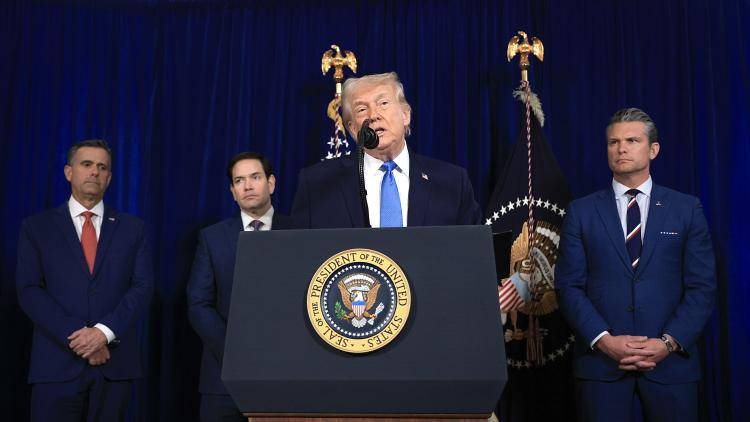
Last week, in an interview with The New York Times, President Donald Trump offered a narrative connecting a series of disruptive events caused by the United States in global affairs.
These include the intervention in Venezuela and imposition of a naval blockade, the attacks on small boats off its coast, the attack on Iranian nuclear installations, and the repeated threats against Denmark concerning Greenland.
Trump’s explanation relied on the unfettered pursuit of US national interests and a denial of the relevance of international law for Washington.
Whatever the political wisdom of these operations, it is certainly true that there is no ready legal justification available for any of them.
A withdrawal from international law and order
The hostility towards international law and multilateralism more generally found immediate expression upon the start of President Trump’s second term in office.
Support for UN bodies was reduced or halted altogether. The US failed to contribute at a high level to important summits, including November’s G20 summit in South Africa. It torpedoed international attempts to regulate AI, or to address challenges like plastic pollution of the oceans. Other major events, including the Belem COP on climate change, were pretty much ignored entirely.
This was topped just last week by President Trump’s spectacular Executive Order withdrawing the US from dozens of international organizations and treaties ‘contrary to the interests of the United States’.
The US has also attempted to ‘spike’ international institutions it opposes. For instance, it has adopted targeted sanctions against senior officials of the International Criminal Court.
This is hardly balanced by the fact that Donald Trump likes to present himself as the President of Peace. The Gaza peace deal of October brought about the release of hostages and a ceasefire of sorts. But the prospect of stable peace remains elusive and there is concern that the rights of the Palestinian people are being ignored.
On Ukraine, Moscow has hinted that, during the US–Russia summit in Anchorage last summer, Donald Trump expressed sympathy with President Putin’s need to regain supposed historic territories in the Donbas through the use of force.
Hence, the heavy pressure on Ukraine to sign a legally binding peace settlement that surrenders territory that has not even been captured. The insistence by Ukraine and its allies that formal legal confirmation of forcible conquest is entirely impossible within the modern international order did not find much resonance in Washington.
A realistic tool of international politics
In fact the principle that territory acquired by force cannot be legally recognized was first introduced by the US, in 1931, by Secretary of State Henry Stimson in response to Japan’s invasion of Manchuria.
That was a key contribution to the post-Second World War development of a global order designed to prevent more terrible wars. This order was formalized in the UN Charter – a document drafted in San Francisco, very much in the image of the US.
President Trump does not deny that international law exists. Instead, he asserts that it is up to him to determine when the US should comply with the rules that bind others, according to his own moral compass or US interests.
It is sometimes implied by academics and politicians not actually involved in international practice that international law is an unrealistic construct invented by incorrigible idealists.
In fact, international law is very much a realist tool of international politics. Generally, states remain free to determine which legal rules they are willing to accept. But once they have consented to a rule, they are definitely bound by it. As states will only subscribe to rules they regard to be in their own interests, compliance with law is generally high.
If, however, each state were to remain free to determine whether or not it will comply with a given rule it has subscribed to – as its interests change, or due to the fluctuating moral sentiment of its leader – there would be no point to having rules at all. The aim of predictable and stable relations, and clear pathways for international transactions, would be destroyed.
A US exemption?
The US might argue that it is in a unique position: that as a democratic superpower with vast military potential, it does not have to accommodate the same limitations others must accept. However, if powerful states opt out of the system, the system will not survive.
International law is about achieving what is in the common interest of all. And that requires confidence that all will support the rules that have been universally accepted, even if these collide, on occasion, with the short-term interest of a given state, however weak or powerful. Exceptionalism invoked by the one will soon be invoked by others.
Some expect that the US, China and Russia will now rule their respective spheres of influence without much legal restraint.
The attempt of the US to dominate ‘its’ hemisphere is already in part reflected in the attitude of Russia towards its so-called ‘near abroad’, including Ukraine and the Baltic, and in that of China in relation to the states bordering the South China Sea.
However, this pressure is generating new coalitions of interest across continents, focusing on the defence of the international legal order, notably the prohibition of the use of force.
The Global South response
At the UN Security Council, it was Kenya that spoke up most eloquently in defence of the core rules of the international system when Ukraine was invaded. South Africa did the same when the intervention in Venezuela was discussed, supported by some 125 neutral and non-aligned states.
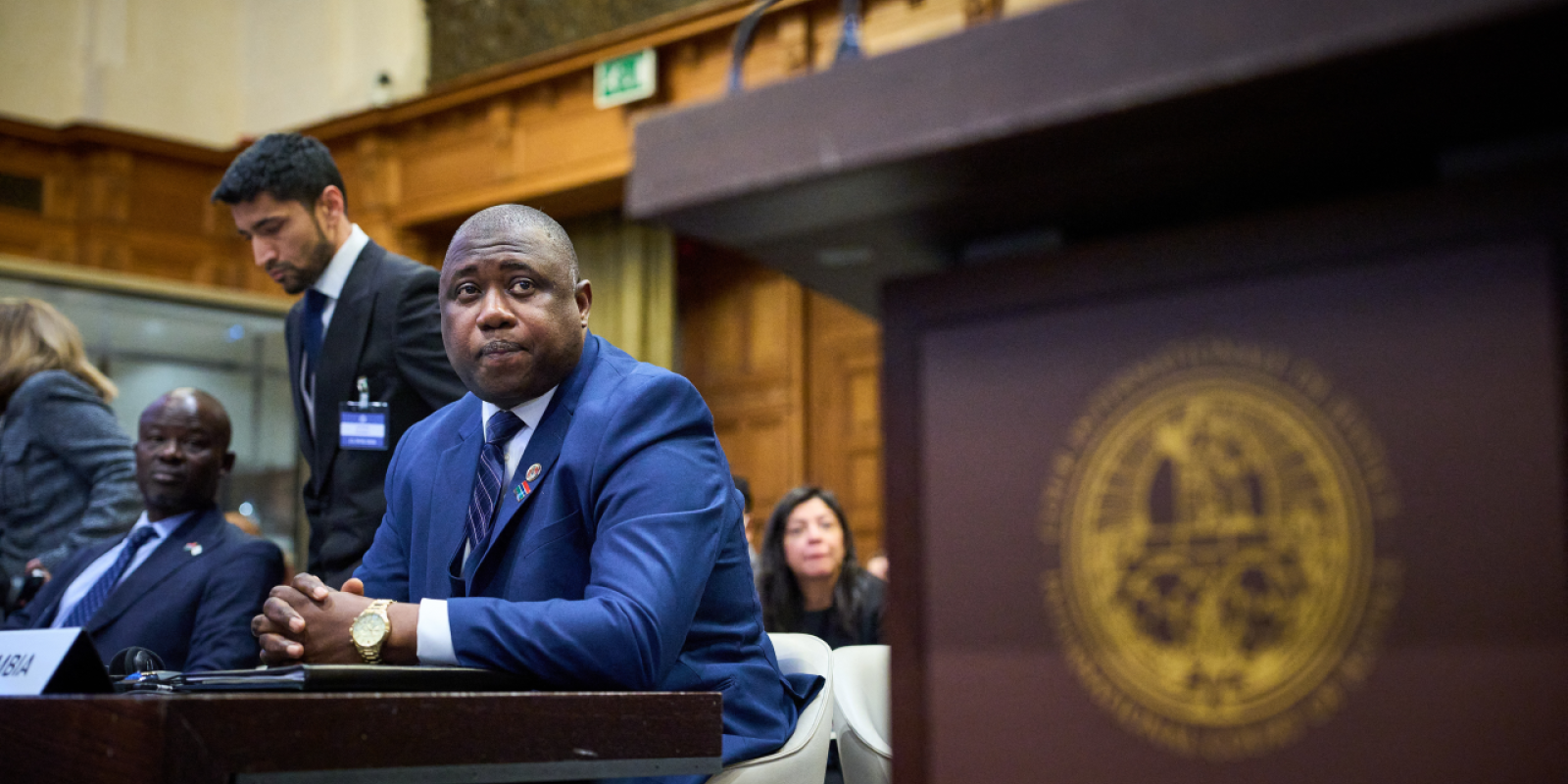
The Gambia is pursuing a fellow member of the global South, Myanmar, for its alleged campaign of persecution of the Rohingya minority, through the supposedly Western institution of the International Court of Justice. South Africa has also brought a case of alleged genocide concerning Gaza before the Court.
Instead of calling out the hypocrisy and injustices of the supposedly Western liberal order, such states are now defending it and using its tools towards that end.
Even European countries, thus far hesitant to offend President Trump, have woken up to the need to counter lawless bullying – rallying to the defence of Denmark over US threats to Greenland, and supporting Ukraine in resisting pressure to relinquish yet more territory.
There are good reasons for this. Global goals, like the preservation of the environment or the maintenance of peace, remain. They can only be effectively addressed collectively.