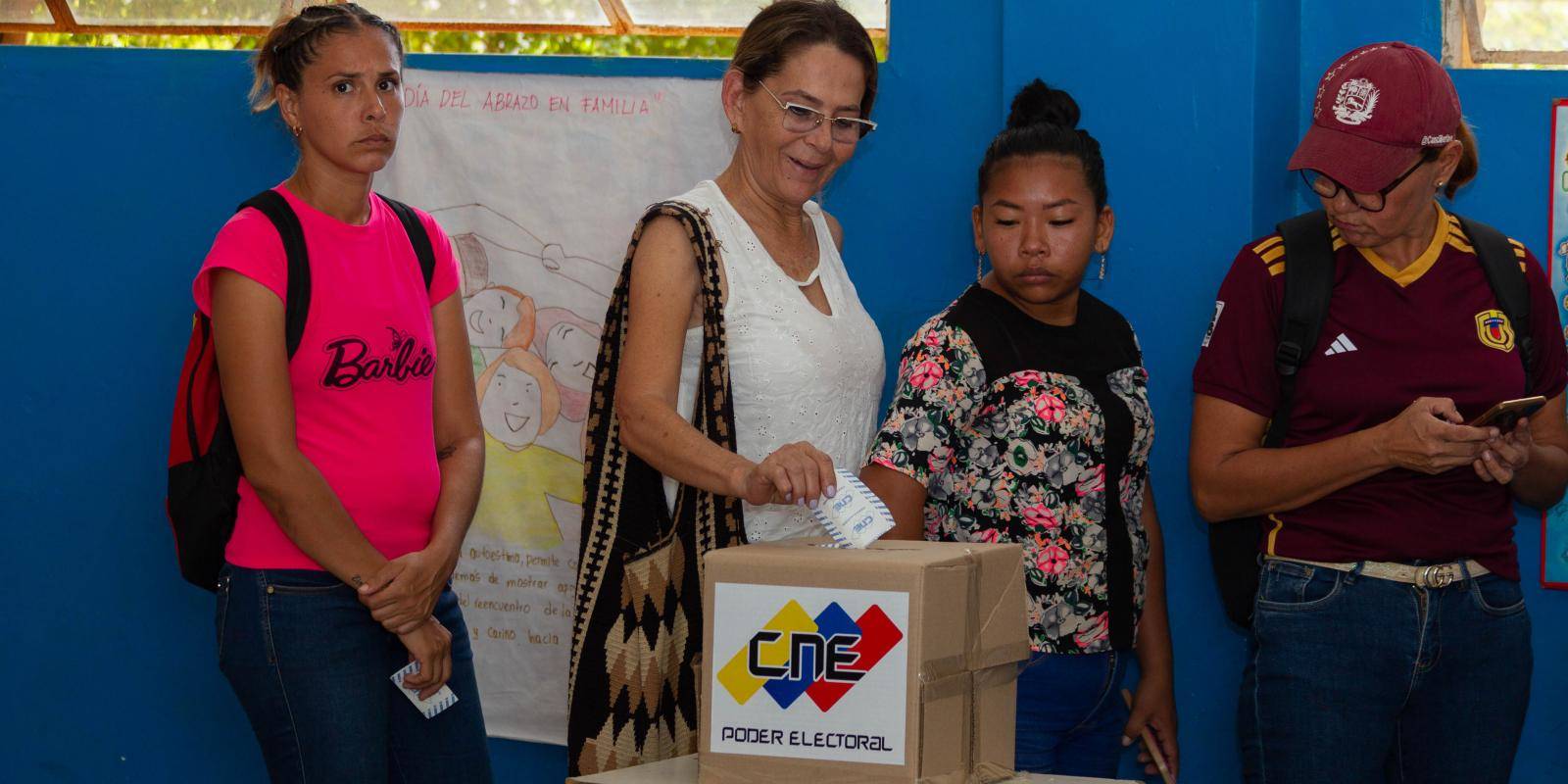
Following the decapitation of the regime via the US military operation that captured Nicolás Maduro on 3 January 2026, Venezuela has its best opportunity in over a decade to re-establish democracy, restore human rights protections and fix its stricken economy. However, despite the mounting demands from Venezuela’s political opposition for free and fair elections, both the Trump administration and Venezuela’s interim government – headed by Maduro’s former vice-president, Delcy Rodríguez – have avoided specific commitments on the organization and timing of elections.
If Venezuela is not to miss its historic shot at lasting change, it needs to make a rapid start on a multitude of electoral and related reforms so that the country reaches a position where credible elections can feasibly be held, where the results of such elections will be respected, and where the political and economic settlement that emerges from the process is durable and beneficial to all Venezuelans.
A viable democratic government will require a minimum level of macroeconomic stabilization. This will entail achieving currency stability, a positive flow of hard currency – via legal exports and investments – and improvements in the fiscal balance. Although elections could occur without progress in these areas, this would leave the crisis of government legitimacy unresolved and increase risks of political and social instability.
At the same time, political reform cannot wait too long. Elections cannot be deferred – as some US messaging seems to have implied – until the economy has recovered. That would be a recipe for kicking the proverbial can down the road. Instead, planning for elections must proceed immediately, in parallel with macroeconomic stabilization, and should begin even before a date is set for voters to return to the polls.
If Venezuela is not to miss its historic shot at lasting change, it needs to make a rapid start on a multitude of electoral and related reforms so that the country reaches a position where credible elections can feasibly be held.
Several fundamental conditions must be met: political inclusion across the ideological spectrum, underpinned by legitimately recognized authorities; an end to arbitrary political disqualifications for opponents and critics of the government; institutional clarity regarding electoral and judicial competencies; legal and security guarantees for relevant political and social actors; and the technical integrity of the electoral system.
Achieving these conditions will require a series of specific political, institutional, legal and technical reforms. It will also require political commitments and good faith on the part of Venezuela’s interim government, the opposition and international stakeholders (especially the US).
The reforms must include: the reappointment of an independent National Electoral Council (CNE, the body that oversees elections in Venezuela); guarantees that Venezuela’s politicized armed forces will not interfere in the elections; the repeal of laws limiting freedom of expression, independent media, political activity and foreign financing of civil society; a determination as to which elections will be held, with a timeline for each; renewal of voter registration, including for Venezuelans in the diaspora who are of voting age; a transparent audit of the election system; and the involvement of professional international election monitors and citizen observers throughout the process.
A political pact on electoral issues will need to be agreed to initiate and underpin these steps. The US, the EU and other international partners must work with Venezuela’s interim president Rodríguez, in dialogue with the opposition and civil society, to outline specific agenda items, goals and timelines.