One of the essential dilemmas for Venezuela and its international stakeholders lies in the tension between responding to popular demands for rapid democratization and following the painstaking – and unavoidably lengthy – preparatory processes essential for ensuring credible elections.
If elections are held too quickly – without permanent or interim reforms to the electoral commission, the repeal of laws limiting political and civil rights, and a full upgrade of the voter registry for both domestic and diaspora voters – the risk is that a potentially democratic exercise would become largely symbolic. Worse, without depoliticization of the security services and reform of the judicial sector, any elected government that replaces the current regime could end up inheriting the pro-government legislature and politicized state of the PSUV. Such a government would also likely be short-lived, or – at best – severely hampered in its ability to deliver genuine democratic accountability.
On the other hand, delay risks leading to political stasis and more entrenched authoritarianism. It could allow the interim government to continue indefinitely in its present form, more or less intact except for the loss of Maduro as president. This would not just destroy hopes for democracy in Venezuela. It would also create a dangerous model for other countries in the Western Hemisphere, the majority of which have enjoyed more than 40 years of democratic governance.
The US will be decisive in determining whether such problems are avoided. Its economic, diplomatic and coercive capabilities form part of the strategic environment shaping Venezuela’s future. Any credible electoral pathway must be understood within this geopolitical context. The initiation and success of electoral reform will therefore depend substantially on the Trump administration. Nonetheless, other international actors have important supporting roles to play. Governments and multilateral institutions from Europe and the Americas will need to offer guarantees and assistance in negotiations on democratic elections, improvements in commercial law, and investment in key areas of the economy – including in infrastructure, socially responsible mining and financial services.
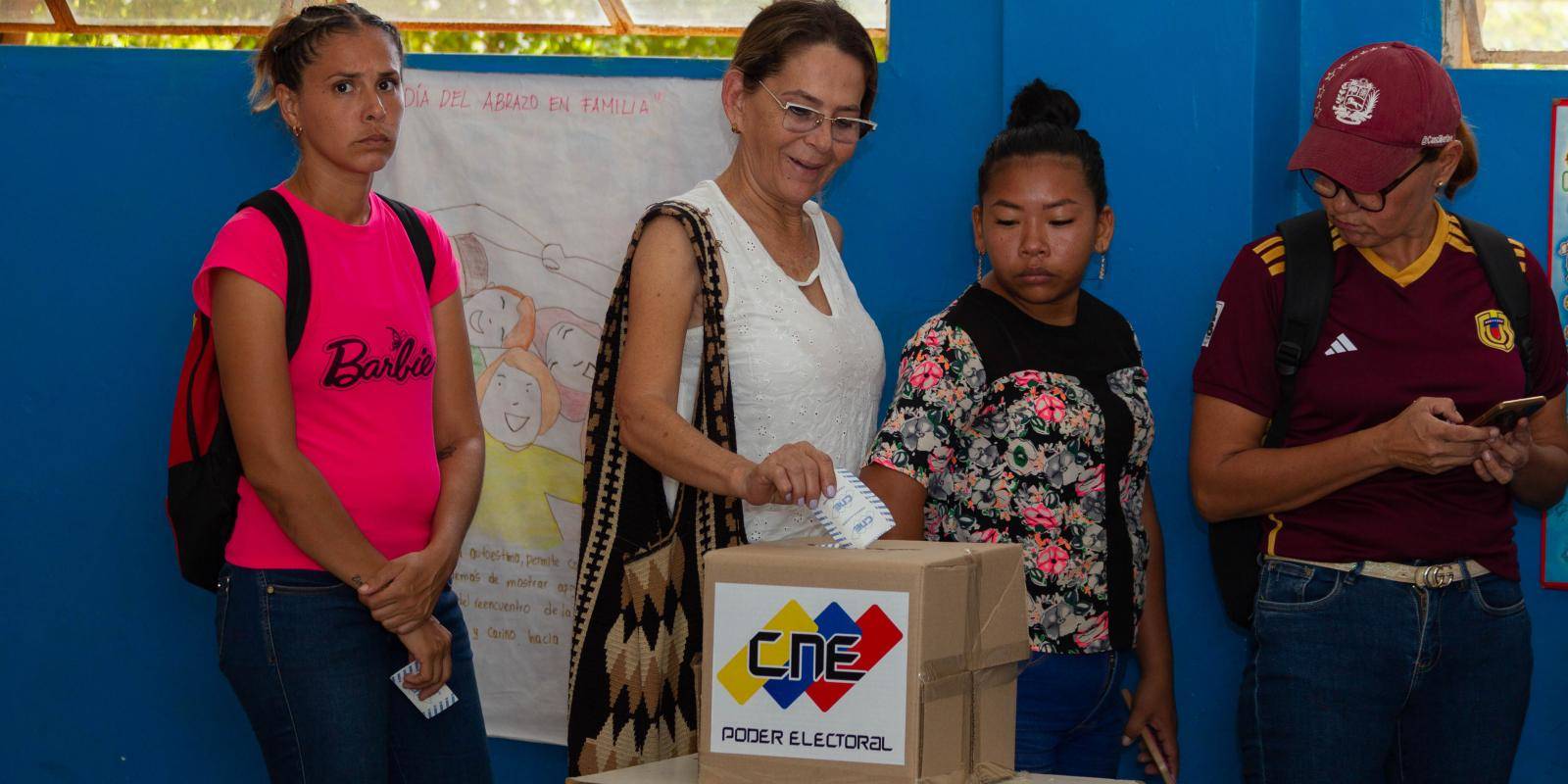
A rush to elections without reform of the CNE or an independent process to monitor voting, adjudicate in disputes and ensure that the candidate who gathers the most votes is duly declared the victor risks repeating the failure of the 28 July 2024 presidential election, though this time with greater threat of political and social upheaval.
Electoral design – including timelines, procedures and monitoring – is inseparable from underlying power realities, including who controls institutions, who can block reforms, and which domestic and international actors shape what is feasible.
Electoral design – including timelines, procedures and monitoring – is inseparable from underlying power realities, including who controls institutions, who can block reforms, and which domestic and international actors shape what is feasible. The goal in the new, post-Maduro context should be to find the minimum threshold for a political agreement on the institutional and legal reforms necessary to ensure credible, safe and enforceable elections without inciting instability.
The importance of calibrating the process in this way was underlined by the findings of US government analysts (including at the Pentagon and the State Department), who argued during Trump’s first term, and again early in the military build-up in late 2025 that led to the removal of Maduro, that a wholesale attempt to quickly replace the entire Maduro government with the democratic opposition could result in chaos and violence.
An essential security challenge in this context is that the once-independent armed forces have become deeply politicized by the PSUV. In addition, the pro-Maduro interior minister, Diosdado Cabello – still in power – is understood to control a private militia (known as the ‘colectivos’) that operates in support of the government. Establishing security both ahead of and after any elections will also be complicated by the wide-ranging presence and operations of the Colombian guerrilla/criminal group the Ejército de Liberación Nacional (ELN). The ELN controls Venezuelan territory along the border with Colombia, and is also known to operate in the Orinoco gold mining region. With the alleged permission of Venezuelan armed forces, the ELN engages in narcotics trafficking and illegal gold mining, and in several cases the group provides de facto local governance in the absence of effective official rule.
Two decades of PSUV rule have also led to the politicization of the national judicial system. The Supreme Court is packed with government loyalists, as are the lower federal courts, and the governing party controls a supermajority in the single-chamber National Assembly.
This partisan control of state apparatus complicates elections and any potential democratic transition. Under present conditions, if the opposition were to win a presidential election – even given a playing field currently tilted in favour of the PSUV – it would need to contend with a national legislature, public security forces, private militias and illegal groups all working with the collusion or cooperation of the armed forces, and a judicial system directly or indirectly controlled by elements of the now-interim Rodríguez-led government.
A related challenge is that Venezuela’s armed forces have historically overseen the security, infrastructure and logistics of elections – a role that pre-dates even the terms of former president Chávez and his hand-picked successor Maduro, under a mechanism known as Plan República. Now, though, penetrated by loyalists and seemingly controlled by a PSUV interim president, those forces will need their operational remits and relationship with the state reviewed to determine how the military can transparently and objectively manage free and fair elections.
Whatever the decision on their timing, elections will risk creating temporary uncertainty and social friction.
Whatever the decision on timing, elections will risk creating temporary uncertainty and social friction. Those risks can be reduced only if the international community, led by the Trump administration, and the interim government press ahead with negotiations over election conditions as soon as possible. Credible elections held under more neutral conditions that are agreed by consensus and accepted by all parties will establish a long-term framework and guarantee for broader economic investment and growth.