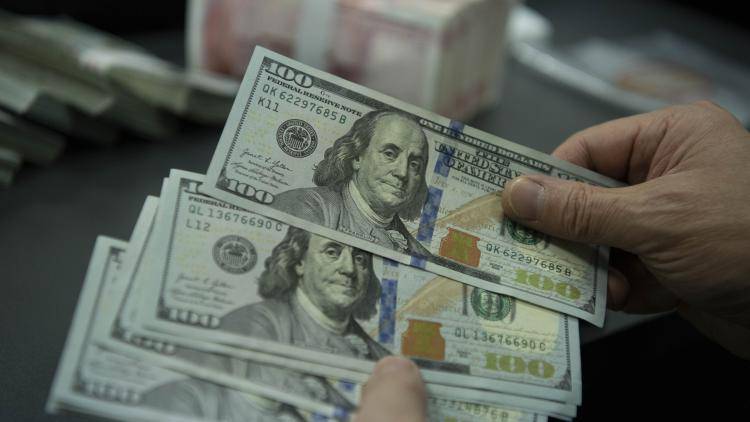
As statistics authorities across the globe start to publish inflation data for the month of April, the scale of the Hormuz inflation shock is slowly becoming visible. The US announced its Consumer Price Index (CPI) had risen by 0.6 per cent in the last month, and 3.8 per cent over the last 12 months, its highest rise since May 2023.
Elsewhere, annual inflation in the Philippines reached 7.2 per cent last month, from 4.1 percent in March. In Turkey, inflation accelerated to 32.4 per cent in April, from 30.9 percent a month earlier.
There will be much more of this to come, and the reason is straightforward: the price of energy is a central variable in shaping overall inflation. And since the US-Israeli war on Iran and the subsequent closure of the Strait of Hormuz, energy prices have soared and show no signs of returning to pre-war levels.
Energy is central to inflation
Under almost any scenario, global energy prices will remain way higher than they were last year, when the price of Brent crude averaged a mere $69 per barrel, the lowest level since 2020. In contrast, the price of Brent crude these days is closer to $100 per barrel.
This will be enough to keep inflation fears ignited, and central bankers will face very unpleasant challenges in the coming months.
It is very difficult to find previous episodes of accelerating global inflation that don’t have rising energy prices at their heart. The most famous, of course, were the oil shocks of 1973 and 1979, which pushed inflation in the US, for example, towards 15 per cent in early 1980. In response, Paul Volcker’s US Federal Reserve raised its interest rate to 20 per cent to tame that beast.
The global economy is considerably less energy-intensive than it was in the 1970s, and monetary policy is a lot more disciplined.
Yet the role of energy prices in shaping inflation seems undiminished.
Rising energy inflation – the change in energy prices – has played a critical role in the two notable broader inflation surges in the past decade: in 2016–2018, and following the COVID-19 pandemic in 2021–2022 (see chart).
Equally, the moderation in global inflation that the world enjoyed between January 2023 and the Iran war in late February 2026 would have been inconceivable without a sustained collapse in global energy price inflation. During this period, there were only six months in which the inflation rate of global energy prices was above zero; the rest of the time, the change in energy price decreased. This energy price deflation paved the way for sharp declines in overall inflation measured by CPI.
The role of demand
An important challenge to this admittedly simple view of things is that it confuses cause and effect: One might argue that it is really only demand conditions, shaped by monetary policy, rather than supply disruption, that determine the price of energy and therefore its effects on CPI.
For example, there is an argument that the post-Covid inflation surge was only really made possible by excessively loose monetary and fiscal policies that many governments put in place to help soften the economic blow of the pandemic. Those loose policies, in turn, allowed global demand to outstrip supply, generating inflation in goods and services prices across the board – including the price of energy.
That view of things may be right when it comes to explaining the specific post-COVID increase in inflation. But it doesn’t work quite as well in the other direction, when a general decline in global inflation began from late 2022. This decline was not accompanied by much of a decline in global demand growth, even though central banks almost everywhere had been tightening monetary policy in response to the inflation surge.
Rather, the broad macroeconomic story of the past three years has been the incredible resilience of global demand – with global growth running at 3.3 per cent both in 2024 and 2025, well above its long-term average of around 2.7 per cent – despite the global monetary tightening. Instead, it is global energy inflation that has been the primary driver of inflation more broadly.
Second-round effects
Given this, the current surge in oil prices is likely to make central bankers worried. Of course, there’s not much they can do to address the direct effects of higher energy prices – rate hikes can’t make the oil price go down.
However, they will need to be very concerned about ‘second-round effects’, or the way in which the initial energy price increases feed through into the broader processes that shape inflation. One of the world’s most respected central bankers, South Africa’s Lesetja Kganyago, made this clear in a recent speech.