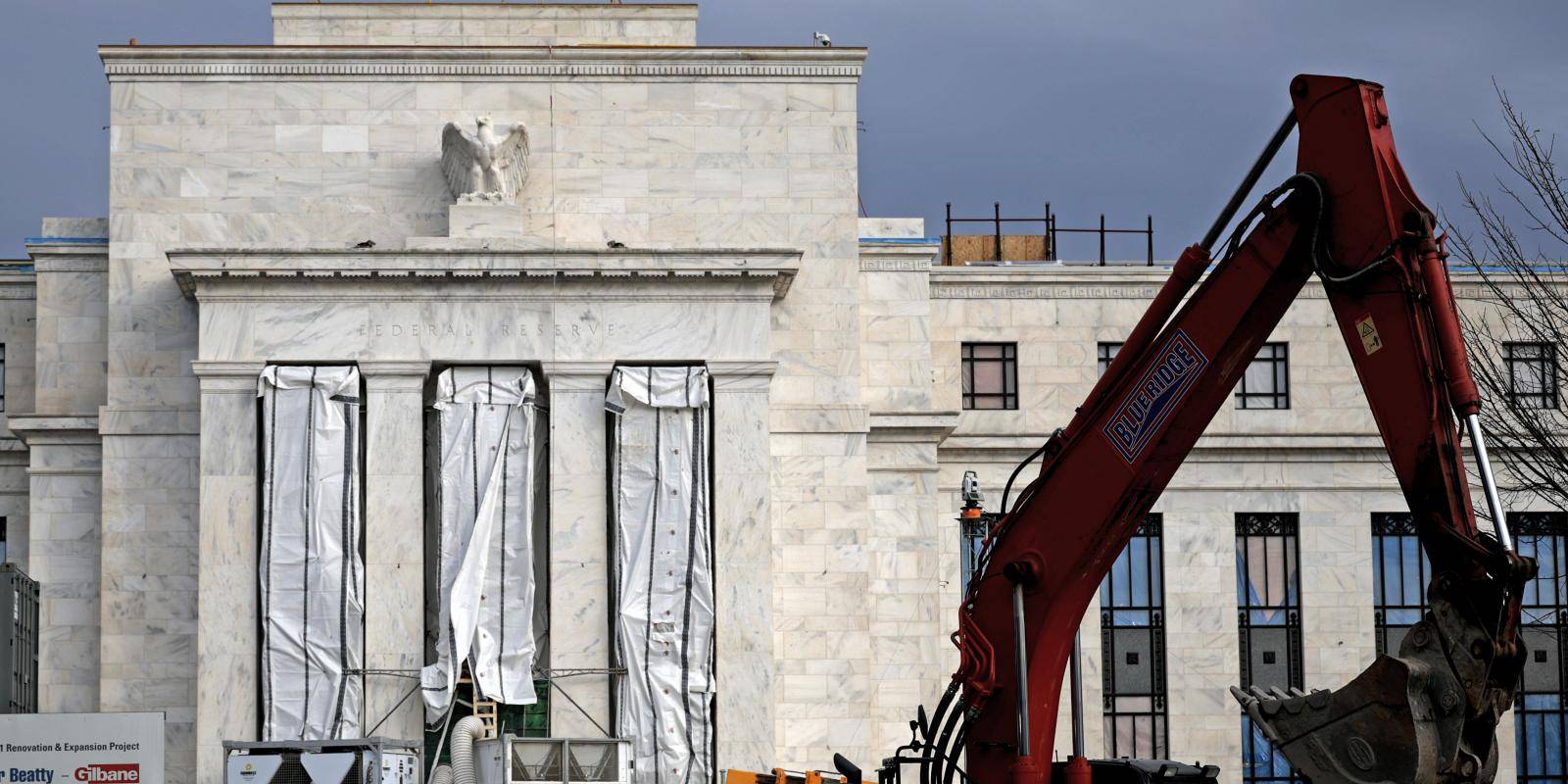

The White House’s assault on the independence of the Federal Reserve appears to be driven by President Trump himself.
Yet it is worth bearing in mind Leo Tolstoy’s effort, in War and Peace, to dump the ‘great man’ theory of history. For him, it is an illusion that world leaders are the cause of events. Rather, it is the mass of people, in their swarm-like nature, that drive the forces of history. A king, for Tolstoy, is ‘history’s slave.’
And those broad forces can be seen in the background of Trump’s desire to re-politicize monetary policy, especially when considering that all monetary regimes are, in the end, the children of history: none lasts forever.
Two pillars of the monetary regime that much of the world finds itself in are central bank independence and inflation targeting. In different ways, it is possible to imagine historical forces bringing about the end of both.
Central bank independence
Central bank independence for many countries is a rather new phenomenon. In the UK, for example, it was only in May 1997 that British finance ministers lost the authority to set the policy interest rate, when the newly elected Labour government established the Bank of England’s Monetary Policy Committee.
Politicians’ willingness to give their central banks enough space to operate independently can be seriously influenced by both the level of public debt and the inflation rate.
When debt is low and inflation high, the fiscal consequences of tight monetary policy – high interest rates – can be negligible, or in any case manageable. And in these circumstances, society can more easily be convinced to bear the pain of high interest rates in order to end the misery caused by currency debasement.

Fed Chair Paul Volcker pushed the Fed Funds Rate (the US policy interest rate) from 11.5 per cent in the summer of 1979 to 20 per cent in February 1980. The broad economic consequences were very painful indeed and the US quickly fell into recession. But since the US public debt burden was only 25 per cent of GDP, the government’s own finances weren’t affected too much by the move. And since US inflation had reached double digits, recession seemed, for many, a tolerable price to pay to avoid an inflationary spiral.
What Volcker enjoyed was a moment of ‘monetary dominance’, where the central bank can operate free from concerns about its effect on fiscal policy.
These days debt is high, and inflation low; historical forces have shifted. The chances are that we may be approaching an era of ‘fiscal dominance’, where the political cost of independent monetary policy becomes so high that the central bank effectively ends up as a department of government, rather than an agency that works alongside it.
President Trump seems completely open to this outcome. One of his loudest complaints about Fed Chair Jerome Powell is based in the president’s claim that each percentage point cut in the Fed Funds rate now could save the US $360 billion per year in debt service costs for the US government.
And the reason why Trump has been able to launch this assault on the Fed’s independence without doing any obvious damage to market confidence – stock prices have continued to rise – is that professional opinion is not especially worried about inflation these days. Global energy and agricultural prices are notably weak, China’s excess supply of manufactured goods keeps their price low, and measured inflation expectations are well anchored.
Inflation targeting and the ‘Washington Consensus’
Just as the threat to central bank independence is governed by some historical forces, it may also be the case that inflation targeting – where an independent central bank makes a public commitment to reach a certain inflation rate and adjusts interest rates solely in pursuit of that goal – could see its days numbered.
Inflation targeting flourished in the post-Cold War era of peak globalization. This period was characterized by a high degree of consensus – the ‘Washington Consensus’ – about what economic policymakers ought to be doing: reducing barriers to cross-border trade and investment, keeping budget deficits low, minimizing government involvement in the economy, and allowing markets to decide the most efficient way to deploy labour and capital across a globally integrated market.
Against that background, the idea of sub-contracting monetary policy to a group of qualified technocrats offered little resistance, and so the era of inflation targeting was born. But since all these pillars of the ‘Washington Consensus’ are now under threat, it should come as no surprise if inflation targeting ends up losing some of its appeal.
It is self-evident to most economists that the loss of central bank independence and inflation targeting would be a terrible idea. This has been articulated recently by former US Secretary of the Treasury and Fed Chair Janet Yellen, among many others. Although inflation is low now, submitting to a new regime of fiscal dominance seems guaranteed to end up with higher inflation over time.
For some, that may be precisely the point. In the US, at least, higher inflation can in some circumstances be helpful in eroding the burden of government debt, as it was during the decades after the Second World War.