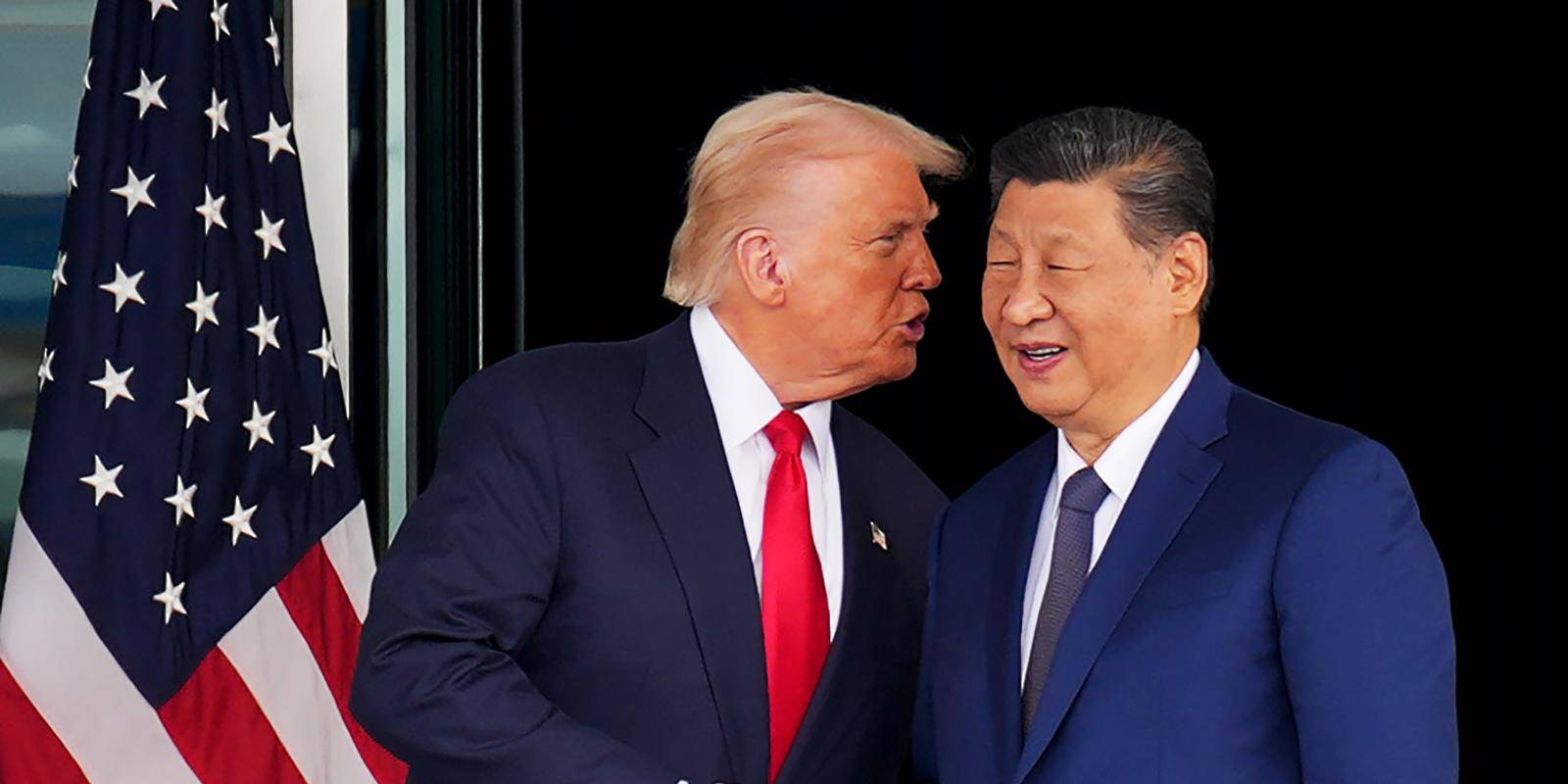

For Beijing, President Donald Trump is the gift that keeps on giving. His decisions have handed China’s leadership advantages of which it cannot have dreamed before he arrived in the Oval Office for the second time.
Trump has cancelled the Biden-era subsidies for clean technology, allowing China to extend its lead. He has slapped tariffs on allies including Vietnam and India, driving them towards Beijing. He has called NATO into question and sided with Russia in its aims over Ukraine. And now he has tied up the US military and his own attention in a war with Iran which he cannot easily end.
That comes after a year in which China demonstrated its rising power. In October, President Trump was forced to back down on tariffs, after Beijing threatened to withhold critical minerals. In March, Xi’s government published its latest five-year plan, showing how it intends to reap the fruits of its strategy of becoming the world’s dominant advanced manufacturer. Meanwhile China continued to rapidly develop a lead across much of the waterfront of technology, with the exception of the most advanced AI.
Seeking short-term wins?
When Trump meets President Xi Jinping this week in Beijing, therefore, one question is whether the encounter will confirm a further rebalancing between the two superpowers – in China’s favour.
Trump’s allies, at home and abroad, are afraid that the president will make long term strategic concessions for a handful of soybean, sorghum and Boeing jet sales – seeking short-term ‘wins’ ahead of the midterm elections in November.
He should resist that impulse. Hugely important issues for world stability are at hand, and there are vital US interests that he should pursue.
Tension between China and Japan is rising, becoming an even more likely flashpoint than Taiwan, which Beijing considers Chinese territory. China’s assertiveness in the East China Sea and South China Sea worries other neighbours, including the Philippines and South Korea, with the latter openly debating whether to acquire nuclear weapons.
China is also asserting that it is a ‘near-Arctic nation’, a triumph of language over geography which signals its ambitions for both a mining and military presence in that opening maritime region. In space, China’s ability to block or destroy other countries’ satellites is growing.
Most immediate, though, is the conflict in Iran. The world needs a solution, and China has influence over Tehran that it has so far chosen not to use.
Trump should also make cooperation on AI a priority: both Washington and Beijing increasingly recognize the threats emerging from the technology, as well as its transformational opportunities.
Trump and the Washington consensus
US discomfort over its relative loss of power to China, notably in manufacturing, has been rising for decades. The US has never had a rival like China: its economy size, technological ability, military capacity and ideology make it far more formidable than the USSR ever was.
Alarm at Beijing’s growing challenge to US dominance is one of the forces that brought Trump to the presidency – twice. And China’s position as the greatest threat to the US is one of very few issues on which Republicans and Democrats can still agree.
Europeans and other US allies have tended to see that Washington consensus as excessively belligerent – or they did until they began to realize the existential challenge that China’s export policy poses to their own manufacturing industries.
Trump’s position has been something of an anomaly. The president is more doveish on China than almost all his administration. Many were disconcerted that he agreed to let Nvidia, whose chips underpin the US’s slender lead in AI, sell its H200 chips (only one generation behind the premier Blackwell chips) to China. He has frequently talked of his ‘friendship’ with Xi. That has led to fears that in search of election-year gains he might, for example, change US language on Taiwan from saying it ‘does not support’ independence to a statement that it opposes it.
Enough voices are warning against that outcome that it may deter the president. But for all the intense preparation for the trip, delayed because of the Iran conflict, there has been a lack of clarity on the US side about this meeting’s goals – partly because both the standoff in the Strait of Hormuz and the state of AI have been developing so fast.
On Iran, Wang Yi, China’s top diplomat, has called for the Strait of Hormuz to be opened ‘as soon as possible’ in talks with his Iranian counterpart. Asian countries including China have been among the most affected by the interruption caused to supplies of oil, gas, fertiliser and helium (needed for semiconductors, healthcare and pharmaceuticals). China has some leverage with Iran but will want something from the US in return, if it is to use it.