Trying to persuade the US and China to join in universal collective action, or developing case-by-case coalitions of the willing, will be less effective than organizing a single permanent group of countries, a ‘third pole’, to promote a rules-based approach to global economic and financial governance.
There are essentially three possible approaches that countries wanting to respond proactively rather than passively to the Trump shock can take:
The first is to continue with the approach adopted up to now in the periods when Trump has been president. This involves trying to collaborate with the US through the existing international institutions and groups where the US remains engaged (e.g. in the IMF, MDBs, G7 and G20) or on issues where America’s role is essential (such as the provision of military intelligence, weapons and political support for Ukraine). This approach also means accepting, over a longer period, the asymmetric trade and investment relationships imposed by the US authorities in recent negotiations, and the weaker standards applied to US firms operating abroad, while developing national policies to reduce exposure to these asymmetries as far as possible. This in turn means focusing on trade diversification, on strengthening domestic regulation to protect against US-generated risks in finance, technology and climate change, and on resisting pressure from the private sector to follow the US model.
In the case of the G7 and G20, the strategy means trying to find ways to reframe key global concerns so that they become acceptable to the US. Mark Carney, the Canadian prime minister, attempted this at Canada’s 2025 G7 summit in mid-2025: taking out direct references to issues, including trade and climate finance, to which the US would object and attempting to reframe these around delivering growth, infrastructure investment and energy security. He also gave summit participants more options about what they would sign up to, rather than pushing for a single common declaration. The French are attempting broadly the same approach with their 2026 presidency of the G7, focusing on global imbalances (a subject on which the US Treasury has so far responded positively) and reform of the global development framework (particularly the role of public development banks). This approach may also mean relying on the US effectively opting out of discussions on certain topics with which it no longer wishes to be involved.
A continuing erosion of diplomatic norms and standards can be expected as the US extends its intimidatory approach to new areas, and as other large countries adopt similar tactics.
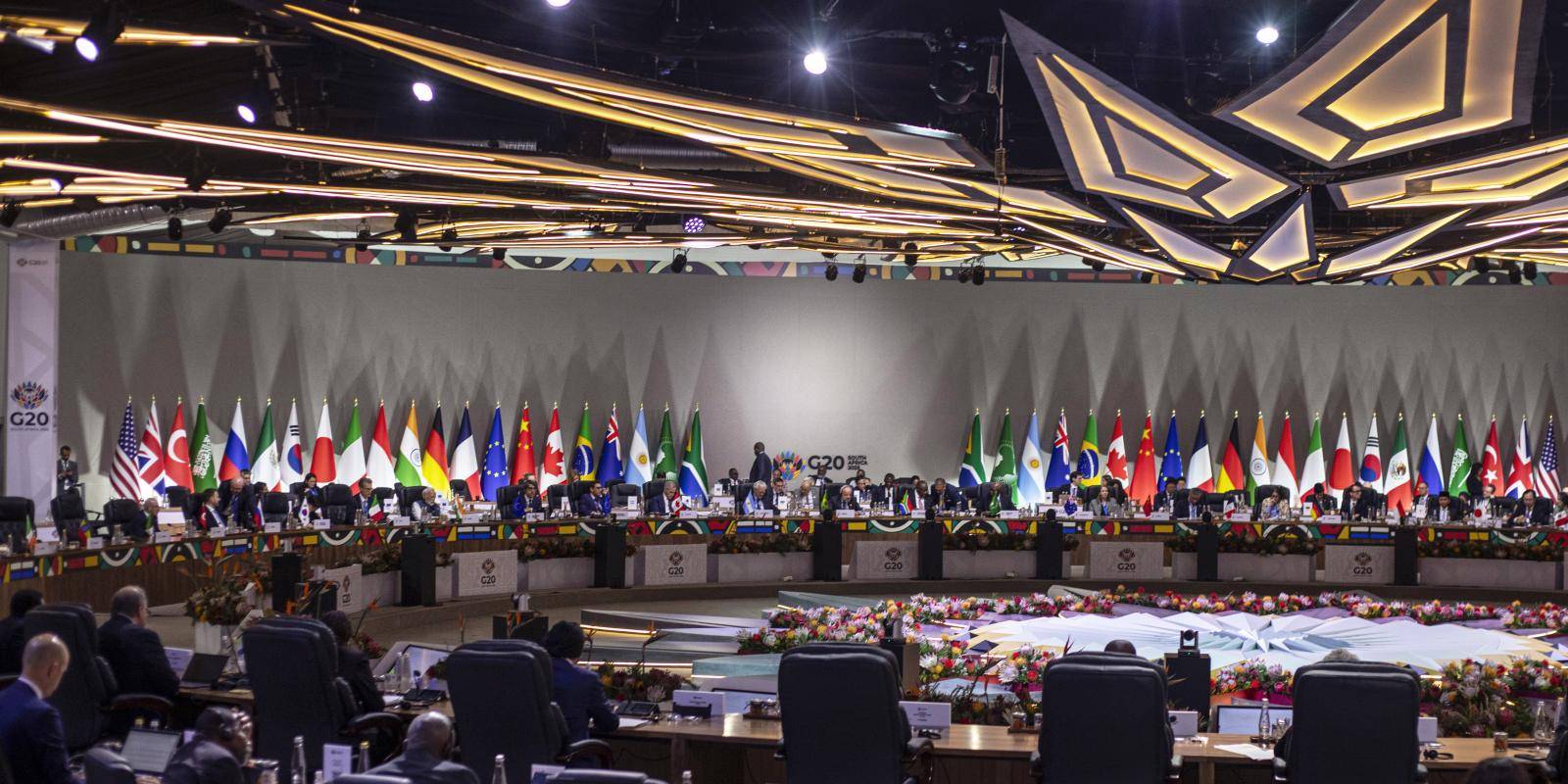
More broadly, the strategy also means accepting what would have been seen in the recent past as entirely unacceptable behaviour in economic diplomacy, such as President Trump’s unilateral decision to exclude South Africa from the 2026 G20 summit, and the bullying tactics adopted by the US to derail the IMO agreement on addressing carbon emissions by shipping.
However, there are several drawbacks with this approach. It may result in some of the most important issues, such as tackling climate change or reforming the global trading system, not being discussed and addressed, or only being considered within a highly restricted or distorted framework that does not permit the development of truly effective solutions. A continuing erosion of diplomatic norms and standards can also be expected as the US extends its intimidatory approach to new areas, and as other large countries adopt similar tactics. If the formal strategies underpinning the work of leading MDBs change in response to US pressure, there is likely to be an erosion of MDB action on climate change, gender equality and other SDGs even if a large majority of MDB shareholders are in favour of maintaining a focus on these issues. There would also be no systematic high-level forum at which non-US countries could develop a collective response to the Trump shock. Instead, concerned countries would have to rely on individual national policies and ad hoc coordination meetings. This is likely to be much less effective.
Nonetheless, in the short term the approach outlined above will be tempting for many countries, as it will be the easiest politically and may appear the least costly. It may also be relatively easy to rationalize, if policymakers hold out the hope that the US will revert to its previous behaviour when Trump leaves office. But, as discussed earlier, this is likely to prove a false hope. Delaying the necessary steps to act independently of the US will prove more costly and politically painful over the long term.
A second approach, as Carney set out in his recent speech, is for so-called ‘middle powers’ to act together through multiple coalitions of the willing on issues such as WTO reform, climate change, development and energy security. This has the advantage of flexibility in that a coalition can be established to tackle any pressing issue. The membership of different coalitions can also be optimized to achieve maximum coherence and impact. However, this approach’s flexibility is also its weakness. Establishing a different coalition for each issue would be time-consuming and would stretch scarce resources. It would also reduce the overall political impact of the effort, and limit the extent to which regular partners can build trust and negotiate trade-offs across different issues.
The third approach, which is favoured by the author, is for a single group of countries to give priority to the creation of a new and permanent alliance on global economic governance. Such an alliance would focus most immediately on addressing the two key features of the Trump shock identified earlier (see Section 4.3). Over the longer term, it would seek to establish a ‘safe’ economic space between, and counterweight to, both the US and China. By acting collectively, members of the group would not only increase their influence on public and private decision-making internationally, but would also create a large (and potentially very large) economic space in which their firms could operate freely and in compliance with stable and relatively high standards. This is the ‘third pole’ to which the subtitle of this report refers.
In the remainder of this report, the analysis will describe the countries or blocs that might pursue this proposed approach as the ‘rules group’, and the new economic governance architecture they would create as the ‘third pole’ in the global economy.
In line with the needs set out in Chapter 4, the new group would have five principal objectives at the outset:
First, it should make an honest assessment of what has happened to global economic governance, particularly as a result of the Trump shock since the start of 2025, but more broadly over the past 15 years as a result of the actions of both the US and China. As reflected in the analysis in Chapters 2 and 3, this assessment should unbundle the impact of the Trump shock on global trade, the net zero transition, energy security, monetary and financial stability, and poverty reduction. It should establish a consensus on the likely permanence of the current stances of both the US and China, and determine which gaps in global economic governance arising from these stances need to be addressed most urgently.
Second, the new alliance should aspire to uphold the existing rules, norms and frameworks underpinning global economic governance wherever possible. These include WTO rules and procedures, anti-corruption agreements, bank capital adequacy norms, etc. This approach would mean resisting changes in the strategies and leadership of international organizations where such changes would undermine these objectives; it would also mean resisting pressure from the private sector to copy US deregulatory initiatives (particularly when such lobbying pays insufficient attention to the negative consequences of deregulation).
Third, it should coordinate its members’ actions to minimize negative spillovers from the Trump shock. For example, a key goal should be to preserve the most favoured nation (MFN) principle in trade relations between countries, although exceptions may need to be agreed when an economy is forced to respond to pressure from the US to agree an asymmetric trade deal.
Fourth, the group should capitalize on the stronger bargaining position its members would have vis-à-vis the US and China on issues where US and/or Chinese participation in addressing an issue is either highly desirable or unavoidable. This means developing common positions on specific issues and keeping to a minimum the number of contexts where individual members of the group may be forced to make rapid bilateral concessions to US or Chinese pressure, which could weaken the position of all other members. One example is the goal of securing access to critical minerals while maintaining social, environmental and governance protections in the poorest countries. Another is the goal of deploying US and Chinese AI while minimizing the national security risks and the possibility that use of these technologies may open the way for future coercion. A further goal would be maintaining progress on the net zero transition. The third pole would clearly not be large enough to deliver net zero at a global level simply through actions limited to its own economic space. But its economic weight – if deployed with maximum extraterritorial impact in such areas as standard setting, R&D, industrial strategy, financial regulation, trade policy and taxation – could make a major difference to progress on the target globally.
Fifth, a third pole in the global economy should develop and promote solutions to new and long-standing issues that, one way or another, have undermined the effectiveness of global economic governance. This project should begin with the most immediate challenges: for example, by proposing a new and more workable text for the national security exemption in the WTO; and by developing a more effective way to use the limited available public international finance to address the climate finance gap in emerging markets and developing economies (EMDEs). But any new alliance must also address the longer-term weaknesses in global economic governance that pre-date the Trump shock. This includes improving voting weight legitimacy in the international financial institutions (IFIs) given changes in relative global GDP weights, and finding a means to strengthen the voice of low-income countries in decision-making on global economic issues. However, these goals will need to be achieved while preserving the effectiveness of the system for all participants.
Any new alliance must address the longer-term weaknesses in global economic governance that pre-date the Trump shock. This includes improving voting weight legitimacy in the international financial institutions.
Although the concept of a third pole is deliberately not universal, the above objectives also provide a basis for a return to universal approaches in the future should either the US or China decide to change their approach. A key feature should be that membership of the third pole is open to any country willing to demonstrate commitment to its core principles.
However, this does not change the need to define clearly who would be inside and who would be outside the alliance at the outset. Members will need a sufficient degree of trust, political coherence and perceived common interest to act together across a wide range of policy issues. This may only be achieved by defining membership in part, at least, according to the demonstrated beliefs of participants. In particular, full members should:
- Want to preserve a rules-based international economic system;
- Believe trade agreements should be developed for mutual benefit, and oppose the use of economic coercion to achieve unbalanced outcomes (i.e., coercive instruments should be used only to defend against coercion by other countries);
- Be ready to comply with international law and respect treaties once signed (including the UN Charter);
- Believe in supporting – and, if a high-income or upper-middle-income country, helping to finance – global public goods including monetary/financial stability and the net zero transition;
- Agree on operating in international organizations according to long-established diplomatic norms and agreed decision-making rules (whether by consensus or, as with the IMF, on a constituency basis); and
- Be ready to reform existing international organizations to improve how they work and address any perceived unfairness in governance arrangements.
As well as beliefs, participation in the rules group/third pole will need to be defined by members’ attributes. One set of participants should consist of traditional advanced-economy partners of the US that have the agency, capability and resources to act increasingly independently. Another should consist of faster-growing emerging economies. The overall group does not need to be defined by its members’ domestic political systems, so it could include non-democracies. Equally, a pragmatic approach is likely to be needed on human rights. That said, a very poor human rights record is likely to rule an economy out from participation simply because other potential members will find cooperation difficult, even in unrelated spheres.
But the third pole should not include China. This is primarily because China does not, as judged on its past and recent behaviour, share the core beliefs set out above. China has used economic coercion instruments extensively in the past 15 years (e.g. against Canada, Australia and, most recently, Japan). There are also some strong similarities between the US and Chinese views on the ‘right’ of major powers to dominate other countries in their respective regions. Although China has in the main followed the letter of WTO rules since joining the organization at the end of 2001, there is a widespread view that it has not followed their spirit, using extensive state subsidies and state coordination to gain a competitive advantage. China also until very recently used its developing-country status to justify restricting access for foreign goods to its domestic market, and has deployed capital controls to manage its exchange rate and prevent the kind of appreciation that would normally be expected to result from very large current-account surpluses.
In addition to this track record, China’s economic size would unbalance the rules group, while the continuing threat of Chinese intervention against Taiwan would make the group unstable. If China were to attack Taiwan, continued membership would be impossible. It is also likely that including China in the third pole would trigger an even stronger negative reaction from the US than might otherwise be the case.
The new alliance should undertake a genuine and sustained dialogue with low-income countries on the basis of solidarity and an aspiration to achieve long-term mutual benefit.
Other questions over a given country’s participation could be much more evenly balanced. For example, including India would add significantly to the grouping’s economic weight and dynamism. But India’s track record on global economic governance (for example, in helping to block progress on plurilateral agreements in the WTO), combined with its possible aspiration to be an independent economic pole in its own right, suggests it might prove a difficult partner.
In contrast to the US’s positions under the Trump administration, the new alliance should undertake a genuine and sustained dialogue with low-income countries on the basis of solidarity and an aspiration to achieve long-term mutual benefit. This should lead to the rules group being a champion of low-income countries in international negotiations. It would also expand the group’s economic influence. However, the alliance should avoid containing a large number of small, low-income economies in its formal membership, as this could significantly reduce its agility, flexibility and impact.
In terms of scope of operations, the third pole should initially focus on international trade and investment because this will very likely remain at the core of the Trump shock despite the recent US Supreme Court ruling.
However, from the outset the alliance will need to be seen as being about a lot more than trade. And it should quickly expand its scope to encompass discussions on other major themes at the heart of the Trump shock, such as the net zero transition, energy security, international monetary and financial stability, and poverty reduction.
This would emulate to a degree the approach of the G20, which was established at leader level in 2008–09 with a very strong initial focus on financial stability, global imbalances and macroeconomic policy coordination, reflecting the themes underlying the crisis of the time. But the G20 subsequently evolved into a forum capable of addressing a diverse range of issues, including climate finance, global health threats and the international financial aspects of counterterrorism.
To be effective, the new group would need to have a combined economic weight at least comparable to that of either of the other two major poles in the global economy (the US and China); ideally, it should be substantially bigger.
It is also critical that the group has sufficient political leadership to carry its agenda forward effectively. This partly means that there must be a leader-level component in the architecture governing the alliance. This is to ensure that the trade steps launched by it are ambitious, and that the group’s focus can extend beyond areas that are the principal remit of trade ministers. To maximize the chances of success, the group ideally also needs to contain political leaders with the vision and time (not just technocratic expertise) to get the concept off the ground, i.e. individuals who could play roles like those of John Maynard Keynes and Harry Dexter White with respect to the Bretton Woods institutions, Robert Schuman and Jean Monnet with respect to the EU, or Gordon Brown with respect to the G20.
Establishing a third pole would have several key advantages over using multiple coalitions of the willing. Having a single core group would be administratively more efficient in pursuing broader initiatives. It would also make it possible to establish a stable overarching political architecture, including a leader-level component, to complement participating officials’ technical expertise. This would help provide the political will and support to make and implement difficult decisions, enable the group to tackle a broader range of issues than just trade, and deal with emergencies more quickly and effectively. Such features could be achieved without much loss of policymaking flexibility, provided the members of the group genuinely shared the beliefs set out above.