While the Trump shock has affected the US economy less than many expected so far, the long-term costs are likely to be considerable. Countries outside the US will need to work together if they are to minimize the spillovers from the US economy to the global economy.
Chapters 2 and 3 have set out the nature and broad scope of the Trump shock to global economic governance. This chapter considers the Trump shock’s impact so far, how permanent it is likely to be, and what in broad terms is needed in response.
4.1 The impact so far
Up to now – and ahead of the possible economic fallout from the US-Israeli war with Iran – the impact from the Trump economic governance shock on the global economy has been much less severe than many expected. World GDP growth in 2025 was 3.4 per cent, and in its latest (April 2026) assessment the IMF forecasts – in the scenario where the Gulf war ends quickly – global growth to continue at 3.1 per cent in 2026 and 3.2 per cent in 2027. Meanwhile, the WTO’s central forecast for 2026 is that merchandise trade will grow by 1.9 per cent and services trade by 4.8 per cent, although both outlooks remain very uncertain due to the Gulf war.
One key factor behind the better-than-expected performance has been the decision (so far, at least) by most countries not to retaliate against Trump’s tariff hikes, and to continue trading with each other on WTO terms. Meanwhile, companies delayed adjusting their US prices while they waited to see where the eventual end point on tariffs would be. Up until the US Supreme Court decision in February 2026, the administration had also granted exemptions to try and limit sharp impacts on domestic inflation (e.g. in relation to food imports from Brazil). As a result, the overall effective US tariff rate (total tariff revenues divided by the value of imports) was only 9.9 per cent at the end of January, compared to a headline tariff rate which at that time was around 16 per cent; numerous exemptions would help explain this. A second, unrelated factor is the AI investment boom, with the top five major US tech firms spending $412 billion on such investments in 2025, equivalent to 1.3 per cent of US GDP. A third factor has been relatively accommodating fiscal and monetary policy internationally, examples of which include the OBBB Act in the US and the German decision in March 2025 to relax the constitutional debt limit in order to fund rapid growth in defence and infrastructure spending.
However, none of these factors mean that the expected long-term costs to the US economy and the global economy from Trump’s policies will be avoided. The historically high level of tariffs – combined with the high degree of uncertainty over what tariff will be applied and when – will still, over time, tend to reduce US efficiency, investment, innovation and competitiveness. The administration’s apparent determination to extract the maximum economic gain from its trade, finance and security relationships with other countries will cause further damage, as will the US’s withdrawal from the provision of a range of global public goods (a move that could be characterized as a modern ‘Marshall Plan in reverse’).
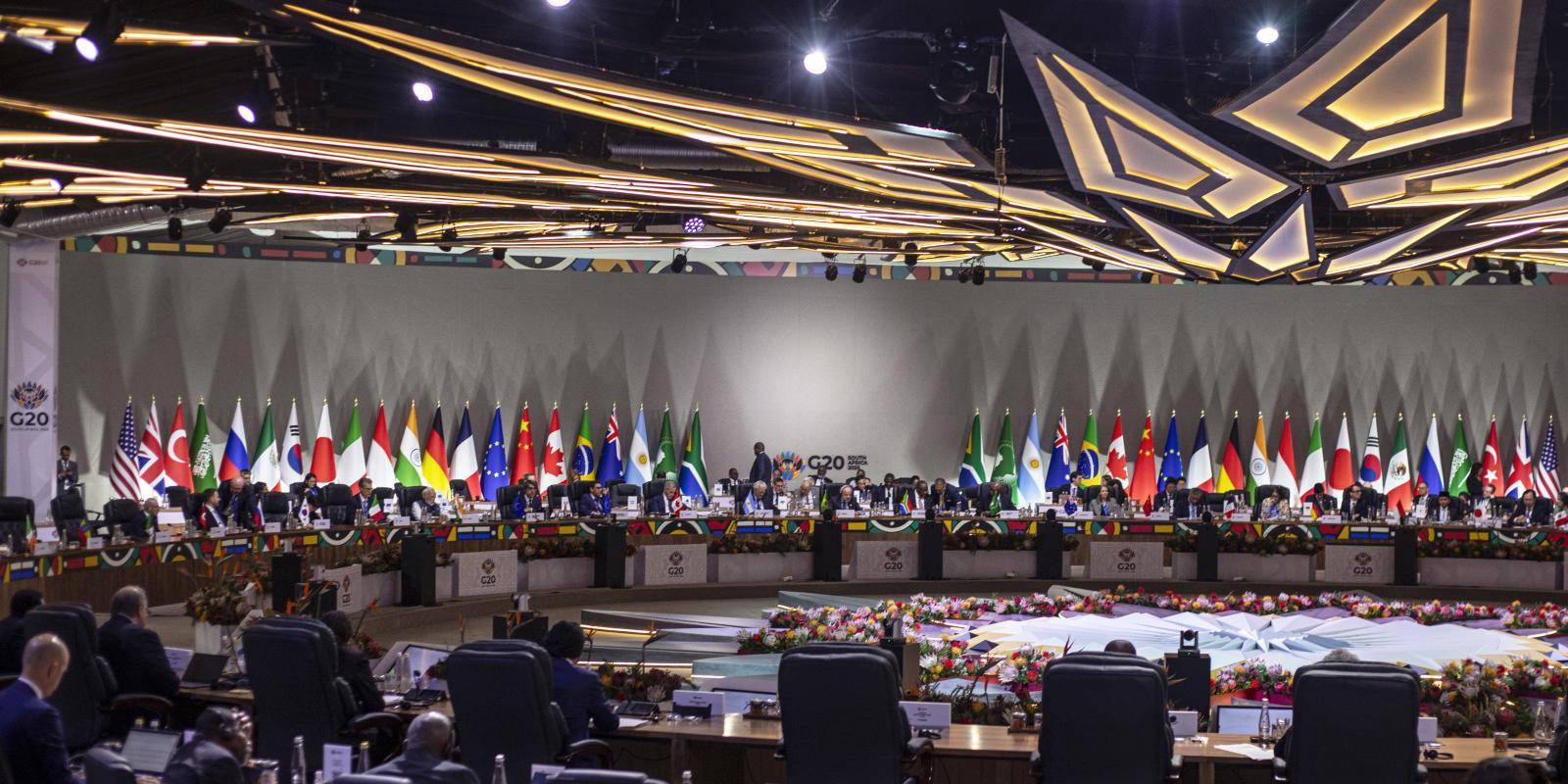
The world economy is also likely to be damaged to some degree, but the extent will depend on how other countries respond. They will work with the US when they have no choice, or when it is clearly in their immediate interest to do so. But the loss of trust, the ending of traditional alliances, and the administration’s adoption – in some areas – of policies that are based on invalid arguments are likely to make countries reluctant to do more than the bare minimum outside these situations. Organizations such as the G20 and G7, which were designed to provide political leadership in addressing global economic crises and long-term chronic problems, are already working much less well, if at all. The critical question, therefore, is whether other countries will both recognize the urgent need to work together without the US and find a practical way to achieve this.
4.2 Will the new US approach to economic governance be sustained?
There is growing recognition that the rest of the world needs to find a way to work together on at least some issues without the US. But one of the biggest constraints on other countries taking the necessary steps to establish an effective mechanism through which to do this is the belief (or hope) that Trump’s economic governance shock will prove temporary – perhaps only lasting a few years. If this were to be the case, some argue, the best approach may simply be to wait it out.
Another scenario is that, despite the current strength and resilience of the US economy, growing evidence of the adverse economic effects of the tariff policy and Gulf war (or a sharp financial market reaction linked to such evidence) builds opposition among Republicans to Trump’s policies and/or persuades Trump to moderate or even reverse some elements in his approach. However, the president’s hold over his party is such that the likelihood of this becoming a major constraint on his actions appears slim.
No matter how Trump and the Republicans fare electorally in 2026 and 2028, the likelihood of the US ‘snapping back’ to the role it played in global economic governance prior to 2024 appears slim.
Further ahead, it is also possible that the Republicans could lose control of both chambers of Congress in the November 2026 mid-term elections, enabling the Democratic Party to reclaim full congressional authority over US tariff policy and reinforce existing institutions in other areas, such as independence of the Federal Reserve. However, it is currently more likely that the Republicans will lose control only of one chamber, most likely the House of Representatives. This would end the Republican Party’s ability to pass new legislation without Democratic Party agreement, and would increase investigative oversight of the president’s actions. But, at this stage, it appears unlikely to lead to a fundamental change of course.
Lastly, there is the possibility that in the 2028 general election Trump would be succeeded by a Democrat or a relatively moderate Republican. However, it could just as easily be a Republican with similar views to Trump’s. The election of a Republican president of the latter type might reduce the extreme uncertainty in US international economic policy (since this appears to be an idiosyncratic attribute of Trump himself) while not changing its direction.
Yet no matter how Trump and the Republicans fare electorally in 2026 and 2028, the likelihood of the US ‘snapping back’ to the role it played in global economic governance prior to 2024 appears slim. The reason for this is partly political. Many Democrat voters are sceptical about the benefits of free trade, and a Democratic administration could struggle to unwind the tariff deals of the Trump administration without opening itself up to the accusation of being weak or putting the interests of foreigners above those of the US public. This was a factor behind the Biden administration’s retention of tariffs vis-à-vis China. But there are also technical reasons. The more Trump’s economic policies become embedded in US economics and politics, with the federal government relying on tariffs for revenues, or with specific industries relying on continuing protection to stay profitable, the harder it will be for a future administration to reverse course even if that would be its preference.
The international context will make it increasingly difficult for the US to revert to its pre-Trump position in the world. It is likely to take many years for the US’s traditional allies to regain their trust in its motives.
Lastly, the international context will make it increasingly difficult for the US to revert to its pre-Trump position in the world. It is likely to take many years for the US’s traditional allies to regain their trust in its motives. At the same time, new FTAs, innovative currency and energy security arrangements, reshaped military alliances, and redesigned funding arrangements to enable international organizations to circumvent US opposition to some of their work are likely to make it very hard for America to resume its previous role in the international system even if it wished to do so.
4.3 What is needed in response
As discussed earlier, there are two distinct elements to the Trump shock. The first is the replacement of a US trade policy based on achieving mutual benefit among partners with a zero-sum calculation based on extracting the maximum economic value for access to the US market and provision of security guarantees. The second is the US’s withdrawal from providing a range of key global public goods.
All countries have been impacted by this shock, but the most seriously affected are those that have previously been most closely allied with the US and have the deepest trade and investment relationships with it, as well as countries (typically the poorer ones) that have relied extensively on the global public goods the US has traditionally supported.
The medium-term response of the global community to the Trump shock needs to address both these aspects and improve the position of the countries principally affected. But it also needs to address the longer-term erosion of global economic governance norms that preceded Trump, a trend that has principally been driven by China. National polices on internal market barriers, regulation and strategic investment will clearly be very important. Nonetheless, some key issues can be addressed only through collective action. The next chapter looks at how this may be achieved.