Haitians are seeing advances in security and cautiously support the presence of the UN-backed GSF in their country, but in both cases these views dominate by only a slim margin. Factors unrelated to the phased arrival and anticipated performance of the GSF may explain some of the uptick in confidence in the security situation. Haitians who live in gang-controlled territory support the GSF by larger margins than those who live in relatively gang-free areas. Although opinion on the GSF is mixed (see Figure 2), there are clear pockets of support for international intervention among those most affected by the violence, as well as qualified pockets of optimism that DDR efforts will be worthwhile.
Age differences matter when assessing policy options for Haiti. As mentioned, young adults between the ages of 18 and 29 tend to support the GSF in higher numbers. Young adults, along with the communities more seriously affected by the violence, therefore represent key constituencies for the UN and for international efforts to restore peace and justice. Ensuring that young people’s voices are heard is critical to internationally supported stabilization, DDR and security/economic reform.
Haitians’ top priority remains security, but other development issues (education, healthcare and jobs) are still deemed to be key to ensuring security and safety in local communities. This implies that, in parallel to hard security interventions, GSF operations and other international assistance will require a new focus on development, economic growth and social policies. Such programmes are likely to have a better chance of success once gang-held territories are retaken and displaced citizens are able to return to their homes. But all of this will require an international focus and a coordinated approach to security, to the eradication of gangs and crime from neighbourhoods, and to community assistance.
In parallel to hard security interventions, GSF operations and other international assistance will require a new focus on development, economic growth and social policies.
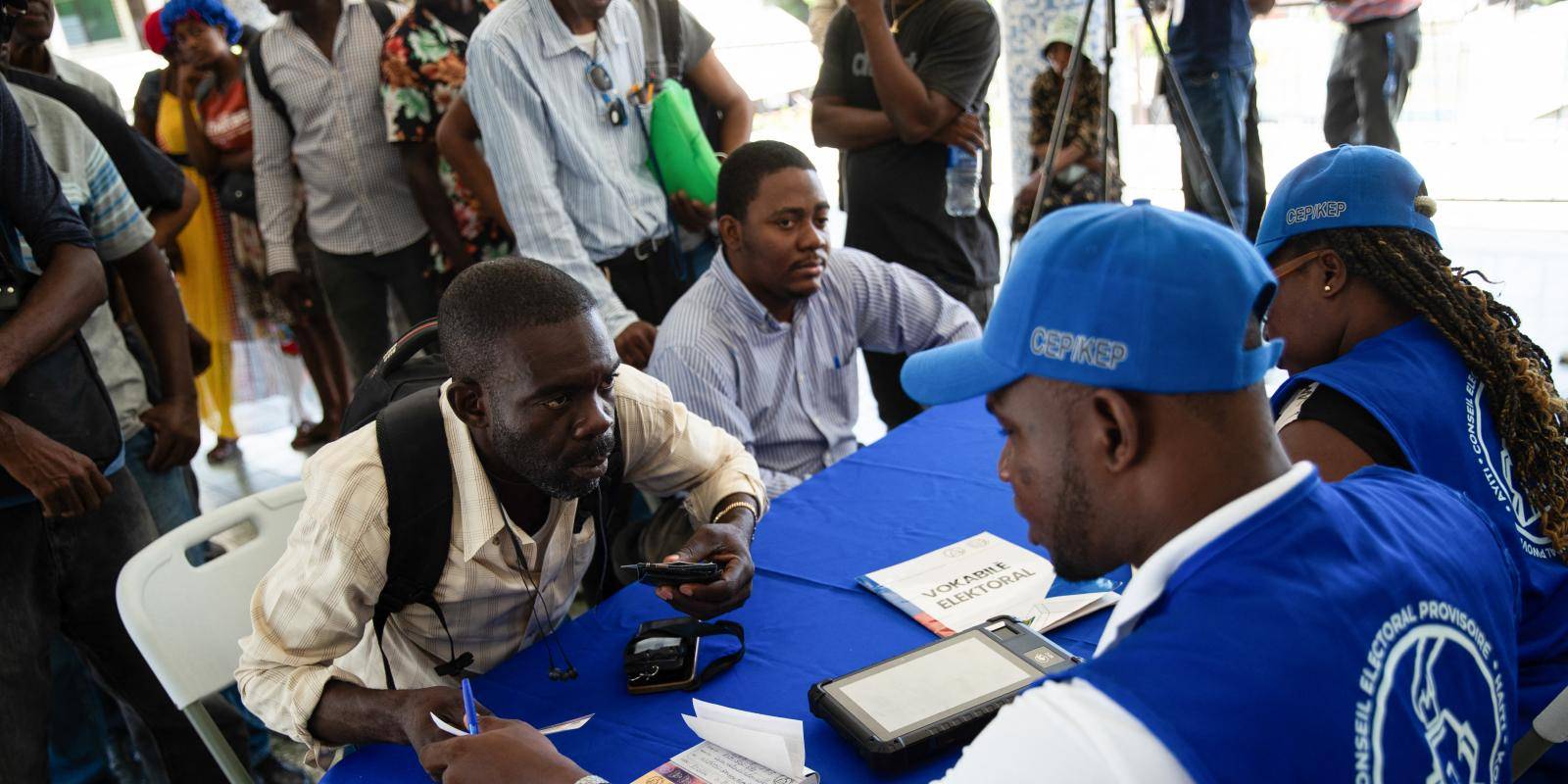
Elections must take place as soon as logistically, institutionally and politically possible. Haitians indicate in the survey that their trust in future elections will hinge in large part on the presence of honest, independent monitors. This is particularly important given Haitians’ overwhelming distrust of the current political class. Preparation for elections should focus, in particular, on ensuring voters between the ages of 18 and 29 can register to vote and have access to Haiti’s biometric identification system. This is important not just to ensure their participation in any upcoming elections, but also to integrate a new generation into the practice of democracy and to cultivate a sense that young people are served by it.
Recommendations
- Haitians’ overwhelming support for administering justice to gang leaders requires immediate steps to establish independent, efficient courts and humane, safe prisons.
- Determining accountability for gang-related crimes and establishing the age of accountability for gang members, especially child members, should be a first-order priority for policymakers, even as security operations are unfolding. This should be accompanied by public education on the meaning and goals of gang-targeted judicial processes and DDR, by the development of a community support network for gang members undergoing DDR, and by a coordinated effort – regulated by international norms – to ensure child gang members are treated fairly and given an opportunity to reintegrate into society.
- Declining support globally for development assistance means that the decades-long practice of government development agencies investing large amounts of their own funds and mobilizing other donors to coordinate in a broad development programme no longer applies. Neither the previous budgets nor the appetite for leadership on development exist, for now. Today, it is up to the coalition of GSF supporters, bilateral donors, multilateral development banks and private philanthropists/philanthropic organizations to coordinate a focused, multidimensional funding approach to meeting the social and development policy demands of Haitians. This should occur in parallel to the renewal and full implementation of the security operations of the GSF and BINUH missions in Haiti.
- A donors’ conference is urgently needed to mobilize international support for Haiti’s development and the restoration of basic public goods. External policy advice and financing are needed, in particular, to help shore up the rule of law, restore the education and healthcare systems, and develop the institutional environment and capabilities necessary to attract foreign investment.
- Following the shuttering of the US Agency for International Development (USAID), there is a question as to who can lead such an initiative. However, the entrepreneurial efforts and political commitments of the Canadian government, the Trump administration and the UN system ensured the approval of the GSF by the UNSC last year. A similar undertaking needs to be mounted now both to renew the GSF’s mandate on 30 September 2026 and to mobilize donors in partnerships with the Haitian government for the next stage of Haiti’s recovery.
- The international community needs to respond to Haitians’ overwhelming demand for elections in 2026 or 2027. The holding of elections – whether presidential, parliamentary, departmental or local – will require international support and a detailed plan to rebuild electoral infrastructure, determine the sequencing of different types of elections, organize registration of voters and the allocation of biometric ID cards, and provide monitors and guarantees to ensure the transparency and credibility of the results. That comprehensive effort should start now.
- Electoral support will require a detailed and realistic timeline, with specific recommendations for tackling the risk of unrest in potential trouble spots where voters may face intimidation or violence, or where the results may be susceptible to rigging or generate social unrest. There will be stages in the preparation and organization of elections – negotiations over the sequencing of steps, over party primaries, over the independence and authority of Haiti’s electoral commission, and around the conduct of election campaigns – that will become contentious. In those cases, the international community should identify potential flashpoints and be prepared to address them via mediation to maintain the process that will finally allow Haitians to select a functioning government and leaders after years of trauma.
- This new phase in Haiti’s international relations will require the interim government to cooperate with a range of external partners. It is crucial that policies developed externally, or by the Haitian interim authorities in coordination with international/multilateral actors, reflect understanding of and respect for Haitians’ concerns and demands.
- The institutional means, beyond a public opinion survey, through which Haitians can express their interests and concerns need to be developed and secured. Free and fair elections should be held as soon as is practicable, accompanied by efforts to establish a credible and accountable political class. Haitians need to see democracy in action.