
An intervention by President Donald Trump this week has once again created problems for Ukraine’s war effort. The president’s deal with Moscow, which could see millions of barrels of Russian diesel released to global markets, was condemned by Democrats and even some prominent Republicans in the US. Trump openly framed the deal as an effort to secure ‘Lower prices for Americans’ as midterm elections approach in November.
It is uncertain that the deal will do much to swing votes back to the president’s party. But it has created another open dispute between Trump and President Volodymyr Zelenskyy – at precisely the moment when Ukraine needs renewed, focussed support from its allies.
A mounting Russian assault
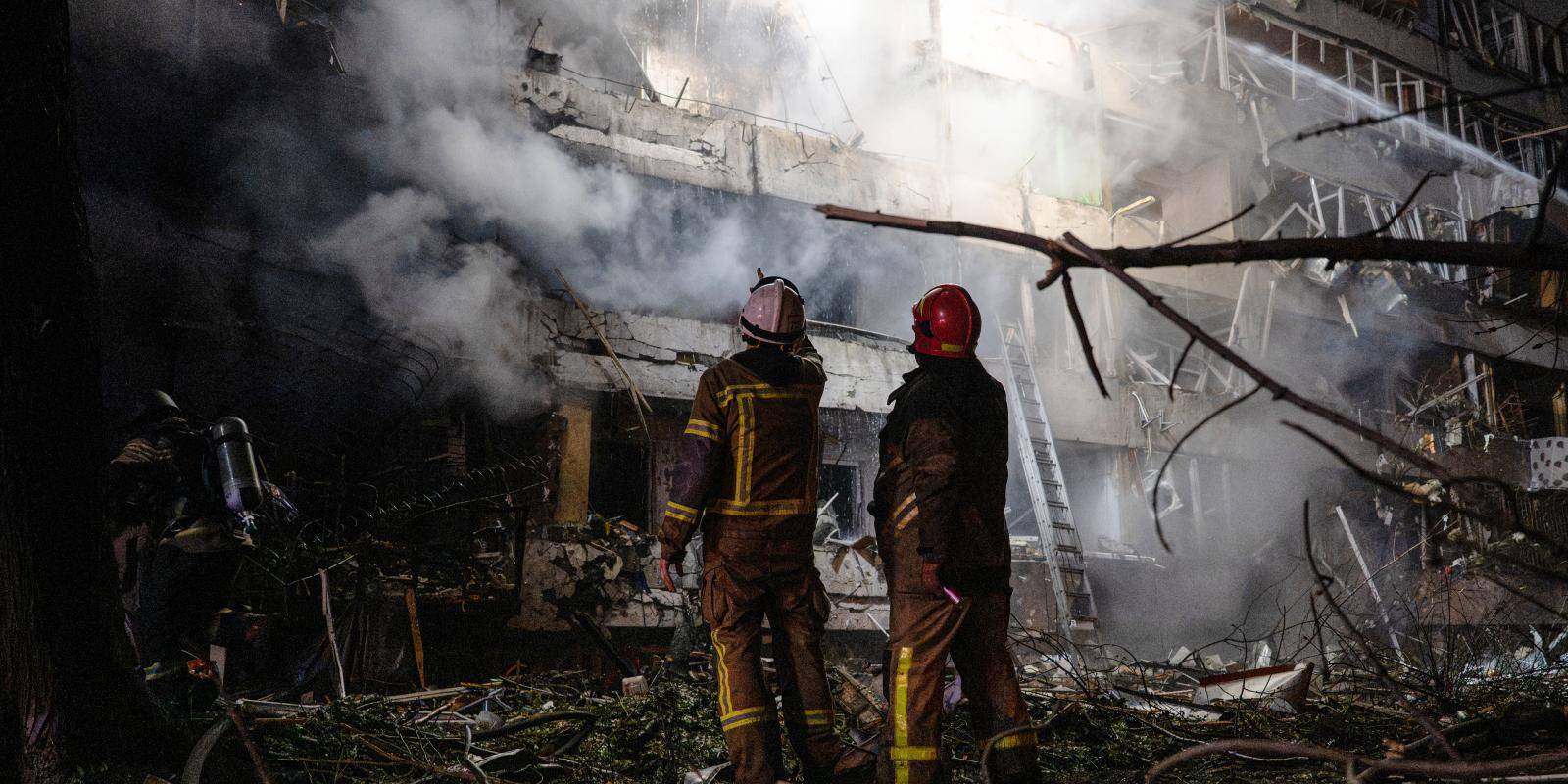
Recent weeks have seen a noticeable shift in Russia’s war strategy. Some had expected Putin to order a new wave of mobilization and a renewed offensive in the Donbas. Instead, he has moved to intensify Russia’s ballistic missile and drone campaign, with the aim of breaking Ukraine’s economy.
There has been a marked uptick in attacks on ports, grain storage and shipping, seemingly to block Ukrainian agricultural exports. Key bridges across the River Dnipro in Kyiv have been hit. So have railways across the country. And attacks have continued on Ukraine’s energy grid (despite the ‘energy ceasefire’ Trump claimed was part of his deal with Moscow), extending beyond generation to transmission infrastructure. Meanwhile, strikes on Ukraine’s steel plants have put five blast furnaces permanently out of action. Retail, warehousing and logistic hubs have also been targeted.
Russia’s intention is to tip Ukraine’s economy back into recession, cause hardship, and erode the morale of Ukrainians. It may even hope to spark a new migration crisis out of the country.
Ukraine’s ask of its allies
Wreaking havoc on Ukraine’s budget, as GDP stagnates, revenues stall, and the budget deficit widens, will increase Ukraine’s needs and the financing ask it makes of its allies in Europe.

That is a serious problem. Ukraine was already warning of a $27 billion defence financing gap in 2026 and a budget financing shortfall of $32 billion in 2027. The problems are so acute that the IMF will likely stall further disbursements under Ukraine’s $7 billion Extended Financing Facility (EFF) unless the financing gap is closed or new financing assurances are provided. The intensification of Russian attacks on the Ukrainian economy will only increase Ukraine’s financing needs, as will an extended war.
Putin’s strategy is clear. He hopes to increase the costs of supporting Ukraine at a time when Europe’s public finances are in a parlous state, and the far right – generally opposed to funding Ukraine’s war effort – appears to be on the rise in some countries. With key elections looming, particularly in France next May, Putin hopes to present Ukraine’s cause as hopeless, unaffordable, and a drain on European taxpayers.
How will EU leaders, gathering in Brussels for a two-day summit, respond?
Russian assets
Europe needs to be ambitious and creative in how it funds Ukraine. The message to Putin should be that, regardless of President Trump, Europe is in this for the long haul and will provide Ukraine with the financial bazooka it needs to win the war.
To begin, the $90 billion Ukraine Support Loan (USL) agreed at the EU Council meeting in December 2025 could be increased. Better still would be to finally bite the bullet and seize the €210 billion of immobilized Russia Central Bank (CBR) assets in the EU (mostly in Belgium) and €25 billion in the UK. It should be an obvious move for Europe’s leaders to have Russia pay for this war rather than their own taxpayers.
The Belgian government, which has resisted any attempt to seize assets, should not have a veto on European security. However, its concerns over shouldering all the liabilities for such a move should be taken on board, with the wider European community providing an indemnity for its legal risks.
First, the assets should be taken out of Belgium’s jurisdiction to a common EU managed Special Purpose Vehicle (SPV). The assets can then be sweated to generate a higher investment return to fund even bigger Extraordinary Revenue Arrangement-style facilities for Ukraine.
Ultimately the security imperative should prevail over legal and economic arguments against seizing assets.
Shielding Ukraine
Urgent measures are also needed to insulate the Ukrainian economy from Russian attacks. Militarily, the obvious solutions would be to provide Ukraine with more and better air defences. But these are in short supply as a result of President Trump’s war with Iran.
To compensate for the emerging gaps in air defence, new solutions on the financing front are needed. These should include providing funding to enable the speedy reconstruction of lost productive capacity, perhaps through public-private partnerships. Two initiatives on this latter account are currently in focus.
One is a first loss compensation scheme, meant to mitigate the risks to existing insurers. The current threat is that even the limited insurance available to Ukraine will be cut if the risks from war losses increase.
But if the Ukrainian government and international donors offer to cover the first losses from attacks on Ukrainian productive assets, private insurers will be more likely to commit to provide insurance cover. This will ensure that funding is available to provide for the speedy reconstruction of key economic assets – factories, farms, energy assets, transport and logistics infrastructure.
Another initiative being pushed by the European Bank for Reconstruction and Development is the extension of the existing Ukrainian Recovery and Reconstruction Guarantee Facility (URGF). This has been used to help insure agricultural exports out of Ukraine. But its cover is limited in size to €2million per shipment and €5 million per client. And it covers just 60 days transit, not storage, and is limited to ‘Free on Board’. That means that farmers are not covered while grains are in port or in storage, where Russia is now stepping up attacks.
Grain exports earn between $10-11 billion annually for Ukraine. Donors have to make the financials of shipping from Ukrainian ports work again. That means helping the market find solutions. To start, the government of Ukraine and donors could increase the scale and scope of the URGF, perhaps to cover port terminal storage.
A deal to force Russia back to the previous Black Sea shipping deal would still be the optimal solution to protect this trade, or perhaps some kind of NATO air or defensive cover for its shipping.
Trump’s deal with Putin undermines Ukraine, but it will not fundamentally change the war situation. What will be decisive is ensuring Ukraine’s economy gets through a difficult winter, so that the country can survive the war and ensure European security in the process. As the US becomes ever more unpredictable, European leadership is needed to bring this about. Will Europe step up?