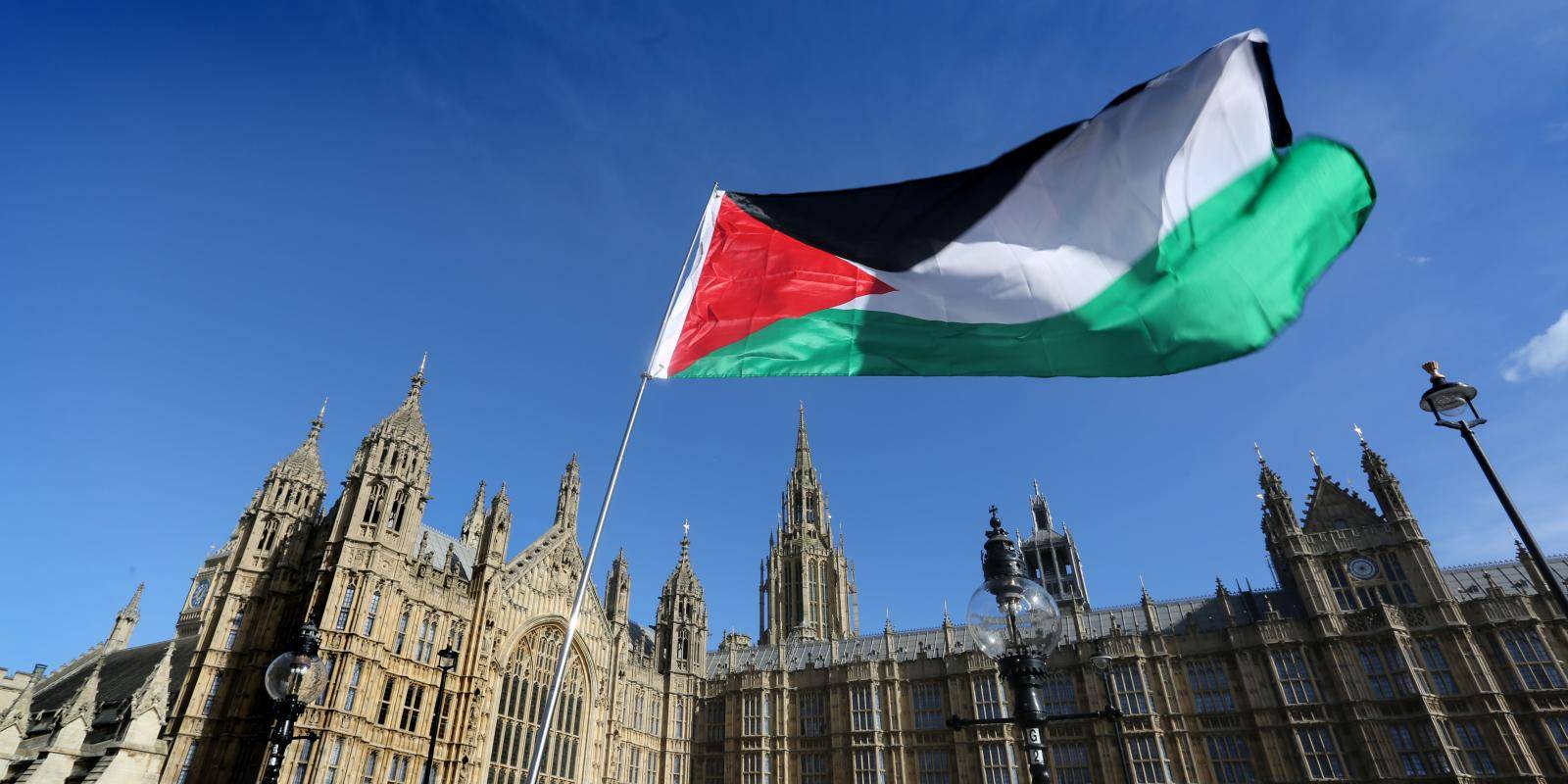
The UK should be unapologetic in ensuring that its Middle East policy reflects the political interests, legal obligations and moral duties that the government endeavours to uphold.
The UK should be unapologetic in ensuring that its Middle East policy reflects the political interests, legal obligations and moral duties that the Burnham government endeavours to uphold. If preserving the viability of a Palestinian state is to be a central pillar of that policy, the UK should consider the following measures:
West Bank
First, if the new UK sanctions policy targeting illegal settlements and settlement expansion is to have any impact, it will need to extend beyond goods to comprehensively address services. Miliband has indicated that some services will be included, stating that action will be taken ‘against specific companies and individuals who provide services such as construction, infrastructure, financing, or real estate for settlement expansion’. However, it is not clear if sanctions on services apply only to E1 and other potential new settlements, or to all existing settlements.
Differentiating services is certainly more difficult than the already imperfect process of identifying goods imported from settlements, and Labour Friends of Israel has previously expressed concern that service restrictions may lead to a de facto boycott of all Israeli businesses. But the onus will be on firms, and potentially the new Israeli government, to clearly distinguish activities within Israel’s internationally recognized borders from those in settlements, and the UK should not back away from this expectation. Indeed, the policy aims to impose a burden on companies in order to reduce material support to settlements, while also compelling Israeli businesses, leaders and citizens to differentiate settlements – conceptually and practically – from Israel itself.
Second, the UK should suspend electronic travel authorization (ETA) eligibility for all residents of settlements wishing to travel to the UK. Most of the over 700,000 settlers live peaceably, and some have condemned the violent attacks carried out by extremist settlers against Palestinians. But the settlements are illegal and have undermined Palestinian statehood for decades, never more so than today. Suspending ETA privileges does not mean denying entry to all settlers, but rather removing the privilege of visa-free entry for this defined category. Especially if other countries adopt similar restrictions, this policy would introduce a disincentive for Israeli citizens to take up residence in settlements.
Administratively, ETA eligibility is organized primarily by nationality, so differentiating Israeli citizens according to whether they reside within or beyond Israel’s pre-1967 borders would require a mechanism for determining habitual residence. This can stem from the existing requirement for applicants to state their primary address on the ETA form. Any application declaring residence in the West Bank or East Jerusalem will be referred to an ETA caseworker; and if the caseworker verifies that the given address is outside Israel’s internationally recognized borders, the applicant will be denied the ETA and directed to a separate visa application process. Any mechanism will be imperfect – some applicants may, for instance, simply give a false address – but it should be made clear that false declaration will result in a 10-year refusal of entry, as is the case with other immigration applications.
Third, the UK should condition future trade agreements with the next Israeli government on halting settlement expansion (including but not limited to E1) and reining in settler violence. When illegal outposts are not only allowed to remain, but actively supported by the state, and when incidents of settler violence not only go uninvestigated, but are enabled by authorities, the state becomes complicit in its citizens’ actions. The UK is well within its legal and moral bounds, and acting in its own state interest, to suspend agreements with any partner that is unwilling to enforce the rule of law.
Gaza
The UK’s leverage is more limited in Gaza, where the Trump-led Board of Peace now oversees most international interventions. But there is still more the UK government can do – and the upcoming Israeli elections could create some openings.
First, the UK should continue to support the efforts of the Board of Peace to reach an agreement on the decommissioning of weapons by Hamas and the withdrawal of Israeli forces from Gaza. These efforts have been stalled since August, but it is likely that the US will expect re-engagement after – and regardless of the outcome of – the Knesset elections. Given Hamas’s declared openness to an agreement, and Israel’s rejection of the plan thus far, the onus will be on the new Israeli government to enter into negotiations aimed at finding a workable, sequenced timeline for disarmament and disengagement. The UK should be prepared to support this process with security guarantees and pressure on all parties.
If need be, the UK should make future economic agreements with Israel conditional on the latter’s engagement with the Board of Peace’s plan, or on presentation of a realistic alternative timeline for withdrawal, sequenced with verified decommissioning of weapons by Hamas. Israel has reason to be wary of any deal with Hamas, and no country should be made to compromise its security. But, by Israel’s own assessment, Hamas has been significantly weakened, and Israel’s extension of the Yellow Line and seemingly permanent presence in Gaza is only deepening grievances and sustaining support for Hamas.
Second, the UK should seek to prevent further splintering between Gaza and the West Bank, especially in terms of Palestinian governance. Free and fair elections with integrated lists from the West Bank and Gaza will be key to achieving this, and the UK should encourage the US and Israel, as well as Palestinian actors, to enable such elections to proceed as soon as logistically feasible. With the Palestinian Legislative Council elections, previously scheduled for 28 November, now delayed until September 2027, the UK should continue to engage with the NCAG – the sole Palestinian-led organ within the Board of Peace – via high-level meetings, training and technical assistance, to ensure that the committee retains relevance and remains a principal actor in Gaza’s reconstruction. It is especially crucial that the NCAG is allowed to enter Gaza, both to undertake its mandated transitional role and to provide a visible governing alternative to Hamas. The UK has little direct say over when or if the NCAG will be able to operate from Gaza, but British interlocutors with the Board of Peace should continue to emphasize this as a priority.
It is critical, too, that the UK engages with the NCAG as a temporary transitional body that is integrated with the PA as soon as possible. As such, the UK should continue to direct Gaza-related communications to both the NCAG and the PA, and to support the efforts of regional actors like Egypt in facilitating coordination between the two bodies. While the PA has its own legitimacy deficit, further fragmentation of Palestinian political institutions will only erode efforts towards effective governance, and shoring up the NCAG as a discrete entity risks creating additional challenges for national unity. Netanyahu has rejected any role for the PA in Gaza, but a shift is not impossible under a new Israeli government – or with post-election pressure from the Board of Peace – and the UK should use its influence to encourage a change of stance. In addition, the UK should make future trade agreements with Israel contingent on the release of withheld tax revenues to the PA, and condition future aid commitments to the PA on enhanced transparency and improved service delivery to Palestinian citizens.
Reclaiming convening power
Beyond direct policy measures, the UK should use its convening power to keep channels open between Israeli and Palestinian interlocutors, hosting high-level ‘backchannel’ conversations and Track 2 discussions on a viable two-state solution. Official negotiations are likely years off, and in the short term, in response to UK policy changes, the Israeli government may decline involvement with formal UK-led efforts. But there are signals that new backchannels may emerge if the Israeli elections bring a change in leadership, and the UK should seek to enable communication where it can. Even without new openings, there is still a critical mass of Israelis from the security, diplomatic and civil society sectors willing to engage with Palestinians, via Track 2 dialogues, in laying the foundations for a future negotiated settlement.
The UK should welcome and facilitate such opportunities, in coordination with international and regional partners. A specific aim should be to facilitate discussion of how the two-state model might better reflect current realities. Aims can include identifying which aspects of the 2003 two-state ‘roadmap’ are still salvageable; exploring updated variations on the traditional two-state model (such as the confederal model) that maintain its basic tenets while reckoning with facts on the ground; and working separately with Israeli and Palestinian practitioners to identify which mechanisms would be necessary to get their respective leaders and communities to re-engage with a two-state strategic vision.
At a time when formal processes appear far off, keeping channels open and supporting peacebuilders at the community level is essential for shifting political imagination and laying the groundwork for a future settlement.
The UK should also further invest in the multi-donor International Peace Fund, launched in June 2026 with Australia and Canada, to increase support for civil society initiatives supporting the rights and security of both Israelis and Palestinians. Especially at a time when formal processes appear far off, keeping channels open and supporting peacebuilders at the community level is essential for shifting political imagination and laying the groundwork for a future settlement. However, seed funding for the Peace Fund is set at just £3 million over three years, considerably less than the International Fund for Ireland (IFI) on which it is modelled, and further investment will be needed from the UK and other international actors for this new fund to have meaningful impact. The UK can also demonstrate its commitment to a long-term peace process by appointing an experienced Middle East envoy to serve as a chief liaison for strategic communications between Israeli and Palestinian officials and regional actors.
Trade-offs and mitigations
A central dilemma for UK policy on Israel–Palestine lies in the tension between taking steps that are mostly symbolic but (relatively) more palatable, and taking stronger actions that are more impactful but also more likely to bring domestic criticism as well as backlash from Israel and/or the US.
So far, the US response to the UK’s September 2026 announcement has been notably muted, with Trump more focused on the war with Iran and the forthcoming midterm elections than on UK–Israel relations. This by no means indicates that future British moves will be immune from US repercussions, especially given Trump’s trademark unpredictability.
But there is evidence of change in both major US political parties’ stance on Israel–Palestine, reflecting broad shifts in American public opinion. This suggests that Washington’s responses may be more nuanced in the months and years ahead than they have been in the past. The Trump administration continues to support Israel where it matters most – with arms sales, including the recent approval of a $2.8 billion munitions deal. But long-standing bipartisan political consensus on Israel is waning significantly. In the Republican party, vice-president JD Vance has said the US cannot be ‘subservient’ to Israel on Middle East policy, and polls indicate that over 70 per cent of Republicans under the age of 30 believe Trump has been too supportive of Israel. Nearly all Senate Democrats recently supported a measure to investigate Israeli human rights violations in the West Bank, and 40 voted earlier this year to block arms sales to Israel. Such numbers may increase after the midterms, in which Democrats are projected to gain seats in both the House and the Senate. And in the medium term, it is possible to envision a future Democratic administration backing the international consensus in endorsing Palestinian statehood.
In contrast, Israel’s response to the UK announcement points to the types of diplomatic trade-offs that must be considered when weighing future actions. Retaliatory measures have included downgrading Britain’s consulate in East Jerusalem to a ‘UK mission’ and requiring the removal of most of its diplomats; removing UK officials from the International Gaza Support Center (IGSC); and ending UK training for PA police in the West Bank through the British Support Team (BST) in Ramallah. It is possible that a new Israeli government will reverse such measures, especially as the IGSC and BST contribute to security infrastructure in the Palestinian territories that directly serves Israel’s interests. And the fact that Israel agreed to the consulate’s downgrading, rather than a full closure as originally ordered, suggests that there may be scope for negotiation on some retaliatory measures. The moves are significant even so, and underscore the necessity of preparing for at least temporary diplomatic setbacks – even if the policy reset is necessary for the long run.
Washington’s heft should not prevent the UK from using its own leverage, both bilaterally and – along with France, other European states and Canada – collectively.
There are several ways the UK can mitigate these challenges. First, the UK can initiate policies in concert with a coalition of like-minded middle powers, as it did in recognizing Palestinian statehood in 2025, and most recently in announcing the settlement trade ban. It is widely acknowledged that the US has the most direct diplomatic influence on Israel. But Washington’s heft should not prevent the UK from using its own leverage, both bilaterally and – along with France, other European states and Canada – collectively. Indeed, the fact that 11 other states joined the UK in announcing settlement trade bans demonstrates the political sway that Britain maintains, while also increasing the cumulative impact of such policy steps. Israel’s immediate response to the settlement trade ban mostly targeted the UK, but coordinated efforts undoubtedly blunt the options available for future retaliation.
Second, the UK and its partners should focus on specific, targeted policies with clear rationales and objectives. The settlement trade ban is again a good example of this. Despite Netanyahu’s attempts to frame the move as anti-Israel, the decision clearly targets settlements, is grounded firmly in international law, and has the aim of preserving the prospect of a two-state solution.
Third, Britain should situate its policy reset in a broader security context, emphasizing (with coalition partners) that Israel’s lasting security will ultimately be achieved by ending the occupation and committing to pathways for a negotiated settlement that includes Palestinian sovereignty. The alternatives – prolonging the status quo, or further Israeli annexation of Palestinian territories – will only intensify grievances and deepen Israel’s isolation, further undermining its security.
The UK and its partners can be clear that they are willing to engage fully with an Israeli government that takes good-faith steps to end the occupation and realize a two-state solution with a viable Palestinian state alongside a secure Israel.
Indeed, the guiding principle for each new policy should be clear: that the UK and its partners are willing to engage fully with an Israeli government that takes good-faith steps to end the occupation and realize a two-state solution with a viable Palestinian state alongside a secure Israel. In the absence of such steps, Israel will face increasing economic and political pressure from abroad.