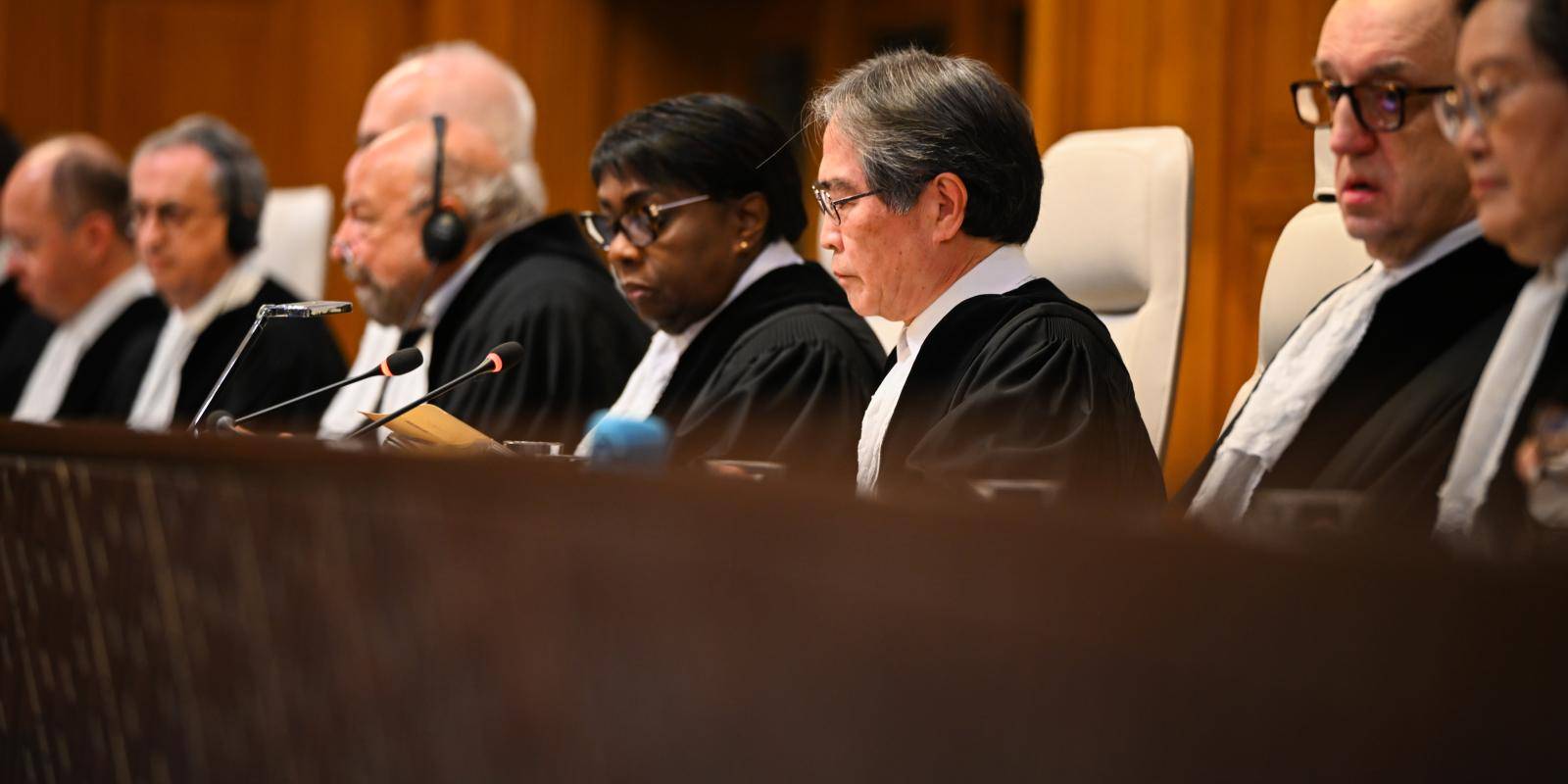

The International Court of Justice (ICJ), the highest court in the world, has ruled that Myanmar is guilty of genocide. According to the Court, the ‘clearance’ campaign by the Myanmar military against its Rohingya minority of 2017 was aimed at the destruction, in whole or in part, of that community. The finding in this case, which was brought before the Court by the Gambia in 2019, will reverberate far beyond Myanmar and its immediate environment.
The ICJ’s previous genocide cases
The Rohingya are a mainly Muslim ethnic group that has been excluded from Myanmar citizenship and discriminated against for decades. In the wake of attacks by terrorist groups against the military in 2016, some 10,000 Rohingya were killed, and over 85 per cent of its population of around 850,000 were displaced from Myanmar over the following year in a campaign of killings, rape and the burning of villages.
The ICJ has established a very high bar for confirming that genocide has occurred. Several cases, including those brought by Croatia against Serbia and Sudan against the UAE, have been unsuccessful.
Others are still ongoing, addressing the Democratic Republic of the Congo (DRC) and Rwanda, Ukraine and the Russian Federation, and Gaza.
Only once before, in relation to the 1995 Srebrenica massacre of 8,000 men and boys in Bosnia and Herzegovina, has the ICJ confirmed genocide. But controversially, it failed to attribute the atrocity to its alleged author, the Republic of Serbia (then the Federal Republic of Yugoslavia) under Slobodan Milosevic.
This new decision of the Court moves the dial ever so slightly, reducing the legal hurdles on the way towards a finding of genocide.
The grounds for a finding of genocide
According to the Genocide Convention of 1948, genocide requires three elements.
First, it must be directed against a protected group, defined by national, ethnic, racial or religious characteristics. Second, there must be prohibited acts directed against members of the group. This includes killings, causing serious bodily or mental harm, inflicting conditions of life calculated to bring about the destruction of the group, or measures intended to prevent births or forcibly transferring children to another group.
But critically, even if a pattern of such practices is clearly evident, this must be carried by the specific intent to destroy the group as such ‘in whole or in part’ – the third element.
This may seem odd. If the result is the destruction of the group, one might argue that this should suffice to constitute genocide. Such conduct would clearly amount to a crime against humanity and other severe violations of human rights and humanitarian law. However, in defining what is sometimes called ‘the crime of crimes,’ the Genocide Convention imposes this additional criterion of specific intent.
Of course, that is difficult to prove. States no longer record their decision to commit genocide in a formal document, as Hitler’s government did in the famous 1942 Wannsee Protocol, which planned the complete destruction of Europe’s Jewish population.
Without such formal documentation, proof of the intent to destroy a group in whole or in part must be inferred from the nature of a systematic campaign of killing and other acts proscribed by the Genocide Convention that are directed at a defined population segment.
Previously, the Court asserted that such an inference can only be made if this pattern cannot be explained by any reason other than the intention to commit genocide.
In its defence, Myanmar offered several alternative grounds to explain the nature of its armed campaign. It referred to the need to mount a counter-terrorism effort following attacks by rebel movements in Rakhine province, where most Rohingya used to reside. However, in view of the Court, this motivation would not explain the pattern of brutal attacks against the civilian population.
The Court also considered whether Myanmar’s conduct might simply have been directed at the forcible displacement of the Rohingya, rather than their destruction in whole or in part. This alone would be a serious international crime, but it would not quite amount to genocide.
However, the Court looked at the overall context of the long-standing campaign against the Rohingya – including discrimination, hate speech, the nature of the military operation and other culpable acts systematically targeting this group and affecting its ‘foundations’ or existence.
In broadening this overall context, and relying on the totality of the evidence, rather than just the well attested reports of individual atrocities, the Court was able to assert that the intent to commit genocide was the only reasonable inference that could be drawn.
The effect on other cases
This outcome will concern some governments involved in other ongoing cases regarding genocide.
Ukraine brought a case before the ICJ in 2022, asking the Court to confirm that it had not committed genocide against Russian-speakers on its territory – a central claim made by Russia to justify its full-scale invasion of Ukraine that year.
In another case, the DRC is alleging that Rwanda is involved in genocide conducted on its territory. In a further action, Nicaragua is alleging that Germany shares responsibility for the alleged genocide in Gaza due to its supply of arms to Israel.
The Court’s Myanmar judgement may impact these cases. But international attention is mainly focused on the case’s implications for South Africa’s genocide case against Israel.
In an initial, provisional phase of the case, the Court found that there may be a plausible case of genocide in relation to Israel’s military campaign in Gaza.
Counsel for Israel and South Africa, along with the over 20 others states that have intervened in that case, will now assess the Court’s finding and ask: what would the outcome be if the matrix of factors applied by the ICJ in the Myanmar case were applied to Israel’s armed campaign in Gaza? Would this exercise demonstrate that the intent to commit genocide is the only reasonable explanation for the character of that campaign?

The key clauses in the Myanmar judgement were adopted by an unusually divided Court, by a majority of 9 to 6. The ICJ decides according to the applicable law, not the politics involved in a given situation. But its decision will probably be criticized by some as having lowered the threshold for the identification of genocide, perhaps with a view to confirming the relevance of the Court and of the international rule of law. International law has been largely disregarded in many recent conflicts – especially its humanitarian provisions.
On the other hand, those opposing the Court’s finding might be accused of trying to prevent a precedent being established when it comes to evaluating the Gaza case.
In addition to political controversy, the case raises another important issue: A third state, The Gambia – which is not involved in Myanmar’s conflict – managed to obtain a ruling in favour of a dispossessed and internationally disenfranchised minority group located a continent away.
The Gambia brought the action with the support of the Organization of the Islamic Conference and senior international lawyers, adopting a kind of international public service role in defence of the international public order. It confirmed that all states have a firm legal interest in compliance with that rule by all other states, and that parties to the Genocide Convention can bring a case to the Court in defence of the prohibition of genocide.
The Court even considered that in this case between The Gambia and Myanmar, it has the authority to rule on the entitlement of the Rohingya as the ultimate beneficiaries of the obligation to prevent genocide to restitution and compensation from their own government. In this way, it has reasserted and indeed extended its role of guardian of the international rule of law at a time of challenge to global order.