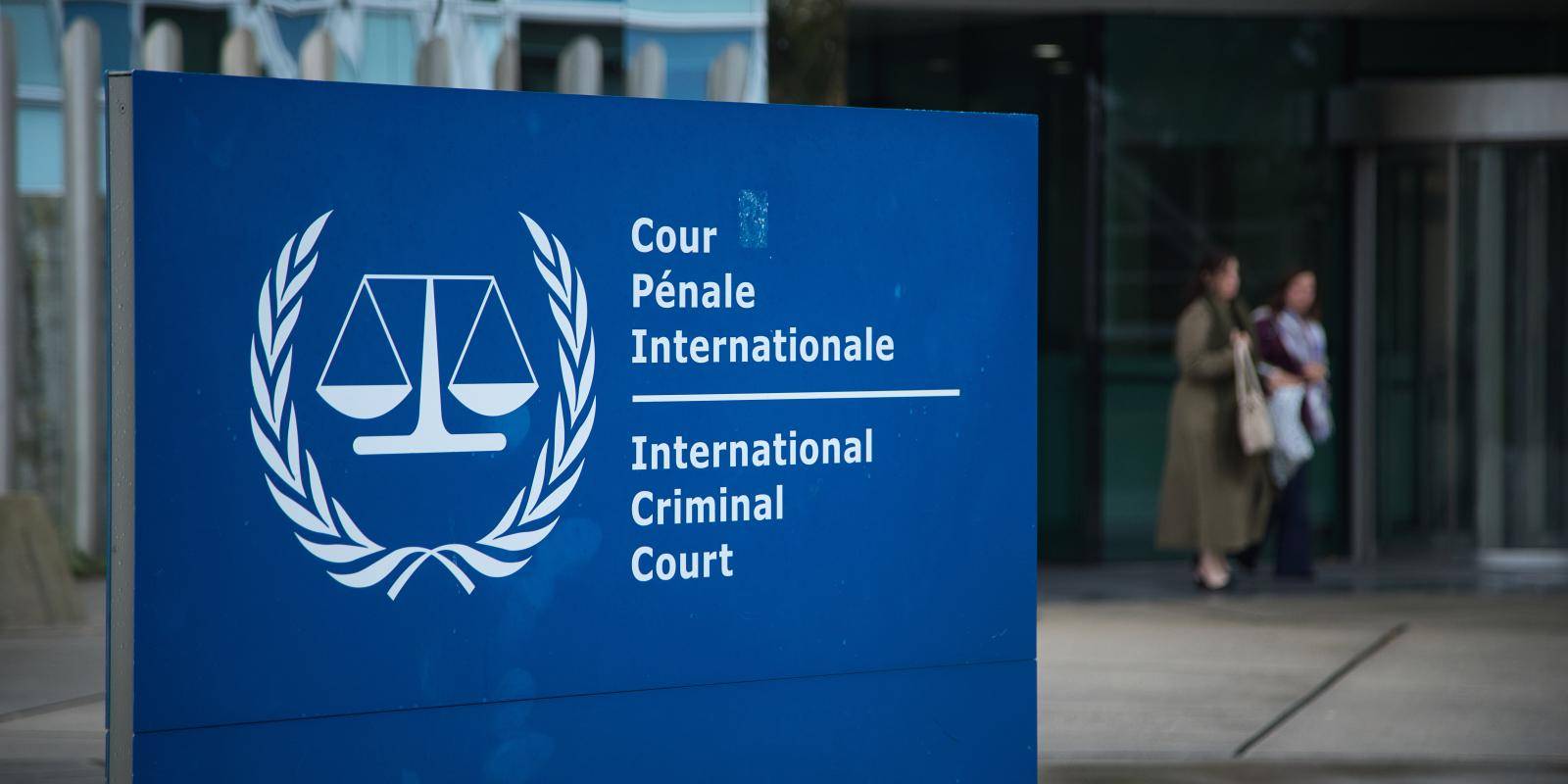

On 9 October 2026, the US designated the International Criminal Court under Executive Order 14203, extending its existing sanctions package on individual ICC officials to the entity itself as a whole.
The US imposed asset freezes on any property owned by the Court and prohibited all transactions by US individuals or entities involving the ICC.
The US has allowed certain limited exceptions to this general prohibition, to allow for the ongoing detention of some awaiting trial, the payment of pensions, the use of IT software and social media and a 180-day ‘wind down’, allowing certain otherwise prohibited transactions until April 2027.
These sanctions were introduced by the US in what Secretary of State Marco Rubio called an ongoing campaign to ‘dismantle the ICC brick by brick’.
‘For decades, Republicans and Democrats alike rejected the idea that the International Criminal Court had the power to prosecute American citizens, military service members, or political leaders. America never joined the court. We don’t need it. And we don’t want it,’ Rubio said in a statement.
‘We expect our allies, many of whom are part of the ICC and that rely on American service members for their defense, to rein in the court. If they do not, the United States will continue its campaign to dismantle the ICC, brick by brick, until Americans are threatened no longer,’ he added.
The ICC called the sanctions ‘an attempt to obstruct the course of justice and to prevent the Court from doing what it was created to do. It is an assault on the rule of law and on the very foundations of the international legal order which strikes at the simple principle that no one stands above the law.’
Those countries that have signed up to the ICC – the ‘State Parties’ – now have to decide how to respond, through diplomacy; support or the ‘nuclear option’.
The impact
An asset freeze essentially prevents making any economic resources available directly or indirectly to the ICC. They must be observed by all US persons and green card holders, wherever they are in the world, all US companies and any person in the US.
They also apply to any transactions or data routed through the United States. In reality, this can often limit (at best) and prevent (at worst) nearly all financial transactions of a designated person.
As such, if left unchecked, the US sanctions could severely hamper the day-to-day operations of the ICC. The General Licence operates to provide a wind down period, but at most provides a stay of execution and the potential for diplomatic efforts to reverse or mitigate the impact.
The Court itself noted that whilst it endeavours to continue functioning as normal, international cooperation is imperative as the Court’s fate also rests in ‘the hands of the States that created it’.
So far, foreign ministers of the UK and others have issued a Joint Statement affirming their unwavering support for the ICC. The EU has also said that it stands ready ‘to take all necessary measures to ensure the Court continues to operate effectively and fulfils its indispensable mandate’.
Below are recommendations on how the UK government may best respond to the ICC designation in coalition with other State Parties.
Diplomatic Engagement
State Parties should open the dialogue as necessary to address the US concerns regarding the authority of the ICC.
The 180-day Maintenance General Licence, marked as a show of good faith, intends to achieve just that. It provides State Parties the chance for diplomatic engagement. The ICC’s Assembly of States Parties in December will provide an opportunity to review and align the response of the State Parties to the US.
Practical Support: Preparing for the Worst
In parallel to diplomatic efforts, State Parties can start to consider what practical assistance they can provide in the event that diplomatic efforts are unsuccessful or that companies start de-risking sooner rather than later and start to withdraw services before the expiry of the US General Licences that could impact – as no doubt the US intends – the ongoing investigations and operations of the Court.
As such, whilst the US General Licence might allow for a 180-day ‘wind down’ of the provision of crucial goods and services, companies caught by US sanctions may simply decide to stop working with the Court at any time.
That means the State Parties need a comprehensive plan to support the Court, covering everything from provision of IT to support on banking and payment routes, and everything in between.
Blocking Statute: the Nuclear Option
Some State Parties – in particular the UK and EU Member States – may have the option of turning to the ‘Blocking Statute’.
This has been dubbed the ‘nuclear option’ by Dutch Foreign Minister Tom Berendsen. It would essentially prohibit any natural or legal person from complying with US sanctions.
But Blocking Statutes have only been deployed vary rarely in the past, primarily targeting US extra-territorial over-reach where it has imposed sanctions against countries like Cuba and Iran, and required those outside of US jurisdiction to comply with them.
However, even this nuclear option’ is not without its limitations. First, it won’t be available to all State Parties without new primary legislation. Second, even where the legislation is in place, it is not clear that the US measures would fall squarely within the legislation which is designed to protect ‘trading interests’ against extra-territorial measures. An argument could certainly be made, but it could face challenge if ever relied upon.
Third, it only applies to those caught by the relevant jurisdiction. In the UK and EU, for example, the prohibition on complying with the US sanctions would only have to be observed by UK/EU nationals, UK/EU companies or those operating in the UK or EU.
Finally, it essentially puts domestic companies between a rock and a hard place – fail to comply with US sanctions or fail to comply with the UK/EU ‘Blocking Statute’.
State Parties with this potential option have not deployed it despite the US targeting of judges and Court staff; perhaps now the US has upped the ante in its campaign against the Court, it is time for its supporters to put all options on the table.