European governments face four broad options.
The first is to focus primarily on higher defence spending and military capability. This will remain very much necessary, but it is insufficient to address Europe’s security challenges. The most burning question, at this stage, is not so much whether Europe needs more hard power, but whether it can credibly assume the growing defence burden left by a disengaging US. The war in Ukraine has exposed how far Europe still falls short in terms of production capacity and ability to sustain high-intensity warfare. Yet higher defence spending alone will not ensure that European societies can absorb prolonged disruption – or, for that matter, that different national threat perceptions are understood across borders.
Higher defence spending alone will not ensure that European societies can absorb prolonged disruption – or, for that matter, that different national threat perceptions are understood across borders.
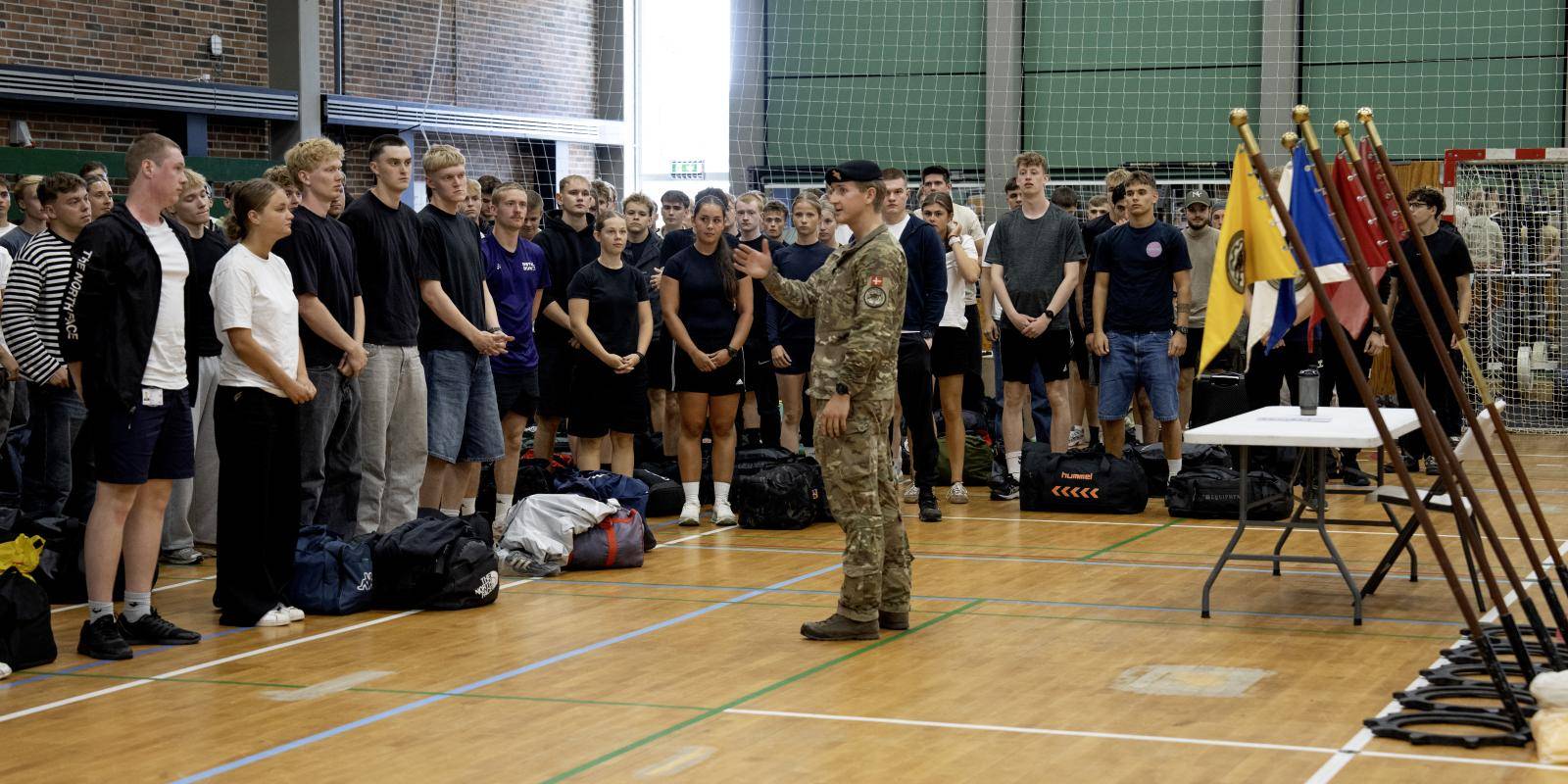
The second option is to revive national service schemes separately. This is the current direction of travel in several countries. France has announced a new programme of voluntary military service for young people, while Germany’s new military service model remains essentially voluntary, although mandatory registration and medical screening are being reintroduced for young men. These efforts may have national value, but they illustrate exactly the risks Europe should avoid: a patchwork of domestically focused schemes would mainly attract the already motivated, would remain too limited in scale to be effective against substantial threats, and would fail to build a common European strategic culture. These national schemes are also emerging at a difficult fiscal moment, when higher defence expenditure is competing with many other intensifying demands on public budgets. National service schemes should, in any event, be designed from the outset to plug into a common European framework, so that the fulfilment of national obligations contributes both to domestic military capacity and to shared European preparedness.
The third option is to create a fully EU-wide compulsory service scheme. But this would be politically unrealistic in the short term. Military and civilian service obligations alike are closely tied to concepts of national sovereignty and remain politically sensitive. Any attempt to introduce an EU-wide model would risk prolonged legal and political contestation in member states. It could also provoke opposition from citizens who might see it as an imposed federal instrument (another machin, to borrow de Gaulle’s famous criticism of the UN) rather than as a national obligation with a European dimension. Moreover, it would exclude non-EU European states with valuable contributions to make.
The fourth option – and the one advocated in this paper – is a coalition-based European resilience agenda. A group of willing states would retain national responsibility for compulsory service obligations, but would agree on common minimum standards and develop four shared instruments: training modules; cross-border placements of citizens; local resilience structures; and a civilian reserve network with interoperability between participating states. The framework should be open to non-EU partners such as the UK and Norway. This option is the most practical route. It could be put into place faster than EU-wide legislation, would respect national sovereignty, and would still create a European layer of strategic education.
Several trade-offs would need to be addressed.
The first would be between voluntary and compulsory participation. Voluntary schemes are easier to launch, but they tend to attract the already convinced. Such initiatives would be unlikely to create the shared civic foundation necessary for a minimum level of preparedness across society. If the aim is to build a strategic culture, the principle should be universal participation with clearly defined exemptions.
The second would be between military and civilian service. A purely military scheme would be too narrow and politically harder to scale, while a purely civilian model would contribute too little to defence readiness. As mentioned, all medically eligible participants should therefore undertake an initial period of basic military and civil-defence training before entering either a military or civilian service track. This would establish a common defence baseline while allowing the respective tracks to reflect different skills and needs.
The third trade-off would be between national legitimacy and European cohesion. The service obligation should remain national in scope, but a substantial cross-border placement should be mandatory. This would preserve national responsibility for compulsory service while giving the programme its genuinely European character. Without a meaningful period of service abroad, the ‘Erasmus-
inspired’ dimension of any scheme would remain largely rhetorical.
The fourth trade-off would be whether operation of the scheme should be the sole responsibility of central governments, or whether aspects of its administration should be devolved to local and private providers. National governments would establish the framework, with the armed forces of each country overseeing military training. But implementation should also involve municipalities and operators of essential services. These are often the institutions and entities expected to maintain continuity during crises. They should therefore have a formal role in how preparedness is planned and exercised.
The fifth trade-off would be between ambition and fiscal realism. The French and German cases already underline the fiscal burden of rebuilding national military service schemes, even on a limited and voluntary basis. France has budgeted €2.3 billion for its new military service programme between 2026 and 2030, with participation expected to rise from 3,000 people in 2026 to 10,000 a year by 2030. Of the amount budgeted, €1.46 billion has been allocated to infrastructure alone. The figures are instructive: most of the projected expenditure lies in creating the capacity to host and train participants, rather than in their remuneration. Germany’s new military service framework is likewise expected to require additional federal expenditure of around €495 million in 2026, rising to €849 million in 2029. The two systems differ in design and accounting, and their headline figures are therefore not directly comparable. They nevertheless show how quickly accommodation, training, administration and support impose substantial costs on national budgets.
A compulsory national defence and preparedness scheme operating at much broader scale would inevitably require significant public investment. The French and German examples therefore strengthen the argument for identifying from the outset which elements must remain national, and which can sensibly be organized collectively. Shared curriculums and certification, cross-border placements, specialized training infrastructure, joint exercises and interoperable reserve arrangements could reduce unnecessary duplication while ensuring that national expenditure builds capacity across borders. The European Commission’s proposed allocation of €131 billion to defence, security and space under the 2028–34 Multiannual Financial Framework (MFF) creates a timely opportunity to finance parts of this European layer. Individual governments would retain responsibility for the costs associated with compulsory national service. At the same time, European funding could support elements that provided clear cross-border added value, and could alleviate some of the additional pressure on national budgets.
The proposed Erasmus-type scheme for defence would offer a concrete mechanism for UK–European reassociation after Brexit, giving the UK a structured role in Europe’s wider security and preparedness.
The sixth trade-off would be between EU integration and post-Brexit European security. The UK should not be treated as an external partner to a predominantly EU initiative. Britain has relevant and advanced capabilities in intelligence, cyber technology, maritime security, civil contingency planning, expeditionary operations, defence training and NATO planning, all of which are crucial to European defence and security. The proposed Erasmus-type scheme for defence would offer a concrete mechanism for UK–European reassociation after Brexit, giving the UK a structured role in Europe’s wider security and preparedness. As Andy Burnham’s government is reopening the debate over Britain’s relationship with the EU, such cooperation would offer enough flexibility of association without tying the hands of either party and prejudging the subsequent question of eventual membership.