A credible European defence posture depends on more than higher budgets and stronger military capabilities. It requires (a) societies able to sustain themselves under pressure, and (b) a common political culture capable of turning different national security concerns and perceptions into a willingness to act together.
When it comes to the first of these two factors, the approach taken by Finland is perhaps the most instructive. The country’s comprehensive-security model does not treat resilience as a substitute for hard defence. Military defence remains one of the Finnish model’s foundations. But this is embedded in a wider system in which government, businesses, non-governmental organizations (NGOs) and citizens share responsibility for safeguarding vital societal functions.
The Finnish government’s ‘Security Strategy for Society’ is currently the most advanced blueprint for preparedness in Europe. As such, it presents a potentially useful template for a common European framework for comprehensive security, describing all vital societal functions that ought to be safeguarded through collaboration between authorities, the business community, NGOs and citizens. At the heart of the system is a national Security Committee, which coordinates and includes members from government departments, local authorities, emergency services and the business community. In addition, a National Emergency Supply Agency (NESA) works with private companies and public authorities to secure supply chains and critical services, and to ensure continuity in the event of a crisis.
What makes the Finnish model notable is that it is designed as a whole-of-society system. It encompasses provision of civil defence shelters, household preparedness guidance, media literacy, national defence training for civilian leaders, the use of voluntary preparedness organizations, and structured cooperation with 1,500 critical companies through sectoral preparedness networks coordinated by the NESA. Obviously, this does not mean that every country in Europe can or should replicate the Finnish model. The main lesson here is that defence is more credible when civil preparedness agencies, local authorities, private operators and citizens are included in security planning.
Defence is more credible when civil preparedness agencies, local authorities, private operators and citizens are included in security planning.
Yet even if other countries successfully developed similar models, doing so in isolation would be to miss the opportunity for more effective preparedness that pan-European coordination could offer. Sure, Europeans might be better able to respond to a crisis developing at home, but they would still have only a limited understanding of the security realities facing other countries. Moreover, the potential benefits of shared expertise, pooled resources and collective resilience would go unrealized. At a time when national governments are increasingly obliged to cooperate more closely on matters of hard security, the need for an accompanying common approach to civil preparedness seems more compelling than ever.
This is where the Erasmus analogy potentially comes in. Since its launch in 1987, the scheme (subsequently expanded and renamed Erasmus+) has enabled millions of Europeans to study and work abroad. Even though its main purpose was originally educational, it has evolved to cover wider areas of exchange and cooperation. The scheme has facilitated the mobility of generations of Europeans across the continent, allowing young people to experience another culture and society at first hand, and strengthening mutual understanding. Erasmus+ has contributed to a shared sense of European belonging.
But if the scheme can be said to have helped create a generation that learnt together, Europe now needs an equivalent initiative to help a generation prepare together. The analogy, of course, has one obvious limit. Erasmus+ is voluntary, whereas the national service and reserve network proposed here would be compulsory. Rather, what a ‘defence Erasmus’ scheme would borrow is the principle of educational cross-border mobility.
An instructive, if limited, precedent already exists. The European Security and Defence College (ESDC), an autonomous EU body, runs what it informally refers to as a ‘Military Erasmus’ – officially, the European Initiative for the Exchange of Young Officers (EMILYO) – to enable young officer cadets to train and study across European borders. Part of EMILYO’s aim is to strengthen defence interoperability and foster a shared European security and defence culture.
The proposal in this paper is to draw on the cooperative spirit of EMILYO and Erasmus+ respectively, but in a new format with a remit that both extends beyond the former’s relatively small professional military cohort and covers very different functional areas from those of Erasmus+. In short, the new programme would apply similar principles of cross-border exchange and organizational integration, but to critical security challenges and at a societal scale.
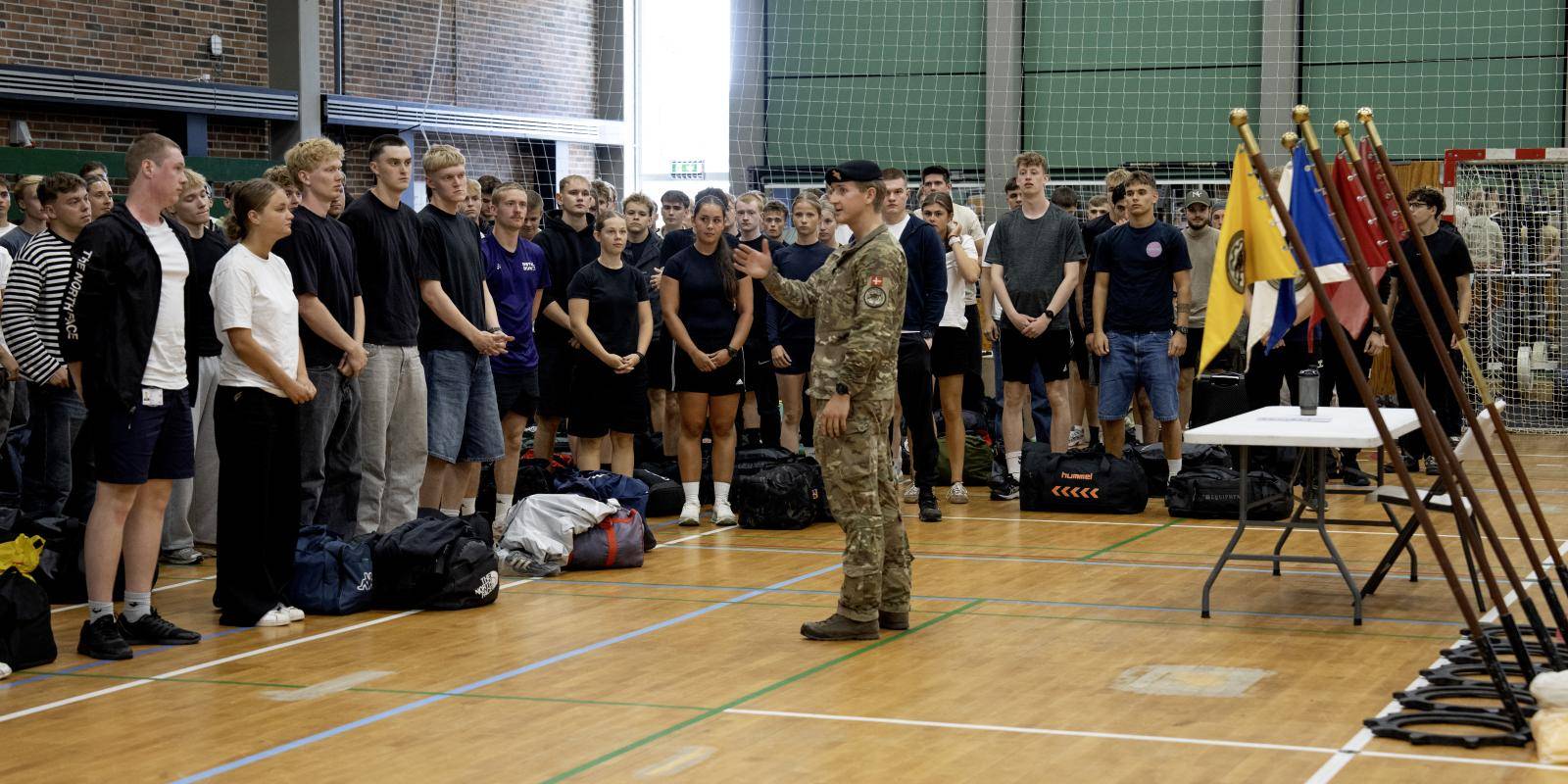
It is important to underline from the outset that establishing such a scheme would not mean militarizing European society or bypassing individual countries’ sovereignty over their defence. The proposal here is simply to institute a common European framework for defence and preparedness, beginning with a period of basic military and civil-defence training for all medically eligible participants – subject to exemptions under national law. In a second stage of service, participants would then pursue either a military or civilian service track, which would include a placement in another participating European country.
Cross-border experience would be particularly valuable at a time of rising distrust in public institutions and growing fragmentation of the media environment. Although governments can seek to explain to citizens why security threats differ across Europe, official assessments – often questioned in the media and by the public – will rarely carry the same weight as direct experience. A young Spaniard spending a period of service in Poland, for example, would see at first hand how the country’s proximity to Russia shapes preparations for conflict (and how Poland consequently works to ensure essential services are capable of functioning under pressure). Conversely, a Polish participant serving in southern Europe would observe vulnerabilities (e.g. to illegal maritime migration) that feature less prominently in Poland’s security debate.
Greater familiarity with another country’s security environment should not be confused with convergence in threat assessment – nor should that be expected. Differences in threat perceptions across Europe often reflect genuine differences in geography, strategic culture, risk exposure and national vulnerability. A French participant, for instance, may understand perfectly well why Poland regards the prospect of Russian military aggression with particular urgency, yet may judge the likelihood of direct kinetic action by Russia against France very differently. Rather than erasing those differences, the purpose of a shared strategic culture should be to make them intelligible enough across borders so that they do not prevent common decisive action at European level when a crisis emerges.
That still leaves a politically sensitive question: why should the security of one European country be regarded as part of the security of another? The answer cannot rest on a claim that Europeans face identical threats. As outlined above, they do not. It rests instead on the extent to which security has become interconnected. Alliance commitments can turn an attack on one country into an obligation for others to answer or replicate. Disruption to infrastructure or supply chains can spread rapidly across borders. A crisis on NATO’s eastern flank, for example, would affect countries further west even if their own territory were not under immediate military threat.
Threats to Europe have at times prompted discussion of the controversial question of whether European or EU states should consolidate their armed forces to create a joint European army. But before Europe can credibly have this debate, which would be politically highly contentious, there needs to be a common strategic culture rooted in mutual responsibility and preparedness – a culture capable of translating different national threat perceptions into European solidarity and action when required.