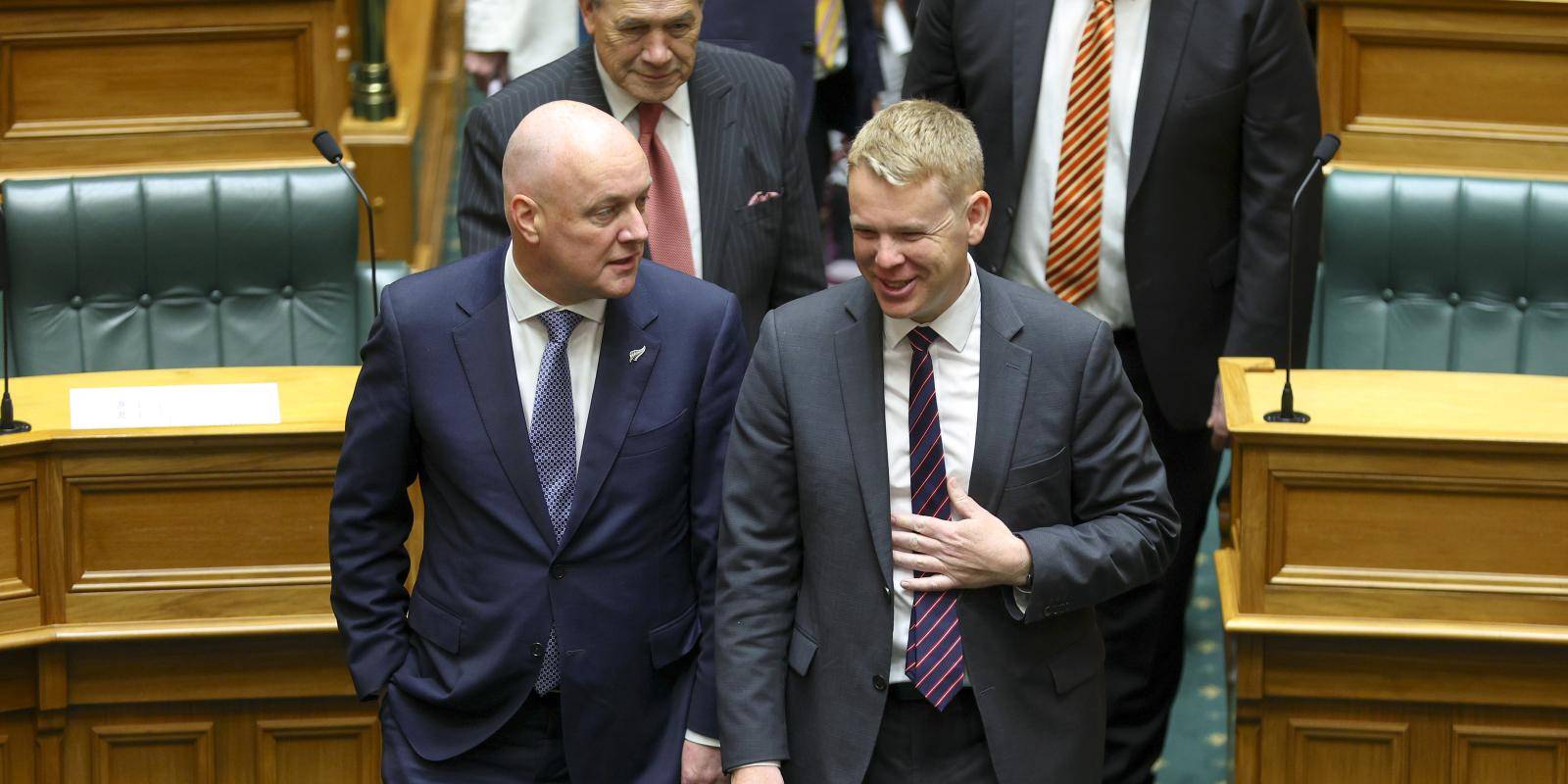


On 7 November, New Zealanders go to the polls in what looks set to be a closely contested general election. As elsewhere, anxiety about the cost of living has dominated the campaign.
International affairs tend to feature at the bottom of voter concerns. However, like many US citizens voting in this year’s midterm elections, some New Zealanders blame international events like the war in Iran for the higher costs that are their top priority.
New Zealand’s foreign policy is therefore at stake in this election. And a change of government could substantially reshape the country’s position on key issues.
The foreign policy reset
Since 1996, New Zealanders have voted in a Mixed Member Proportional (MMP) system which normally produces a coalition government.
In 2023, New Zealand formed its first three-party coalition government under MMP. The centre-right National Party, led by Christopher Luxon, was joined by the right-libertarian Act Party and right-wing populist New Zealand First Party, led by Winston Peters. Peters took on the role of foreign minister – a role he had held twice before.
As a small, open, Pacific economy, recent New Zealand governments have generally sought balance in foreign policy. On the one hand they have nurtured the increasingly important trade relationship with China, building on a long history of openness to engagement with Beijing (China has been New Zealand’s largest trading partner since 2017). On the other hand, governments have sought security and other partnerships with the US and other IP4 countries like Japan, Australia and South Korea.
However, after the 2023 election the coalition announced a ‘reset’ in foreign policy, aligning New Zealand more closely with the US and Australia.
This has not meant total alignment with Washington. The coalition has supported Ukraine against Russia’s war of aggression. It has stressed the importance of free maritime movement, including in the Strait of Hormuz and the Bab al-Mandab Strait. And it has stated its support for the international justice system.
But the government has also expressed interest in joining AUKUS Pillar II – an Australia–UK–US security initiative – and deepened military cooperation with the US. It has near-doubled defence spending, while weakening engagement on humanitarian issues and climate security.
Meanwhile, relations with China have cooled. China has shifted to making public comments on New Zealand’s foreign policy – particularly its AUKUS discussions. And in May Beijing imposed travel bans on New Zealand MPs that visited Taiwan, something that New Zealand politicians have done without consequence since 1972.
Seeking a closer relationship with Washington, the coalition has maintained a ‘softly-softly’ approach to the dramatic changes in foreign policy during the second Trump administration. Wellington’s response to US pressure on Canada, Mexico and Denmark – and the multilateral system in general – has been muted. And, though government policy is to support a Two-State Solution, the conflict in Gaza and the US-Israeli war against Iran have exposed foreign policy faultlines.
In 2025, New Zealand declined to recognize Palestinian statehood, diverging from partners like Australia, the UK, Canada and France. In March, released emails showed Prime Minister Luxon wanted to show ‘explicit public support’ for the US war against Iran.
But closer security alignment with Washington has not exempted New Zealand from a higher 12.5 per cent rate of US tariffs, leading to a 13 per cent decrease in exports to the US in the first year. And it has not shielded the country from the impact of the US–Iran war. Many New Zealanders blame these factors for increasing prices at home – as do some coalition government ministers.
What a change in government might mean
Crucially, New Zealand’s reset was not put to voters at the last election in 2023. This time, some parties have set out some foreign policy positions in advance.
The Labour Party pledged in 2024 not to join AUKUS Pillar II. And the party says it would recognize Palestine statehood and enforce sanctions on Israeli settlements in the occupied West Bank.
The National Party, meanwhile, has pledged to continue to invest in defence, seek new trade relationships, and boost the medicine budget of the government’s pharmaceutical agency by cutting foreign aid outside of the Pacific.
Climate is the area of greatest division. The coalition’s interventionist approach against climate litigators risks leaving New Zealand in breach of its climate obligations. That could threaten its trade relationship with the EU. In contrast, parties like Labour promise to prioritize compliance with climate commitments and relationships with the EU, as well as Canada and ASEAN. Labour also says it would express greater support for multilateral institutions like the World Health Organization (WHO). (Under the current coalition, New Zealand has abstained from or rejected significant global health measures).
Labour has been the most proactive about publicising foreign policy commitments in its election campaign. But a clear strategy from either of the largest parties is still lacking. The stances of smaller parties, who will serve as coalition partners, are even more opaque.
Power favouritism increases vulnerability
Throughout the campaign, polling has shown a finely balanced race. A small percentage of undecided voters could yet install a left-wing coalition led by the Labour Party – or maintain the status quo.

Were the coalition re-elected, New Zealand’s foreign policy would likely extend the first term’s agenda. Peters would probably remain in post as foreign minister. And the relationship with China will continue to be delicate, especially following recent events. In July, Peters directed remarks at a left-wing Chinese-New Zealander in Parliament that were condemned as racist at home and prompted a formal protest by Beijing.
The pursuit of positive US relations would also probably continue under any new government. But it will need to be refined.
The policy is predicated on the belief that Washington is a reliable security partner in the Indo-Pacific. But US attention is fixed on the Middle East and its commitment to its alliances less sure than ever – leaving New Zealand potentially vulnerable.
Europe and the IP4 have acknowledged the need for enhanced Pacific security engagement to compensate. But the US will still need to be involved to counter China’s influence in the region. The challenge is to engage Washington without relying exclusively on it.
Informed consent at the ballot-box
As a small economy, New Zealand is more vulnerable to shocks. Russia’s invasion of Ukraine and the war in Iran have contributed to higher inflation, trade disruption, and a weaker New Zealand dollar.
It can help New Zealand to retain a level of strategic ambiguity in its foreign policy. But this must be balanced with the right of voters to have their say in how the country positions itself and understand the trade-offs involved.
To ensure that voters can make informed decisions, political parties need to be clearer about their foreign policy positions. Parties should define the principles and red lines they will use to guide relations with the US and China, spell out their positions on security alliances, and more clearly articulate what they see as New Zealand’s role in the Pacific.
These positions need not be fixed or undermine strategic ambiguity. But parties should outline their policies clearly enough for voters to evaluate them. If either party believes another ‘reset’ in foreign policy is necessary, they should make an argument for it and win New Zealanders’ consent at the ballot box.