
The second round of Colombia’s presidential election will be held on 21 June, revealing a country deeply divided between two candidates with entirely different political visions.
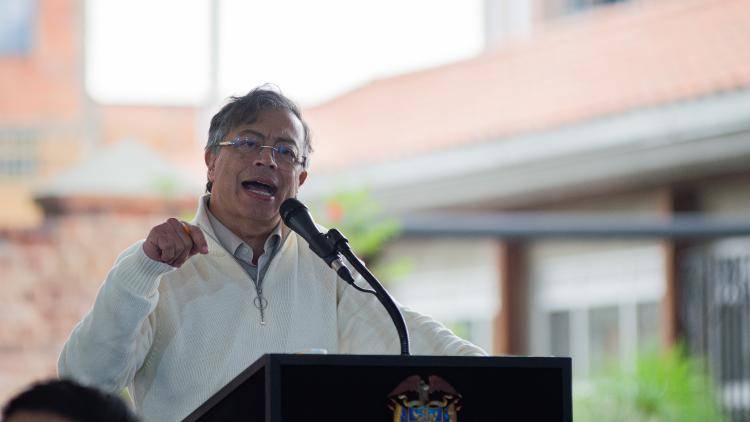
Iván Cepeda, leader of the left-wing coalition Pacto Histórico, is the government-backed candidate endorsed by current president Gustavo Petro. He aims to combat the economic elites and political forces that have dominated Colombia for over a century. To do so, he wants to reform the state and the tax system, reduce inequality through social agreements and increased access to new technologies, protect nature, and strengthen peace and multilateralism.
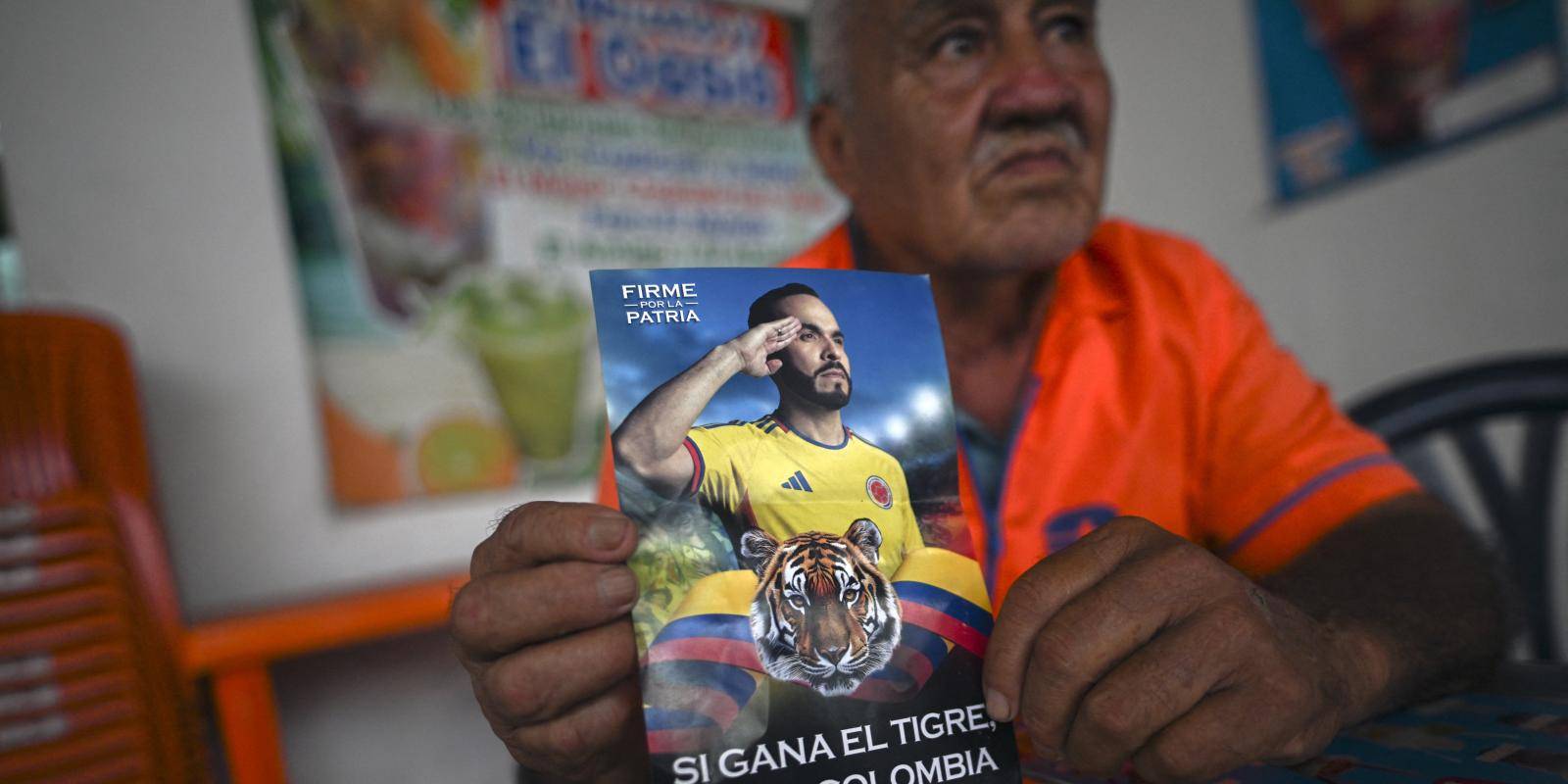
His opponent, Abelardo de la Espriella, is a businessman and lawyer with no political experience who is endorsed by US President Donald Trump – and currently leading the polls. Nicknamed ‘El Tigre’ (The Tiger) for his aggressive approach, he blends the characteristics of Donald Trump, Argentina’s Javier Milei and El Salvador’s Nayib Bukele. De la Espriella presents himself as a staunch opponent of communism and advocates a tough stance against the authoritarianism of the left, organized crime, corruption, drug trafficking and illicit economies.
Two very different visions for Colombia
The differences between the two candidates and their visions for Colombia could not be greater.
Cepeda is a senator who has spent his entire adult life fighting against the state’s collusion with the far-right paramilitary groups that murdered his father, senator and lawyer Manuel Cepeda Vargas, in 1994. He wants to tackle three key problems in Colombia: inequality, violence and the lack of state control of 40 per cent of the national territory – which creates the perfect environment for armed groups to operate freely.
In Gustavo Petro’s current government, Cepeda led the Paz Total (Total Peace) initiative to reach agreements with non-state political and criminal armed groups. The aim was to get them to lay down their arms and cease their illicit activities by offering reduced sentences and the retention of part of their wealth. He also attempted to reach a peace agreement with the National Liberation Army (ELN) guerrilla group. Both projects failed, and he is accused of indirectly having helped the armed groups gain ground.
De la Espriella, meanwhile, became famous as a lawyer for defending individuals linked to organized crime and paramilitarism. His clients include Alex Saab, an alleged organized crime operator who was a key ally of former Venezuelan president Nicolás Maduro’s government as well as an alleged collaborator of the US Drug Enforcement Administration (DEA).
As a politician, he now takes a very hardline approach to organized crime and drugs. If elected, he would use massive force against armed criminal or political groups and strengthen security by building maximum-security prisons. He would also seek to dismantle the 2016 Peace Agreement between the Juan Manuel Santos government and FARC Marxist guerrilla, particularly the Special Jurisdiction for Peace (JEP) established by the agreement to implement transitional justice.
De la Espriella wants to reduce the size of the state, eliminate regulations, promote mining and energy exploitation, cut taxes on businesses and large fortunes, and force banks to provide cheap loans for home purchases. He also wants to withdraw Colombia from the United Nations and the Organization of American States.
A new right and new alignments
The Colombian business community, most of the media, the international financial sector, and part of the armed forces officers would support a potential De la Espriella victory. In diplomatic circles, however, some feel it would be a lack of prestige for Colombia to have a president linked to organized crime and the paramilitaries.
But it is a price they might consider worth paying to be on good terms with the US, which has always been their political and economic benchmark. And currently occupying the White House is a president for whom the lines between personal and political interests are blurred.

De la Espriella’s approach fits in with Trump’s national security strategy, which seeks to have like-minded governments in the region that cooperate in the war on crime and grant him access to their mineral and energy resources. By contrast, if Cepeda wins, the Trump administration may try to exert direct and indirect pressure through their regional allies to limit his reforms, particularly tax reforms and attempts to impose regulations on US mining and oil companies operating in Colombia.
This election is part of the wider trend towards the far right across Latin America. In elections across the region, traditional right-wing parties – as well as those on the left and in the centre – have been taken by surprise by populist, non-political outsiders who have won over a large proportion of their voters by focusing on issues such as crime and nationalism versus multilateralism.
Although Cepeda has focused his campaign on denouncing De la Espriella for his links to the paramilitaries, he has misunderstood the new right which his opponent represents. De la Espriella has presented himself as a representative of a new, pragmatic right, which is devoid of values and instead focused on seeing immediate results. As Hernando Gómez Buendía, director of Razón Pública, points out: ’The right-wing did not disappear. It changed hands’.
This election highlights the link between the erosion of democracy and the consequent rise of the far right in Latin America on the one hand, and Trump’s hemispheric policy of supporting allied governments in the region on the other. This support is either direct or channelled through local allies, as seen in Ecuadorian President Daniel Noboa’s explicit backing of De la Espriella, which led to accusations of ‘deliberate interference’ in the election.