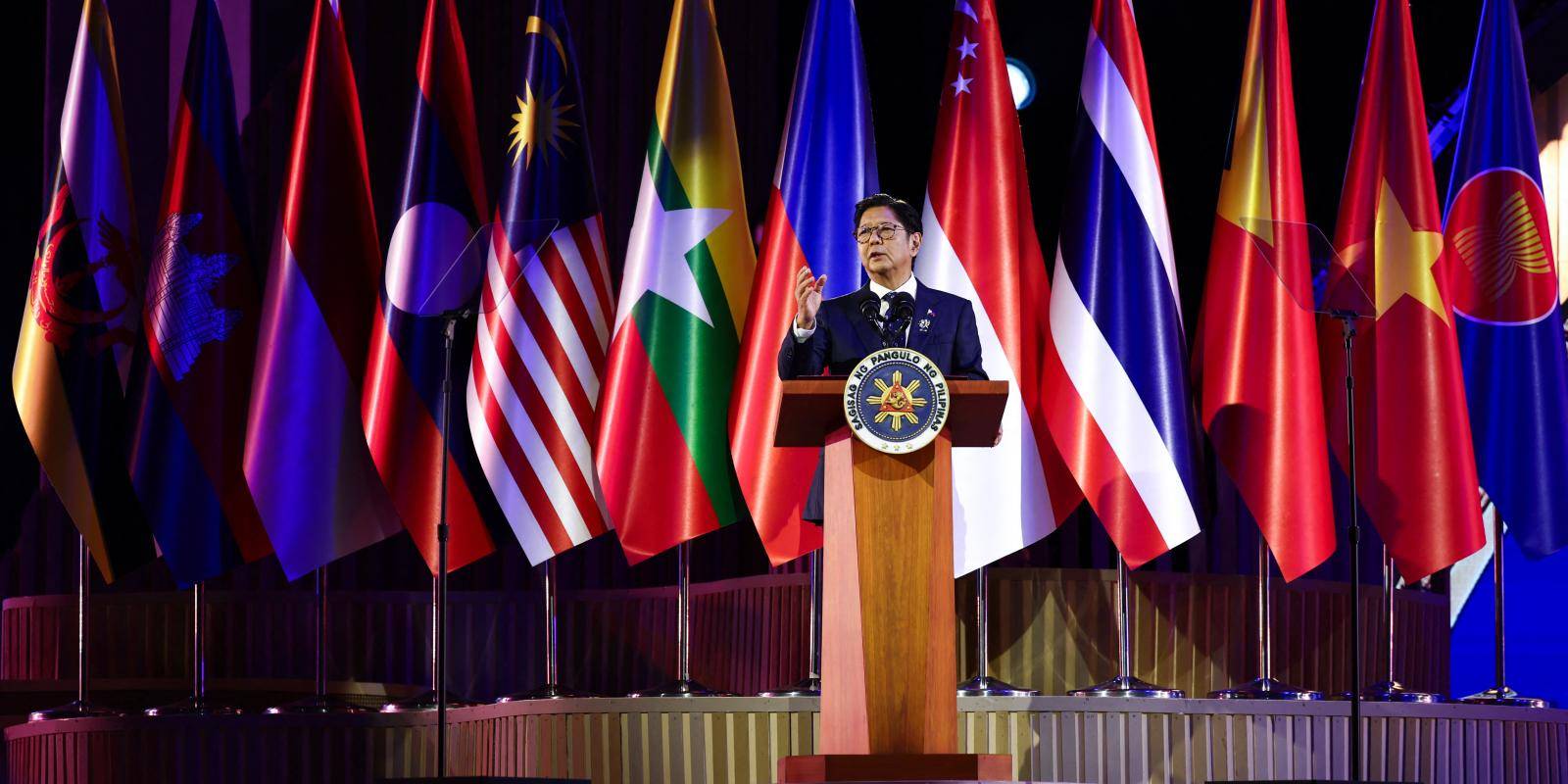

When it assumed the Chair of ASEAN last year, the Philippines placed negotiations to establish a South China Sea Code of Conduct (COC) at the centre of its agenda. An agreement has been desired for decades, to help reduce territorial and other tensions between China and regional countries. The need for the COC is clear: Philippine ships have continued to clash with Chinese Coast Guard vessels throughout the year, around disputed areas such as Scarborough Shoal.
But Philippines Foreign Affairs Secretary Theresa Lazaro cooled expectations of an agreement at this week’s ASEAN summit. In a recent statement, she said that while around 80 per cent of the provisions are agreed, ‘sticking points’ still remain. It is therefore unlikely to be concluded by the end of the year with Philippines as ASEAN Chair.
But the Philippines tenure has been about more than just the COC. In a region of diverging priorities, security alignments, and threat perceptions, Manila should be judged by how far it has boosted ASEAN’s utility as an independent diplomatic actor able to strengthen regional solidarity.
Progress under pressure
The role of ASEAN Chair was clearly going to test the Philippines: How would it reconcile its national security interests with its responsibilities as the leader of a forum for regional cooperation? And would Beijing see Manila as a good faith actor on the COC?
The Philippines is, after all, one of the oldest treaty partners of the US. Those ties are getting stronger under President Ferdinand ‘Bongbong’ Marcos, while its relationship with China becomes ever more fractious – a stance not shared by all ASEAN partners.
Beside these obvious impediments, the overlapping and complex nature of the claims in South China Sea waters made the COC a tricky subject to negotiate within the bloc, let alone with China. But under the stewardship of the Philippines delegations met every month this year and have managed to produce a substantial part of an agreement – a significant jump after two decades of diplomatic deadlock.
There is no official confirmation on what the sticking points were, but past statements suggest issues around legal implementation, geographical scope, and terms of reference prevented a final agreement. Singapore, next year’s chair, enjoys a more stable relationship with Beijing and may stand a better chance of ironing out these final elements. Even this remains uncertain, but setting up Singapore with the best possible chance always looked like the most realistic ambition for the Philippines on the COC, and it has made good progress to that end.
Outside of COC negotiations, the Philippines has managed to make significant moves on some other stated priorities. The Philippines assumed the Chair of ASEAN under the theme ‘Navigating our future, together’. This focussed on three core pillars: Peace and security anchors, prosperity corridors, and people empowerment.
To this end, Manila concluded negotiations of the ASEAN Digital Economy Framework Agreement (DEFA). This is the world’s first binding region-wide digital economy deal, which will better integrate the region and foster greater cross-border data flows and end-to-end digital trade, promising to bring in $2 trillion by 2030.
The Philippines also championed the ASEAN Leaders’ Declaration on Strategic Trade Management, which aims to establish unified frameworks to strengthen the resilience of regional supply chains.
And it established the ASEAN Centre of Excellence for Creative Industries, fostering a more interconnected creative economy and greater cultural exchange. Manila has also pushed for greater collaboration on disaster preparedness, with a focus on pooling resources in the face of natural calamities.
One significant area where little has been achieved is the crisis in Myanmar: diplomatic progress on the issue was a strategic and symbolic challenge for the Philippines and ASEAN’s credibility as a peace-making body. In the end, ASEAN’s agenda remains stalled. The summit agreed to pursue ‘calibrated engagement’ in pursuit of ASEAN’s ‘5 Point Consensus’, and leaves the door open for gradual restoration to the bloc. But as a unified group, ASEAN appears to have little hope of influencing Myanmar’s military government.
Successful summitry
This summit needed to go well for President Marcos. The Philippines has been pursuing its ASEAN agenda at a time of mounting domestic pressure. The war in Iran has strained energy supply chains, hindering access to necessities. Summer saw massive losses from tsunamis and earthquakes, and impeachment proceedings against the Vice President. The Marcos administration received its lowest ever approval ratings this month, as protestors clashed with police on the eve of the summit.
The event was ostensibly been productive. More than 150 outcome documents were reviewed and approved. A new ASEAN free trade agreement has been agreed with Canada. Brazil and Canada have committed $540 million for rainforest protection. And the event presented a significant opportunity for the bloc to interact with influential leaders including President Donald Trump, Prime Minister Narendra Modi, Prime Minister Mark Carney, and President Lula da Silva.
And as always at summits, meetings on the sidelines provided opportunities for important diplomacy: Japan’s PM Takaichi and South Korea’s President Lee Jae Myung held their fourth bilateral meeting. And the Quad convened for the first time in two years.
But ASEAN countries must see real returns from these convenings to be considered a success. And it is imperative that ASEAN as a unit is seen as a key player rather than a platform through which bilateral deals can be done. Indeed, Philippines President Marcos emphasized a ‘whole-of-ASEAN approach’ in his plenary speech.
This focus on unifying regional interests is not for the sake of ASEAN alone, but part of a wider strategy to protect the Philippines in the face of broader geopolitical trends. The test will be if Manila can carry this sentiment forward beyond its tenure as chair – something that may prove difficult.
Preparing for the storms ahead
2027 will see Singapore become ASEAN Chair with the organization set to be tested by deepening faultlines on AI alliances, critical mineral exploration, and supply chain and energy resilience.
Divergences are already appearing among members on how best to approach these issues. Coming on top of existing territorial disputes, strained relations within the bloc seem likely. However, even if ASEAN countries have diverging interests, they will never be able to escape the reality of what they share: geography and history.
As the overlapping threats of climate change, great power rivalry, and an unstable global economy demand a cohesive regional response, the Philippines’ priorities of cohesion and greater interdependence will be key to the region’s survival. What this year has made clear is that grand international dealmaking of the kind represented by the COC may continue to prove difficult for the group. Despite this, ASEAN can provide an indispensable function, facilitating interoperability and integration that fuels growth and secures sovereignty.
As President Marcos said at the summit’s opening, the coming years will be about ‘not only where ASEAN is headed, but what ASEAN must become’. For years the ASEAN has been dismissed as ineffectual and underperforming. But the group has endured. And the Philippines period as Chair has perhaps shown the bloc’s true value – driving incremental but unyielding change towards an increasingly interconnected region.