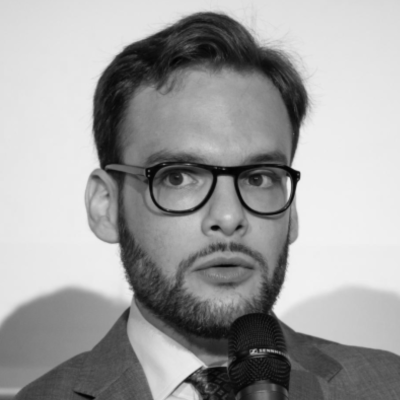
Grégoire Roos
…morning and a warm warming. I was about to say hot morning, but it’s much cooler here than outside.
Michel Barnier
No doubt about that.
Grégoire Roos
No, it’s…
Michel Barnier
In Paris, yeah.
Grégoire Roos
…true that in Paris – so, we had that discussion right here this morning and it seems that the climate is actually pushing Europe closer to the UK than the other way around, because you told me it was much cooler here than in Paris. We meet at a very special time in the UK. The British Prime Minister has just stepped down. This is something that, of course, everyone had been monitoring for several days, but I believe that this heightens the fact that political instability, even with a majority, is something with which every, or almost every country in Europe, has to deal with. So, that will be the, kind of, background.
I think, as we stand on the eve of the 10th anniversary of the Brexit Referendum on the continued association with the EU, everyone will remember what they were doing, what the weather was like, on that very day, and I think that’s one of the days. And I’m very happy and privileged, indeed, to be joined today with a man that has played – that did play a consequential role, instrumental role, for almost a decade, in the discussion – in the divorce. So, you actually were the – how you – not the Chief Lawyer to deal with the divorce, but in a way, you were that man and became a structuring face in the discussion, both in Europe and in the UK.
I must say I feel a bit uncomfortable a few days after the 86th anniversary of the Appeal of General de Gaulle on the wireless to stand with another Frenchman and speak in English. But before the Brexit ten years ago, a first Brexit happened when England decided to go away and no longer use the French language, which we understand – we’ll agree was the worst decision they took. But be it as it may, English being the language of His Majesty, then we’ll talk in French.
Prime Minister, I’m very happy to have you with us today. There was a very, and I’ll start with that, a very, very interesting, indeed, interview you gave The Guardian last week that I must say caught my attention and I’m sure it did many others in Europe, when you said that it was very possible for the UK to come back, should they decide to come back to the EU, to enjoy more or less the same benefits they did enjoy. And when I read that, I thought about all the conversation I’ve had for the past two years with MEPs, members of national parliaments, from the left, from the right, from the hard left, from the hard right, and no-one wants that anymore. The EU has changed a lot and I’m sure you will agree, since the UK left the EU ten years ago, and perhaps we’ll start with that. Is that even possible that now, any country joins starting with a list of conditions of what they don’t want to take – what they don’t want to eat when they order their dish?
Michel Barnier
First of all, good morning to all of you Ambassadors and ladies and gentlemen, thank you very much for your attention and thank you very much to Chatham House to your invitation.
You begin by speaking about the domestic situation. I don’t want to comment on this situation. I never want to comment on domestic situation in the UK when I launch – I manage the negotiations, so I don’t want to begin today, but just to mention that this resignation of the Prime Minister is not linked to my visit in London.
Grégoire Roos
I – well, it remains to be seen. I don’t know.
Michel Barnier
And to be frank, as you know, I was short-term as a Prime Minister in France, about three months, but it was enough to get it to build a strong compassion for any Prime Minister losing a majority, yeah, because it was my case, even the situation are different.
Grégoire Roos
Well, that one has a majority, but…
Michel Barnier
Yes.
Grégoire Roos
…you didn’t even have a majority.
Michel Barnier
Yes, I didn’t, from the very start. But in any case, I have a great comprehension and compassion for the Prime Minister when they are in these situations, why I don’t want to give it in essence. But I – oh, I always had very good relations with Sir Keir Starmer, to be frank, yeah, because I think he knows – he knew and he knows that importance of the European stability and if I may say.
The Brexit remain a divorce, huh, and remain a lose-lose game for both sides, even ten years after, huh? So – but I’m not sure that the UK people has been informed of all the consequences of leaving the EU and not only leaving the EU, but leaving a single market and leaving the Custom Union, which was not an obligation for the UK and let me record that – the fact that it was perfectly possible at that time that the UK le – choi – choose to leave the EU, remaining in the single market or this Custom Union, no? But the choice was to leave everything, with many consequences we ha – which have not been explained before the referendum, huh?
But now I think it’s clear, thanks to the negotiation, thanks to the fact that I try every day to make the peka – pedagogy of this divorce, every day in every – in each capital of the EU and even in London, everybody knows the rules, right, the rule of the game or some. So, if I miss the rule of the – that mean – what means to be inside or outside the single market. So – but I don’t want to make any comment, but it was a sovereign choice of the UK to leave, and we have regretted this choice and respected this choice and delivering the best Brexit, an organised divorce, if I may say, organised divorce. It will – it would be, in any case, it would be the sovereign choice of the UK people to rejoin.
But in that – yes, and the only point I mention to The Guardian is – was that clearly, there is two strong corporation and the UK were – and – before the Brexit, outside of these two corporation, Schengen for objective reasons and the single mar – currency. I think we – it is quickly – in my view, and it’s a personal feeling, yeah, it will be – it will – it could be a re – it would remain the same situation.
Grégoire Roos
But I mean, let me challenge you on this, if I’m being more French than a Former French Prime Minister, and I look at the EU and for the past ten years, it’s deployed a shield against Donald Trump’s economic coercion, it stood firm on the Greenland file. It’s managed, in spite of the Hungarian problem, now solved with the election of Péter Magyar, to stand behind Ukraine, in spite of everything that every – almost everyone was saying in the aftermath of the full-scale invasion of Ukraine, that the EU would not stand united. I don’t really see a EU weaker than ten years ago, but I do see a UK weaker than ten years ago. So, can I be provocative and say, you said it’s a ‘lose-lose’, I see a lose on the UK’s side, where is the lose on the EU side?
Michel Barnier
The lose on the EU side is that – well, the fact that a very strong country, very dynamic country, very influential country at the United Nations level and the European level, at the military situation, I think, and diplomatic network in the world, losing such a strong country as the UK is a big lost for the EU in any case, and will remain. We were stronger with the EU – we were stronger at that time, and we would have been stronger with the UK, but it’s not prevent us to less – to be less weak for all the other challenges, huh, and to face the situation.
Grégoire Roos
But then…
Michel Barnier
And the…
Grégoire Roos
…the voice of the EU would have been stronger, but if I look at the rest…
Michel Barnier
Yes, but it’s – it is – it’s clearly not linked on independent from the Brexit, in any case, huh? I’m sorry to tell you, that for us the Brexit is at the book, yeah, and there is no – we have regret, but no nostalgia. We can – you can’t manage a country; you can’t be the President of a country or Prime Minister who is working with nostalgia. It’s not the right way to work and to manage a country to – and Europe. So…
Grégoire Roos
Well, you can be elected…
Michel Barnier
…we would ju…
Grégoire Roos
…with nostalgia, but then you need to deliver, yeah.
Michel Barnier
Yes, we can be elected sometimes with demagogy, but not [inaudible – 14:52] is good advice. But coming back to the last ten years, we have faced lots of crisis, huh, and just before the Brexit, we – let me record that we have faced a cri – financial crisis with the UK and ruined relations. At that time, I was a Commissioner in charge of the financial services. ‘The most dangerous man in Europe,’ I was called in…
Grégoire Roos
Are you still?
Michel Barnier
No, not in – no, no, I’m not – I’m – I was – it was not the case at that time, no, but it was a – I don’t remember the newspaper in UK calling me the most dangerous man in Europe.
Grégoire Roos
I think many – must have been on the thoughts of many back then, I’m sure, but…
Michel Barnier
But we face this crisis, we faced many other crisis, the migration crisis from Iraq or Libya, we face the Brexit crisis, which is a huge one, the first – very first one.
Grégoire Roos
The pandemic.
Michel Barnier
The pandemic, the war in Ukraine, and if I may say, we – as a European level, collectively, we have faced this crisis and draw the lessons, huh? It’s true, it’s true, it’s true and may…
Grégoire Roos
But…
Michel Barnier
In that sense, we are very different from the EU. The UK lea – left ten years ago, very different, but independently of the Brexit. It was because of the crisis and because the sit – the challenges we face, plus the climate change and nothing to the Brexit, because of the situation in the world.
Grégoire Roos
But then you confirm that even without the UK, the EU managed to advance integration. I mean, we’ve seen, you know, common debt, facing the pandemic, rearmament, and there has been…
Michel Barnier
Common debt to invest…
Grégoire Roos
Yes.
Michel Barnier
…together. To invest together and…
Grégoire Roos
Correct, yes.
Michel Barnier
…drawing the lessons of the pandemic and not common debts to manage the current situation in each country.
Grégoire Roos
Right. No, absolutely, you’re right, but then…
Michel Barnier
As you know, I…
Grégoire Roos
…it shows that without the UK, that you could…
Michel Barnier
There is good debts and bad debts, no? If I…
Grégoire Roos
Even – and especially coming from…
Michel Barnier
It…
Grégoire Roos
…a Frenchman, I think it’s…
Michel Barnier
Sure.
Grégoire Roos
…an important clarification, indeed, but…
Michel Barnier
We have a lot of bad debt in France, huh?
Grégoire Roos
But then we will not, you know, litigate Brexit and spend the entire discussion on this, but I think it’s an interesting – as we talk about new forms of enlargement, association with the EU, now the Germans and the French have come with very innovative patterns of association with the EU, whereby a country could join the discussions, the council’s discussion without voting, could benefit from some parts of the EU budget, but not necessarily the Common Agricultural Policy.
So, the point is we’ve passed the pa – the, ma – the, kind of, stage whereby a country’s either in or out, and second, I still look at – and listening to you at an EU that over the past decade, has managed to do a lot in spite of sub-political polarisation and without the UK. So, we’re stronger even without the UK. The UK has not – the UK leaving the EU has not weakened the EU. Whereas the UK outside of the EU is more vulnerable than ever before in the world where the strong men are dictating the game.
Michel Barnier
I can try to repeat and to say the same answer in other words, but I don’t think that objectively speaking, the Brexit was a divorce, and we are, on both side, weaker than before because we are now separate, huh? It’s clear, and I – and as I sometimes think we will be – would have be – would be more stronger together, huh? And I – once again, so I don’t want to comment to – and turn the debate about rejoining or not. If you ask me as a French Former Prime Minister, a French citizen, if France, for instance, would be stronger, weaker or – leaving the EU, my answer is very clear. It’s the reason – the main reason why I’m opposed to Mrs Le Pen or Mr Mélenchon, who are both of the nationalists in France, and we want to destroy the EU, as Mr Farage and some others wanted to do. It’s clear that my answer was that we must remain, for national reasons, because it is our national interest to be European. It is our national interest. It is a point.
But go – speaking about the different way to work with the neighbours, the first of them is Ukraine. I know the debate what could be the level or the threshold of association, or the perhaps new model, but for instance, but for the moment, we have one tool, a key tool, which is association agreement, huh, for country wanted to join the EU, wanted to join. Not to rejoin, to join, huh? Yeah, so, the – my first answer wa – is to speak about this association agreement, we – and in the case of Ukraine, this association is – agreement has been very ambitious. I still think that it was one of the reason of the aggressivity of Mr Putin at that time, huh, 2012. Mr Putin was very aggressive because of this association agreement with Ukraine. I think we have to implement this association agreement just after the end of this war. I – for the moment, we are not at that stage. For the moment, we have to be very strong on the side of Ukraine, huh, as we are together, the UK and EU, huh?
Grégoire Roos
So, you mention Madame Le Pen, Monsieur Mélenchon, the hard left here and France. We have seen over the past few years strong Politicians who had spent the previous decades campaigning vocally against the EU and two in particular, very different indeed, coming from very different political traditions, Madame Meloni in Italy and Mr Bart De Wever in Belgium. Those are strong political leaders now in Europe and they are some of the strongest supporters of EU integration. Does that – and when I listen to Madame Le Pen or Frau Weidel in Germany, they are less vocal about leaving the EU, leaving the Euro, because they just understand that either they feel, indeed, that their countries are stronger within the EU, or they think it’s a vote loser to stand out against the EU. Does that mean that Euroscepticism has faded away or that some parties have changed their tone, but their thinking has remained the same?
Michel Barnier
First of all, I recommend not to confuse Mrs Meloni and Mrs Le Pen.
Grégoire Roos
Le Pen.
Michel Barnier
They are not the same. On the substance, as you know, Mrs Pen is pro-Russian, not the case of Mrs Meloni, and Mrs Meloni is pro-business, which is not the case of Mrs Le Pen, which reported in the French National Assembly. I am – I became a member of the French National Assembly six months ago in a very specific election in Paris, and do not forget my roots in Savoie, but I’ve been elected as a member of the French National Assembly in Paris.
Grégoire Roos
It’s close to Italy, yes.
Michel Barnier
And I can tell you that Mrs Le Pen join voices, very often in French National Assembly, to the left on the socialist Étatist programme, huh? So, it’s not the same that Mrs Meloni, huh, so don’t confuse the two. But I don’t think, to be frank, that Mrs Le Pen and Mr Bardella and some other far-right leaders, again, Wilders in Netherlands or Salvini, change their mind, no? I remember clearly what Mrs Le Pen say ten years ago on the night – in the night of the referendum vote here in UK. She said precisely, ‘Congratulations to Brits. They had the courage to leave…
Grégoire Roos
The European serfdom.
Michel Barnier
…to escape from the European ‘servitude’, servitude, huh, servitude, the same word.
Grégoire Roos
Serfdom or servitude, yes.
Michel Barnier
There’s so many words which are the same in French and in British.
Grégoire Roos
Well, I’ll tell you…
Michel Barnier
Maybe.
Grégoire Roos
…I mean, everyone was speaking our language…
Michel Barnier
Yes.
Grégoire Roos
…sort of, centuries ago.
Michel Barnier
A long time ago.
Grégoire Roos
No-one knows what…
Michel Barnier
A long time ago, but…
Grégoire Roos
…happened there, but…
Michel Barnier
It’s more or less the contrary now, but we try to. But I don’t think that Mrs Le Pen has changes her mind. I think that the current position, the current speech of Mrs Le Pen are totally opportunist, because she knows that in the French people, the – as the European people, everybody knows and sees that we need to be together, we need to maintain a European Union. Perhaps not the same, we – not prevent us to change what needs to be changed in present, there is a lot of change – seem to change. But the fact is that we need to be together to build this European strength and force and capacity to resist to Chinese, to the – even the US today and to the Russians. So, if we are not together, we are lost, we are lost. Everyone on Earth is lost and so, will be – is – it – once again, it is a question of national interest for us to be together.
And Mrs Le Pen understand this point, but I think that she has not changed her mind, no, so I would – and the point is that we can face, in France the second round of the elections, second…
Grégoire Roos
Second round, yes.
Michel Barnier
Second round, we can face the situation, which will be incredible to have two Nationalists.
Grégoire Roos
Hard left and hard right.
Michel Barnier
Uh-huh.
Grégoire Roos
Yes.
Michel Barnier
We have to be careful.
Grégoire Roos
I’ve had many discussions over the past months with industrialeest – industrialists from the UK and from Poland, from France and of course, elected officials, and many are either very bluntly and directly, or indirectly, showing some concern at the pace and the scale of German rearmament. It always comes as not a surprise, but striking to me, that there’s still some kind of a German problem when it comes to rearmament. Would that push France and the UK to take their rapprochement more seriously?
I mean, I remember very vividly the discussions 15 years ago around a joint aircraft. I won’t go back to the Second World War when there were plans to merge the two countries and His Majesty’s George VI would’ve been King of France for the same, that de Gaulle supported, by the way. But it – would that lead to an acceleration of not necessarily the UK rejoining the EU, but France and the UK accelerated integration, especially on defence?
Michel Barnier
Yes, but it is the spirit and the goal of the Lancaster Agreement between our two countries, huh, and I think that strengthening and consolidating the European Defence Policy, which is not the same that a European army, yeah? I never spoke about the European army, and we never really speak about a European army, but I speak about consolidating the European Defence Policy and the European defence by co-operation between the country, co-operation. Don’t – do not prevent to have bilateral agreements between Germany and the UK, between Poland recently. Poland two weeks ago, and UK are – between France and UK. We need to, and I think it – this element of bilateral co-operations are – could be as a – in personal, be put together and reinforcing the European defence. The – I think it’s the right way to work, yeah, but I don’t want to make any com – bad comment or critique about what the Germany is doing because Germany’s coming from very far, no?
Grégoire Roos
But they have a budget, a…
Michel Barnier
Yes, yes.
Grégoire Roos
…defence budget twice as big as the French budget…
Michel Barnier
Yes, hmmm.
Grégoire Roos
…in less than five years.
Michel Barnier
Yes, but it was – they are not make the same effort and we did from the very beginning of the Fifth Republic, building our nuclear dissuasion, no? Look at the – what we did at the Europe – at the French level from the beginning of the Fifth Republic and what Germany did, yeah. So, we will…
Grégoire Roos
So, you mean…
Michel Barnier
So, it’s a need…
Grégoire Roos
…you spend more because you need to…
Michel Barnier
Look…
Grégoire Roos
…catch up with them?
Michel Barnier
…at the balance between the two on the perspective, long perspective, I think, long-term, not on a right one – annual budget. So, we have to avoid this kind of a false comparison. So, I’m not – the point is that Germany put – the point for all of us is to know what part of our national budget we put together by – in the strong co-operation at European level, no? It is – the lesson we draw from the aggression of Russia in Ukraine, using the European budget for financing munitions or equipments or facilities to merge and to be build common project, common project of research, and I think it’s the right way to work together today, yeah.
And to be more specific, I think that we – there is room for increasing, improving our relation with UK at European level. That’s the reason why I’ve proposed a few weeks ago when I was in Prague, in the GLOBSEC meeting, which is a very interesting meeting between leaders from the east and – eastern part of the EU and Europe, to create, on the side of the European institutions, a new body which could be a, kind of, European Council for Defence and Security, open to country where are no longer in the EU or not yet in the EU, or not in the EU. I’m speaking about three countries, specifically, UK, Norway and Ukraine. I think we need to find a way, a place, a table where we have to work on a permanent base, and it is a reason why I propose this kind of a new European Council for Defence and Security.
Grégoire Roos
So, it seems we’re entering a new phase of association with the EU, whereby it does not necessarily require to be a member of the club to be taking part in some of its projects? Which would be…
Michel Barnier
Yeah.
Grégoire Roos
…good news for the…
Michel Barnier
Yes.
Grégoire Roos
…UK, because…
Michel Barnier
Yes, yes, but the rule of the game will not change as far the single market is concerned. The indivisibility of the single market, the four freedoms, are totally non-negotiable, in my view, for the reason I mentioned. Because we cannot give any kind of argument to the far-right or the far-left leaders in Europe, not only in France, to ask the same privilege. The EU and the single market is based on the balance between right and obligations. We cannot – you nobody can have the right without the obligation.
So, as far the single market is concerned, for businesses, on the basis of the agreement we negotiate ten years – five years ago for trade and goods, the rules of game will not change. But a part of this – economic part of the relations, we can build many, many strong initiative as far defence, external policy, co-operation, even investment in new technologies, I think we have lots of manoeuvre. Let me recall that at the end of the second negotiation with the UK in 2020, with Mr Johnson as a Prime Minister of UK, and some of his friends – I face four UK negotiator in four years, huh?
Grégoire Roos
Feels like French Prime Ministers at the moment.
Michel Barnier
Yes, yes, it’s the reason – I don’t – I’m not give any lessons, huh? But the difference is that in France, we are negotiating with ourselves, huh, if I may say. It’s the difference, not with the UK. So, at that time, I’ve proposed clearly to the fri – the Prime Minister to open new chapter of the negotiation, for defence, external policy and co-operation, and the very first step is accept it. You’ll remember this document which was called the ‘Political Declaration’? You can read again this text, which is very interesting. Sign and negotiated line-by-line by Mr Johnson and his cabinet, and after a few weeks, he decided to refuse to open this chapter. So, this is still possible to open this chapter between UK and EU to open this chapter on external policy and defence, huh.
Grégoire Roos
So, Andy Burnham will be the next Prime Minister, and he has said a lot about how strongly he feels about the UK rejoining the EU. Although Sir Keir Starmer never campaigned from Brexit, he belongs to the Brexit generation, in a way. Are you confident that a new Prime Minister, more, you know, openly vocally in favour of reassociating the UK with the EU, would open a new stage in possible negotiations? And I would also ask, when you said in The Guardian that the UK could benefit from the privileges they had, is that a personal opinion or does that reflect some of the thinking in Brussels, where you’ve retained significant influence?
Michel Barnier
I didn’t speak about privileges or…
Grégoire Roos
No, that was my word.
Michel Barnier
Yes, sure, not mine.
Grégoire Roos
But those were privileges.
Michel Barnier
But it was a objective situation that UK was not in the single currency. It’s not only the case of the UK at that time, huh? Still the case for some countries, and not in the Schengen Agreement, but this is my two points. I don’t want to make any kind of a comment about what would be the situation UK, what will be the – who will be the next Prime Minister in the UK and at what time they want to negotiate. I don’t see the – it was – once again, it was the sovereign choice of the UK to leave. It will be the sovereign choice of the UK to rejoin when it wants, but – and we are – the door is open and we are – and then – and everybody knows the rule of the games and the cahier des charges in France. I don’t know the word in English, the cahier des charges.
But apart the fact of rejoining, there is lots of things to do together, lots of things to nego – to improve and to negotiate together. And looking at the world around us, if you look carefully at the world around us and the many challenge around us, the global challenges, the point for any Brits citizen, British citizens, any French citizens, is to ask to himself how we can defend our values, our interests, our national interest in the – facing this current world.
Ladies and gentlemen, it’s the very first time since 60 that the American President want to destroy the EU, exactly the same, for different reasons, from the Russian President. We face a very unusual situation, historical situation, where the two leaders of the two main countries on our West and on our East, want to destroy the EU. So, the point is to know and to find a way to defend our interest and our values. I think it’s the right question for any British citizen, so – but I think that I will not cease to ask this question in the French debate. I’m – I visit one department in one region of France every week and I ask in each of my meetings, ‘Ladies and gentlemen, ask to yourself how we can defend our interest, our stability, our values in the current world, facing this world. Is it alone or together?’
And my answer is, definitively, we need to be together. The – that doesn’t prevent us to change what needs to be changed in Brussel, less [inaudible – 37:52], less bureaucracy, more common investment, industrial policy and education policy. There’s many things to change and to do together in Brussel, even people to change, but in any case, we cannot destroy and accept to destroy the EU, huh?
Grégoire Roos
We’ve talked a lot about more innovation in infrastructure, technology, artificial intelligence, the energy transition, clean tech, you name it. And the Common Agriculture Policy has become a bit in the spotlight lately, after the German EU Minister said in the Council of Foreign Ministers the other week that, if Europe had to start again, they would invest in competitiveness and artificial intelligence, rather than the Common Agricultural Policy. That was a message to the French and to some extent, the Poles.
When we look at the surveys across Europe and especially in France and Poland, ma – most of the arguments against the Ukraine joining the EU would be that Ukraine would absorbed a lot of the Common Agricultural Policy budget. You have – you served as Agricultural – Minister for Agriculture in France.
Michel Barnier
And Fishery.
Grégoire Roos
And Fishery in…
Michel Barnier
Don’t forget.
Grégoire Roos
Yeah, that helped you when – in the Brexit negotiations. But how do you look at – let’s say, what solutions do you see to address that problem in a constructive, respectful manner, to, on the one hand, understand the German arguments, on the other, understand the structure of the French and the Polish economy that is dependent on agriculture? And I think it’s not just an economic problem, by the way. In France and Poland, it’s a social dimension. Farmers are part of the DNA of French and Polish cultures. So, how can we reform without antagonising, in a words that – in a world that doesn’t like reform and loves antagonising?
Michel Barnier
Which is very interesting, speaking with you as a British citizen, huh?
Grégoire Roos
A French.
Michel Barnier
French, you are French too?
Grégoire Roos
No-one’s perfect.
Michel Barnier
Yeah, I don’t – ah, certainly. It was a mistake by co-ordinations, huh? Speaking about – that the same question asked even ten years after the Brexit, huh, and the same question about the Agriculture Policy in Europe, huh? I remember when I was a Commissioner in 99, long time ago. At that time, the British Government wanted, clearly, to destroy the Agriculture Policy, yeah. Same question, because you – in this country you do not understand that a part of our sovereignty is linked to the strength of the pol – Agriculture Policy. It’s always the – it’s also the case in Germany in a certain sense in – evident in – obviously, in Italy or in Poland, huh?
So, what we have built with the Agriculture Policy in 65, 60 – 70, is a kind of contract between the Farmers and the society, and the price of this contract is the Agriculture Policy. Supporting the Farmers for maintaining the territory, it’s very important in the time of climate change, and giving the insurance to the citizens, to consumers, of a – that I don’t know the word, traceable or good.
Grégoire Roos
Traceable, hmmm.
Michel Barnier
Traceable and good food. It is the quality of food, which is at stake, yeah, for us. So, this is the price of this contract between the European Union, the institutions and the Farmers, and this is the price. So, it’s no question to abandon this policy. That it can be change, it can be reformed. It will not the first time, huh? There’s lots of reforms of Agriculture Policy since the last – during the last 20 years, but we cannot abandon this. Because I think that the price for abandoning this policy will be higher than this poli – the price of the policy itself, huh. The price for abandoning the co – to face the consequences of no Agriculture Policy will be higher as far as the territory and the quality of food is concerned.
So, speaking about the grain, I – we know the products. So – and why my answer a few minutes ago was to tell you that we have to implement the Association Agreement with Ukraine, which was a very, very strong and ambitious agreement, step-by-step. And time, as usual in Europe for the last 60 years, the time – using the time would be a part of the solution now.
Grégoire Roos
So, we’re left with 20 minutes. I’d love to open the – there’s a microphone somewhere, to questions. I will start with one online. You know Ireland very well. In your journal of Brexit, you refer – describe a lot of your trips to especially Northern Ireland. How shall I frame this? How to look at ‘Ireland’s neutrality today’, the question was shorter, you might feel uncomfortable answering that, but I thought it was an interesting take on the question of rearmament. And another one on the quality of beef from Brazil, but I think that’s another discussion.
Michel Barnier
I don’t understand – I didn’t understand…
Grégoire Roos
So…
Michel Barnier
…what you referred…
Grégoire Roos
…Ireland’s neutrality now, especially Ireland is engaged in closer ties with France when it comes to defence, is it something that should change or that echoes on the other hand, the will and – of many countries to join the EU? I hope I translate that question clearly enough, but it’s about Ireland’s neutrality.
Michel Barnier
But there are several countries, member states, which are not in the NATO framework, yeah, for the case of Ireland. So, I don’t…
Grégoire Roos
Austria, I feel.
Michel Barnier
Austria and some others will – yeah, but for the case of Sweden and Finland, who decided finally to join the NATO. So, you – but once again, it is – to be neutral on – not neutral, to be member of NATO and to work for – inside the framework of NATO, inside, as is the case for France, in a more stronger Europe pillar of NATO, is – you know, will remain a national choice. Because in any case, as far defence is concerned, the capacity to send out broader forces and per – and people with the risk to be killed, I think must remain a national choice.
So, the base of any kind of European defence policy will be founded and built on the national sovereign, pulling together, not merging, but pulling together their capacity. So – and we are ready to work with the real – with Ireland, yeah, but that give me the opportunity to say that I spend a lot of time to find the right solution, because the place where the Brexit had the more negative and stronger consequences was Ireland, and these consequences has been always underestimate by the UK Government at the time.
Grégoire Roos
But so – I mean, your message is strong, saying that we should not – we should clarify that more integration, including in defence, does not mean infringement of national sovereignty when it comes to…
Michel Barnier
Oh, sure.
Grégoire Roos
…making decisions. I think that’s an interesting…
Michel Barnier
I – it’s – even think for a long time, ladies and gentlemen, that to fight – to be able to fight the national regime, we need the nations and we need to respect national identity. So, in that case, I am not a federalist. I think it – the European Union will remain a very unknown political body in the world.
Grégoire Roos
UFO, yeah.
Michel Barnier
Which is not a federation. There is not a single state, there will not be – will – there will not have a single nation, a single language. We have 24 national languages, so we – Europe needs to respect national identity. This is the reason why the current management of the EU and Brussel is so complex. Too bureaucratic, I agree, but it will remain complex because it’s the price, ladies and gentlemen, for the Europeans to be united and not unified. United, not unified, huh, and that the reason why the current – the daily management of the EU will remain complex.
Grégoire Roos
Katya. There’s a microphone somewhere.
Member
I can also…
Grégoire Roos
Right. No, I think that that people following the livestream will struggle.
Member
Thank you very much, Mr Barnier. My question is actually directly following on from that, because if we recognise that this is the moment where Europe needs to become stronger geopolitically to stand up against, sort of, threats out of Russia, the US, China, as well, can that be done, though, without more integration, I wonder? ‘Cause if the current – it seems that the current system, the current structures of the EU, are not fit to allow Europe to speak as one, sort of, coherent geopolitical entity. But you think that you think it should remain that way in principle, or that we should keep that chaos, let’s say, of Brussels, in favour of something that’s perhaps more federalised or integrated?
So, I was wondering if you could see a situation where you could have a coherent geopolitical, like, not Europe, that also, that retains that, sort of, power with the member states. Thank you.
Michel Barnier
But we have to be careful using some words, integration or federalism, in particular because these words have not the same translation in each of our countries, huh? If you use the world federalising, for instance, the French people understand exactly the contrary that the German people. The same word, federalism, no? So, we have to be – and personally, I prefer the word cognity or reunifications, also, the case where the – the base where we’re – so that means that we need – I spoke about the complexity of Brussel management. We have to explain, to assume this complexity. Once again, it’s because it is a price we need to pay to be united and not unified.
Gerald de Gaulle was very important for me. My initial and very first involvement in politics when I was very young, and it’s still my fidelity, my saying in one speech, not – doesn’t – do not – cannot merge the people as a [mother tongue], I don’t know the sense…
Grégoire Roos
Let me time to think about the translations, but it’s…
Michel Barnier
[Mother tongue].
Grégoire Roos
…not very fitting for…
Michel Barnier
Uh-huh?
Grégoire Roos
…today’s weather, but…
Michel Barnier
Monsieur.
Member
Chutney.
Member
Yeah, it’s chutney.
Grégoire Roos
Chutney, I think it’s chutney. Chutney would be the closer.
Michel Barnier
Yeah, chutney. Europe cannot merge the nations.
Grégoire Roos
In chutney.
Michel Barnier
The people in chutney, so – or [mother tongue] is more French. So, that you understand that feeling. That means that we need to respect and we want to respect the national identity in Hungary or in France or in any member – the European members, huh?
Grégoire Roos
But I think that’s the other challenge of doing more on integration…
Michel Barnier
So…
Grégoire Roos
…and Mario Draghi talked about ‘pragmatic federalism’ and that was not – that was met with a very…
Michel Barnier
Yeah.
Grégoire Roos
…tepid welcome in France, but…
Michel Barnier
I know that Mario Draghi use this word in the report. I don’t want to use the same word, because once again, it is sometimes dangerous to use this word. We can’t have the same conversation everywhere, but we need – I wasn’t – I used to be also the Commissioner for Single Market, so we need to reinforce, to consolidate, to end of the integration of single market now. We – but it’s not the case of national identity. That case is just to be strang – to be stronger.
Grégoire Roos
Thank you. If you can keep your questions as short as possible so we can take as many as we can. I see many hands now up. Please, by all means.
Mariam Wornum
Right, thank you. I’m Mariam Wornum. So, financial services seem to be, kind of, conspicuous, really, absent from the recent agenda. That – while energy and defence, for instance, are pacing forward in the UK-EU relations, but financial services still isn’t there. So – and one of the recent examples of the UK bilateral agreements is the Bern Agreement with the – Switzerland, which is based on mutual recognition of the regimes, rather than equivalence. So, would that be one of the ways forward in the EU-UK financial services relations, going forward? Thank you.
Grégoire Roos
Thank you.
Michel Barnier
Hmmm. I know for a long time the capacity of the UK financial services leaders, to use the example of Switzerland, to try to get the same situation, but I said clearly, the rule of games, leaving the EU means leaving the financial passport, huh, and Switzerland is not in the same situation. So, we have worked on the base of what we call the mutual recognition, and we’ll continue to work on that base. So, I’m sorry to say that, but the fact that London is very – the most important places – the financial places in the world, one of the most important, and the capacity of London was, before the Brexit, to be the door for the international investment to enter in the single market.
The point is that the door is now outside of the house, huh? So, it cannot be longer the same situation, but we are ready to work on a pragmatic way, if it is a common interest, common and mutual interest, to work on mutual recognition.
Grégoire Roos
Sir, please.
Member
[Mother tongue – 54:09-54:26].
Grégoire Roos
Thank you. So, ten years after Brexit, how do you look at the French living in the UK and how do you see your political future in France?
Michel Barnier
As you understand, it’s – they are two different positions, huh?
Grégoire Roos
Yeah, well, that’s up to you to say so.
Michel Barnier
Even if the French citizens living in the UK are able to vote in France, huh? But no, no, remember at the very beginning of the negotiation of Brexit, of this divorce, the three key points at the very beginning was one, about the single market, number two about the peace in Ireland, number three about the citizen rights. And finally, we succeed to build a strong agreement to protect on both sides, the rights of the British citizens living in the EU, a large number of people, and the French and the European citizens living in UK.
So, I think that the situation is very important and generally speaking, I have a great of respect and gratitude for the French people living abroad, yeah. There are three million, three millions of French people living outside of France, abroad, and so – and they play a key role for the French influence, for the businesses, for the French languages and I think we have to be careful. So, it’s the reason why we have – I’m member of the French National Assembly, Fran – a member of the French Senate, representing these people, and I pay a lot of attention to this people, I can tell you. I will continue.
The second question is less – this is more difficult, huh? So, I don’t know yet what can – you can – what will be – could be my role in the next French election and I just want to be useful. I’m not looking for a function, for a post. I just want to be useful is the reason why I wanted to regain democratic legitimacy, being elected six months ago as a French MP and the French National Assembly, as a member of the French National for Paris, a part of Paris, a centre of Paris, where I have been elected at the French National Assembly. Just to get back and to keep my democratic legitimacy, and in that case, I just want to be useful and to be useful for the unity of the centre-right.
Because the key point, the key solution to avoid is a incredible duel or competition between the far-right and the far-left at the previous election. It could be possible to avoid this situation, is to have a single candidate at the end of this year, November or December. Between my party, the Republicans, Republican right, and the cen – the different party of the centre, and I will work for this unity.
Grégoire Roos
Thank you. We have a question and I apologise, it’s not chutney, but chestnut purée, it’s now confirmed online. So, I confused the two, I apologise.
Christine Moran
Hello, many, many thanks for your observations. Christine Moran from Amundi. I ha…
Grégoire Roos
Would you mind having the microphone to you? Thank you.
Christine Moran
Hi. Two questions. So, one is in relation to the last ten years, an observation on Europe in that we’ve seen influence, political power and economic strength growing more in the east, if I may, so the likes of Poland and obviously, Ukraine. So, that’s – my first question is, how do you see, if you may indulge me, how do you see this shifting of influence to the right? To – sorry, to the right of Europe, how do you see that influencing the debate going forward and moving slightly away from the French-German stronghold?
My second question is in relation to root causes. So, the – largely, the root causes of Brexit were political disenfranchisement, concerns around immigration and concerns around poor public services and poor growth. All of those root causes still exist today and that’s probably why we’ve had, you know, a resignation this morning of our Prime Minister. They also exist in Europe. Have you got any practical responses to those root causes? Because we hear a lot about the frustrations and the rise of populism, but for those of us that aren’t in that popularist camp, we need some practical communications to the general public around how we can address those root causes.
Grégoire Roos
Thank you.
Christine Moran
Thank you.
Grégoire Roos
Thank you, and we’ll take the gentleman’s question.
Robert Walter
Thank you very much. Robert Walter, I am former Member of Parliament and now Chair Eurodefense in the UK. And my question is, to follow up on your comments about defence, European defence. Russia first invaded Ukraine in 2014, annexed Crimea and the Eastern Donbas. It then launched a full-scale invasion in 2022 and there has been outright war since then. You talked of a Council of European Defence. Commissioner Kubilius has talked of a European Security Council. We have the Coalition of the Willing, the E3. But when President Putin looks at Europe, he sees a Europe that without the United States, cannot defend itself. How do we bring all those initiatives together now, rather than maybe in five years’ time or ten years’ time?
Grégoire Roos
Thank you, and the gentleman over there. Short please, because we are left with…
Member
My question was…
Grégoire Roos
…four minutes.
Member
My question straightaway, was it regrettable and is it mistake on UK when they left the EU? And then in addition to that question, is it now possible for UK to go back to EU and what conditions do they have to satisfy?
Grégoire Roos
Thank you. The question with which I should have started the discussion, but…
Michel Barnier
Yes.
Grégoire Roos
…I kept it for the end.
Michel Barnier
Yes, you ask me the same question three times, huh [pause]? Come – beginning by this last questions. To be frank, during the last ten years, nobody has been bold to – has been able to give me the proof of any added value of the Brexit, nobody. I listen everybody, I listened to carefully, I – looking for the newspapers, for the national political debate in UK. I met Mr Farage at his request, personally, in my office. Nobody, even Farage, has been able to give me a single proof on the added value of the Brexit.
So, we – the reason why we have regretted this divorce and is the reason why I still think that it is a lose-lose game, or so, and once again, the debate about rejoining or not will remain a national debate, a national choice of the UK people. At that time, if this situation happen, we will have to open a negotiation, huh, between us, but the door is open, but it will be the choice, sovereign choice, of the UK people. I hope I have answered your question about mistake all that, but nobody has been able to give me the proof of any positive consequences for the UK.
And to be frank, I’ve just – let’s be – I – one thing I think clearly. I don’t think that all the current difficulty in the UK, social difficulties, gross unemployment, inflation, nobody can give lessons to the other, so – in particular, France, but I don’t think that’s all these difficulties are linked or provoked by the Brexit. I don’t think so, to be fair. I think – I just think that all these difficulties are harder or more difficult sole because of the Brexit, because you have left the single market. So, this is my point and I hope it’s clear, huh?
Grégoire Roos
Yes. I was looking at the time and within 45 seconds…
Michel Barnier
Sure.
Grégoire Roos
…how to answer all the others.
Michel Barnier
Oh.
Grégoire Roos
But you’re not…
Michel Barnier
But I’ll try…
Grégoire Roos
…a former German Prime Minister…
Michel Barnier
…for the…
Grégoire Roos
…so, you don’t need to be on time. It’s not really…
Michel Barnier
The – no, no, no, I always try to be on time. You remember, I ten – I spent ten years of my life before, a long time ago, to organise the Winter Olympics…
Grégoire Roos
True.
Michel Barnier
…in Savoie and I work closely with a very famous triple gold mentalist, Jean-Claude Killy. And at that time, I – as a French Politician, I was always late, and he asked me, ‘Michel, you need to be on time and even a few minutes in advance. Don’t forget that I spend four years as a Olympic champions to – for a race we – of 80 seconds and I always on time.’
Grégoire Roos
And now we are five seconds behind schedule…
Michel Barnier
I’ve got…
Grégoire Roos
…but it’s perfectly fine.
Michel Barnier
So, you know, the point of influence of the east part of EU, where are you? Yes, is correct, but it is the proof of – the proof we were right, we love EU, and to – and for the accession of all these countries at that time, in 2004, 2006, it was a huge and difficult debate in EU, even in France. It was a part of the reason of the success of the no in 2005, remember, in France. The referendum was a failure, huh? So – but now, ten years – 15 years – 20 years ago – 20 years after, it’s a proof.
I was in Poland a few days ago, visiting the border between Poland and Belarus and the development, the growth, the way the Polish people speak about Europe and their country, is incredible, positive and incredible. It is a proof that the reason where we will – I don’t speak about the enlargement, but about the recoil – reunification…
Grégoire Roos
Reun…
Michel Barnier
…of Europe. I think it was a great success, and we can never be worried about the success of the others in Europe. We need to speak about where we are weak sometimes, in France, or – because our inflation and our debt, our competitiveness. France and Germany, madame, I said a few minutes ago that the Franco-German co-operation has been never easy, it – never spontaneous, but this Franco-German co-operation will remain, if I may say, more and more necessary every day, because if there is no co-operation between France and Germany, everything can be blocked in Europe. But in the same time, this Franco-German co-operation is less and less sufficient, more and more necessary, less and less sufficient. So, that means that many other country, in particular Poland and – are – or Italy, are very important.
At a social level, my answer to fight the populism at the nationalist – I don’t speak about the UK, I speak about France, is to solve the problems of citizens. The British leaders of the nationalist party have – can no longer use the scapegoat of Brexit, huh, but the problem remains. So, we need to answer, to address the questions, the daily questions of the people, at – as far the public health is concerned, the transportation, the security, the uncontrolled migrations, the – and globally, there’s the feeling that the people are not respected by the elites, at the top. So, it’s exactly the same situation in France and my answer in France is to find the right level to answer. Everything can be – cannot be sold at European level and the answers are not at European level for everything. So, the point is to explain.
So, thank you for your question. You know, the – I don’t want to come back on the historic consideration of Ukraine and Crimea, but the fact is Mr Putin want to destroy us. Attacking and invading the Ukraine, he want to destroy the EU, because we are, for him, a democratic – we have a democratic force which it could be dangerous, in his mind, for the Russian people. So, we have to defend ourselves, we have to defend, to be on the side of Cri – of the Ukrainian people and it’s a reason why I think, not only for Ukraine, but globally speaking, about terrorism or security, our stability, we need to find a way to work on a more regular and daily way with UK, huh, because your country will remain a key partner, a key player in the world.
And we need to find, in that world where – the pool is given and now the – what we are not ready to do for ourselves, nobody want – will came to our place of – we need to find a framework or a way, a table, where we can work with the UK on a daily basis, as far as defence and external policy is concerned.
Grégoire Roos
I think there couldn’t be a better conclusion than that one for – on the eve of the 10th anniversary of Brexit. Monsieur Barnier, thank you very much, indeed [applause].