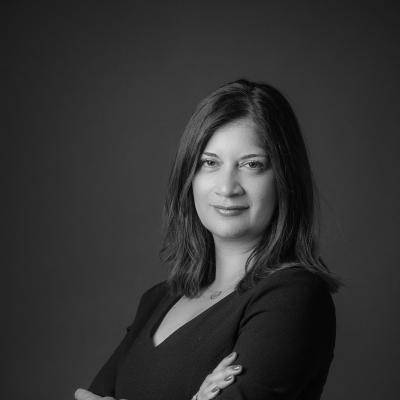
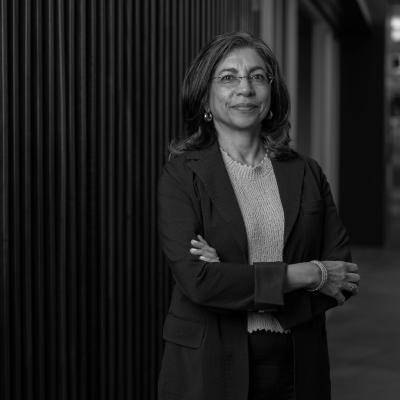
Binaifer Nowrojee
[Applause] And very honoured to be sharing the panel with both of you today. So, it’s an honour to open this conversation at Chatham House, an institution founded more than a century ago on the conviction that international affairs should be openly examined, rigorlos – rigorously and with clear eyes. So, it’s in that spirit that I offer these remarks, not as a set of settled conclusions, but rather, as arguments for us to discuss in this rapidly changing world. And the premise of this evening’s discussion is that governments and multilateral institutions are retreating from human rights leadership, and the retreat is real in many places.
Many governments that once prided themselves on their human rights records at home and their commitment to them globally are failing on both fronts, but I want to resist the two stories that are most often told about human rights in this moment. The first, a story of nostalgia, that our task is to go back to restore the order that we lost. That world is gone and that world is not going to return. So, we shouldn’t invest our energies in mourning it, but only to regain and retain the best of it.
The second is a story of despair, one that I think we’re all feeling. Human rights have lost their meaning. We’re no longer anchored, international law no longer matters and that we’re descending into a, sort of, Lord of the Flies moment of chaos and violence that ref – just is revealing our, sort of, inherent capacity for evil, and there’s no denying the horrors of this moment. So, the gravest of crimes being committed in Gaza, Sudan, the war waged on Ukraine, the targeting of schools, hospitals, people queueing for food, so casual now that it’s become necessary to ask whether any standards actually exist anymore.
But I would argue that both stories carry false claims of prophecy. They’re stories told by humans and not the iron laws of history that doom us to this, and both rest on the same analytical mistake. They measure the health of human rights by the conduct of the most powerful states. If we only look at who is leaving the stage, we’re going to miss who’s stepping onto it. When we speak of international human rights, we mean something specific, the UN bodies of law in institutions, built to constrain how states treat their people. The Universal Declaration of Human Rights, covenants, treaties, international courts, laws of war, and as we know, that system is under severe strain.
But the board – broader spirit of a shared humanity that was built to serve for dignity, for justice, for accountability, is not in retreat. If anything, in other parts of the world, we see it growing stronger. We should not mistake our disenchantment with structures that we’ve known for the condition of the world and its future. Rights were never, ever a gift from above or an act of charity from the West to the rest. They were always the product of struggles, one from below. What this moment right now has done is make that truth impossible to ignore, and the question for us is, what follows from it?
Start with where moral leadership has actually gone. It’s not disappeared, it has moved and it’s moved often to the tou – to the people who are closest to the violations. So, for the in – for example, I actually take really great inspiration from some of these brave Gen Z movements that have turned protests against injustice into struggles. Unjust taxes in Kenya, economic justice, that shatter the wall of fear in Bangladesh, that actually resulted in the overthrow of a government. The reclaiming of a nearly stolen election in Senegal, feminist movements of Ni Una Menos, and the Marea Verde which redefined gender violence as a political responsibility rather than a private matter and then exported that redefinition to other countries, Italy, Spain, Turkey.
We’re looking at Afghanistan at the way women are defying the Taliban at risk to their own lives and young girls in Afghanistan using technology to claim back the education that’s stolen from them. These are not movements that we need to romanticise, as if often the temptation with nascent movements. Of course, they have their flaws and limitations. The games that they’ve made are fragile, the coalitions that they’ve built are shaky and the leaders of these movements lack policy or governance experience, but some things stand out. First, they are speaking the language of human rights, of truth, of dignity, of justice. These are often young people who’ve never even lived under democracies but are demanding that their voices be heard; that they have a seat at the table and that they have a say in how they are governed. They also display amazing courage and a boldness that’s needed in this moment, both of how they are organising and what visions they’re fighting for.
All these new movements have shown a fearlessness on the streets, knowing that they’ll be met with repression, whether it’s the hundreds who were killed by security forces in Bangladesh or the women who were beaten and arrested in Herat, Afghanistan last week. Or the people in Minnesota who placed themselves between the United States ICE Agents and the migrant families they live among. They’re harnessing technology not just as a tool to connect, share information, document repression, amplify voices, but also as a space to debate, to source, to generate new ideas and to collectively build alternatives. They are not trying to reform existing systems. They are imagining entire new worlds that place dignity and justice as the principles at the centre of their designs.
We’re also seeing leadership globally move across states. International law has its origin in the age of empire. Truth be told, it was never meant to be an egalitarian international system, but to establish a set of rules between self-styled civilisations that quantified their freedom to conquer, to take control of countries weaker and poorer than them, to exploit their resources. In the post-World War II era of international human rights, some of those aspects were embedded in terms of inequality into the structures of the UN and the international financial institutions.
We now, however, see two rival trends. One is the brazen assault on international law, through wars of aggression, regime change, impunity for the most serious crimes, including crimes against humanity and genocide. But at the same time, we can see states using and reshaping international law to assert their sovereignty and solidarity as middle powers and small powers, to insist on what binds together our shared humanity. In a world where global power is being renegotiated, the West’s moral authority has been waning, so these new coalitions that we’re witnessing are going to be essential to the survival of international law in the future and its renewed relevance at the moment.
And it is there over 100 states are currently engaged in human rights related cases at the International Court of Justice. Half the world took part in the climate advisory proceedings, driven not by a great power, but rather by a sinking island, Vanuatu, and a coalition of Pacific students. It was South Africa, not a Western capital, that brought the genocide case at the International Court of Justice, that has defined this period of international law. We’re witnessing The Hague Group, a group of states that has come together to refuse to accept a world governed by lawlessness and seeking to strengthen accountability for violations of international and humanitarian law by Israel.
Pakistan has emerged as a mediator for peace between the US and Iran, something that previously would’ve only been done in Oslo or Paris, Madrid, Vienna. We’re seeing the Vatican as a growing voice for human rights, warning that artificial intelligence could become the new Tower of Babel, concentrating power, weakening truth and turning people into datapoints. The Pope’s call is for a world to shape AI around human dignity. So, while the Security Council is paralysed, other states are using the General Assembly and the courts to keep norms alive. They are not abandoning the framework. They’re giving it new life from below.
What these new advocates, state and non-state, share and acknowledge is the heart of one understanding of how rights are actually secured. They understand that law alone will not save us, and I say this as a Lawyer who has seen what persistence in the courtroom can achieve. I was involved in some of the first international convictions for rape as an instrument of genocide and it came because the survivors I worked within in Rwanda refused to let the Prosecutors look away.
But law alone sits in a context. Law gives form to a political consensus; it can’t be a substitute for one. The practitioners reshaping advocacy today, Kenyan Lawyers demanding justice for abducted protestors, the constitutional courts in Uganda, South Korea and Senegal blocking executive overreach, they succeed because they treat litigation as one instrument in their toolbox within a larger political struggle, not as a neutral referee standing above it. And grassroots movements understand the same thing from the other side. They fuse their organising, their mass mobilisation and their legal strategy where we once just filed reports and advocated for pressure to be applied in Washington, London or Brussels.
So, they’re forcing a shift on civil society organising tactics. The pressure is severe for grassroots advocates. Funding is being choked off, leaders are being prosecuted as foreign agents, onerous NGO regulations are being put there, but the adaptations are equally real. People are finding new ways to organise at the grassroots. Regional sanctuaries where threatened defenders can continue their work. Funding diversified away from traditional donors into social media spaces. Formal NGOs giving way to looser movement structures that are harder to decapitate by repressive states.
But the deeper reckoning is this. In many places, civil society had drifted away from society, become elites, professionalised, fluent in the language of donors, concentrated in capital cities. And when these changes and attacks came, part of it found itself defending rights before publics that no longer felt those rights belonged to them. So, I think we also have to look at ourselves, it’s very important. The organisations that endure are those that are closing that distance. Survival, it turns out, is also a question of legitimacy more than a question of security.
So, the rise of more assertive middle powers should not be heard as an attack of universality, but perhaps even as its recovery. There are those contesting who owns the idea? You know, we think of universality or human rights as being some post-Second World War concept. Universality was never the property of the West alone. The first known Charter of Rights is inscribed on the Cyrus Cylinder in 539 BC by Persian king Cyrus the Great. Our principles of solidarity owe much to the spirit, African spirit, of Ubuntu, meaning ‘I am because we are,’ and we have to thank Hansa Mehta of India, who insisted in the Universal Declaration of Human rights to use the language of ‘all human beings’, not ‘all men’, as was originally written.
Recovering these sources debunks the myths that human rights somehow began after the Second World War, or that rights depend on the wealthy and powerful states from one part of the world, or that rights are a foreign imposition brought from somewhere else. It contests the hierarchy that the old framework that was built, that prioritised civil and political rights as absolute, but economic and social rights, left as subsistence issues, are something we should accept. Economic and civil and political rights both need to be dealt with. We previously set a floor on – beneath how low the poor could fall, but we’ve never refused ceiling on how high the wealthy could rise and now we’re in a situation where a single person in the world could be wealthier than a whole nation.
For the vast majority of people in the world, economic inequality is a human rights question because it determines their ability to exercise all their other rights and the fate of the countries they live in and it recognises that the international economic architecture that we live in is flawed. It is actively impoverishing people. People in poverty is – it’s not some coincidental thing. There are active ways in which people are being impoverished through the international system. And it also contests the framework’s individualism, bringing in collective traditions, like indigenous and Afro-descendent concepts in Latin America of buen vivir, the idea of living well, of having harmony between communities and with nature, something that is urgently needed in this moment of the climate crisis.
Which brings me finally to the institutions we engage with. If leadership has moved and organising tactics have changed, legitimacy must now be earned where it was once assumed. Europe cannot be complacent about its own record right now. The rights of freedom of expression, assembly and association are under assault right now and people are being punished for peacefully opposing the policies of their government. The role of European governments today is to ensure that they don’t abandon the freedoms that they once were most proud of. The way to honour that inheritance is to live those ideals, to defend democratic institutions, to protect the dignity of all who live on this continent and to resist the lie being told that it’s a win-lose situation, that one person’s rights come at the cost of another’s. And to refuse to cede the ground to those who seek to exploit differences and traffic in fear.
We need to see Europe applying one standard to Gaza, to Sudan, to Ukraine alike, because a standard applied selectively soon ceases to be a standard at all and in the multilateral system, we need to see a more equitable power sharing. The order built in 1945 formalised the privilege of the powerful. It had inequities built into it and perpetuated by it. So, the future depends on welcoming, not managing or limiting, the wider coalition of states who are looking to sit at the table, who are seeking a place to set the agenda and to ensure that issues of debt, inequality and climate are finally treated as the global human rights challenges that they are. And the same test falls not only on governments, but also on philanthropy and civil society, my own institution included. Changes are happening at the frontlines. Let’s not just look for the familiar actors and discount the new voices and ways in which the debate is being having. Let’s transfer power, not just resources. Let’s ensure we stand with communities calling for human rights as allies, not as saviours.
So, the old certainties are gone, and we need not overly mourn them. They moved us far over the past 80 years, but they were never as solid as they appeared, and they were never meant to serve as a final resting place. Eight decades ago, when the Indian feminist activist and freedom fighter, Hansa Mehta, was part of the Drafting Committee of the Universal Declaration, she spoke of the importance of that moment, the inauguration then of a new era of rights, where everyone everywhere would be guaranteed the same freedoms and protections. ‘To create a new world,’ she said, ‘it is necessary to create a new way of thinking,’ and so, that’s the challenge before us. That is our task, once again, as we look to defend human rights. It’s become difficult right now, but it’s also more necessary and so, the challenge on all of us is to pick up the mantel and think differently and listen to the new ways in which debates are happening. Thank you [applause].
Marc Weller
Thank you very much. That was Binaifer Nowrojee, who is the President of the…
Binaifer Nowrojee
Open Society.
Marc Weller
…Open Society Foundation, of course. I was distracted because I’ve received instructions from the internet that we should reintroduce everybody due to the internet. So, I apologise, I was looking that way. Binaifer has given us a message of hope, but also slight warning that things cannot quite continue as before, that we need to think about changes in the international system, in the equality that we apply to situations, the need to avoid hypocrisy, but also to recognise new developments and trends and to seek to support those.
We now have two further speakers, before we come to the discussion, and they have been set the task to reflect from their particular area of practice or work these very same factors. What are the challenges to human rights in their areas? How do the institutions that traditionally are meant to look after human rights in their areas, be it legal ones or social movements or other mechanisms, how are they coping, and what are the new developments that we can detect?
The first speaker is Schona Jolly, who is a King’s Counsel at Cloisters Chamber. She is also a Bencher at Gray’s Inn. She is a leading member of her chambers and in fact, heads the Human Rights and International Practice Group. She is highly regarded and sought after as a Legal Advisor and Litigator, but she also served as the Chair of the Bar Council’s Human Rights Committee for some years. Has much engagement with civil society, even a background in relation to Latin America somebody whispered into my ear. So, she is a straight Litigator with many other strings attached to her bow. Please.
Schona Jolly KC
Thank you very much. Thank you very much, first of all, for that tour de force of an opening and I didn’t know, actually, what Binaifer was going to talk about today and I think it’s a, sort of, a good sign, but also maybe we should reflect on the fact that we’re thinking about many of the same things. Because my opening line to you was going to be, and still will be, who owns international law? And it seems to me that this is something that we can focus on very positively but also think about strategically when we think about where international human rights and international law lie today.
I wanted to talk to you about a number of things, but I’m going to focus, just for time reasons, on two questions and two institutions, the International Court of Justice and the European Court of Human Rights. And if I have a minute at the end, I’ll say something about how that all fits into the domestic setting here in the UK. It’s important to ask the question of who owns international law, because you can see that reflected in the way our states are operating and in the way that we see our institutions operating, but you can also see a path to the future when you ask the question squarely. And there are two really good examples of that question in operation and what the past – and the difference between the past and the future.
On the ICJ, it – the ICJ, within its first 75 years of existence, was something that domestic Lawyers and domestic audiences, even less, barely had reason to notice. Most people wouldn’t have known what it was, let alone commented on what it was doing. Judge Joan Donghue, who was President of the Court between 21 and 24, remarked, ‘When the Court held its opening sitting in April 1946, there were only 51 members of the United Nations. Almost a third of the world’s population lived in non-self-governing territories.’ If we fast-forward 75 years, there are now 193 UN member states, each one entitled to sovereignty equality. To date, over 100 states have been parties to contention cases heard by the Court, and we now know that from 51 to 193 state parties signed up to the statute. Today’s ICJ reflects a much more complex world, settling disputes and delivering advisory opinions in some of the most contentious issues within a large range of public international law.
And from considering things that were once dry, considered dry, maritime disputes, territorial disputes, we now know that they are covering some of the most contentious issues, such as genocide, and I don’t know if anyone in this audience was watching that very first hearing before the ICJ back in January 24, but the livestream jammed with the sheer thousands of people across the world trying to watch it. And I think that is a very interesting – that case itself, wherever we sit now with it, is a very interesting exercise in picking up on what Binaifer was talking about and the legitimacy of international law amongst states who were once not considered states to rely on it, to use it, to own it, and also public except – public expectations about international law and particularly about human rights law and what the law can achieve. And there is a balance somewhere between jamming livestream feeds of the ICJ and the expectations of what the ICJ can achieve because the wheels of justice move slowly. And law is, as Binaifer talks about, just one part, one institution that has to play its part in uphand – in upholding the rule of law, both domestically and internationally.
There are lots of questions about whether the ICJ is able to manage the, sort of – or how it’s best able to manage the sort of proceedings that now it finds itself dealing with. If we then think about other courts and we think about the question of ownership of international law, I think climate change forms one of the most interesting assessments of where we’ve been and where we’re going, because in the sche – in the scope of literally a few months last year, or was it 24? I’ve slightly lost where we are in dates. Everything changed with a landmark advisory opinion from the Inter-American Court of Human Rights and that clarified how states’ existing legal obligations related to the climate emergency.
That was requested by Chile and Colombia, delivered last July, so July 2025, following the submission of 263 briefs and 185 delegations participating in public hearings across Barbados, Brazil and Costa Rica, involving the participation and engagement of civil society, indigenous peoples and affected communities across The Americas. And then, just a couple of weeks later, in another historic ruling, the ICJ sitting in The Hague, then pronounced its own advisory opinion on states’ obligations of climate change, and this opinion had been requested by the UN General Assembly and was the product of a six-year campaign, Binaifer’s already referred to it, which had been led by Pacific Islands’ students fighting for climate change and championed by the Government of Vanuatu.
And ultimately, it was jointly sponsored by I think 132 states, which then sought legal clarity on the duties of states to protect the climate system. And then followed another – and this followed another huge climate change case in the KlimaSeniorinnen case in Switzerland before the European Court of Human Rights. And I’ll just take a moment to list all of those because it demonstrates that for all the failings that we all see every time we open the newspapers at the moment in front of us, international law is being reshaped as we speak and it’s being reshaped by different parties and institutions.
And with that, I just want to take a moment to pause to think about another very recent and significant development in the international scene in Europe, which is the Chişinău Declaration, which some of you may have heard of. And there’s a lot to say about it and I’m not sure I’ve really got time to talk about it now, but I think in many ways, the Chişinău Declaration is something we can probably all relate to matters taking place within domestic legal spheres ourselves. It is the product of domestic, often populist, often nationalist, concerns.
There may be leg – there may or may not be legitimate concerns about all sorts of areas within international human rights law and within international law. There are matters, as Binaifer says, which are not settled and nothing was ever intended to be settled. The law moves forward, but Chişinău marks a moment of something that we need to reflect on and it marks a moment of danger in some ways, because if we don’t set the standards that we expect our states to achieve, then there’s a question about what it is meant to achieve at all.
So, that’s a very, very quick explanation of, I think, some of the things we need to be thinking about and some of the challenges that are before us, and that we, as both domestic and international Lawyers, are thinking about, I think, all of the time at the moment.
Marc Weller
Thank you so much [applause]. We’re running a bit late. Otherwise, I would’ve asked you immediately to tell us what the Chişinău Declaration actually says, but that will remain a mystery for now, because Fred Bauma also wants his time. He is the Executive Director of Ebuteli, a highly regarded Congolese research institution, focusing on politics, governance and the avoidance of violence. He is also a Senior Fellow at the Center of International Co-operation at NYU, New York University, and he is the founder of one and a leading member of another civil society movement, one in the Democratic Republic of the Congo and the other one concerning Africa as a whole. Fred, may I turn over to you?
Fred Bauma
Thank you so much and thank you for this discussions, which in my view, brings back something that people in most countries of Global South have been already thinking of, like the future of human rights or the place of human rights, if we can say so. Because your question is right, in my view, Schona, who owns human rights? And I’ve come from a region that has known violence atrocities for many years, for more than 30 years, with recycling of violence and calls for justice and accountability and we have not seen that for a long time, and in a region where people are stuck between violence atrocities and political violence, which is equally harsh on population.
But also, and peop – in some of those places where the struggle for human rights and the use, actually, of the language of human rights, has been very present in – within social movements, pro-democracy movements or human right movement or climate movement, but where there is a sentiment that the human right discourse has not been for the communities of those areas. So, that is the initial contradiction, I think, that I’m struggling with when I hear this discussion on the world that is changing. I think the world is mostly changing for the North, because the rest of the world has been left aside for a long time, and I will come to that shortly.
Because when we look at the human rights, as Binaifer says, and as Schona add, we see those international instruments of human rights, the UN bodies and at the ICJ, the ICC and so on. And those are the institutions that if in EU and international context is dying, those are the ones that are mostly dying, and of course, Western countries that are retracting from the use of discourse of human right. But those are instrument has mostly been very distant from people in places where I come from. I think Palestinian have been asking for them for a long time. In Congo, when we see, for example, the international – the ICC, many people fro – who went there from – were from Congo, some of them are back in the government.
So, they – there is – at the same time, I, myself, in the streets with many of my fellow activists, we’ve been using that language a lot, but it’s also – I mean, I’ve – I have that strong feeling of the way human rights has been used as a political discourse rather than as a genuine value that we all fight for. And so, when the weakness of those human rights institution were very clear for everybody, we retracted of the survival of human rights were mostly, at least in the case of DRC, not less on institutional, like, institutional bodies of human rights, but on bilateral position of some actors, mostly in the West. So, targeted sanctions replace justice, for example. And so, when those countries that were using their own power, it would be the US or the UK or France, stop using it, it’s as if the world is scrambled, but the reality I think predates the shift in the Western Hemisphere.
But – and I think it has a long consequence for human rights advocates in the Global South, because the more we use that language and the more that language become associated with people in the North, the more it reinforced that idea that human rights activists are agent of the West, and it feels like that. Even if the subjects we’re talking about are the very things we live for, the very thing we want, both our electricity, as to justice and so on.
And so, I think the – one of the main challenge of the hum – of human rights is to cure itself for its – for that connection with the dying world. And I think it’s important, even for ourselves, activists and human right defenders, to allow ourselves to take that distance in order to give human rights a new life. As I think Binaifer was reminding us, the majority of the world live in the places where actually the call for those principle are still vibrant, but where the power in international organisations doesn’t exist.
And so, even when we speak of new actors in this field, in our – in my region, for example, there is a lot of discussion on the middle powers in conflict resolution or – but they are – they came almost in the same line as the Western powers or other powers, in a very transactional way, also, and maybe human rights is not the central piece of their motivation. It’s some other points, economic interests, political interest, and the danger for advocates is that mo – for most of the countries, especially in the Great Lake of Africa or in the – on – and in the Horn, they are not equip enough to discuss with this middle power, because most of them have been trained in the UK, in the US, in Africa, or – but in connection with the West. And so, there is that gap between where power, at least institutional power, is shifting and the tools that these advocates have.
So, in my view, one of the challenge of human rights, or the future of human rights on – and the future of advocates for human rights, is, first of all, the dissociation with people and spaces that have been mobilising human right discourse, mostly from opport – political reasons rather than the genuine belief. So, the – it’s the challenge of reclaiming the human rights from those people who struggle for human rights at the very grassroots level.
The second one is reimagining new ways of solidarity and I think this is something have – that many people within feminist movement, within youth movement, have been doing for ages and I think it has to continue, but it has to continue in the way that you understand and are proud of the political influence that human rights should have. Because one of the weakness, I think, was – in ages, was to also depoliticise human rights in time. It was very political when it was anti-colonial movements, but it’s less and less political when its limit itself to open political space or even climate justice, somehow.
And the last thing I will say is resisting, not the dying world, but to save and preserve the living principle, and I’ll have to say I’m – and I’ll end here, I am very negatively impressed by how fast the West has abandoned its own principles. It’s as if someone change the seats, like in the US, and everybody is like, ‘Well, this world has scrambled.’ Was it principles or was it something else? Because the same courage that we ask people from grassroots to have, some of the Western nations should have them, and I mean, maybe the news is the West cannot survive by playing the games that many other countries are better it. You can’t beat China by being China. I will end there.
Marc Weller
Okay [applause]. Thank you very much. I have been instructed immediately to turn to questions for the audience, which I greatly regret, because I’ve got a long list of interrogatory questions for our panel, but – no, not so fast. Lawyers are known to break the rules on occasion. I have just one question for Binaifer. If states were to renegotiate the Universal Declaration of Human Rights tomorrow, would they manage to agree and how would it be different?
Binaifer Nowrojee
So, I think that if – and this is a really tricky one for all, the Refugee Convention, Genocide Convention, at this moment in time, if we open up those documents, we will open a Pandora’s Box and we will probably lose much of what is there in principles. It’s not to say that those documents are ideal. For instance, the Refugee Convention didn’t recognise that people could seek asylum on the basis of persecution, on the basis of gender, for example. But if we try and open it, we will end up, I think, losing more than we’ll gain.
So, I think we have to understand that those documents were a product of a certain historic time. Let’s reap the benefits of what they’ve given us so far that’s positive and there is much that’s positive. Let’s take what’s good from there, even as states are beginning to erode them, and think now where this goes. What we are finding in our work, and Open Society Foundations supports groups around the world, works with governments, etc., is that actually, it used to be that when I started my career, you would look to the UN and the UN standards. Now actually, people are developing regional standards, people are working in their own spaces, people are talking about human rights using cultural or sacred language based on the communities that they value most.
We have to say that is human rights work, that is human rights language. We can’t say, oh, no, no, if it’s not in the UN Convention, it’s not. Because people speak in the language that they can hear and they will convince more people, and we are seeing that now, and I mentioned that in Latin America, people are using the indigenous concept of buen vivir. That is the language of human rights, but we have to start listening closely where is the language of human rights? And it will be packaged differently, it will be spoken differently, and because of the shifts in the multipolar world, it is not going to be, sort of, in the five official languages of the UN. That’s okay, that’s fine.
Marc Weller
Okay, let us speak the language of human rights. One from the right, one from the left. The gentleman in front, if you identify yourself. The microphone is coming.
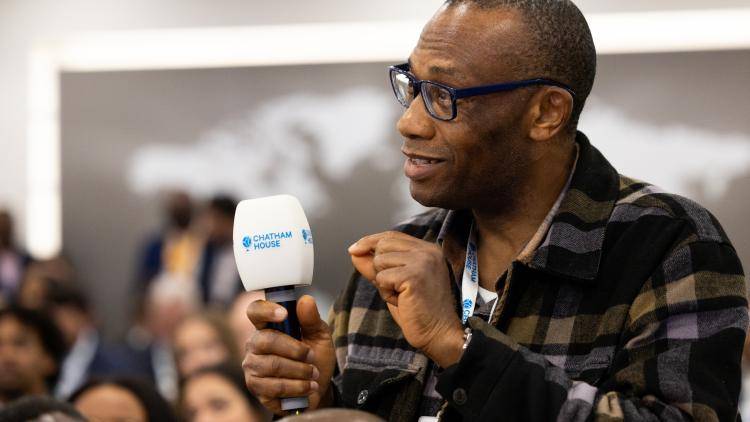
Ibrahim Aziz
My name is Ibrahim Aziz. Thank you very much. I am from [inaudible – 52:43] Kurdistan. My question about the rule of the state. Can human right progress by sustained without strong support from the great powers, from the middle powers? Thank you very much.
Marc Weller
My proposal is that we collect another question. The lady in the second row with the striped sweater.
Member
[Pause] Hello, my question goes to Freddy. In countries such as the Democratic Republic of Congo, where conflict, displacement and internation – and human rights abuses persist despite decades of international attention, how can the new generation of advocates hope to bridge gaps within international human rights commitment and the realities on ground? Thank you.
Marc Weller
Okay, I’ll read out one more and then we turn over to the panel, and you can pick any of the questions that were put. There is one from Peter Hurst and a similar one from Gilligan Dare. ‘Is it time to abandon the absolute primacy of the nation state?’
Binaifer Nowrojee
Ah.
Marc Weller
And the other one says, ‘We, the people,’ as in the UN Charter, ‘the problem is that human rights language has been captured by the very governments we’re trying to constrain.’ We’ve got three very good questions, three very good panellists. Let’s start with Fred at the outer edge. You were the last speaker, you go first, if you like.
Fred Bauma
Yeah, I will take the – Hayley’s question. For me, one way of bring – building that gro – that gap is to displace – to move the conversation of human rights outside of those two goals that we think they are captured. Not that the Security Council, for example, will not – will cease to exist, but I think I respond – the respond more on pressure and global coalitions and long commitments by those advocates than if we believed only in those procedural – I mean, I’m not talking against Lawyers here. But I think somehow there has to be a conversation between, to put it bluntly, the streets and those who are well trained to use and to manipulate that language.
And I think that’s the kind of quest – and has to be in the north and the south and I know that a lot of those connections already that’s probably need to be reinforced. The risk here is that every – since the problems are – tend to be everywhere, people try to focus on their own issues without understanding that maybe the survival of human rights, whatever discourse we use for human rights, depend on those connections. And I found, for example, student coalitions, now, as in the past, as during the Apartheid of – have been very powerful and there are so many of those coalitions that’s can continue to be used in a way that power – like, the real balance of power is not in a single space where only the powerful will be able to speak. But maybe I’m idealistic, but…
Marc Weller
Please.
Schona Jolly KC
Thank you. I mean, I think this perhaps picks up on what you’re saying, Fred, that I think I’ll take the questions about the language of human rights and the state structures. I think if we just take away the language of international human rights for a moment and bring it down to everyone’s own individual countries, there are very few countries in the world that don’t currently have an issue with the language of commitment and the language of equality and human rights compared with what’s happening on a daily level in newspapers or on the streets, to say what you said. And that’s an issue, for example, here in the UK, that we clearly have that – and within Europe, we clearly have it.
And to take Fred’s point, you know, why is the West ‘abandoning its principles’? Well, I mean, I’m not completely sure I accept that premise, and you can see different approaches on different things. And for example, you can see in Spain different approaches taken to international rules to other countries. But what – in an economic crisis, with pressure points on so many people on the cost of living and with the disruptors of tech and social media and the way in which people gather their news, human rights has an image problem, I think is the reality. And there have been stories told about human rights every day in newspapers and on Facebook and in other forums which very often, bear absolutely no relation to facts. And we have an issue with facts being, kind of, distorted and expertise being distorted.
And so, I don’t think that you can divorce human rights as a concept from these very major societal issues that we are currently undergoing and I think this is true across the – and around the world. And so, I do think as Lawyers, Academics, activists, people working in this space, we have to find a way of engaging with that narrative, which is a storytelling narrative. At the moment, we’re not doing it particularly well and we have to think about that, and we have to think about how we tell the stories of how rights impact ordinary people. And one way of us doing that is understanding that socioeconomic rights have to be real for people to understand how this impacts them in many ways.
And similarly, I think, we need to think very hard about the question of othering which is happening in almost every country around the globe. And the question of othering and of make – of creating difference and emphasising difference for all the wrong reasons, to create hostility in our spaces, is a serious problem with which human rights and equality have to contend, and law can’t do it on its own. It needs political partners and narratives to do it.
Binaifer Nowrojee
So, can we escape the nation state? Well, the whole international system is built on the primacy of the nation state. That is the building block around which everything is built. And so, international systems have given us multilateral and international, sort of, standards, but as we all know, when it came time for COVID, we were victims of whatever country we came from and the services and the access we had depended exactly where our feet were on the ground and we were with the governments that we came from. And so, the power of the nation state cannot be ignored, and human rights cannot be devoid. It cannot be some neutral thing. Human rights, when done well, is a highly political act.
Why? Why is it so political? It’s because it’s about moving voice to people who don’t have voice and it’s about shifting power to people who’ve been denied it. That’s very threatening to states, especially states that are authoritarian or autocratic. And so – and changes come because of sustained political pressure. In Europe, continued protests on things in the US, elsewhere, it’s those – that continued pressure that ultimately forces governments to do things that they don’t necessarily want to do. And so, the, kind of, key to unlocking the universalism sits with organising at the grassroots. So, I think that the nation state will remain important. The language of human rights, yes, it’s been co-opted by governments and misused and again, the issue of the narrative, but that doesn’t mean that we can’t claim it back and put back what we want in it.
I think that also, it’s a moment where middle powers, for better or for worse, are exercising sovereignty in response to events such as the toppling of the government in Venezuela by the US, or the, you know, illegal acts of aggression, Russia moving into Ukraine. It is pushing the idea of sovereignty and state and reassertion of state against what’s seen as, sort of, imperialistic expansionism. So, it’s complex. The debate has lots of different, sort of, angles to it.
So, just in short, I think the nation state’s here to stay. It’s our job as citizens and people of goodwill around the world to continue to push in the direction of human rights and equity and justice and for us to reclaim the narrative from governments that have captured this language and are misusing it.
Schona Jolly KC
Can I just add one line to that? Which is that within the nation states – which is within those nation states that we practice and resolve and look for remedies for human rights in the first instance. International courts don’t immediately give us access to any of that. It’s constitutional systems within states where we find the access to those rights. So, that’s why international law, of course, is important and Fred’s point was, well, there’s international law here and there’s the streets here, and at the – in our structures that we have and that I – none of us yet see foreseeing, that’s where law has to operate. So, international law insofar as we’re talking about human rights law, has to operate within our own straits too. It can take its tentacles from other places, but that’s where it has to exist.
Marc Weller
Well, there seems to be a consensus on the panel that human rights is about empowerment and bringing new constituency into – constituencies into political dialogue. Of course, traditionally, human rights are seen as a defence against the state, that it is the space that you preserve to ensure your autonomy, ensure that you’re not tortured altogether too much, ensure that you have political and maybe economic entitlement. But also in that sense, that can give rise to a confusion which is disenfranchising rather than enfranchising. The idea that the state can do whatever it has agreed not to do to you through human rights, and that is, of course, the opposite of our broader understanding of the state, not as something that shouldn’t repress us too much, but to the contrary, that should be a mechanism to allow us to express our identity together and for common purposes. And I think that broader vision of human rights you have brought out so well today.
It falls to me, having negotiated successfully an extra four minutes for all of us, it falls to me to thank our speakers, to thank the organisers at Chatham House who have given us four more minutes, and to thank all of you for having devoted a not entirely, but nearly summery Monday evening to this difficult but important subject. Thank you so much [applause].