Olivia O’Sullivan
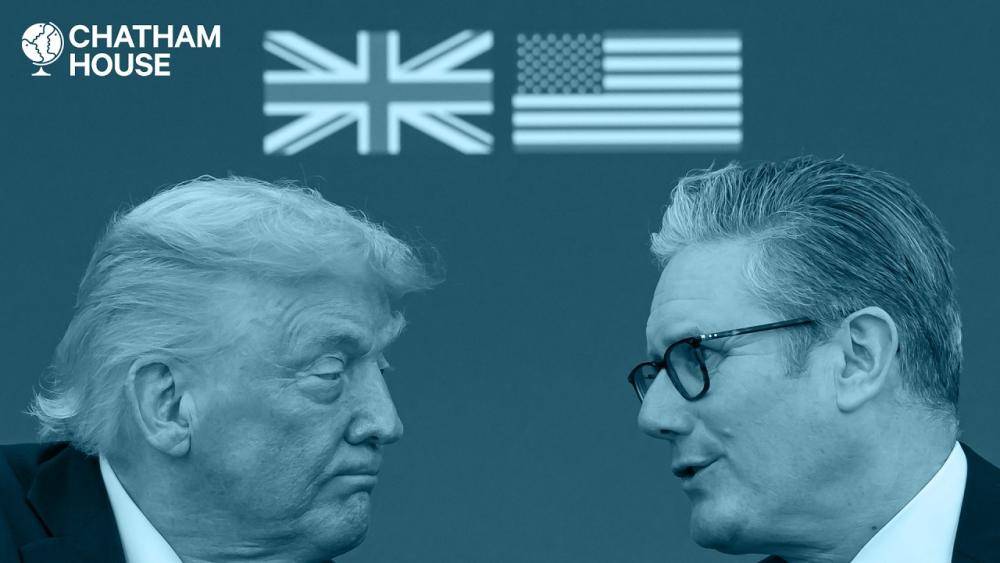
Hello, everybody, and a very warm welcome to this Chatham House discussion on “The not-so-special relationship: Can UK-US relations survive Trump 2.0?” A very warm thank you for coming, particularly those of you who battled through the tube strikes to get here today. My name is Olivia O’Sullivan, and I direct the UK in the World research Programme here at Chatham House. We’re really pleased to be hosting this discussion today with members of the Lords’ International Relations and Defence Committee. Lord Robertson, Chair of the Committee, Former NATO Secretary General and UK Defence Minister, Lord Darroch, committee member and Former British Ambassador to the US, and Lord De Mauley, former Chair and member of the committee, alongside our own Laura Rapp, Director of the US and North America Programme at Chatham House.
The Lords’ Committee have published a report today following their inquiry into US-UK relations. The report strongly argues the UK must jettison sentimentality about the special relationship, focus on building up its own defence capabilities and reduce what it calls “over-reliance on America.” Here at Chatham House, we certainly see the shift in the US’s attitude to European allies, not just the impulsivity of the Trump administration, but the long-term trends around Atlantic ties, as one of the most urgent and challenging questions for UK foreign policy. So, we’re very pleased for the chance to dive into this report and hear from the panel.
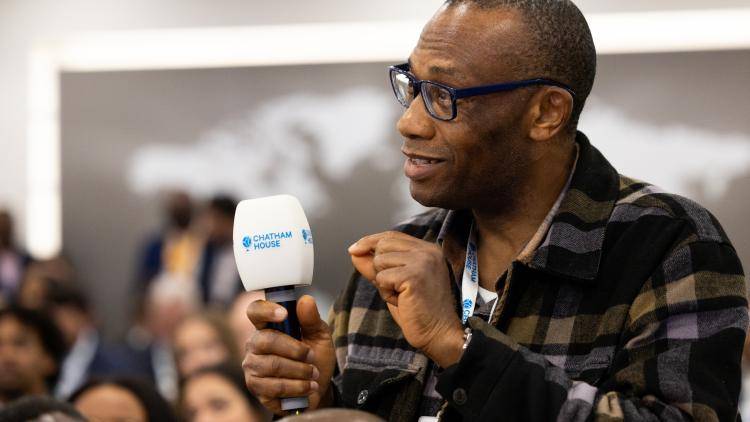
We will do that shortly, but just before we do, a brief word about how the event will run today. Lord Robertson will give a brief overview of the report from the lectern. We’ll then – I will then put some questions to the panel and we’ll have some discussion. Then we will open up for audience Q&A. So, while we’re talking as a panel, please do be thinking of questions that you would like to ask. When it comes to that section of the event, if you’re in the room, please just raise your hand, a microphone will come to you. If you’re online, please use the Q&A box to pose your questions, and please do tell us your name and organisation and please do ask a question with a question mark at the end of it, rather than make a long comment, just so that we get a chance to hear from everybody. There’s an awful lot to talk about today. A reminder that this event is on the record and is being livestreamed. Thank you again, for joining us.
There’s so much to talk about that I don’t want to take up any more time with my introduction. Let me hand straight over to Lord Robertson to give us an overview of the report from the lectern.
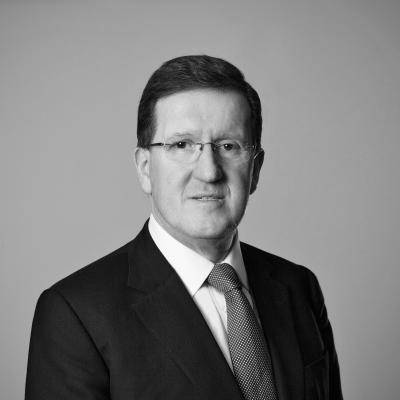
The Rt Hon Lord Robertson KT, CMG, HonFRSE, PC
Thank you very much, and I’m delighted to be here today to launch this report entitled, “Adjusting to the new realities: rebalancing the UK-US relationship.” I am the present Chair of the Lords’ Committee, but I pay tribute to Lord De Mauley, who presided for the majority of this inquiry.
The report is a product of the first large-scale Parliamentary inquiry into UK-US relations in over 15 years and as Parliamentary inquiries go, it has been a long one. We hosted 21 expert panels, collected significant amounts of written evidence, and in January, a delegation went to Washington D.C. to speak with a range of US Government Officials, members of Congress, experts and defence industry representatives, as well. So, we thank all of those who contributed to our inquiry, several of whom are in the room today, including on the stage with us, as well.
The inquiry started in January 2024 at a critical moment. With President Trump about to make his return to office, committee believed that it was high time for a reassessment of the foundations of the relationship. The aim of the committee was to look beyond one administration and to think about the long-term trends that will alter the way in which our two countries ray – co-operate and they go – given recent events, it has not always been easy to stick to this task.
The challenges of the previous years – of the previous year barely need repeating, certainly to this audience. The Trump administration’s decision not to consult the United Kingdom in advance of airstrikes in Iran, its decision to levy widespread tariffs against allies and most jarringly, the threat of military action against the territory of a fellow NATO member, all of these illustrate a growing divergence between Westminster and Washington. And all the while, Washington’s diplomatic tone towards the United Kingdom has reached a historic low point. But we need to remember and underline that President Trump and his administration are not the whole of the United States of America. It’s a huge country with an elected Congress and a diverse politics. Yet given immediate challenges, it’s the committee’s belief that UK policymakers must ground their approach into transatlantic relations and a sober analysis of the long-term trends impacting on US policy.
The US’s geostrategic competition with China, its related de-prioritisation of European security and an increasing public scepticism of globalisation are all trends which will shape future administrations, whether they be Republican or Democrat. In the immediate and the long-term, we believe that the United States will become more transactional in its foreign policy, including in its approach to the United Kingdom. And as the US undergoes such changes, the United Kingdom must adjust, as well.
Firstly, it’s clear that our high level of military dependence on the US is no longer tenable. President Trump’s demands about a greater European contribution are just a dramatic manifestation of a longer-term American anxiety about imbalances within NATO. Our reliance on the United States, predicated on the naïve belief that it will always be there to support us in times of conflict, has led to the diminishment of our own capabilities. Russia’s invasion of Ukraine has been a wake-up call, and we must rapidly pivot to becoming a more autonomous military actor, working closely with European allies to develop the capacity to deter and to repel any Russian aggression on the continent.
Secondly, the post-war age in which the United States acted as a steward for the global rules and norms and institutions that structured state behavor – behaviour, may well be over. Public demands will force future US administrations to be much more circumspect about pursuing global commitments, and this could fundamentally destabilise the international system, which has been in the past, so beneficial to our country. As the UK seeks to promote international order and seek global solutions to global problems, developing a diverse suite of partners is going to be necessary.
Lastly, the UK must prepare to deal with an America in which the prevailing economic model has shifted away from openness and towards protectionism. The UK must prepare for a world in which access to the UK mar – the US market is much more conditional than previously. For the committee to suggest that the United Kingdom should diverse its partnerships to hedge against the changing America, is not the same thing as suggesting a drastic decoupling of relations. Any such suggestion would be irresponsible and likely to make the UK less safe and less prosperous.
There’s a clear need to maintain a close transatlantic partnership and continue working intimately on areas such as intelligence, emerging technologies, nuclear deterrents and programmes such as AUKUS. While doing so, the UK must shore up its own credibility by rebuilding its own sovereign capacity and be scrupulous in demonstrating its value as a partner to the United States. It’s our hope, the committee’s hope, that this report will stimulate a critical debate about the nature of the transatlantic relationship in an increasingly disordered world. It’s the committee’s belief that a stronger UK, with a more diverse base of partnerships, will be better equipped to meet the challenges ahead. That is the – thank you for your attention [applause].
Olivia O’Sullivan
Lord Robertson, thank you for giving us that overview and I do urge everyone in the audience to read the report in full. Let me stay with you, Lord Robertson, because one of the key themes in the report is the defence and security relationship, and it makes the point that this relationship remains extremely close and has underpinned the wider US-UK ties. But that relationship is changing, isn’t it? We’ve just heard this morning Iran has fired on ships in the Strait of Hormuz as part of a conflict, that as you noted, the US launched without consulting the UK or European allies. That follows months in which the US administration made threats over Greenland, over NATO. Do you see that defence and security relationship is irreparably damaged by these kinds of events, or how do you see it evolving?
The Rt Hon Lord Robertson KT, CMG, HonFRSE, PC
No, I don’t think it’s been damaged at all. It has been affected and the committee has looked very carefully at the longer-term threat, the trends that are taking place both domestically in America, but also internationally, as well. So, we have an intimate relationship with the United States and that will continue. It’s very, very deep at lower levels in the American administration, especially in terms of intelligence and technology and especially on the nuclear front. That hasn’t changed, but the present administration, which has pivoted much more to Asia-Pacific region and to an interest in China, will obviously impact on what British foreign policy is going to be.
But the committee, the – again, and I am speaking today on behalf of the committee and not an a – as an individual, believes that the longer-term trends will continue whether the administration is Republican or Democrat, and that this country has got to adapt to that. But the underlying defence relationship is a very clear one and a very intimate one, which will continue.
Olivia O’Sullivan
Hmmm hmm. One of the ways that the report recommends that the UK adapts to that shift in defence priorities is to make sure the government sets out a clear path to spending 5% of GDP on defence. You recently accused the government of corrosive complacency when it comes to hitting that target. Do you think they listened to you and do you think anything’s going to change?
The Rt Hon Lord Robertson KT, CMG, HonFRSE, PC
Well, I accused the political leadership of the country of corrosive complacency and not – did not direct my attention specifically to the government. I make that absolutely clear. But our relationship with the United States will depend very much on what we contribute to the alliance, and if we are going to maintain the leading role in NATO, then we have got to be very clear about what we are spending and how – and what we spend it on. It is, therefore, I think, very important that the government lays out very clearly in advance that progress towards the 3½ plus 1½% of GNP that it is committed to as part of the last NATO Summit.
Do I believe that they’re going to do that? I hope that they are going to do that and certainly, the discussions I’ve had since last week indicate that that is the direction that they’re going in, and we’ll keep watching.
Olivia O’Sullivan
Thank you, Lord Robertson, I expect we’ll come back to that theme in questions. But let me come to you, Lord Darroch, and the report indicates there’s a wider divergence between the UK on the – and the US when it comes to foreign policy more broadly, particularly around international law, international institutions, around the idea of a rules-based order. How dramatic do you think that shift is, how do you see it, and what, in your view, can the UK do about it?
Lord Kim Darroch KCMG
Thank you. Yes, you’re right, the report identifies, basically, three broad areas of divergence in foreign policy. First of all, and this is set out in length – at length in the recent US National Security Strategy, there is an American pivot away from Europe because the see the rise of China as the existential challenge for this century. And they see the Asia-Pacific area as the primary focus for them in future, rather than the North Atlantic. And obviously, for us, given the neighbourhood in which we live, the threat from Russia will remain primary. But this doesn’t mean that there won’t still be plenty of challenges ahead where we’ll need close co-ordination between the US, the UK and Europe. So, that will continue, but the reality is that the centre of America effort is going to shift to Asia.
Second, there is, as Lord Robertson said in his introduction, a US retreat from what is commonly called the rules-based international order, which broadly defined, is the system of institutions and rules set up after the Second World War, to manage relations between states, to promote prosperity and to prevent conflict. And as a medium-sized power with an open economy and a history of supporting free trade, we in the UK have found that system has suited us well, but it looks to us that increasingly, America – Americans are taking a different view. There seems to be a growing belief in America that globalisation has damaged, rather than benefitted, ordinary Americans and that the United States has borne a disproportionate amount of the burden for managing and enforcing this international system.
And if you want one example of this, one manifestation of this, it is that the US has, in the last year, I mean, under this administration, it’s withdrawn from 66 international institutions or agreements or treaties. Indeed, for example, the Paris Agreement on Climate Change and the World Health Organization. There is also, one could argue, and Lord Robertson again mentioned this in his introduction, a quite clear distain for disregard for international law, as demonstrated recently by the military actions in Venezuela and Iran. And in some ways, America foreign policy seems to be moving back to an older tradition that is more nationalist.
And then third, again, as was mentioned in the introduction, increasingly disagree with the US on global economic policy. We support free trade. The US has become more protectionist. It uses tariffs to favour its domestic producers and its industrial base and as an instrument of political coercion. And within these broad areas, you can add some quite clear divergences, disagreements on specific crises around the world at the moment, such as the nature of any future peace deal between Russia and Ukraine and the handling of the Iran conflict. The differences there between the UK and the US and indeed, between Europe broadly and the US.
As to how we should respond to this. Again, it’s set out in the paper, in the summary and in detail in the paper and by Lord Robertson’s introduction, but there are some thoughts and recommendations in the report. The broad point here is that we need to work with – to learn to work with a more diverse set of partners, with whom we can address collective risks and challenges. And as part of this, the development of closer relations with the EU will be important but not exclusive. There are also, potentially, more novel partnerships out there that we can support.
We also think the government should remain steadfast in its commitment to international law, even in the face of US retrenchment, and we need to assess the areas where US withdrawal leaves gaps that we, probably not us alone, but in partner with – partnership with others, need to fill.
Olivia O’Sullivan
Lord Darroch, thank you. I’d like to come back to those questions about which partners the UK needs to get closer to and how we respond to these shifts, but let me bring in Lord De Mauley at this point, because Lord Darroch brought up the point in the report about the long-term shifts that you diagnose in the US’s approach to the broader economic order. The UK and US economies are closely intertwined, but that shift by the US away from this idea of open, free global trade, where do you see the frictions for the UK in that and how might the UK respond to that change?
Lord Rupert Charles De Mauley KCVO TD FCA
Thanks, Olivia. Well, the major short-term economic challenges include navigating the changing tariff policies of the Trump administration. It’s, as yet, unclear what that picture will be after the 24th of July, when the current 10% tariff is due for congressional approval. I think the priority for the UK must be to continue to work on tariff concessions and reduced barriers for specific sectors, which are covered by the Economic Prosperity Deal, particularly steel, aluminium, cars and pharmaceuticals.
The EPD is not legally binding, so priority must be given to locking in the commitments in that. So far, the UK has managed, through the EPD process, to work with the US while also attempting to reset its relationship with the EU. And the hope is that this prevents a choice of one over the other. Less successful has been the separate UK-US Technology Prosperity Deal, where – whose negotiations were suspended late last year, reportedly over American concerns about our digital services tax, food safety standards and the Online Safety Act, and there will continue to be friction, I think, in those areas.
In the long-term, in addition to continued concerns over US protectionism, the major dilemma for the UK is going to be triangulating its relationships with the US and China. We have got to develop a clear plan for economic engagement with China, because it’s clear that we can’t take as hawkish an approach as the US does. If we can develop a consistent economic strategy towards China, it could allow the government to identify areas in which it can co-ordinate policy with the US, such as defining controls on dual-use technology and taking action against non-market practices which harm the United Kingdom.
Nevertheless, I think we can expect considerable pushback from the US, including subsequent administrations, about failing to adhere to a more stringent anti-China approach. And that, I think, is going to be one of the core challenges for us in the foreseeable future. But the root of the solution is the need for a coherent approach to China that can be clearly articulated to US administrations.
Olivia O’Sullivan
Hmmm. Lord De Mauley, thank you. On that note, let me come to Laurel. Laurel, the report emphasises that the UK isn’t just facing immediate problems dealing with the Trump administration, but it seeks to identify long-term trends in the US that might lead to a shift in the relationship. In your own view, how much of the current US-UK relationship and the challenges in it are a function of the Trump administration and how much of this is about more enduring US foreign policy trends?
Laurel Rapp
I will just say this is a bilateral relationship that is really important to Americans. It has been for generations, and I believe and hope it will continue to be so, and look, Americans hold a very favourable view of the UK as a partner. That has dropped off a bit over the last year. So, there are some warning signs that we’re starting to see, and in this transactional future where there’s less ballast to a bilateral relationship that is less based on values and more on interest these days, it will be a little bit rockier, and we’re seeing that today. And what that will then translate into is scrutiny among the US and the American people and the very material benefit Americans derive from this relationship.
And so, even if a new US administration pursues a different approach, and they undoubtedly will, both in style and in substance, it still is smart for the UK to buy down the risk by broadening partnerships and by scrutinising its own national interest in what is working and what is not working. And so, you know, I think we’ve seen a lot of strain over the past year, what’s been illuminated in the report and we’re all familiar with it, on the US use of leverage against adversaries as well as partners, economic coercive measures. We’ve seen that in the tariffs and in some of the trade arrangements, the US playing hardball on some of the trade negotiations, and then on the use of force and the unwillingness to consult with partners and allies that we are now seeing on Iran.
So, these are – this is a feature of the US administration broadly right now. It is an experience all are having around the world, but it is particularly acute in the UK because there is such a close partnership here. And so, when you have a transactional partnership or the transactional future for all of us will be looking much more specifically at what are we getting out of these relationships? And so, where the recommendations focused, I thought it was very smart to look at recommendations on that material benefit, right? Looking at AUKUS investments, looking at the F-35 programme, looking at space investments together, because that’s something that the US and the Pentagon is looking for. That’s something that the UK has also embraced and wants to pursue. So, that’s a, sort of, very concrete, both now and later, examples of material benefits to both.
What I also thought was really useful in this report were these longer-term trends, right? The question right now is not what are the next 2½ years going to look like? Because I think we now have a pretty clear sense of the steady state until 2029, until January, and it’ll be a period of ups and downs, of tensions and crises and coming back together again on discreet areas. And so, that is likely – that’s here to stay for the next 2½ years, but what are those enduring features afterwards, right? And the reason this is important is not just so we can look to the future about, you know, what the relationship looks like in ten and 20 years because we’re curious. We have investments and choices to make now on military hardware, on technology agreements, on security partnerships, right? These are choices to make today that will be – that will have a ten-and-20-year tale to them.
And so, we need to know now what those trends look like in the US, and the report outlined five trends, and I’ll walk through them very briefly. So, the first is that, you know, “China will be a geopolitical competitor for the United States for decades to come,” and I think that’s absolutely right. You know, Americans rank China as the biggest threat to US national security and to the American people and that is, you know, consistent, but increasingly consistent over time these days.
There’s a question in the US about whether we’ve entered an era of ‘peak competition’ right? Are we at the height, right now, of competition with China and then we’re going to come down that ledge? Either way, this will be a structural feature of the relationship. And so, in that respect, the report’s recommendation on being very clear on what the UK’s strategy towards China is, is a really smart one, because it allows the UK to set its own China agenda, both privately and publicly, not just to offer more predictability in how the UK will approach China, but then, also not to be – to then have to react to how the US or China or other third countries are shaping their China Policy.
The two – the second trend is that burden – that there will be more “burden shifting from – to Europeans, for European security.” And I agree in some respects, but there’s burden share – burden sharing, absolutely. Burden shifting, I think different – future administrations may take a different approach to Russia, right? I think we’re seeing – there is strong American public support for a strong US role in NATO. Americans do absolutely see ranking below China, Russia as a second threat to its own national security. And so, the degree to which the US will push off versus partner on European security remains a question, in my mind.
Trend three, “scepticism towards global commitments and multilateralism,” that is absolutely the US administration’s view and that is the view of some conservatives in the United States. There is – there are partisan divisions on this question, but there are still a majority of Americans that do support a strong US role in the multilateral system, a strong role for the UN in the world and the US having a very meaningful role to play in the UN itself. So, you know, this is a space to watch, and this is one of the more politically volatile issues across administrations.
Trend four, “rise of economic nationalism,” absolutely, and this is a bipartisan issue. There is a common view that the free trade international market system was not working for all, or most Americans, over the past decades, and I think even with a different administration, we will see a lot of these tools now being road tested, potentially being adapted for different – adapted in different ways, but in some of the same – with some of the same outcomes.
And then finally, trend five, “political and cultural polarisation,” that’s undeniable. So, there are a lot of structural factors that will work against replicating what we had in the past, right? But the future is also not predetermined, and the choices the UK makes now will shape the relationship with the US and vice versa.
And so, I think just to wrap up, area – clarity on where we have differences is important, publicly speaking out about where behaviours that each of these countries are exhibiting is important. You know, we will not be as sentimental in this relationship, moving forward. It’ll be a more self-interested one. But my personal hope is, and as Lord Robertson said, you know, we can get back to solving big problems, right? These – the UK solves big problems; the US can solve big problems. There’s clearly common interest and ability to do that together, moving forward, as well.
Olivia O’Sullivan
Laurel, thank you, and thanks to the whole panel for helping, kind of, break down the report for people listening. I wanted to put back a question to the Lords, in particular. Some people listening to the arguments you’re making today and the arguments in the report, particularly around the defence and security relationship, which you emphasise is foundational and is important, but there is a real need for the UK to invest, to develop more of its own capabilities, to work more closely with Europe and to develop more autonomy. You talk about a ‘dependency culture’ and an ‘atrophy’ of UK capabilities in the report.
Some people listening will hear this, maybe some of those people are in the Treasury, and think is all sounds very worrying, but, you know, maybe we can ride this out until the end of the Trump administration, and we can avoid the, kind of, transformative investments and the cost that is implied by those recommendations. So, I want to give you an opportunity now to argue back to that point of view. You know, why is this a long-term concern that requires this investment? Why is the shift in the US’s approach to its own defence and security, why does it force us to make these choices now?
The Rt Hon Lord Robertson KT, CMG, HonFRSE, PC
Well, the resentment against the imbalance inside NATO is not new and it’s not simply a function of the Trump administration. It’s been going back even to President Eisenhower’s day, as well. It has suited the United States for a long time to have that imbalance, because it gives them a disproportionate influence inside NATO, but it is becoming more and more of an irritant now. And I think that Europe is going to have to, for its own sake, do much more, as well, within the NATO alliance. And the United Kingdom, you know, which at the moment is 13th in the league table of spending as a percentage of GNP within NATO, needs to do much more.
And the committee, therefore, has concluded that there needs to be greater investment in defence, that there must be signposts as to how we are going to get to that 5% that was agreed at that – in – at the NATO Summit. And that we need to implement as quickly as possible the recommendations of the Strategic Defence Review. So, that has been the view, the collective view, of what is a non-partisan committee of the House. And only in that way will we be able to – in that – the transactional atmosphere that now exists, be able to exercise some greater influence on the United States and maintain the precious elements of co-operation that are the basis of the UK-US relationship.
Lord Kim Darroch KCMG
Could I just add a couple of points? Obviously, I agree with everything Lord Robertson has said. First point, for one reason or other over my 40 odd year career in diplomacy, I went to a number of NATO Summits and as George has said, the Americans have been saying literally for decades that Europe needs to spend more on defence and that the burden is – that they’re carrying is disproportionate. And for a long time before the last NATO Summit, 2% was the limit, and at one stage, not that many years ago, only about four or five countries in NATO had reached even the 2%, let alone the 3.5% we set ourselves.
So, this is a longstanding problem and a longstanding failure of not just the UK, but a number of European countries, to live up to their promises and to be serious about defence. And we were lucky enough to have Lord Hutton, Former Chairman – Chief of – Chief Defence Staff on the committee and he told us, graphically and colourfully, just how weak we now are in terms of our preparedness for, you know, for military conflict. This is while the Russians have invaded Ukraine and if anyone – if they win in Ukraine, which is not impossible, does anyone imagine this is where that stops? So, this is the most critical time for Europe, and we are nowhere near where we need to.
And one last point just – it’s a statistic that sticks in my mind, if Germany spends – actually spends what it’s promised to by 2029, Germany will be spending by that date twice as much on defence as the UK if we stick to our current schedule. Is that really our vision of the British defence effort that we’re spending half as much as Germany in three years’ time? I can’t believe it.
Lord Rupert Charles De Mauley KCVO TD FCA
I mean, taking that point, I would just say that it’s not just – this is not just about our relationship with the US, it’s about our relationship with Europe. We can’t match what they’re doing, and a lot is going on. The further east you get in Europe, the more you can see they are stepping up their recruitment, their spending. We will lose out if we don’t help…
Olivia O’Sullivan
Yeah.
Lord Rupert Charles De Mauley KCVO TD FCA
…play our role.
Olivia O’Sullivan
Thank you. I’m going to put one final question to the panel and then, I’ll open up to the audience. I wanted to ask a bit about the way the report deals with China and the A – and Asia-Pacific, in particular this diagnosis that the US is keen to pivot to focus on the Asia-Pacific. I think I might not be alone in being a bit confused by the Trump administration’s approach to China. That trend of seeking to pivot away, particularly from involvements in the Middle East and focus on geoeconomic competition with China and strategic competition with China, didn’t come with Trump. Previous US administrations had sought to do that but often found it difficult to actually prioritise in practice. And from the Trump administration, we also sometimes hear this desire to focus on the Western Hemisphere, including their desire to focus on places like Greenland, but also Venezuela.
I just wondered if the panel could firstly, unpack that diagnosis a bit, not just that the US will seek to focus on the Asia-Pacific, but how and in what way? And the recommendation about the UK having a clear and relatively independent idea of its own China strategy. I’d be keen to hear from the panel any more specific recommendations you have for government on how they should do that. So, how will the US approach China, can we tell and how should the UK do so? Who would like to go first?
The Rt Hon Lord Robertson KT, CMG, HonFRSE, PC
I think the important thing is that the British Government articulates a very clear view about its relationship with China. There’s a degree of ambivalence at the present moment, and that adds to the confusion that the – that is expressed about China as a whole. There is no doubt that the approach of the American administration is very much hostile to the economy and the strategic influence of China as a whole, but we are much more ambivalent in this country and the committee has concluded that we need to be much clearer about what it is we’re actually seeing about the role of China.
In terms of defence, we want to argue against a view that America might take that we should be simply focused on the North Atlantic and the High North, and not on China. That endorses what the Strategic Defence Review says that there is – there are still interests for the United Kingdom in the Asia-Pacific, including in AUKUS and the AUKUS Agreement, and that that must be prioritised in whatever we do. But yet, they – the general priority will have to be within NATO on the North Atlantic and the Atlantic Bastion.
Olivia O’Sullivan
Thank you. Laurel, did you want to come in on this question?
Laurel Rapp
Yeah. So, one of the challenges in navigating where the US is headed right now on China is that there are slightly mixed sing – signals that are being sent from Washington. And this more harder line approach the US has taken on China actually was archi – was – the architect was President Trump in the first Trump administration, right? He said there needed to be a tougher line on China, they weren’t economic and a security competitor. President Trump called China and Russia “revisionist powers that seek to undermine the Global Order,” right, in the first National Security Strategy, an approach President Biden said, “Yeah, you’re right, we’re going to continue this. Not everything President Trump did we disagree with. We agree with him on this front. Let’s build on what he has started.”
And what we’re seeing now is a bit of a, sort of, harder language and measures on some of the security pieces of the relationship with China, but then also deals on tech, better allowing advanced semiconductors and chips to go to China. So, there’s a bit of a mixed messaging going on. President Trump will go to China next month, and there are questions about what deals will be struck there. So, this is an evolving picture right now of the US relationship with China and I would just say two things on this.
The first is that having clear national strategies is in each country’s interest right now. Whether you put them out very publicly and communicate them in great depth, or you hold them more privately, but knowing what your core national interests are and ruthlessly prioritising them as you engage with strong partners in the world, the US and China, this is important. And understanding not just the opportunities but to the risks to both. Right?
And the second piece is this is also important because Washington of either administration will see deepening ties with China as an intentional hedge, right? The – they – you know, trips to Beijing, Washington, you know, knows what’s up. They know why this is happening and this did not pre – this did not just begin in the Trump administration. This was also a project of many countries in the previous administration and it’s natural. The US is doing it too. Trump is going to China, and the US is seeking to identify commercial opportunities to expand on. But the – but having a clear picture of where not to expand, right, whether that’s in – I mean, absolutely in the intel and security realms, but also on sensitive technology, on export controls, on inbound investment from China into countries, right? Being clear on what is in your national interests and is not, is something that, you know, the US has done and continues to refine and is something that every country should be doing now too, including the UK.
Olivia O’Sullivan
Laurel, thank you. We really must open up to questions from the audience and give people a chance to come in. So, let me take a few now. Let’s go to – let’s start on this side of the room and start with the gentleman here. If you just say your name and organisation, thank you.
Dan Sabbagh
Hi, I’m Dan Sabbagh with The Guardian. I feel obliged to ask a question in this way. How much damage or problem has been caused to the US relationship by the misjudged appointment of Lord Mandelson as Ambassador to the United States? And more generally, what sort of qualities should an Ambassador, successful Ambassador to the – British UK Ambassador to the US have in negotiating with the Trump administration? Was a political appointment a wise one? Perhaps it’s time for – to bring back some old stages.
Olivia O’Sullivan
Thank you. We’ll take a couple of questions, and if you were expecting that one, you shout bingo. Let’s go here to Leslie in the front, thank you.
Leslie Vinjamuri
Hi, a terrific panel and great to be here. I have a question about China. I would be very curious to hear what your view is on the very concerted effort that Rush Doshi and Kurt Campbell have made to advance an argument about the importance of allied scale in technology, artificial intelligence, critical minerals, shipbuilding. Noting that if you put the US and Europe and a few key large middle powers together, you get, sort of, a much larger grouping than China would have. And the argument being that if you want to make supply chains resilient and embed technology in industries with values that are shared across the Transatlantic Partnership, that the US can’t do it alone. It has to work with allies.
So, I just raise that because it seems likely that if a democratic administration comes back, that that will be the dominant strategy. And I would also note that 53% of Americans in 2025 would like to see friendly co-operation and – with China. That’s up from 44 – from 40% the previous year. So, actually, Americans’ attitudes have changed. That’s Chicago Council polling in the past, since President Trump came into power.
Olivia O’Sullivan
Thank you, great questions. Let’s take those two. Lord Darroch, perhaps you’d like to field Mr Sabbagh’s question.
Lord Kim Darroch KCMG
Ah, I wonder why you chose me for that. Look, first thing to say is in terms of our current representation, we have in Christian Turner, the most talented member of his generation, in the Foreign Office. I mean, ‘cause he is a friend of mine, so I’m biased on this, but he is an extremely accomplished Diplomat. I can’t think of anyone better to be in the role. I can’t think of a more difficult job at the moment than the Ambassador in the United States, because every day – I know – remember from my own time, every day you wake up and look at the headlines and remember, you’re already five hours behind what’s going on in London, and there will be a new surprise.
And the most difficult thing is to work out of a dozen things that you could report back to Whitehall and say, “You need to do something about this” every day, which are the ones that are genuinely important and need some action or some response, or whatever, and which are that current word, just noise that you can ignore? And so, it is a really, really challenging 24/7 job, but it’s still, obviously, extraordinarily – I mean, one feels extraordinarily lucky to be doing it.
Look, on the Mandelson appointment, Washington is not the only job which has ever had political appointees, but there have been quite a lot of political appointees in the past. And you have to say, as a career Diplomat, you understand why, given the importance of leadership in the United States, Prime Ministers will sometimes want to have someone there with whom they have a real close personal relationship. I’m not sure that was the case, actually, between Starmer and Mandelson, but anyway, you know, someone there who they know and have worked with in the past, who could pick up the phone to them or they can pick up the phone to the person and know what they can expect.
So, there’s a tradition of, as I say, of political appointees at times and I understand that. Of course, as a Diplomat myself, I like the idea the job should, more often than not, go to Diplomats and I like to think that, you know, history of British Diplomats in that job in Washington has been pretty favourable. But, you know, I understand why Politicians might occasionally want someone political there, and that’s just life and it won’t be the last time that it’s happened.
Lord Rupert Charles De Mauley KCVO TD FCA
I would…
Olivia O’Sullivan
Lord De Mauley, sorry.
Lord Rupert Charles De Mauley KCVO TD FCA
Well, I was going to say, in terms of the question about China.
Olivia O’Sullivan
Yes, that – the que – Leslie’s question on the value of allied scale…
Lord Rupert Charles De Mauley KCVO TD FCA
Yeah.
Olivia O’Sullivan
…as a counterweight…
Lord Rupert Charles De Mauley KCVO TD FCA
So…
Olivia O’Sullivan
…from China.
Lord Rupert Charles De Mauley KCVO TD FCA
Well, I find it attractive that the US might have a need for others. I think for us, the important thing is to focus on here and now and the fact that we do need to develop our own consistent policy. And I – this is probably more De Mauley than the report, but I think it needs to – it – we need to protect our national security, and we need to take care, for example, over where there are risks in that regard. We need to align with allies, of course the US, but also Australia, U – George mentioned AUKUS, Japan and the other members of the CBTPP. We need to push back against coercion, human rights issues, and having done all that, we need to engage on shared interests in trade, where there – where it’s safe, where there’s reciprocity, where there’s mutual benefit.
Olivia O’Sullivan
Thank you, unless – Laurel, come on in.
Laurel Rapp
Leslie, it’s very good to see you again.
Leslie Vinjamuri
Hmmm hmm.
Laurel Rapp
And it’s a really good question, and look, this isn’t – this is how the US has built its alliance network going back 80 years, right? This is not just a democratic project. We’re seeing a big break now in the Trump administration in wanting to, kind of, rollback a lot of those alliance commitments and the partnerships. But it’s been interesting in the past couple of weeks, even this administration has recognised the value in some partnerships, right? We saw the critical – on critical minerals, you mentioned. They – the State Department rolled out a big Critical Minerals Initiative that sought to build preferential trading corridors with countries that are suppliers and consumers of critical minerals, seeking to exclude China from this exclusive zone, right? So, they – it was an in – it was one of the first, sort of, minilateral/multilateral efforts to address critical minerals from the – from Washington.
I found that, kind of, interesting, because yes, on AI, on shipbuilding, on aviation, the scalability of these things are – make it so much stronger and so much more effective from D.C. So, I do think we’ll see, over time, even in these next 2½ years, incremental efforts to build partnerships in areas that the US can’t solely do it by themselves.
Olivia O’Sullivan
Let’s go out for a few more questions, thank you. Down here at the front.
Sir Bernard Jenkin
Thank you.
Olivia O’Sullivan
A mic will come to you.
Sir Bernard Jenkin
Hmmm. Thank you. Forgive me for two questions, they’ll be very brief.
Olivia O’Sullivan
Please say your name and affi…
Sir Bernard Jenkin
Bernard Jenkin from the House of Commons. Firstly, I would love to have a clear policy on China, but how on Earth do you define what the red lines are and what the areas of co-operation are? They’ve been – it’s a very one-sided relationship. We’ve become almost chronically dependant upon China for their buying our bonds. We can hardly make anything complicated, even weapons systems, without Chinese components. We don’t have the industrial capacity anymore because they’ve, basically, destroyed it, because we’ve had an open market and they subsidised their exports. Where do we start with this definition of a clear policy with China without immediately antagonising them and making it very adversarial, because that’s the way they behave? And one could say understandably because of the way they’ve been treated by the United Kingdom in the past.
The second question is, is it really helpful for so much of the debate about defence to concentrate on percentage of GDP, when what really matters right now, to be ready to fight the war we’re already in, is what we spend the money on? And in particular, we could spend it on quite a lot of quite cheap stuff that would very – be very effective at defending frontline NATO states or providing missile defence for our cities, which we have none of at the moment. Again, we are in an extraordinarily unbalanced military opposition to Russia, where they seem to have all the advantages and we have a political problem that nothing seems to be happening in the UK, as George mentioned last week.
Olivia O’Sullivan
Brilliant, thanks.
Sir Bernard Jenkin
Thank you.
Olivia O’Sullivan
Thanks so much. Gentleman here and then we’ll go to the lady…
His Excellency Ashraf Swelam
Thank you very much.
Olivia O’Sullivan
…with the short hair.
His Excellency Ashraf Swelam
Thank you very much. My name is Ashraf Swelam. I’m the Ambassador of Egypt. Everything I’m going to say now is – should not be taken as criticism, just the observations of somebody who arrived in London…
Lord Kim Darroch KCMG
Oh, dear.
His Excellency Ashraf Swelam
…seven months ago. So, number one is just an observation I’ll put out there because I want to ask two questions. The observation I’m going to make is about relationships with the United States and China, and it seems to me following the conversation here, that so much of the conversation about UK relations with China starts with Washington. Meaning, what will Washington think? Is that useful for our relationship with Washington? So, this is not criticism, this is just an observation.
Olivia O’Sullivan
Hmmm.
His Excellency Ashraf Swelam
In the very important work, which I salute you for and this incredible session that we just followed, I’m just wondering why I didn’t hear the word the EU yet. Because it seems to me that if we’re talking about the strategic level, one important component of moving forward is a closer relationship with the EU. So, I would like to hear from the panel on that.
The second thing I’m going to raise very quickly…
Olivia O’Sullivan
Right.
His Excellency Ashraf Swelam
…very, very quickly, is that the conversation about the pivot from Asia – sorry, to Asia from Europe and from the Middle East, is as long as my diplomatic career.
Olivia O’Sullivan
Yeah.
His Excellency Ashraf Swelam
And the Middle East has a way of having people bivot – pivot back to it, like we see right now. So, I’m just wondering, again, how much thought did the committee give to Africa and the Middle East as areas where the national interests of the UK, independent of the US and China, place, and also, as an asset in the relationship with both China and the US? Thank you.
Olivia O’Sullivan
Ambassador, thank you. Let’s take one more, the lady in the glasses here. I’m so sorry, everyone, I’m going to have to ask for concise questions, please.
Xenia Wickett
I’ll be concise. Xenia Wickett, formerly Chatham House, now Wickett Advisory. I’d like to ask a question of – about resilience, and what I mean by that is the UK is going to be under great pressure from the United States that is thinking transactionally when we don’t do what we’re asked to do, like in Iran. What would you recommend this government do to build stronger resilience against the pressure that we’re going to get under the United States? And it picks up a little bit from the Ambassador’s question about perhaps stronger alliances with other countries, like the EU. Thank you.
Olivia O’Sullivan
Great, thank you, and so, some common themes there around defining our own approach to China, understanding where D.C. might go on Middle East, Africa, China, what we need to do to be more resilient to US pressure. Lord Robertson.
The Rt Hon Lord Robertson KT, CMG, HonFRSE, PC
Well, the committee was very clear that we need to build new relationships with other groupings in the world as a hedge against any retrenchment by the United States, and I think that that is a common theme that goes – runs right through this report. So, the – what is being said about the Middle East, about Africa and elsewhere, including the Commonwealth, the European Union, these are relationships that this country has. You – we’re still an important power in the world. We have a perma – we are permanent members of the Security Council, we’re at the heart of the Commonwealth, and we need to build on these.
In the past, we’ve maybe accepted that America was always there, depended upon it, and in that respect, perhaps we have not done as much on defence as we probably should’ve, and focusing on GNP per head is not necessarily the best judgment about the strength of the resilience of the United Kingdom and our relationship with the United States. But we need to move into that different world that has been created by major shifts in American public opinion and in American trajectory that is very different to the one that we’ve grown used to in the past.
Olivia O’Sullivan
Thank you.
Lord Kim Darroch KCMG
Can I pick up on a couple of…?
Olivia O’Sullivan
Yeah.
Lord Kim Darroch KCMG
Bernard’s point on defence, it not being all about what you pay for it, it’s – but – and your point about resilience. Actually, I think they’re combined, they’re related, because I think we have – for too long, our – the population of the UK has been allowed to think that war – the prospect of war is very far away and somebody else will take care of it, in – and in this case, it’s the business of government and the MoD to take care of defence. We need to somehow – and the SDR refers to this, create across the nation the feeling that everybody’s responsible for defence.
And I’ve read a recent article by, I think, an Israeli Academic, who said that “You can have all the bombs and bullets and tanks and aircraft that you need, but if your population isn’t behind you, you won’t win the war.” We need to get the population behind us, and we do need to find ways of doing it using autonomous kit. I met a company the other day that said they can produce a ship that does everything that Dragon does, but there isn’t a human being on it, and it could’ve been ready instantly to go and it’s going to cost us 30 million. Well, let’s have a few of them.
Olivia O’Sullivan
Any other comments on those questions, or I’ll go out for a very quick final round? Okay, let’s go for the gentleman in the glasses here. I’m going to put a couple of the questions that we’ve had online – in the glasses, in the middle there.
Oh.
Olivia O’Sullivan
Thank you.
Homan Zanusi
Hello. Thank you very much for the amazing event of Chatham House. My name is Homan Zanusi. I’m a PhD Researcher on financial crime, focused on Russia, China and Iran. As the US steps back from the co-ordinated sanctions and anti-corruption enforcement, does the committee believe the UK has the institutional capacity and political will to fill that gap independently, or does financial crime co-operation sanction depend entirely on Washington’s lead? Thank you.
Olivia O’Sullivan
Thank you, and I’m – forgive me, there were a lot of questions today. I’m going to put a few questions from online, particularly Mehdi Asgaria has asked, “Was President Macron right to recommend strategic autonomy?” Perhaps we can close on that question.
Laurel Rapp
Hmmm hmm.
Olivia O’Sullivan
Over to the panel. So, question on sanctions and anti-corruption, particularly as the US steps back from some measures, and strategic autonomy and taking advice from…
Lord Kim Darroch KCMG
Hmmm.
Olivia O’Sullivan
…Macron.
Lord Kim Darroch KCMG
I’ll have a go. This is a personal view, not a committee view. We didn’t look at this in the committee, but I think the City of London, I think our policing of our financial system is still very weak. I think there’s still too much money from dubious sources washing around in it and it’s something that’s been recognised – was recognised back when I was National Security Advisor. So, it’s been around for a decade or more.
The problem with it is that if you want to police it all better, you need to throw a lot of resources at it, including people and it’s been a long time since the government has had enough money, any government of whatever political persuasion, has had enough money to, sort of, focus new resources on this. So, I’m not sure it’s going to happen quickly, but in – my short answer to your question is yes, we need to be a lot better in the UK. Whether we can take any kind of lead on it, I’m not sure, but we’re a long way away from doing what we need to do, at the moment, I think, on that.
What’s the other question?
Olivia O’Sullivan
President Macron, strategic autonomy.
Lord Kim Darroch KCMG
Well, I just think that again, if you were in diplomacy for a long time, the French have been saying – again, personal view. The French have been saying for decades that the – that Europe needs to develop much more of an autonomous defence capability “because you cannot rely on the Americans forever and sooner or later, this is going to, sort of, be a problem.” And what they go around doing now, although I’m not a practising Diplomat anymore, is they keep – they go around saying, “I told you so.” And actually, I think they have a point and they would certainly believe they have a point, but it’s down – it’s all very well talking about it, but the embryoic – embryonic efforts within the EU when I was doing EU work, to create a European defence identity, frankly, didn’t amount to very much.
Again, it’s a resources issue and it all comes back to not just whether we are prepared to do what needs to be done, and I think you’re absolutely right, it’s not – shouldn’t be a question of – if it was you said this, that GDP, it’s what you spend it on, as well, and how effectively you spend it. And we spend it very wastefully across Europe. I mean, there are 15 different kinds of tank in Europe. It’s ridiculous that 15 different tanks – kind of tanks are produced. So, we need to spend it much better, but it does come down to, you know, if you want what the French have argued for, for a long time, which is better strategic autonomy, then you need to put the resources in, and we’re nowhere near that at the moment.
Olivia O’Sullivan
I think with that, we’re bang on time, so unfortunately, we’ll have to close. Thank you so much to everyone. Thank for the great questions. Sorry we couldn’t get [applause] them all and thank you to the panel [applause].