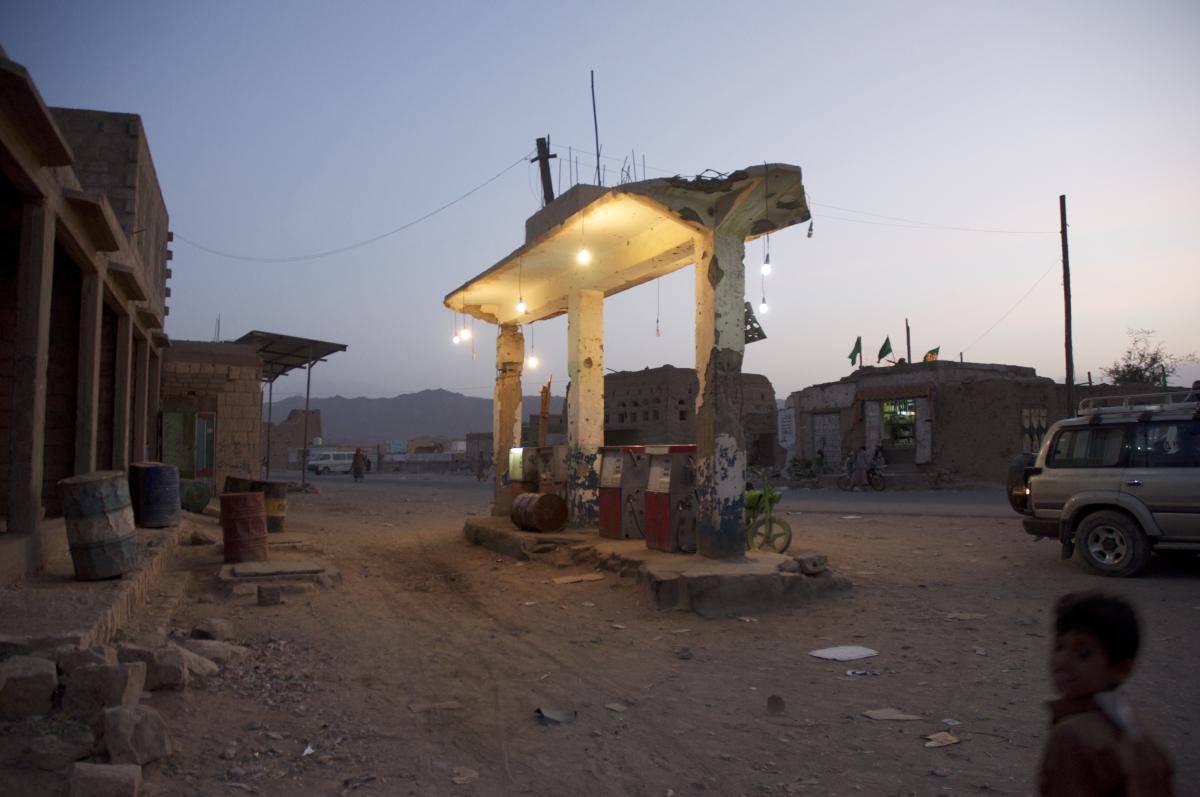




This report examines the common economic factors that continue to drive conflict in Iraq, Libya, Syria and Yemen. It also makes specific recommendations to Western policymakers addressing these types of sub-economies in detail.
Chatham House report
Published 25 June 2019
Updated 18 October 2023
ISBN: 978 1 78413 332 0
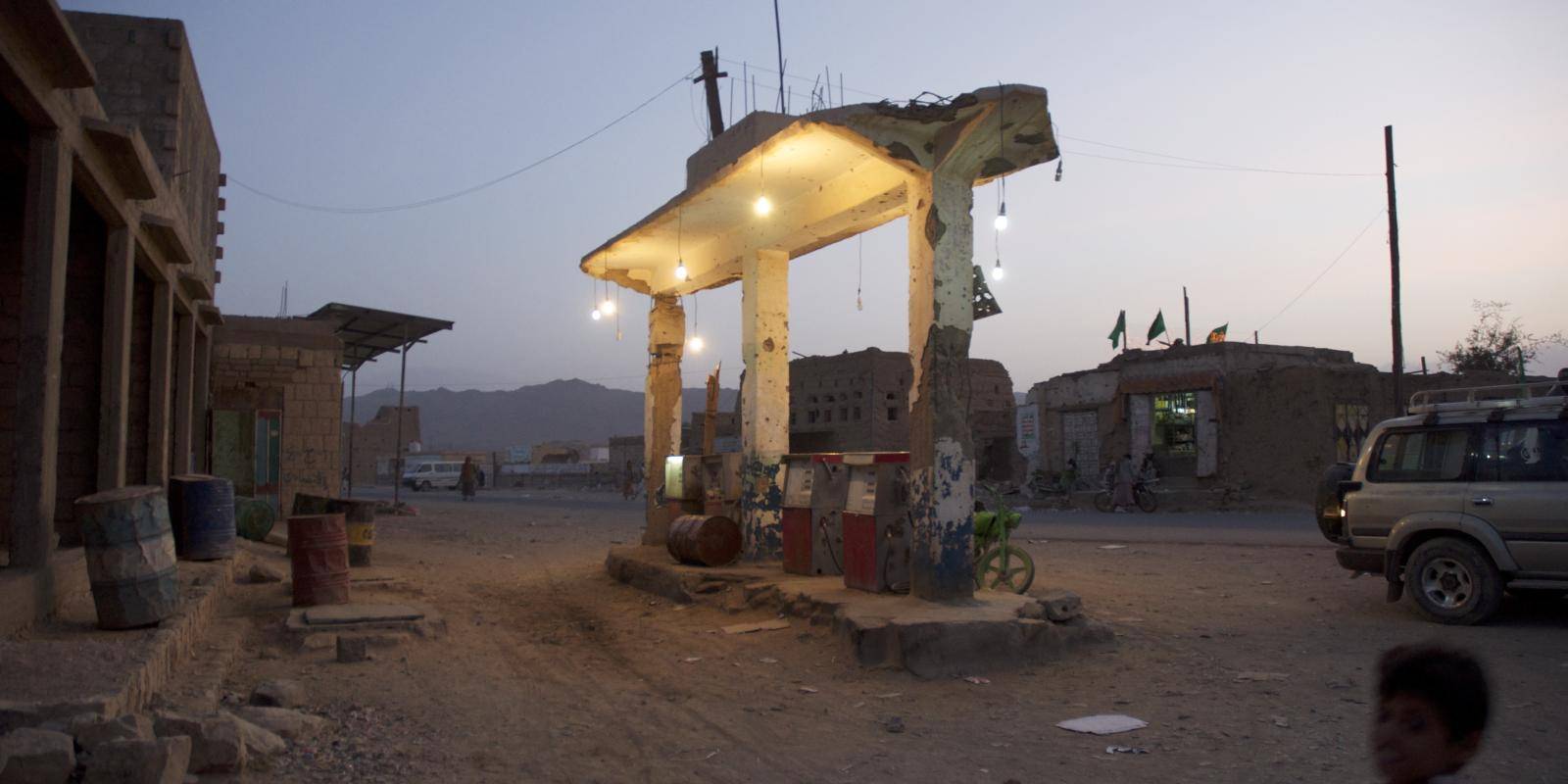
This report examines the common economic factors that continue to drive conflict in Iraq, Libya, Syria and Yemen. It also makes specific recommendations to Western policymakers addressing these types of sub-economies in detail.

The conflicts in Iraq, Libya, Syria and Yemen have killed hundreds of thousands of people and displaced millions. In seeking to explain the violence that has struck the Middle East and North Africa (MENA) over the past two decades, analysis to date has focused predominantly on ideological and identity-based factors.1 This report expands this discourse by incorporating approaches adopted from the literature on the political economy of war to examine the conflict economies of Iraq, Libya, Syria and Yemen.
Economic motivations, at the individual and group level, are key to understanding the wars in these countries, yet have tended to be overlooked in the MENA context. (As the wars have progressed and evolved, the national and local economies in which conflict is embedded have also changed.) Such motivations can offer an alternative or complementary explanation for armed group membership and armed group behaviour. While some groups will fight to promote or defend a particular identity, others fight for economic survival or enrichment. For many more actors, these motivations are tied together, and separating out ‘greed’ and ‘grievance’ is a difficult, if not impossible, task. Even if economic motivations did not spark the wars in Iraq, Libya, Syria and Yemen initially, it is clear that such factors now play a critical role in the persistence of open fighting, localized violence and coercion.
The objectives of this report are twofold. First, it seeks to develop a framework for comparative analysis of conflict economies at the local level in the MENA region. Traditionally, the idea of a conflict economy has been tightly linked to the funding for arms, ammunition and fighters. Further, most analyses of conflict economies are conducted at the national level. Even where research is conducted on a regional basis, discussion of the impact of conflict is brought back to the national level. In contrast, we see a broader political economy of war at work in the region. Our analysis illustrates how a conflict economy is embedded within a complex local socio-political system, in which many variables and agendas interact. We deliberately avoid characterizing conflict economies in terms of ‘black’ and ‘grey’ markets that somehow need to be ‘cleaned up’, as this erroneously implies that they can eventually be converted into licit markets like their peacetime counterparts.2 A more nuanced and multifaceted reading is essential. For the purposes of this report, we define a conflict economy as a system of producing, mobilizing and allocating resources to sustain competitive and embedded violence, both directly and indirectly.3
Second, we show that a ‘political economy of war’ framing offers new approaches for reducing competitive and embedded violence. ‘Competitive violence’ can be defined as violence ‘deployed by warring elites to contest or defend the existing distribution of power’.4 Fighting between rival armed groups for control over resources and rents, among other things, usually falls into this category. ‘Embedded violence’, in contrast, underpins ‘how a political settlement5 works, as the deals agreed between elites may revolve around who has the “right” to use violence’.6 In practice, this could mean that one group is ‘permitted’ to use violence against another group – and no punishment will be enforced. In the context of this study, the use of armed force to assert the status quo to limit the number of ruling elite members is one example of embedded violence.
Analysis of conflict economies has mostly focused on state-level dynamics.7 However, less attention has been paid to the development of conflict sub-economies that are specific to certain types of location. This study demonstrates three distinct types of conflict sub-economy: (1) capital cities; (2) transit areas and borderlands; and (3) oil-rich areas. Our analysis highlights how each sub-economy creates distinct location-based patterns of resource production, mobilization and allocation to sustain competitive and embedded violence. The rents available in these areas vary. In capital cities, rents focus on control of the distribution of revenues and assets from the state and private sector. In transit areas and borderlands, rents centre around taxation and arbitrage. In oil-rich areas, rents are related to control of the area itself (and therefore the ability to levy taxes upon the oil sector), bearing in mind that the level of achievable taxation depends on the extent to which a given actor controls the supply chain.
As this report will elaborate, factors specific to each sub-economy type play a role in conditioning the nature of economic activities in each locality, and in determining whether and by which means violence is dispensed. For this reason, national-level generalizations and in-country comparisons of conflict economies are inadequate: for example, the conflict sub-economy of Baghdad has more in common with that of Tripoli than that of al-Qaim, an Iraqi town on the border with Syria. In turn, the conflict economy observed in al-Qaim has more in common with that of al-Mahra in Yemen than al-Mahra does with Sanaa, the Yemeni capital.
In developing policy responses, policymakers must first accept that any aspiration to ‘do no harm’ is illusory. In conflict sub-economies, taking calculated risks with the aim of doing ‘less harm’ is the best option open to policymakers. In Syria, for example, the conundrum for donors is that humanitarian aid is instrumentalized by the regime of President Bashar al-Assad as a means of countering its economic failure, but is also critical to the coping ability of local populations. Donors must here accept that any intervention is likely to have unforeseen and/or negative consequences. These risks are best managed through developing a deep understanding of the operating environment in order to honestly assess whether there are opportunities to change conflict sub-economy dynamics (through partnerships, incentives or leverage). Such an approach also requires pragmatic acceptance of those elements of the conflict economy that policymakers cannot change.
In designing interventions, policymakers should develop incentives for peaceful cooperation rather than relying solely on enforcement mechanisms, which have demonstrated little success to date. Cracking down on illicit economic practices without offering viable alternative livelihood opportunities, for example, may have a displacement effect that can lead to something worse or simply encourage armed actors (or their associates) to take up alternative forms of profiteering.
Policymakers should develop incentives for peaceful cooperation rather than relying solely on enforcement mechanisms
When considering how to target specific illicit activities through enforcement mechanisms, policymakers should acknowledge that ‘legality’ is a relative, not fixed, concept in conflict economies.8 Legal measures therefore often lack potency as a policy intervention tool. In the four countries covered in this report, it is notable that the legality of a given practice may be decided by a single conflict actor – as in Syria, with the Assad regime. Rather than focusing on compliance with the law per se, it is more pragmatic to assess how political and economic gains and losses from conflict economy activities are distributed horizontally across groups and vertically within groups.
In choosing which illicit activities to target, policymakers should focus on those with shorter supply chains, where financial gains are not redistributed within or across groups, and where local coping economies are less likely to be affected. Financial and property crimes are good examples of this. In contrast, certain forms of smuggling – such as of subsidized goods and fuel – involve longer supply chains and wider networks of direct and indirect beneficiaries. For the greatest impact at the lowest cost to those in need, Western policymakers should therefore target bottlenecks where rent-seeking is most concentrated. In doing so, they must adopt clear, transparent, consistent and enforceable criteria in order to be taken seriously.
In identifying specific sub-economy typologies and their dynamics, this report concludes that it is possible to develop distinct policy approaches that target the particular rent structures of capital cities, transit areas and borderlands, and oil-rich areas. We offer insights for Western policymakers to guide them in this process.
Capital cities have symbolic as well as practical significance. In each of the countries, the relative strength of the state, the degree of centralization of powers in the capital, and the history of state consolidation of power differ. Yet in each case, powerful dynamics are associated with the seizure of the state’s institutional and legislative power in the capital, which in turn determines control of assets and the distribution of resources. Capital cities are also major financial centres that interface with the legal and economic institutions of the international system. Despite the political, economic and social fragmentation in Iraq, Libya, Syria and Yemen, in each state physical control of the capital remains the most prized asset.
The nature of the violence employed in each capital differs. In Iraq’s capital, Baghdad, the city’s resources are divided among a limited elite, sustaining a system of embedded violence. Libya’s capital, Tripoli, is similar, serving as the principal access point for revenues generated from the state’s oil wealth. However, in Tripoli, a sustainable division of power among rival forces representing elements from across the country remains elusive. As a result, the city has been subject to bouts of competitive violence that are likely to continue. In Syria and Yemen, the authorities in the respective capitals, Damascus and Sanaa, do not have the same largesse to distribute. Nonetheless, the role of the capital city in the conflict economy remains significant: in Syria, the regime has used the presence of financial institutions and the powers of the state in Damascus to build its economic capacity; in Yemen, the Houthis and their loose network of affiliates have seized institutions and channelled funds generated through taxation towards support of their war effort. In both cities, the actions of the dominant forces are underwritten by coercion. In Sanaa, before the war, the city’s role as a central clearing house for various forms of revenue reflected its economic importance. These financial inflows included receipts from oil and gas exports from the governorates of Mareb, Shabwa and Hadramawt; customs receipts from ports such as Aden and Hodeida; and revenue from manufacturing in Taiz. However, the Houthi takeover of Sanaa in 2014 precipitated a breakaway of these regions from the jurisdiction of the capital, and the subsequent loss of revenues for the central state.
Western policymakers should consider three key factors in addressing these developments:
To varying extents, the conflicts in Iraq, Libya, Syria and Yemen have created internal territorial divisions. These in-country lines of territorial control have in turn distorted markets and created distinct sub-economies across the fault lines that divide areas controlled by different armed groups. ‘Transit areas’9 have risen to prominence as sources of tax revenue (levied on the movement of goods) and arbitrage income (realized from cross-border differences in the prices and availability of goods). Outside of capital cities, trans-market taxation and arbitrage have turned transit areas into prized assets for armed groups and other conflict economy participants.
In most cases, the economic activity in transit areas falls outside the control of the state. In some cases, state actors cooperate with the armed groups to take a cut of the profits from these locations, rather than reporting such activity up through the command structure.
Similar informal arbitrage and taxation opportunities are also visible in international border areas – which this report terms ‘borderlands’ – with the difference that neighbouring state actors and their economic systems become engaged.
Transit areas and borderlands are major sites of competitive violence. Although the conflicts in the region have typically been depicted as ethno-sectarian or tribal in nature, they can alternatively be understood in economic terms, as actors competing for rents along formal or informal trading routes. The consequent revenue-generation opportunities often perpetuate the existence of territorial divisions, which further reinforce ethno-sectarian or tribal divisions, with harmful welfare implications for local populations.
Western policymakers should consider the following issues when designing interventions in transit areas and borderlands:
Iraq, Libya, Syria and Yemen each have regions where oil wealth is situated. However, control over the physical territory where oil infrastructure is located does not necessarily translate into taking over oil revenue streams. There are significant barriers to entry in the oil industry, with a complex supply chain that requires infrastructure, expertise and market access in order to effectively monetize geographical control. Selling crude oil internationally generally requires market access that is conditional on international legitimacy – though there are no such obstacles to selling refined fuels. The case of Islamic State of Iraq and Syria (ISIS), prior to its wide-scale loss of territory as a result of the international anti-ISIS military campaign, is instructive. Because ISIS controlled only part of the oil supply chain in Syria, it was forced to cooperate not only with the engineers responsible for operating oil rigs but also with other actors that had access (which ISIS lacked) to refining capacity and tanker fleets. This scenario provided opportunities for middlemen who were able to negotiate with armed actors on all sides. On the other hand, when actors control the entire supply chain, as in the Yemeni province of Mareb, they have much greater latitude to operate independently. In Libya, the international community has prevented sales of crude oil from unrecognized authorities in the east of the country. This has meant that their opponents in Tripoli have continued to receive the revenues from oil sales. Meanwhile, in Iraq, smuggling routes established to circumvent international sanctions under Saddam Hussein’s regime continue to operate. These routes provide a source of patronage for those in control of the oil infrastructure in the south of the country, even as the inequities of the centralized system of distribution remain entrenched.
Western policymakers should consider the following issues when designing interventions in oil-rich areas:
Through different forms of engagement and intervention – security, political and humanitarian – Western policies play a key role in shaping the dynamics in the conflict sub-economies of Iraq, Libya, Syria and Yemen. Such interventions present many pitfalls, but there are also opportunities to help reduce violence and insecurity – though a basic requirement is that local dynamics are taken into account appropriately. Intervention targeting specific conflict sub-economies can increase policy impact, but this requires that Western policymakers invest in developing their understanding of local networks and local economies. Without such an understanding, there is a substantial risk of unintended consequences causing unanticipated harms.