Utilitarian legitimacy: the bureaucracy and the de facto authorities
The weakening of the unitary state and the emergence of de facto authorities challenge the formal bureaucracy, which is no longer the only actor that can provide security or essential services. As a result, armed and other actors seeking legitimacy often focus on providing services as a way of gaining the right to speak on behalf of a local population. This ‘utilitarian legitimacy’ is a product of ‘capability’, discussed in further detail in the next chapter of this paper. While in other contexts legitimacy based on the provision of essential state services – electricity, water, etc. – would belong in the legal-rational category, in a hybrid/fragmented political order utilitarian legitimacy is a separate attribute in its own right.
Unlike legal-rational legitimacy, utilitarian legitimacy tends to be short-lived: actors often cannot provide services for long periods. When armed actors, for example, have gained popularity by providing services or protection, they typically are unable to sustain their position without tapping into other forms of legitimacy. This partly explains why most then seek to take over the formal bureaucracy as part of the transformation.
Iraq
In the 20th century the Iraqi state was hostage to rentierism, relying on oil and gas revenues to become the central provider of basic services and welfare to its citizens. Many Iraqis viewed the state in effect as a bank, which would pay a salary and provide services without levying taxes. During the Baathist years, the state was instrumental in all aspects of economic life, whether directly transacting with citizens or granting licences and permissions to private-sector providers. The majority of Iraqis expected not only their water and electricity, but also their income, to come from the state.
War and fragmentation have since led to an increase in attempts by the executive to build utilitarian legitimacy. Public-sector employment was estimated at 1.2 million in 2003. But by 2015 that figure had more than doubled, with 3 million Iraqis receiving a salary from the state. In this sense, more Iraqis were indeed using the state as a de facto bank.
After almost two decades with a government that cannot provide basic services, from water to electricity, many Iraqis have become willing to confer their support on any actor that can help provide such services in the short term.
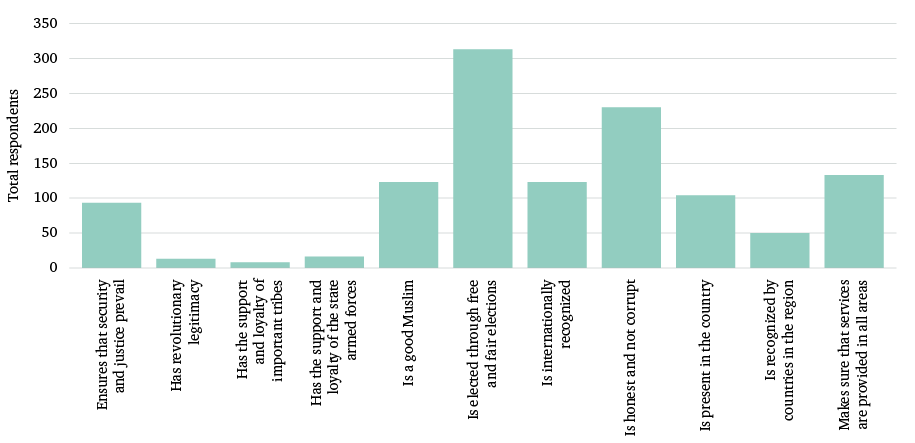
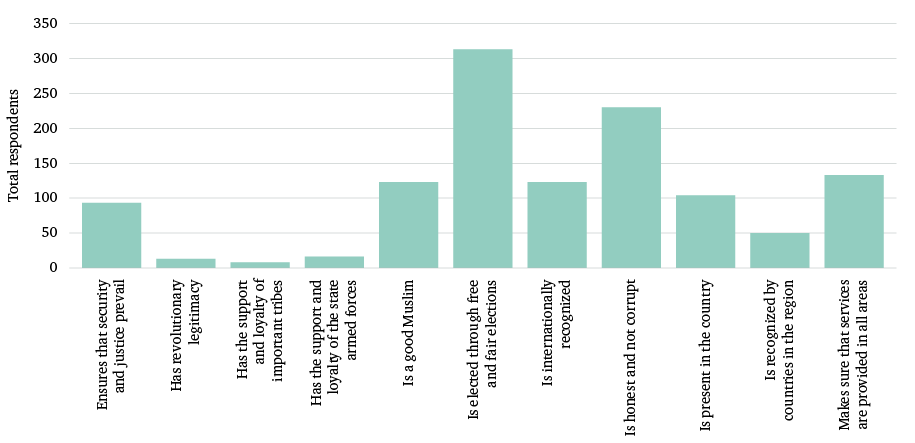
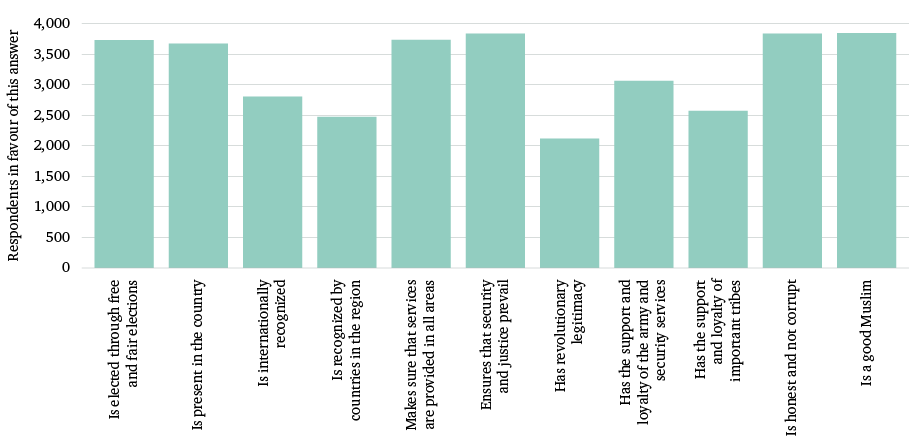
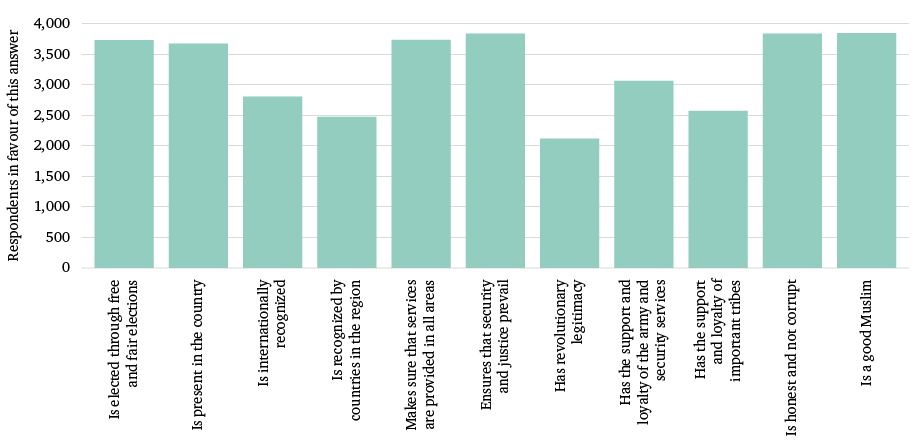
Despite the rise in public-sector employment, after 2003 the state was not the only provider of essential services. Many Iraqis searched and found alternative providers of basic services and income. Armed actors filled this gap without necessarily requiring permission or licensing from the state. They paid their members and their patronage networks, and provided services in the localities where the state had minimal reach. In doing so, these groups acquired utilitarian legitimacy. In a 2019 Chatham House survey, respondents across Iraq argued that providing services was the third most important quality for a legitimate leader. After almost two decades with a government that cannot provide basic services, from water to electricity, many Iraqis have become willing to confer their support on any actor that can help provide such services in the short term.
The swift rise of ISIS offers an extreme example of a similar legitimization process. In June 2014, when the Salafi-jihadi organization took over the city of Mosul, its first priority was restoring security and providing basic services (primarily water and electricity) as quickly as possible. To many local residents, this was initially welcome. One Sunni resident said, ‘ISIS with all its brutality is more honest and merciful than the Shia government in Baghdad and its militias.’ Another resident said, ‘There were no more car bombs, no clashes and no IEDs […] Mosul is at peace finally. They control the streets and people are awestruck. They allow people to leave Mosul, and schools are teaching government curriculums.’
However, this situation did not last long. ISIS’s brutal regime, coupled with its inability to maintain essential services, meant that popular support for/tolerance of its presence began to wane (as it did not gain the other forms of legitimacy). The story of ISIS therefore reveals the limits of utilitarian legitimacy. Lacking legitimacy from other sources, a group will struggle to maintain popularity strictly through the provision of services and security.
Yemen
Yemen’s central governments have a relatively short history of providing services beyond policing. In southern Yemen, electricity supply did not extend beyond the cities of Aden or Mukalla until the 1980s. In the 1970s and 1980s, local services in the north of the country were provided through autonomous local development councils, funded through remittances. These councils were later integrated into the state, in part because the government hoped to benefit from the resources they had at their disposal, and also to mitigate the threat of potential rivals to the state. Yemen therefore has only a 30-year history of ‘state services’ in the conventional sense of the term. Despite some improvements, by the 2000s Yemenis outside the capital were accustomed to providing their own electricity through generators, while water trucked in from private providers was in wide use in both urban and rural Yemen. The main social goods provided by the government were state salaries (for around 1.25 million people) and fuel subsidies.
Service provision and the failure to provide services have been exploited repeatedly by non-state actors as a means of garnering support for their own agendas and undermining the legitimacy of the formal state. In 2011 and 2012, Yemen’s local Al-Qaeda franchise experimented with service delivery, including provision of electricity and water, in the southern town of Zinjibar. When the Houthis entered Sanaa in 2014, they did so under the pretext of wanting to overturn a corrupt government and ensure a more equitable division of the country’s resources – an adaptation of protesters’ demands for reform during Yemen’s ‘Arab Spring’ in 2011. When the Houthis seized Sanaa, electricity supply briefly improved and fuel prices were cut, giving them a temporary popularity boost. When the current war began, Al-Qaeda affiliates seized control of another southern city, Mukalla, where they focused on service delivery and humanitarian work and set up their own courts system. Al-Qaeda was pushed out of Mukalla in April 2016, however.
Elsewhere, the governor of Mareb has become popular thanks to his management of revenues from local oil and gas production facilities, which he has used to provide electricity, improve healthcare and education, and pay for infrastructure upgrades. The internationally recognized government has struggled to make a similar impact in Aden, the main city ostensibly under its control. In August 2019, secessionists with strong ties with the United Arab Emirates (UAE) seized government military bases and institutions in and around Aden, alleging government corruption and infiltration by ‘terrorist’ elements. They later pushed into neighbouring Abyan and Shabwa governorates.
The Houthis, meanwhile, have been widely criticized by those under their control, a uniform complaint being that the state no longer provides any discernible services beyond security. Electricity supply is absent, hospitals are funded and staffed by international NGOs, state wages go unpaid, and fuel prices are at near-record highs amid shortages of supply. In the words of one Sanaa resident: ‘If they paid just some wages and provided some services, and if they were seen to do so, they would be much more popular. But they provide nothing, they tax heavily, and they have made a police state. All the taxes are used for war and to oppress people.’ Yet residents in Houthi-controlled areas also note the relative security of the canton, and disorder elsewhere, and have not mounted major protests against Houthi rule. Both the Hadi government and the Houthis blame each other for the lack of services nationwide, while the southern secessionist STC has blamed what it terms Hadi’s ‘corruption government’ for these problems while presenting itself as a viable governance alternative before and since its August 2019 takeover of Aden.
International legitimacy
In international relations, de jure recognition has been the defining feature of statehood, and much more relevant than the de facto capacities outlined by the Montevideo Convention, which decrees that the state should possess ‘(a) a permanent population; (b) a defined territory; (c) government; and (d) capacity to enter into relations with the other states’. In certain cases, international actors recognize state leaders who may not enjoy the other forms of legitimacy, and these state leaders then rely on their external alliances to maintain some claim to speak on behalf of their constituents. In Iraq and Yemen, international recognition thus becomes another way of gaining a right to represent a population and to become the executive. Leaders can gain additional legitimacy among their domestic constituents by claiming to have the support of influential regional or international players. At times, actors that lack de facto power can still maintain de jure legitimacy due to their alliances and close relations with external patrons or allies. As such, an overreliance on international legitimacy widens the gap between de jure and de facto authorities, as the former become less reliant on legal-rational or utilitarian legitimacy, creating the space for the latter to fill.
In other cases, however, actors that lack de jure recognition can still gain legitimacy via international alliances. For instance, the Kurdistan Regional Government (KRG) in Iraq is a sub-state actor rather than a de jure state actor. However, the KRG’s leadership engages in diplomatic relations and uses its foreign relations portfolio domestically in a bid to acquire and maintain greater legitimacy among its local constituents.
But when an actor is deemed illegitimate by powerful states because of the threat it poses (or is seen to pose), it can face military action, hastening its demise or leaving it in an embattled position. This was the case for the Saddam Hussein regime in Iraq. It has also proven true for Al-Qaeda, ISIS and the Houthis during their respective periods of territorial control.
International support has become an important feature of the legitimization process for incumbent executives. Once provided, this legitimation can help sustain the rule of otherwise weak leaders and can be used to attack rivals. Yet, when combined with support in the form of military and financial resources, it may also create an artificial balance of power that becomes a barrier to state–society relations and bargaining between elite groups, both also important parts of legitimization. More critically, an actor cannot survive on international recognition alone. Like utilitarian legitimacy, international legitimacy tends to be short-lived unless complemented by other forms of legitimacy. Protest movements in Iraq have revealed the extent to which local populations can direct their grievances at the elite and complain about interference from foreign actors, whether the US, Iran or others. In such cases, international recognition can in fact do the opposite: make the leader(s) seem illegitimate.
Iraq
Iraqi politics after 2003 became intertwined with regional and international politics, as the weakening of the state made it more susceptible to external influences. For the first year after the US-led invasion, the American Coalition Provisional Authority (CPA), led by Paul Bremer, became the sovereign of Iraq. During this period, all political actors in Baghdad required strong relations with the foreign sovereign if they were to be deemed legitimate. Conversely, many actors whom the CPA did not recognize, such as Shia cleric Muqtada al-Sadr, stood minimal chance of participating in the political process. Although sovereign power was handed back to Iraqis in 2004, international actors continued to support (and work against) domestic political actors. As such, in the early years of the war Iraqi politicians often felt that they needed the support of Washington in order to succeed in political life.
Over the years, international actors would also act as kingmakers in government formation in Iraq. In 2005, 2010, 2014 and 2018, countries such as the US, Iran, Turkey and the Gulf states played pivotal roles in supporting the ascent of certain leaders. While the US had more of a say in the early years after the invasion, in recent times Iran has become the primary kingmaker in Iraqi politics. As an aide to former prime minister Haider al-Abadi told one of this paper’s co-authors: ‘One of our mistakes was getting so close to the Americans, when Iran was really calling the shots for the next government.’ After the 2018 election, Abadi was unable to remain as prime minister. Partly, this was because his party had not won the election; however, more critically, it also reflected a veto from Tehran. This loss of Iranian support further undermined Abadi’s domestic legitimacy. As a senior political leader confirmed, ‘To be successful in politics in Iraq, you must be friendly with Iran.’
For all Iraqi political parties, therefore, a strong international relations portfolio became an important tool for maintaining domestic legitimacy. Some parties focused excessively on foreign relations. For instance, the Kurdistan Democratic Party (KDP) used the strength of its relations with the US and Turkey to increase its capabilities and demonstrate to its constituents that the party was now on the world stage. This form of international recognition gave Masoud Barzani, the leader of the KDP, considerable legitimacy in the eyes of his people and encouraged the party to focus its communications efforts on publicizing his relations with world leaders.
However, international legitimacy has distinct limitations. Like utilitarian legitimacy, it reflects the weakening of state institutions. It can also reflect the increased influence of foreign actors within a country. Actors that rely solely on international legitimacy will not be able to maintain their standing for very long. For instance, in the Kurdistan Region of Iraq, between 2014 and the present, the failures of the KDP’s utilitarian and legal-rational legitimacy affected its international legitimacy. As several protesters told one of the co-authors: ‘The Barzanis care more about appeasing foreigners than providing their people with basic services and salaries.’ At some point, then, the KDP had to shift its focus back to utilitarian and legal-rational legitimacy.
Yemen
International recognition and support have also played an outsized role in the process of legitimizing successive Yemeni leaders. From the early 2000s onwards, external support for the presidency, from the US in particular, strengthened Saleh’s hand against potential rivals during a period when intra-elite competition was becoming visible in Sanaa, and when regional challengers such as the Houthis and southern secessionists were also emerging. Saleh sought to limit Western officials’ contact with any group that might criticize the regime or undermine his own characterization of the country as a complex, tribal place that only he could manage. In particular, his role as a counterterrorism partner allowed him to sustain his position, with Western diplomats aware of the weakness of his government but worried that without him the power vacuum would embolden Al-Qaeda in the Arabian Peninsula (AQAP). When it became clear in 2011, however, that civil war was likely if he was left in power, the Western position shifted. Saleh’s vice-president, Abd Rabbu Mansour Hadi, who was seen as pliant by both the international community and local elites, was installed in his place. Hadi would receive almost limitless support during the subsequent transitional period.
Following the September 2014 Houthi–Saleh takeover of Sanaa, Hadi retained his post, but his power and arguably his legal-rational legitimacy became increasingly nominal. Yet Western governments did not describe what was increasingly clearly a coup as such, as doing so would have forced an end to counterterrorism cooperation and would likely have caused the collapse of the Yemeni political transition. For some Yemenis, this appeared to translate into international acceptance of the Houthis. In January 2015, after being placed under house arrest in Sanaa, Hadi announced that he had resigned from the presidency.
He later fled to Aden and rescinded his resignation, calling for the Gulf states to come to his aid in the Yemen war, invoking Chapter 7 of the UN charter (which deals with the legitimate use of force) and, in effect, authorizing Gulf intervention. In April 2015, the UN Security Council passed a new resolution that described Hadi as Yemen’s ‘legitimate president’, underlining international support for him. But diplomats have come to describe the resolution as a ‘millstone’. The same Security Council resolution calls for the Houthis to effectively surrender and hand control of the state back to the Hadi government. This has made negotiations under the auspices of the UN highly problematic, as the Hadi government regularly invokes the resolution as a fait accompli despite its weak position on the ground. The August 2019 STC takeover of Aden has made this stance even more problematic, with the international community bound to the legitimacy of a leader who has lost control of both the de jure and transitional capital cities of his country.