The context of devolution
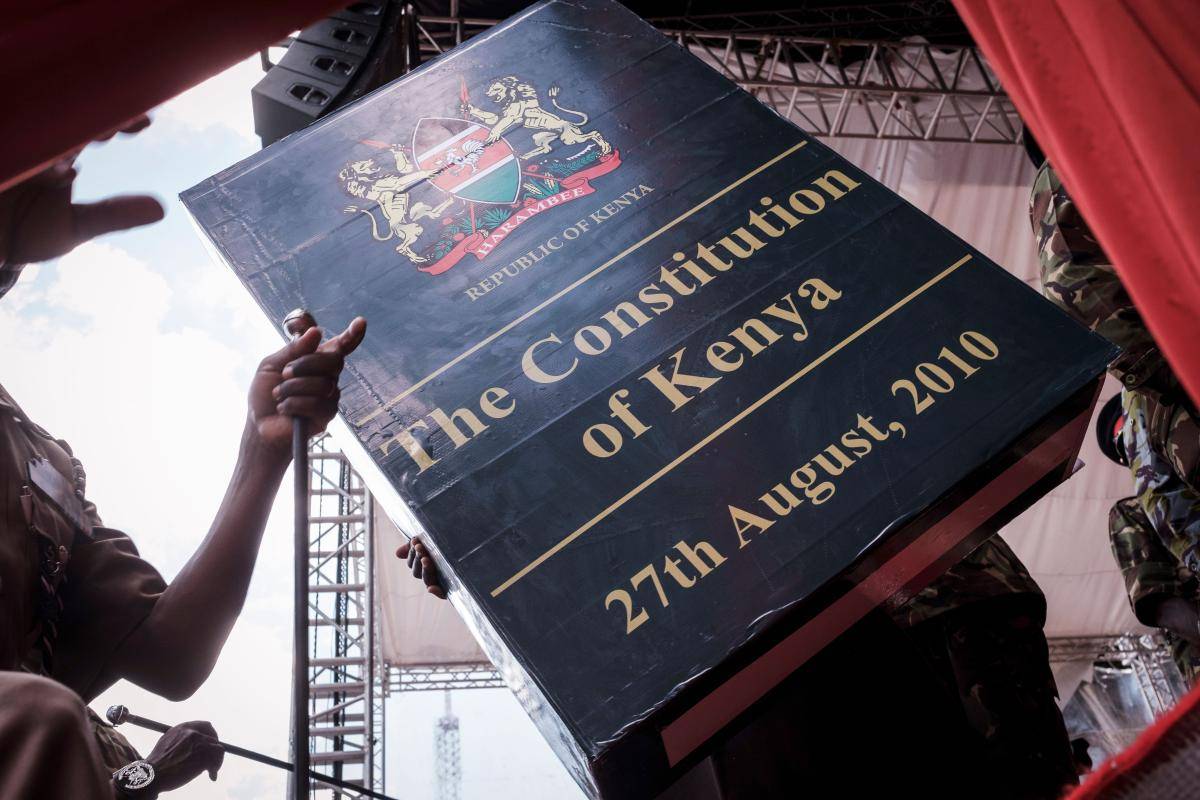
In addition to addressing gender inequality, Kenya’s 2010 constitution also mandated a radical ‘big bang’ devolution of government, with financial and administrative autonomy transferred simultaneously to county governments. The reform, eventually enacted in 2013, marked a response to a collapse of public faith in the previously extremely centralized system of government, which had inhibited the active participation of citizens (especially at grassroots level), had enabled resource mismanagement, and had excluded many communities from decision-making. There had also been persistent perceptions – and actual evidence – of vast inequalities between regions, leading to the marginalization and under-development of some regions.
Some of the objectives of devolution outlined in the constitution include promoting the democratic and accountable exercise of power; enhancing popular participation in the exercise of the powers of the state and in decision-making that affects citizens; protecting and promoting the interests and rights of minorities and marginalized communities; promoting social and economic development; and providing easily accessible services throughout Kenya.
Devolution was intended to bring services closer to the people and create a platform from which women, marginalized communities and minorities could participate more effectively in decisions that affected their economic and political well-being. Under the post-2013 system, county governments were given a constitutional mandate to raise revenue, and to develop and implement budgets, plans and policies for delivering effective services that improve the welfare of Kenyans. Their record to date has been mixed.
Incoherent policy formulation
There remains significant tension between national and local responsibilities. The central government is constitutionally mandated to formulate national policy for implementation by both levels of government. The Ministry of Public Service, Youth and Gender Affairs is tasked with developing national policy on gender mainstreaming, but it is yet to develop a policy or regulations that can be adopted at both national and local level. As noted, NGEC guidelines on gender-responsive budgeting are not widely known and cannot be implemented, while the Treasury, which formulates national economic policy and planning, is yet to develop guidelines or a policy establishing how both national and county levels of government should mainstream gender equality into budgeting and planning. There is therefore no coherent national approach to entrenching gender equality in Kenya, and no clear policy lead. This has resulted in an absence of accountability. Indeed, it is often difficult to tell what outcomes specific initiatives achieve, as there is a lack of reporting on their performance.
Partly as a result, most county governments lack formal strategies for gender mainstreaming, and often group women, people with disabilities, young people, the elderly and children together under the rubric of ‘special interest groups’, failing to consider the different dynamics and needs of each constituency. Women’s empowerment programmes offered by county governments are frequently piecemeal, short-term in scope, and lean towards traditionally construed roles. For example, some programmes seek to increase the number of local town markets (sokoni). They allocate spaces to women by encouraging the organization of women into self-help groups (chama) for collective projects. While this has had some positive effects in some counties, it does not address fundamental issues of inequality and historical injustice. What is more, such projects and programmes often account for less than 1 per cent of budgets, are politically motivated, are unaligned with county governments’ wider economic agendas, and are thus unsustainable in the long run.
County governments have also largely failed to engage the public in deciding what to spend money on. County governments are required to publish simplified, ‘popular’ versions of their proposed budgets in order to encourage citizen participation. None has yet done so. Each is also legally mandated to set up a County Budget and Economic Forum (CBEF) to engage members of the public and collect views on local budget issues. Several county governments have delayed establishing and operationalizing these forums, however, or have used membership as a reward for political allies. Documents are rarely provided in advance, which leaves the public with very little time to submit proposals or recommendations. The public is often only consulted at the end of the budgeting process, when little can be done to change proposals.
This marginalization is more acute for women. Women rarely attend budget forums, as it is presumed that men are able to understand the issues better. County governments are yet to take steps to increase participation by women or to sensitize the public to the importance of broader participation by both men and women. Instead, county governments often encourage women to participate in programme-specific forums, such as those relating to funding for women/youth or women’s empowerment. Officials often lack the technical capacity to understand the different impacts of budgets on women and men respectively, and thus continue to perceive budgets as gender-neutral.