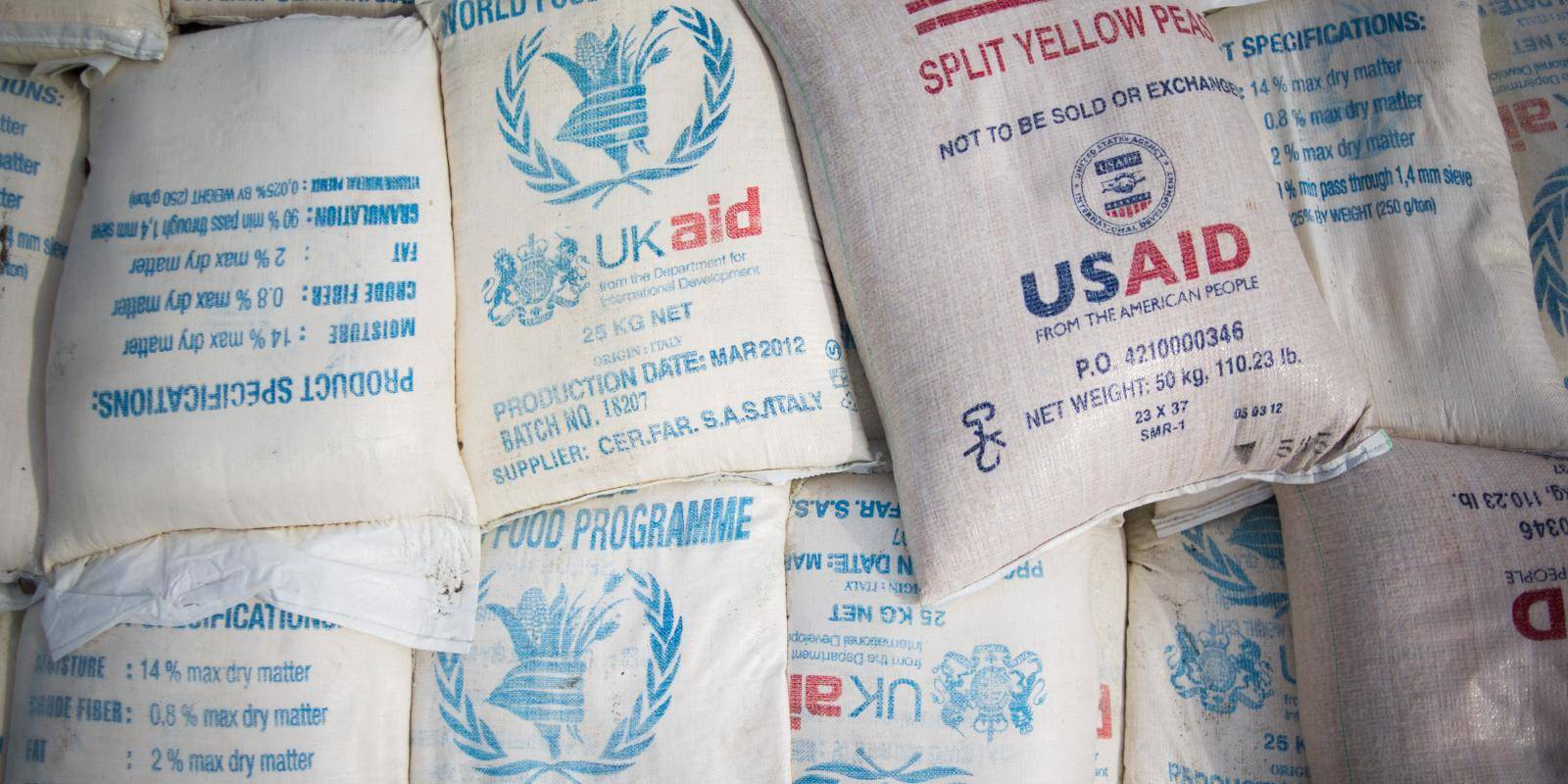
Global aid cuts reinforce perceptions that Western democracies are becoming less reliable partners. China and others are seeking to exploit this narrative. The UK will need to build more strategic and mutually beneficial relationships with developing countries to sustain its influence and counterbalance these trends.
Development assistance has always been geopolitical. Throughout the Cold War, aid was frequently linked to security alliances, economic interests and spheres of influence. While the post-Cold War period appeared to mark a shift towards greater multilateral coordination around the Millennium Development Goals (MDGs) and then the SDGs, aid continued to be tied to strategic objectives, such as migration control, counterterrorism, market access and donors’ broader security interests. In other words, given a history of geopolitically charged and securitized aid flows, the current ODA cuts indicate the West’s withdrawal from one of the principal instruments it has used to project influence and build relationships with developing countries.
However, while that shift is significant in itself, there are broader consequences for the UK in terms of how the cuts intersect with emerging-power agendas, weakened multilateralism and a less reliable US. New or emerging actors are becoming more dominant and influential when it comes to aid and related activities aimed at Global South countries. These actors include China, Russia, the Gulf states and Turkey. At the same time, increased challenges to multilateral coordination raise questions about how the UK and other allies can continue to manage aid relationships effectively.
The rise of emerging powers in global aid
Over the past two decades, emerging powers such as Brazil, China, the Gulf states, India, Mexico, Russia and Turkey have deepened their engagement with developing countries, reflecting an increasingly multipolar global order. Both as a response to the collective call for action represented by the MDGs and SDGs and to advance their own interests and influence (like Western donors), these actors have invested in development programmes, humanitarian response and conflict mediation. But their approaches to development are heterogeneous, can differ significantly from the OECD DAC-defined ODA model, and sometimes challenge its accepted tenets. For instance, alongside grant-based aid, these actors make extensive use of loans, guarantees, infrastructure investment, credits and other financial instruments. Their definitions of (and budgets for) overseas ‘assistance’ can also include security-focused activities and military support, particularly where Russia or China is involved as a donor.
In some cases, non-traditional aid models offer more flexible or politically palatable engagement for partner countries. The growing role of such assistance has therefore prompted debate about whether these actors could ultimately replace donors such as the US, the UK and other European states in response to the recent global ODA cuts.
But because these models often use different instruments and serve diverse objectives, they are unlikely to substitute for Western programmes. The new models are not set up to fund large-scale health, humanitarian or climate initiatives in the way that ODA traditionally has. Instead, their models reflect a logic more explicitly oriented towards mutual benefit and state-to-state negotiation than is the case with traditional donor–recipient relations.
However, even if emerging actors do not ‘fill the gaps’ left by Western retrenchment, the ODA cuts will have geopolitical consequences. Aid reductions create openings for other states to expand their influence, promote development models that reflect their own priorities and programme styles, and shift the balance of power within multilateral institutions. To be clear, Western donors have frequently adopted this strategy in their own use of ODA in certain contexts. This includes securitized ‘hearts and minds’ interventions in Afghanistan, and the tying of aid to migration control and border enforcement across Europe’s peripheries. The growing foreign aid role of emerging powers also affects how responses to global challenges are governed, including on digital standards, climate negotiations, developing-country debt and global trade, where interests sometimes converge with but often diverge from those of the UK.
China
China’s growing role in international development in recent decades has raised concerns in some foreign ministries – particularly in Western governments – that the ODA cuts create opportunities for the country to expand its influence across the Global South at the expense of OECD DAC donors. This reflects a long-standing anxiety in Western policy discourse that China’s development model, which often prioritizes large-scale infrastructure projects, is primarily directed towards strategic, rather than developmental, objectives.
The Belt and Road Initiative has altered perceptions of China as a systemic development actor and led Western donors to view development more explicitly as an arena for strategic competition with China.
Critics suggest that China’s Belt and Road Initiative (BRI), launched in 2013, has created a network of dependency-based relationships through ‘debt-trap diplomacy’ and control of supply chains for low-carbon technologies and processed rare earths. Evidence for this claim is mixed, however: while the BRI mobilized large volumes of capital at its peak, its scale has diminished substantially in recent years; today, China’s engagement is increasingly framed around the more multilaterally oriented Global Development Initiative, which China launched in 2021. Regardless of true on-the-ground conditions, however, the BRI has altered perceptions of China as a systemic development actor and led Western donors to view development more explicitly as an arena for strategic competition with China.
For example, G7 states have increasingly framed some development initiatives as a counter to China. The EU’s Global Gateway Initiative was launched in 2021 to mobilize investment in digital connectivity, energy and transport, while the G7’s Partnership for Global Infrastructure and Investment (2023) pledged to mobilize ‘up to USD 600 billion by 2027’ for strategic projects across the Global South. But these efforts have faced persistent challenges, including low levels of capital mobilization and coordination problems due to fractures within the G7 alliance, which have further contributed to perceptions that Western donors are unreliable.
Against this backdrop, concerns have grown in some countries that the recent ODA cuts provide China with the opportunity to step into positions of leadership left by OECD DAC donors. But while China has responded in some areas – for example, it has provided $4 million in partnership with South Korea to the Africa Centres for Disease Control and Prevention (see also Chapter 3) and briefly provided $4.4 million to fund demining in Cambodia after the US temporarily paused operations – these sums are only a fraction of what the US provided and are largely symbolic. In other words, there is no indication that China is seeking to comprehensively fill the funding gaps left by Western donors or replicate their programmes at scale.
There is no indication that China is seeking to comprehensively fill the funding gaps left by Western donors or replicate their programmes at scale.
There are several reasons for this. First, China’s development budgets are planned years in advance, and its bureaucracy is not designed to adjust rapidly, for example in response to OECD DAC members’ ODA spending cuts. Second, political constraints within China preclude it from mobilizing significant amounts of capital for overseas development. Given enduring poverty within China, citizens oppose spending on such development rather than on domestic priorities. Third, and most importantly, China’s model of engaging the Global South – including on development – is different to the approach of DAC states. Rather than primarily providing concessional grants, China’s engagement model prioritizes concessional and non-concessional loans, infrastructure projects and state-backed investment, often tied to Chinese contractors. These forms of support do not neatly map onto the areas most affected by the ODA cuts, such as global health, conflict response or some types of climate action. Likewise, China prefers to engage directly with states rather than NGOs or some multilateral agencies, meaning it bypasses many of the actors facing the most severe shortages of funding.
As a result, the geopolitical implications for the UK are not that China will replace DAC programmes on a like-for-like basis. Instead, the risk is that the cuts leave significant financing gaps in critical areas like health, while creating opportunities for China to shape the narrative in ways that are politically beneficial to China. For instance, China has sought to amplify and leverage sentiment, across the Global South, that regards the existing international order as unjust and as predominantly benefiting Western states. This narrative gathered force and legitimacy during the COVID-19 pandemic, during which the inequitable distribution of vaccines and their stockpiling among Western states underscored grievances with the prevailing international system. China has sought to present itself as a ‘voice’ of the Global South and as a more reliable partner than Western democracies. China highlights its engagement with developing countries as South–South cooperation, avoids framing relationships in the language of ‘aid’, and portrays itself as an equal partner rather than a donor. For many developing countries, this framing, coupled with limited political conditionality on China’s part, can be more attractive than traditional ODA models.
Yet, while this approach does resonate politically, it can also mask new forms of dependency and geopolitical manoeuvring, for instance through debt or geopolitical alignment under the ‘One China’ policy, which asserts that Taiwan is under the sovereignty of the People’s Republic of China. For example, Anke Hoeffler and Olivier Sterck find that African countries that formally recognize Taiwan receive significantly less aid from China than those that refuse to recognize Taiwan, and that recognition/non-recognition of Taiwan is the strongest factor shaping China’s decision-making on aid. In other words, China’s aid is closely tied to its geopolitical strategy and objectives.
To be sure, China’s strategy faces constraints – not least from arguments that China’s export-led economic model is antithetical to the interests of other Global South actors due to its impact on the competitiveness of their markets, and that the BRI proliferated unsustainable debt relationships. More importantly, many developing states are pursuing a steadfast strategy of non- or multi-alignment, which is relatively unaffected either by ODA flows or by China’s rhetoric. As a result, rather than obtain hegemonic influence, China is one voice, albeit an increasingly powerful one, claiming to champion Global South interests.
Nevertheless, from the perspective of the West, Beijing’s promotion of the idea that Western democracies are unreliable and hypocritical development partners confers geopolitical benefits on China. This comes at a time when China is already the most important trading partner for around 30 African countries, and when the multilateral initiatives it is establishing to bypass and counter Western influence are framed as empowering developing countries.
Therefore, the effects of Western retrenchment could play into China’s broader geopolitical strategy, even if China does not significantly increase its own development spending or seek to fill funding gaps. This means the UK will face greater difficulty positioning itself as a dependable partner, defending multilateral institutions in which it has traditionally exercised influence, and shaping global governance.
Russia
Russia makes very limited investments in development. While official statistics are not published, the World Bank estimates that between 2004 and 2017 Russia’s ODA contributions rose from around $100 million to $1.2 billion. This is not insignificant but is modest compared with the amounts of funding from Western donors. More importantly, Russia prefers to engage developing countries through bilateral security assistance, energy partnerships and regime-to-regime linkages. This often includes arms sales coupled with security forces training, food and fuel subsidies, or debt relief.
While these measures can strengthen regime security in recipient states, they rarely confer welfare benefits to society and can be detrimental to development objectives. Nevertheless, in parts of Africa, the Middle East and Central Asia, this model has allowed Russia to sustain influence at relatively low financial cost.
Our interviewees for this paper highlighted that – as with China – while the drop in global ODA does not pose a geopolitical risk to the West in terms of empowering Russia’s limited developmental activities, the cuts do create opportunities for Moscow to expand its geopolitical influence and exploit anti-Western sentiment. By presenting itself as a partner that imposes few political conditions on aid recipients, Russia appeals to governments wary of Western support tied to improvements in governance or human rights. In some cases, Russia’s engagement strengthens authoritarian regimes and opposition to democratic norms, in direct competition with the UK’s stated interests in promoting a rules-based international order. Like China, Russia has sought to capitalize on criticism of the unreliability and double standards of Western democracies, and the country has stepped into contexts where Western influence has waned, such as the Sahel and the Balkans. While Russia does not necessarily command sustained influence over developing countries, their non-alignment or multi-alignment has benefited Russia in key UN votes, including on Ukraine.
The Gulf, Turkey and other emerging powers
Alongside China, a wider set of emerging powers such as India, Turkey and the Gulf states – notably Kuwait, Qatar, Saudi Arabia and the United Arab Emirates (UAE) – have become more active in international development over the past two decades. Turkey’s aid agency, TIKA, has expanded rapidly since the early 2000s, while the Gulf states have played an increasingly important role in humanitarian assistance and concessional lending. As with other donors, the assistance of these emerging powers is often tied to strategic objectives, such as consolidating influence in the Horn of Africa, Yemen and Sudan, albeit with varying degrees
of success.
Closer cooperation between the UK and emerging powers will likely reinforce the existing trend of sidelining human rights and democratization agendas in development engagement.
Similarly to China, these actors are not positioned to replace Western ODA in areas like global health: spending is often concentrated geographically and delivered through a mix of formal and informal channels. Nevertheless, in the context of these actors’ growing role, the global ODA cuts create geopolitical opportunities and risks for the UK. DAC donors, including the UK, have already increased cooperation with Gulf donors, particularly on pooled humanitarian funding. Given fiscal constraints across Europe, including in the UK, interviewees highlighted that this cooperation is likely to deepen and gain impetus, with these partners playing a more significant role in setting development agendas. This has the potential to bring benefits in terms of resources, shared expertise and geographic reach, but it may also create tensions in areas where interests diverge. For example, the Gulf states remain heavily invested in fossil fuels even while promoting green energy initiatives, and their engagement in conflict can frustrate Western diplomatic objectives, such as in Sudan. Moreover, closer cooperation between the UK and emerging powers will likely reinforce the existing trend of sidelining human rights and democratization agendas in development engagement. For the UK, cooperation with emerging donors such as the Gulf states can create opportunities to broaden its approach to development partnerships, but this will create challenges to its geopolitical interests in governance, conflict prevention/response and climate action.
Multilateralism and coordination with allies
In addition to financing development programmes, ODA has long underpinned multilateralism itself as a means of ordering geopolitical affairs. For example, in 2019 some $75.6 billion in ODA – almost half the total – flowed to or through multilateral organizations. A significant fraction of these flows consists of core funding, which not only supports action on underfunded crises but also pays operational costs to enable the ongoing existence of the institutions and agencies themselves. As such, alongside creating openings for emerging powers, the ODA cuts weaken the multilateral architecture that has historically provided the UK with privileged influence, convening power and a role in global agenda-setting.
ODA cuts weaken the multilateral architecture that has historically provided the UK with privileged influence, convening power and a role in global agenda-setting.
To be clear, the recent round of ODA cuts is not the primary cause of a weakened multilateral system – this is better attributed to the systemic rivalry between the US and China, and Russia’s escalation of violence. But the ODA cuts compound existing pressures in several ways. First, they directly reduce the resources available to key multilateral agencies, undermining their ability to respond to global challenges. Second, the cuts exacerbate budgeting uncertainty and complicate multi-year planning; this poses challenges in areas where predictability is important, such as global health security and conflict response. Third, reduced ODA undermines the capacity of multilateral institutions to play a part in shaping norms, which have often reflected Western preferences. For the UK, this diminishes the government’s ability to project influence through the multilateral system.
In the US, the ODA cuts also coincide with ‘an explicitly anti-multilateralist policy rooted in national sovereignty, geopolitical calculation, and transactional economics’, which accompanies the country’s broader ‘America First’ programme. Interviewees emphasized that this both reinforces the perception that Western democracies are unreliable and undermines a more coordinated approach among G7 states. For example, interviewees highlighted that, for many small island states in the Pacific, the US’s ODA cuts and aggressive use of tariffs have created confusion about US policy goals and exacerbated the perception that democracies are increasingly inconsistent.
For the UK, this creates further difficulties in coordinating with allies on development issues. While G7 countries have not adopted a common position on development and themselves pursue divergent agendas, the US’s shift to a more nationalist and bilateral model undermines efforts to organize one. This contributes to a more fragmented, competitive and transactional environment that does not play to the UK’s strengths and risks diminishing the UK’s global influence. In this context, the UK and other middle powers should focus less on replicating the scale of US or Chinese aid financing and instead work towards building coalitions and coordination mechanisms to promote coherence, transparency and predictability in development. The next chapter considers this challenge in more detail.