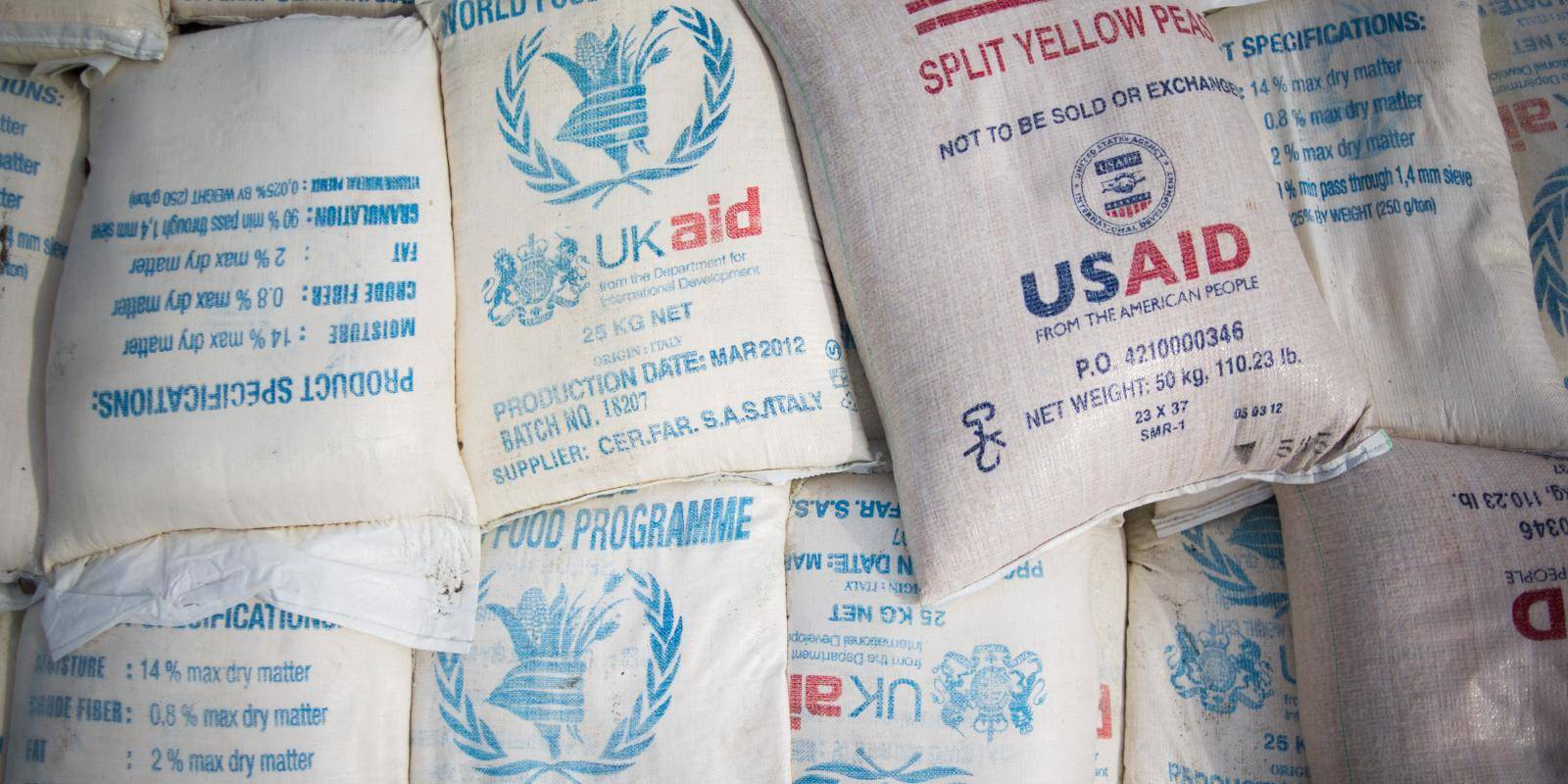
Reductions in aid to fragile and conflict-affected states risk entrenching instability and generating wider spillover effects. The cuts also threaten the provision of global public goods, in areas such as health and climate security, with tangible consequences for the UK.
The substantial cuts to global aid spending, combined with weakening multilateralism and growing geopolitical competition, carry significant implications for global and UK security. In this chapter, we review two dimensions of this – first, the risk that aid cuts could worsen fragility and conflict in countries already facing extreme poverty, displacement and violence. Such crises generate instability, migration pressures and transnational threats that could spill over into wider security concerns for the UK in the medium and long term. Second, reductions in ODA undermine the provision of global public goods – including disease surveillance, vaccination and action on climate change.
Conflict and instability
A significant proportion of ODA funding has long focused on preventing conflicts and stabilizing fragile and conflict-affected countries. Extreme poverty is increasingly concentrated in these countries – while GDP per capita has grown steadily in other developing economies over the last 25 years, conflict-affected states have remained in extreme poverty. By 2030, they will account for 60 per cent of the world’s extreme poor – not least because conflict and poverty are linked and exacerbate each other. Between 2010 and 2022, the amount of ODA going to the world’s most conflict-affected countries doubled, from $41 billion to $83 billion.
The current cuts and other trends in aid jeopardize support for conflict-affected countries, and risk exacerbating the concentration of deep poverty and intertwined crises in fragile states around the world.
The current cuts and other trends in aid jeopardize support for these countries, and risk exacerbating the concentration of deep poverty and intertwined crises in fragile states around the world. Early analyses suggest many of the countries likely to be hit hardest by the combination of aid cuts and US tariffs are conflict-affected or fragile, particularly Afghanistan, Somalia, South Sudan, Sudan and Ukraine. In addition, development institutions increasingly rely on mobilizing private investment to offset the insufficiency of public funding, but private finance tends to avoid fragile markets in favour of safer, middle-income contexts. By some recent estimates, most of the private finance mobilized by development institutions between 2012 and 2020 went to middle-income countries. Furthermore, donors and development banks have sought to spend more on addressing climate change in recent years to hit international targets on climate finance. But climate finance also tends to flow more towards middle-income countries, which are better set up to absorb investment in infrastructure and energy.
In the 2010s, the UK prioritized fragile and conflict-affected states: the government committed to spending 50 per cent of its ODA on such countries, and recognized in policy documents the links between development and security. But since the merger of DFID and the FCO and subsequent reductions in aid spending, UK bilateral aid allocated to fragile and conflict-affected states has significantly declined: total UK ODA for these states decreased by 40 per cent (or £740 million) between 2020 and 2021. The disorderly withdrawal of NATO forces from Afghanistan also undermined the idea of links between aid and longer-term security, as it highlighted the limits of development aid in making a difference to a country’s stability when broader political and military strategies fail.
Reviews of available evidence nonetheless suggest that, in a wider range of contexts, and when well designed and carefully managed, aid targeted at conflict prevention and stability can help to prevent or reduce violence. Aid can cushion economies from shocks that might otherwise spark unrest. It can support inclusive institutions that reduce grievances among local populations. And it can provide tangible improvements in livelihoods, thereby lessening the appeal of armed groups. Post-conflict aid has also been shown to help countries rebuild institutions and infrastructure, reducing the risk of relapse into violence.
On the other hand, there are also examples where aid flows have been manipulated by warring parties, where poorly managed aid interacts with the conflict economy and exacerbates violence, or where aid interventions show poor results. There are limitations to existing evidence on the positive or negative impacts of aid, particularly in relation to conflict contexts where multiple factors are at play – though some studies suggest that abrupt withdrawals of aid funding can trigger violence. Yet ‘aid’ is not a monolithic phenomenon – much depends on the type of assistance provided, its tailoring to the political context, and the long-term focus of donors.
The argument that there is a direct relationship between aid spending and migration – essentially, that development reduces migration – has long been contentious. In fact, recipient countries that have become more prosperous often see an increase in the number of people leaving for wealthier countries as citizens’ aspirations broaden and as people obtain the means to depart. While evidence of a direct correlation between aid spending and reduced migration overall is thus limited, the relationship between the two is not straightforward. It is important to note that economic migration is distinct from the refugee flows that occur during conflict. In the latter cases, conflict is a driver of migration, especially for people in low-income countries.
The downstream costs of failing to prevent or manage conflicts are high – in terms of costs for handling refugee flows, and other spillover effects – and often far greater than the costs would have been for preventive or stabilization measures. In addition to the impacts mentioned already, worsening conflicts disrupt supply chains and trade. They also affect international security by providing fertile ground for extremist movements and organized crime.
Most refugees fleeing conflict go to neighbouring countries rather than to donor countries in more distant locations. The majority of the world’s displaced people are located in low- and middle-income states. Reductions to international aid for refugees risk exhausting the patience of host governments and communities, many of which are geopolitically important to the UK. Kenya, for example, has hosted large numbers of Somali refugees for decades, while also serving as a key security partner for the UK in East Africa. Bangladesh has borne the brunt of the Rohingya refugee crisis for years, straining its own resources and social fabric. The current UN response plan for supporting the Rohingya has a funding gap of over $170 million just to meet urgent needs in 2025. If international donors withdraw support, these governments may face growing domestic pressures to close borders, restrict rights, or push refugees back into dangerous conditions – actions that could fuel instability and undermine regional security.
If international donors withdraw support, governments may face growing domestic pressures to close borders, restrict rights, or push refugees back into dangerous conditions – actions that could fuel instability and undermine regional security.
As the aid system changes, there is a risk that remaining donor funding for fragile and conflict-affected states will increasingly come in the form of short-term humanitarian assistance in response to immediate crises, which tends to be a more politically palatable priority. This remains essential for minimizing the human costs of conflict and other emergencies, but it does not necessarily address the long-term drivers of instability and insecurity. In fact, as great power competition absorbs diplomatic attention and as ODA declines, resources and diplomatic bandwidth for more complex, long-term approaches – such as conflict prevention, peacebuilding and other kinds of violence-prevention activities – could be neglected. This would carry significant human costs, and would generate spillover effects in terms of irregular migration and wider threats to security. Interviewees for this project highlighted that with intense Western attention on Ukraine and the Middle East, there is a risk that conflicts across Sudan and the Sahel, as well as the fragile post-conflict situation in Syria, may receive less attention, funding and diplomatic consideration. Cuts also threaten the ability of the international aid system to respond to conflicts in the short term: i.e. to provide sufficient and well-governed emergency humanitarian aid. In December 2024, the UN Office for the Coordination of Humanitarian Affairs (OCHA) launched its 2025 Global Humanitarian Overview report; in the report, OCHA calculated that $47.4 billion in humanitarian aid was needed in 2025. Yet by halfway through the year, just $5.6 billion had been received. In response, OCHA launched a ‘hyper-prioritized’ appeal in June for the most urgent $29 billion.
The neglect of fragile and conflict-affected states poses geopolitical risks for the UK. Powers such as Russia and Iran have often viewed instability as an opportunity to expand their influence and undermine Western engagement. This includes providing military assistance and financial support to entrench authoritarian regimes or armed groups aligned with their interests. For example, both Russia and Iran have intervened extensively in Syria over the last decade, in attempts to influence security conditions on the ground and wider conflict outcomes. Although the UK recently restored diplomatic ties with Syrian authorities for the first time since 2012, the political transition in the country remains fragile: violence persists in several regions, public services and infrastructure remain severely disrupted, and UN appeals are critically underfunded. Any renewed conflict in Syria could have significant geopolitical repercussions, including for regional stability, refugee flows and Western policy in the Middle East. More broadly, these developments underscore the point that neglecting fragile states can create vacuums which adversarial powers can exploit, with direct implications both for the UK’s strategic interests and for regional stability.
Global public goods and the multilateral system
Alongside impacts due to the neglect of conflict-affected states, the ODA cuts present medium- to long-term security risks related to the underfunding and under-provision of global public goods. The term ‘global public goods’ refers to goods whose benefits transcend borders, and which one country cannot ‘capture’ at the expense of others. Examples include infectious disease surveillance, vaccination against epidemic-prone pathogens, and climate action. The provision of global public goods has typically relied on ODA and other forms of international collective action, particularly for global health security.
Global health security
Global health security refers to the international collective capacity to prevent, detect and respond to public health threats. Importantly, this is a transnational challenge: prevention and response depend on effective health systems (e.g., routine immunization, epidemiological surveillance and primary healthcare) in both developing countries and advanced economies – a fact that has been long recognized by the FCDO, and has justified the prioritization of health in the ODA spending of many OECD donors.
US funding played the most significant – and potentially irreplaceable – role in this system. But the UK is also a leading contributor to global health security. The country has historically been among the largest state supporters of WHO and Gavi (the Vaccine Alliance), initially committing £1.65 billion to the latter for the period 2026–30. The UK established the Fleming Fund in 2015, which funds the prevention of antimicrobial resistance (AMR) globally, while other flagship initiatives, such as the Tackling Deadly Diseases in Africa programme and the ASCEND programme, have addressed neglected and vaccine-preventable diseases in several high-risk contexts through the strengthening of public health systems. As such, the UK has invested in global health security as a strategic priority and, while it does not match US funding, plays a critical role in specialist areas like AMR prevention.
Although the UK has sought to preserve contributions to some key global health institutions (such as WHO), the UK’s ODA cuts nevertheless impact funding for global health initiatives at a time when US policies are systematically undermining the global health security architecture. The FCDO’s Annual Report and Accounts 2024–2025 show that UK aid spending classified as covering ‘health’ has already declined by around 45 per cent, from £1.77 billion in 2023/24 to £975 million in 2024/25, and that it will fall by a further 46 per cent to £527 million in 2025/26 – although it is important to note that this category may not always capture funding with broader purposes than health, even though such funding can contribute to desirable health outcomes. The Health Institutions and Health Security Department within the FCDO is particularly impacted, with the department’s budget being cut by 61 per cent from £806 million to £314 million. In July 2025, the UK announced that it plans to close the Fleming Fund, which has supported 25 countries in Africa and Asia in addressing AMR through investments in surveillance systems and laboratory capacity. The UK also reduced its pledge to the 2026–30 funding cycle for Gavi by £400 million.
The impact of donor-wide ODA cuts on health security is already being reported. A WHO analysis across 108 country offices for March–April 2025 found that 70 per cent reported disruptions linked to ODA cuts since the start of 2025. The most severely affected services were the systems that underpin the global capacity to monitor, prepare for and respond to outbreaks of preventable diseases. Likewise, the FCDO’s equality impact assessment of ODA programme allocations for 2025/26 found that the cuts will disproportionately affect Africa, women’s health, initiatives to strengthen health systems, and emergency response. The assessment states that ‘reductions to health spending risk an increase in disease burden and ultimately in deaths, impacting in particular those living in poverty, women, children and people with disabilities’.
Reductions in ODA for routine immunization, surveillance and primary care increase the likelihood of outbreaks of vaccine-preventable diseases.
Reductions in ODA for routine immunization, surveillance and primary care increase the likelihood of outbreaks of vaccine-preventable diseases. WHO, UNICEF and Gavi report increasing rates of measles, meningitis and yellow fever and have warned that continued underinvestment in health systems, compounded by ODA cuts, is likely to drive further escalation. With measles, for example, while multiple factors besides ODA cuts – such as vaccine hesitancy and disruptions to routine healthcare caused by the COVID-19 pandemic – have played a role, cases have risen annually since 2021 and were estimated at 10.3 million in 2023 (20 per cent higher than 2022). In the 12 months to April 2025, 138 countries reported measles cases, including 61 large or disruptive outbreaks (some in high-income countries).
The cuts also fall on programmes and health systems that are essential to pandemic preparedness and response. Prior to the cuts, estimates projected the annual probability of a COVID-19-scale pandemic for any year to be 2.5–3.3 per cent. While ODA alone is not sufficient to prevent outbreaks, nor are cuts their primary cause, aid does contribute to more effective preparedness and can save costs in the long term. The estimated cost of the UK government’s response to the COVID-19 pandemic exceeded £300 billion, indicating the pressure that health crises have put on the UK’s fiscal space and ability to pay for other priorities, such as defence and development.
ODA cuts also risk undermining efforts to reduce or contain AMR, both at home and abroad. The government plans to mitigate the impact of the planned closure of the Fleming Fund through a new ‘partnership’ model, but details are yet to be formalized, and there are likely to be gaps in high-risk contexts in the interim. This comes at a time when pre-existing estimates suggest that global deaths from AMR could increase by 60 per cent by 2050, with 1.34 million people in the US and 184,000 in the UK dying each year from antibiotic-resistant pathogens, while other estimates show that AMR-associated deaths in the UK could reach between 27,500 and 39,200 per year by 2030. The economic costs are also potentially significant: analysis suggests that a 15 per cent increase in resistance rates would leave the global economy $1.7 trillion smaller in 2050 than it would otherwise be, with the US, UK and EU economies among the hardest hit.
Global health has also become a critical vector of geopolitical competition. During the COVID-19 pandemic – which coincided with the UK’s 2021 cut in ODA spending from 0.7 per cent to 0.5 per cent of GNI – Western governments faced criticism for stockpiling vaccines rather than coordinating an equitable multilateral response. China has sought to capitalize on the capacity gaps and resentment this caused by promoting its own ‘Health Silk Road’ and Global Development Initiative as alternatives to Western development models. As part of a ‘vaccine diplomacy’ strategy, China provided its COVID-19 vaccine free to 53 countries between 2021 and 2022, although delays and its own ‘Zero COVID’ strategy led to mixed results for China’s reputation and soft power. In February 2025, China (alongside South Korea) donated $4 million to the Africa Centres for Disease Control and Prevention to help address immediate health funding gaps in the aftermath of USAID cuts. Such initiatives are modest compared with OECD programmes and cannot fill the global ODA funding gap, but they demonstrate the degree to which China seeks to use global health and aid for its own soft power projection.
Broader security consequences
This chapter has focused on conflict, instability and the provision of global public goods as examples of areas in which ODA cuts have security implications. In particular, we have focused on health security as an example of a global public good threatened by aid cuts. However, there are also implications for other global public goods – including for efforts to address transnational security challenges around climate change, illicit finance, human trafficking, and serious and organized crime, which are all relevant to the UK.
As discussed throughout this paper, the multilateral system, which has been critical to the provision of global public goods, has come under sustained political and financial pressure in recent years. The ODA cuts add to this. Similar pressures to those undermining health security systems are bearing down on some of the institutions and processes charged with strengthening climate security, for example, and this poses tangible risks to UK food security, ecosystems and the economy. Similarly, research interviews for this paper highlighted the broader impact of the cuts in terms of addressing weapons-related contamination (e.g. demining operations or clearing biological chemicals), commitments to international humanitarian law, and funding for organizations responding to forced labour and trafficking in the UK. These issues highlight the broader implications of aid cuts, and offer avenues for future research and discussion.