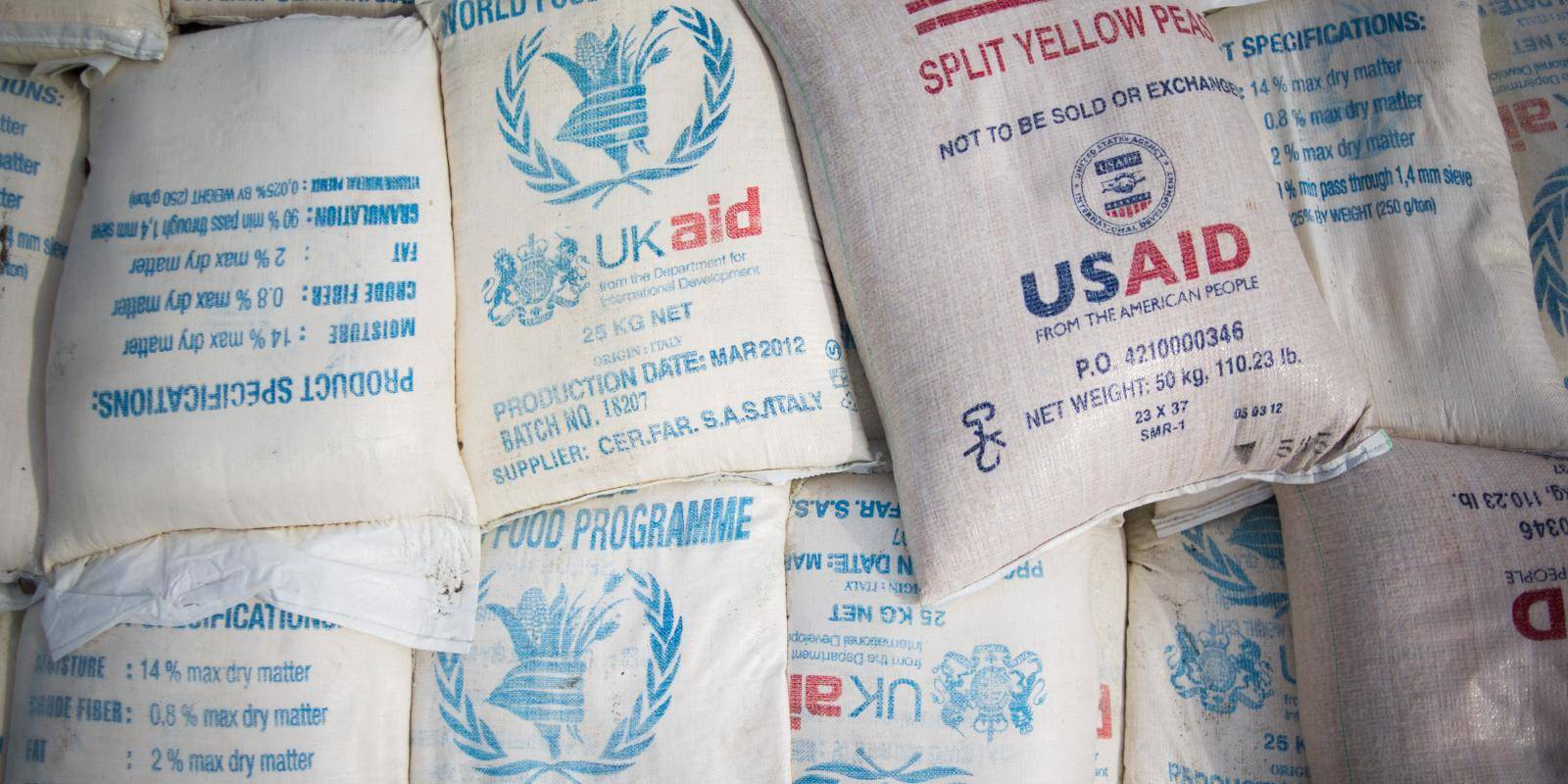
Western donors are pulling back on aid spending – driven by fiscal constraints, defence pressures and, in some cases, ideology. These cuts will have significant and widespread human consequences across the globe. But they also carry security and geopolitical implications for donors themselves, including the UK.
In the past two years, many donor countries have made significant cuts to their aid and development spending (‘official development assistance’ or ODA). In February 2025, the UK government announced it would cut its aid spending from 0.5 per cent of gross national income (GNI) to 0.3 per cent in 2027 to fund increased investment in defence. This will be the UK’s lowest level of aid spending as a proportion of GNI since 1999. France, Germany, the Netherlands and Sweden have also recently made significant cuts.
Meanwhile, the US – hitherto consistently the world’s largest aid donor, accounting for around 29 per cent of ODA from OECD Development Assistance Committee (DAC) members in 2023 – has shuttered its government aid department, USAID, and permanently cancelled 83 per cent of US foreign aid contracts following an executive order by the Trump administration in early 2025. The US Congress has continuously wrangled with the administration over the final amounts the US will spend on aid – but the Trump administration’s budget request in May 2025 sought to reduce the wider foreign affairs budget by 84 per cent.
Overall, analyses of OECD data show that spending on aid by the 17 largest donors will fall by $49.3 billion from $213.3 billion in 2023 to $164 billion in 2025. This is projected to slide again to $146 billion by 2026 – in other words, global aid spending could fall by just over $67 billion, or 32 per cent, between 2023 and 2026. While ODA spending was at a high in the early 2020s, much of this was driven by additional funding to Ukraine in the wake of Russia’s invasion, and by spending in donor countries on the costs of hosting refugees and asylum seekers. The recent cuts, combined with the US’s increasing reluctance to work with international institutions and its rejection of many aspects of multilateral global development, mark a departure from the global aid system of recent decades.
Global aid spending could fall by just over $67 billion, or 32 per cent, between 2023 and 2026.
This will have significant human consequences. Countries that have relied on external financing for the delivery of vital services such as healthcare and education will have major budget shortfalls – as of 2025, 32 countries were receiving ODA equivalent to 25 per cent of their total health expenditure. Major global health programmes face either steep cuts or at least disruption – as in the case of PEPFAR (the President’s Emergency Plan for AIDS Relief), the US-funded anti-AIDS programme that has saved tens of millions of lives. Overall, the UN estimates that the annual financing gap between what is needed to achieve the Sustainable Development Goals (SDGs) by 2030 and what has already been invested or announced is now $4 trillion, up from $2.5 trillion in 2015.
The risks which these financial deficits present are significant for countries receiving aid. But the cuts also have wider consequences for donors, including the UK. This research paper explores the emerging security and geopolitical implications of the aid cuts for the UK, and offers insights into how the government could respond. Among other themes, our analysis explores how the UK might work with like-minded middle powers – such as European donors, Australia and Canada – that are similarly affected.
In regard to the security implications of the aid cuts, we focus on two distinct but related risks. Firstly, the pattern of lower global aid spending means international funding for fragile and conflict-affected states – particularly on conflict prevention and peacebuilding – is likely to decrease. This could exacerbate existing conflicts, generate further regional instability and push more people to flee conflict, all of which could rebound on UK security in the medium to long term. When determining cuts to the UK’s own aid spending, government representatives said they would seek to preserve a focus on some key conflict zones, including Ukraine, Sudan and Gaza. In practice, however, while bilateral funding for Ukraine has been preserved, cuts in the 2025/26 financial year have resulted in a decline in bilateral spending for both Sudan and Palestine, as well as for other conflict-affected states such as Afghanistan, Somalia and Syria. (Headline figures are not the whole story: the UK has sought to play a diplomatic role in the Sudan crisis, and did increase some funding to the country prior to this year, although subsequent cuts have meant the UK government response to the crisis has been more limited than it could have otherwise been.) The effects of the UK’s broader cuts may also be partially mitigated by the fact that the UK’s non-bilateral spending on humanitarian response is set to decrease by only around 3 per cent. But the risk remains that some of these fragile contexts will be neglected.
Secondly, ODA cuts and the weakening of multilateral systems threaten the provision of ‘global public goods’ – i.e. benefits that transcend borders and which no one state can ultimately own or control, such as disease surveillance and aspects of climate action. In so far as reduced funding will affect international systems for managing climate and health security risks, this also has potential long-term consequences for protecting UK citizens against health, environmental and economic shocks.
In terms of the geopolitical consequences, the Western aid cuts, alongside the withdrawal of the US from development relationships and multilateral forums, will challenge the historic prominence of DAC members in the donor community and multilateral system. In particular, China, Russia and other states may benefit from positioning themselves as more consistent security or development partners for countries in the Global South, despite being unlikely to fill funding gaps or adhere to traditional aid spending formats. China, for example, is unlikely to provide funding in the same way as the US and allied countries have. Beijing’s own relationship with other countries in the Global South is complex. But China may obtain soft power benefits from looking like the more reliable counterpart, especially as cuts to aid come alongside the US’s shifting tariff policy, which has resulted in the application of steep duties on exports from a range of the world’s poorest countries.
The UK is not alone in confronting the security and geopolitical risks that arise from its own aid cuts and broader Western policies. Many other middle powers have also reduced their aid budgets – primarily due to fiscal and defence pressures rather than for the ideological reasons driving the US. While these cuts reflect a growing realism in foreign and national security policymaking, many middle powers – including European allies, Australia, Brazil, Canada and India – recognize a strategic interest in sustaining a functioning international system for addressing global challenges. Moreover, the UK shares overlapping interests with many developing countries in tackling these same challenges, including climate change, global health crises, debt and protectionism. At a time when many developing economies are seeking diversified partnerships beyond traditional aid, this convergence creates an opportunity for the UK to work with like-minded donors and developing countries to preserve some collective capacity to manage global risks and deliver mutual benefits.
Consequently, we argue that as the US steps back from its global role, countries such as the UK, Australia, Canada, Japan and key European partners should coordinate to reinforce parts of the international system most essential to the provision of global public goods and collective security, including those parts underpinning conflict response, health security and climate action. At the same time, the UK should make a clearer and more credible offer to developing states in the Global South; this means linking trade, research and security cooperation with development and debt relief, and consolidating some of these efforts with those of European partners. Many developing countries were already becoming less reliant on traditional aid, but they have significant concerns about the cost and sustainability of their public debt, timely access to finance and loans from international financial institutions, and wider questions of global stability; new offers of partnership should credibly respond to these issues.
The UK should also guard against further loss of specialist capacity and knowledge within the Foreign, Commonwealth and Development Office (FCDO), and prioritize retaining expertise and personnel focused on conflict response and prevention in government to mitigate the risk that poorer, conflict-affected states are further destabilized. The UK should consider whether a proportion of new, resilience-focused defence spending could be devoted to conflict prevention where links to national security are clear. However, robust scrutiny of new defence spending will be needed to ensure such spending contributes to UK security. Finally, the UK needs to articulate a coherent public narrative that connects development spending to Britain’s own security as well as to global stability.